
Moroccan carpets
Town, village, mountain.
C messier — CC BY-SA 4.0 · Yastay — CC BY-SA 4.0 · C messier (Retouched by Robert Prazeres — CC BY-SA 4.0 · t_y_l — CC BY-SA 2.0 · Pedro from Maia (Porto), Portugal — CC BY 2.0 · RSAlmeida — CC BY-SA 4.0 · Charlie Marchant from UK — CC BY 2.0 · Elgaard — CC BY-SA 4.0
A late nineteenth-century palace in the medina, built between 1894 and 1900 by Si Said ibn Musa, minister and brother of the grand vizier Ba Ahmed, close to the Bahia Palace his brother built. It has been a museum of Moroccan arts since the 1930s. After a restoration by the National Museums Foundation it reopened in 2018 as the National Museum of Weaving and Carpets, telling the history of the Moroccan carpet across the regions, urban, rural and Amazigh, with their colours, patterns and symbols. The palace itself is an architectural gem, with a zellij-paved courtyard and central fountain, halls with painted and gilded wooden ceilings, carved doors, coloured stucco, a shaded inner garden and a decorated upper-floor pavilion. Admission is thirty dirhams for adults according to the National Museums Foundation, open Tuesday to Sunday from ten to six and closed on Mondays. It is a few minutes from the Bahia Palace.
Town, village, mountain.
Fountain, gilded ceilings.
Shade and calm.
Derb el-Bahia, medina, Marrakech
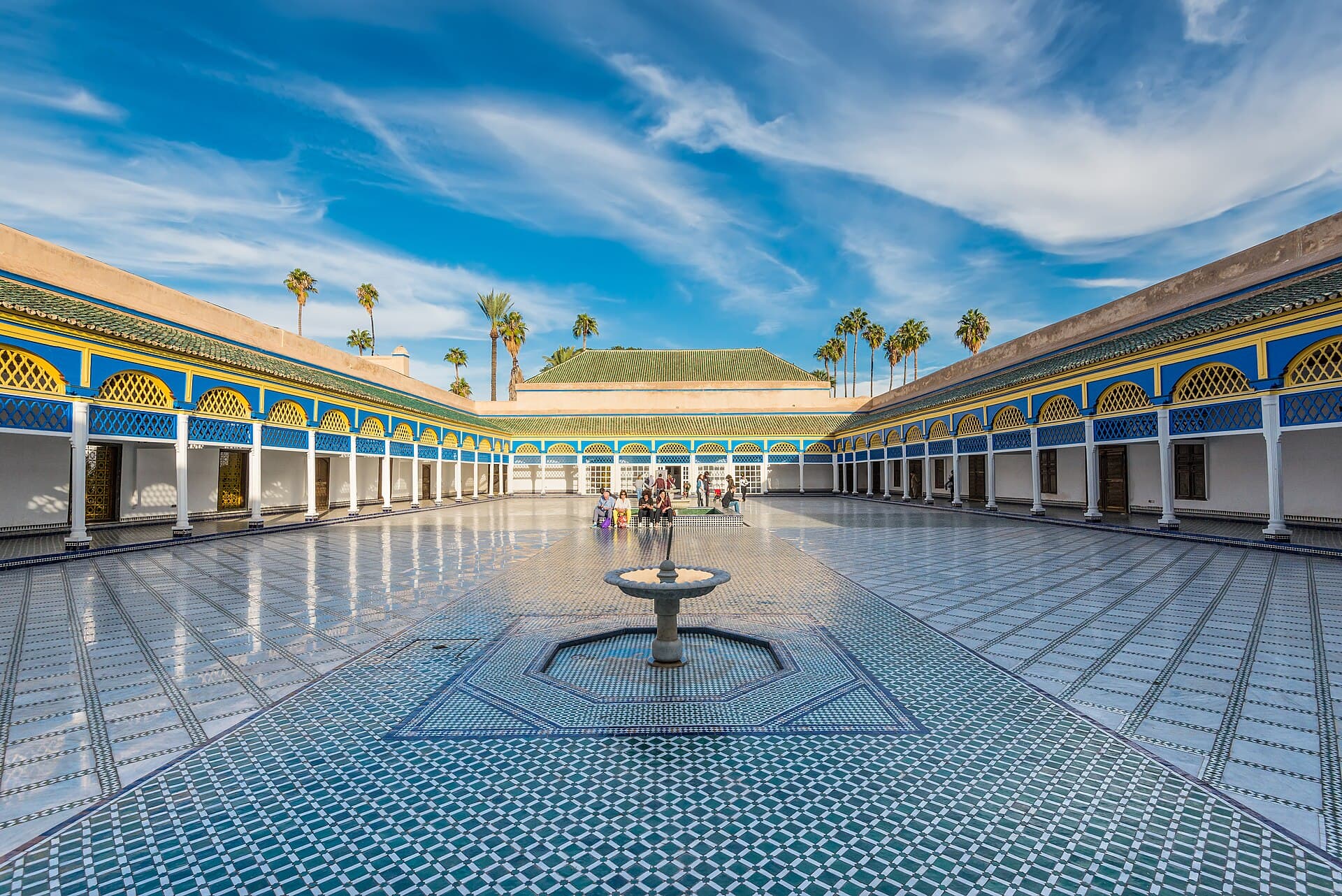 Bahia PalaceA nineteenth-century palace in the medina, begun by the grand vizier Si Musa in 3 minutes walk
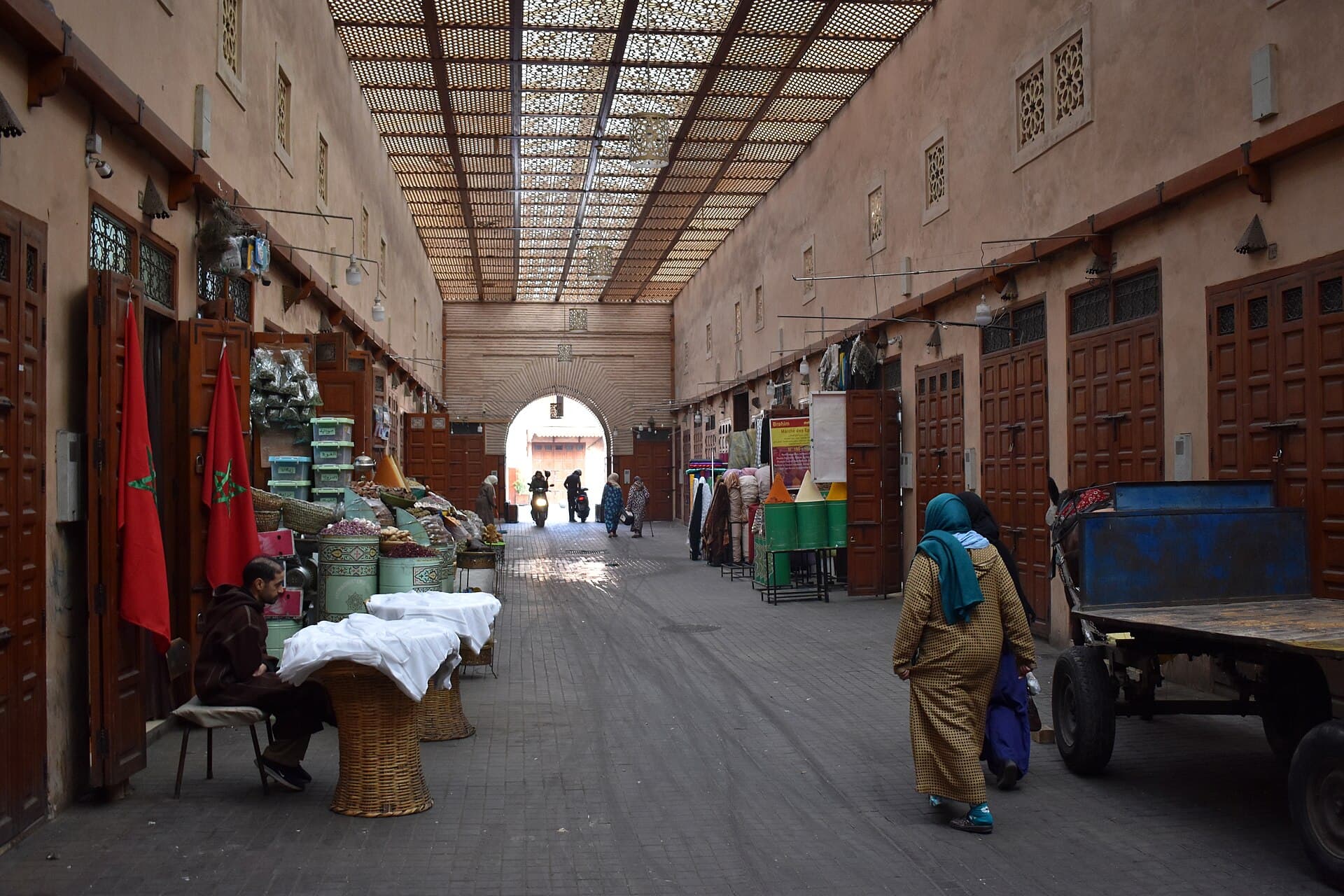 Mellah and Lazama SynagogueThe historic quarter of Marrakech's Moroccan Jews, founded by decree of the Saad5 minutes walk
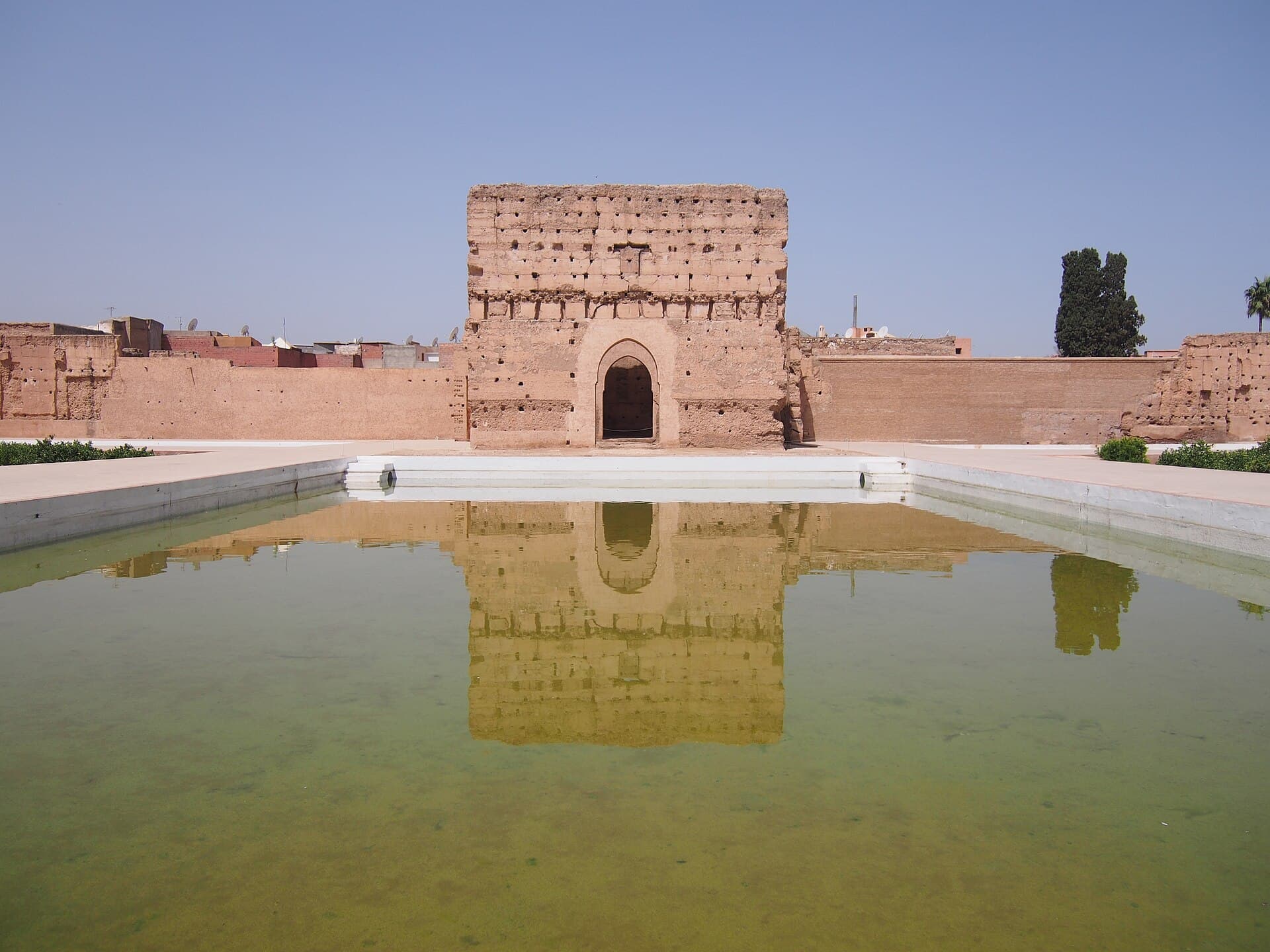 El Badi PalaceThe ruins of a lavish palace commissioned by the Saadian sultan Ahmad al-Mansur 7 minutes walk
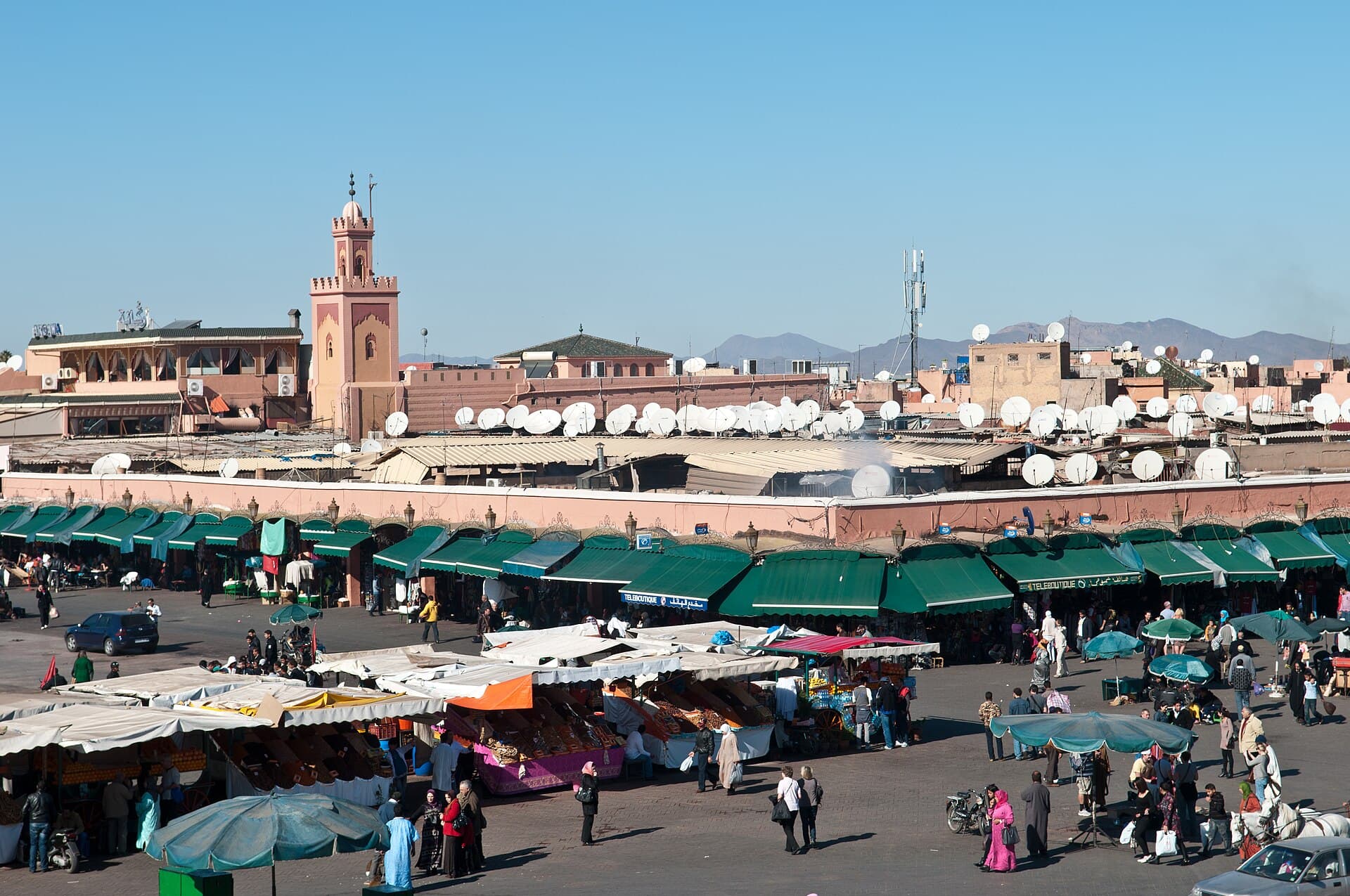 Jemaa el-FnaaThe great square of Marrakech's old city and its beating heart for centuries, wh7 minutes walk
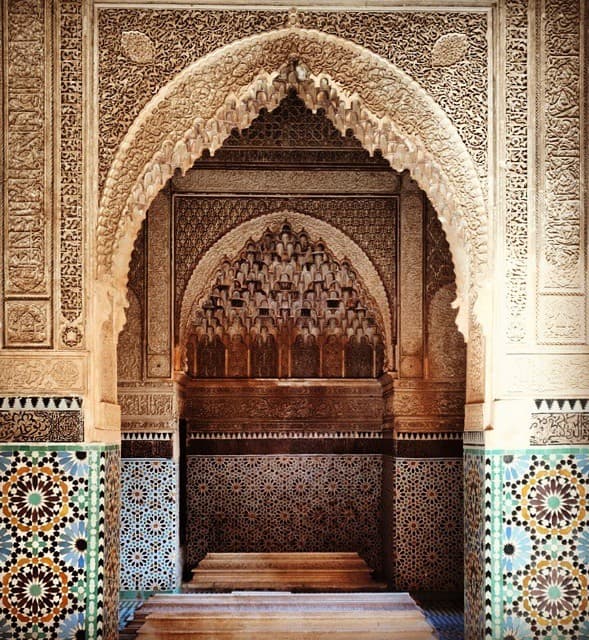 Saadian TombsThe royal necropolis of the Saadian sultans and their families, behind the Kasba10 minutes walk
Yes: it is smaller and far calmer, pairing a lovely palace with a carpet collection that explains this Moroccan art.