
Stork walls
Nests on the ramparts.
C messier — CC BY-SA 4.0 · C messier — CC BY-SA 4.0 · Jakub Hałun — CC BY 4.0 · Laura Caillebot — CC BY 2.0 · Keirn OConnor from New York City, United States — CC BY-SA 2.0 · Draceane — CC BY-SA 4.0 · No machine-readable author provided. Raf24~commonswiki assumed (based on copyright claims). — CC BY-SA 3.0 · R.maabid — CC BY-SA 4.0
The ruins of a lavish palace commissioned by the Saadian sultan Ahmad al-Mansur a few months after he came to power in 1578, with building and decoration continuing through most of his reign. He meant it as a reception palace showing off the state's wealth and power, with materials brought from far away, from Italian marble to gold from Mali. After al-Mansur died in 1603 the palace was neglected and fell into ruin with the decline of the Saadians, and its precious materials, especially the marble, were stripped for use in buildings across Morocco; much is said to have gone to Meknes under Moulay Ismail. What remains are towering rammed-earth walls where storks nest. A vast courtyard with a great pool and sunken orange gardens lies at its centre, ringed by the remains of pavilions and halls. One hall displays the wooden minbar of the Koutoubia Mosque, a masterpiece of medieval woodwork, and from the top of the walls there are views over the city and the Atlas. A foreign visitor's ticket costs one hundred dirhams according to the Ministry of Culture's ticketing site, half for children aged seven to thirteen, and it opens daily from nine to five. It is near the Saadian Tombs and the Bahia Palace.
Nests on the ramparts.
Sunken orange gardens.
A wooden masterpiece.
Kasbah district, near the Mellah, Marrakech
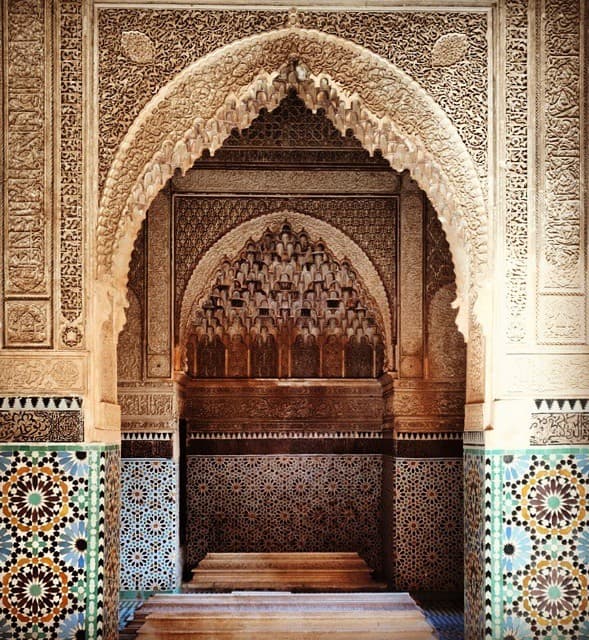 Saadian TombsThe royal necropolis of the Saadian sultans and their families, behind the Kasba4 minutes walk
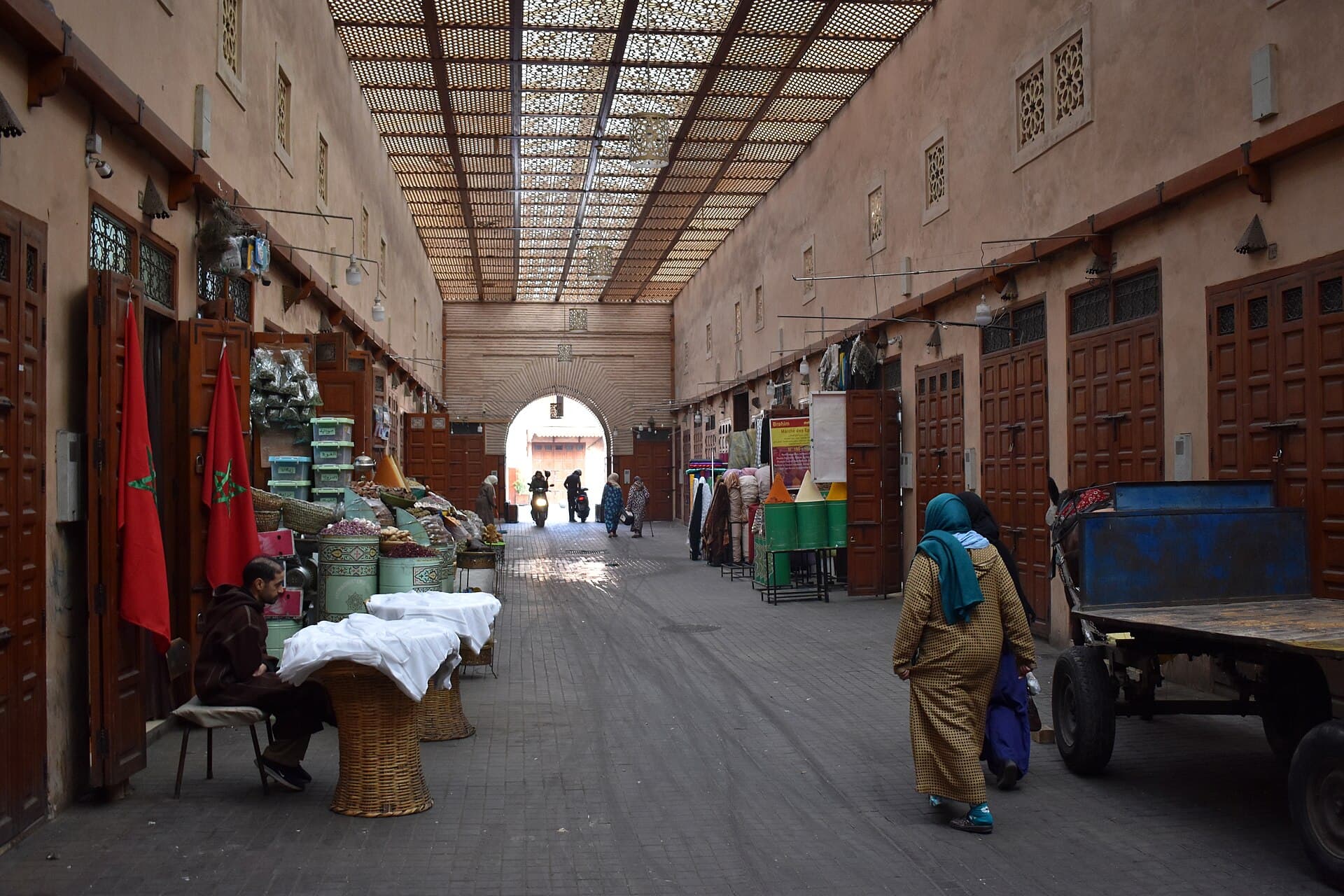 Mellah and Lazama SynagogueThe historic quarter of Marrakech's Moroccan Jews, founded by decree of the Saad5 minutes walk
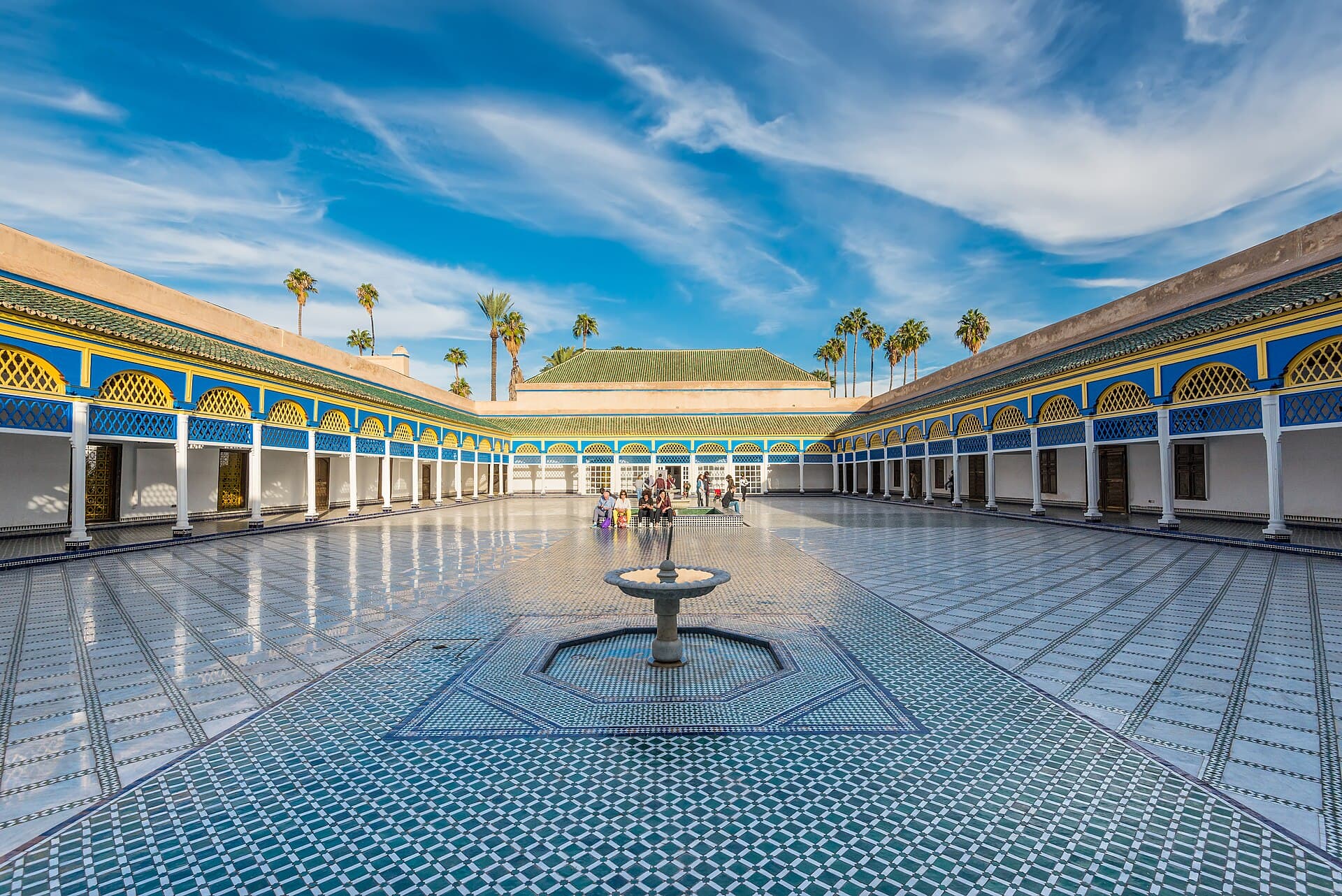 Bahia PalaceA nineteenth-century palace in the medina, begun by the grand vizier Si Musa in 7 minutes walk
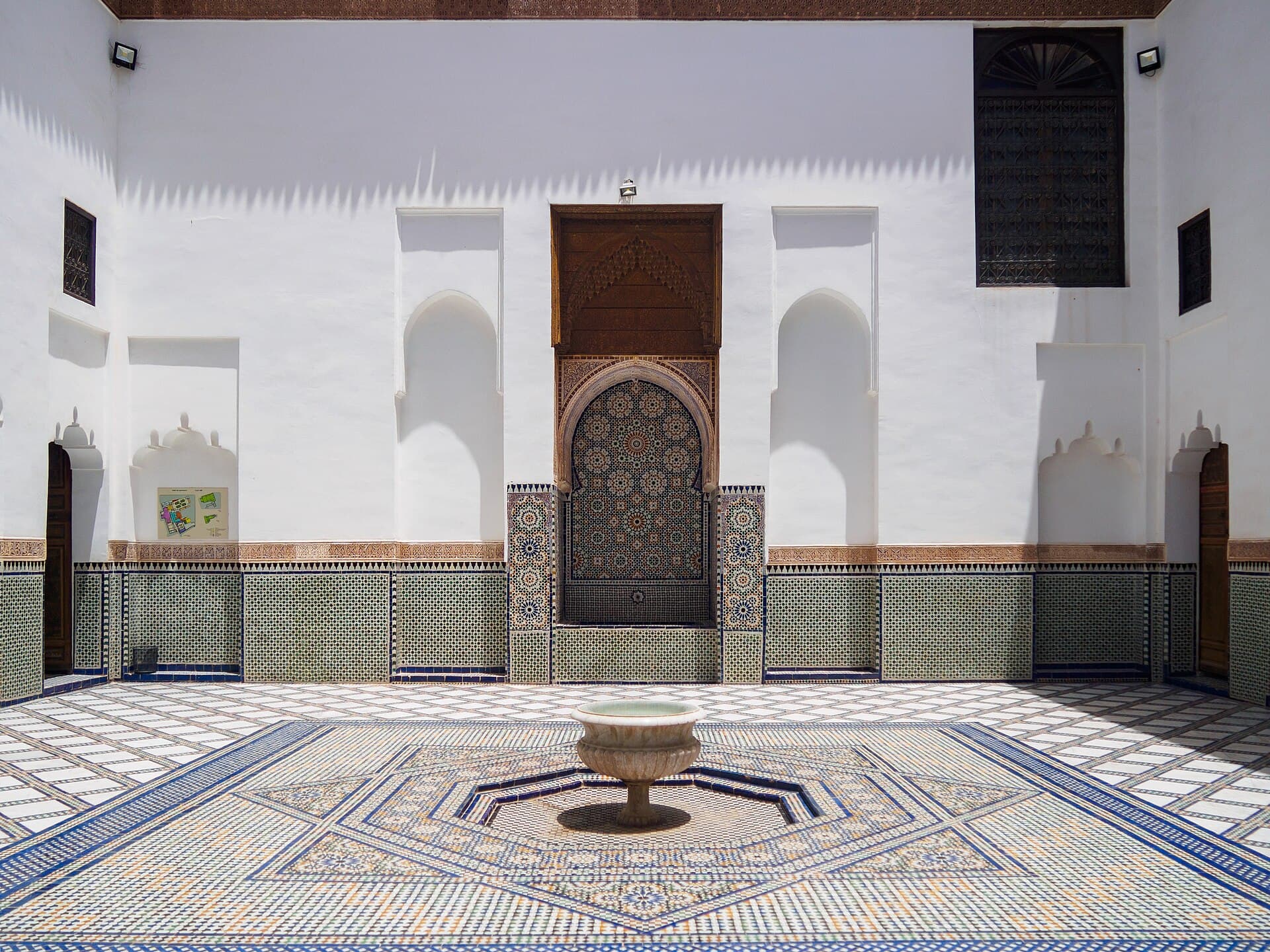 Dar Si Said MuseumA late nineteenth-century palace in the medina, built between 1894 and 1900 by S7 minutes walk
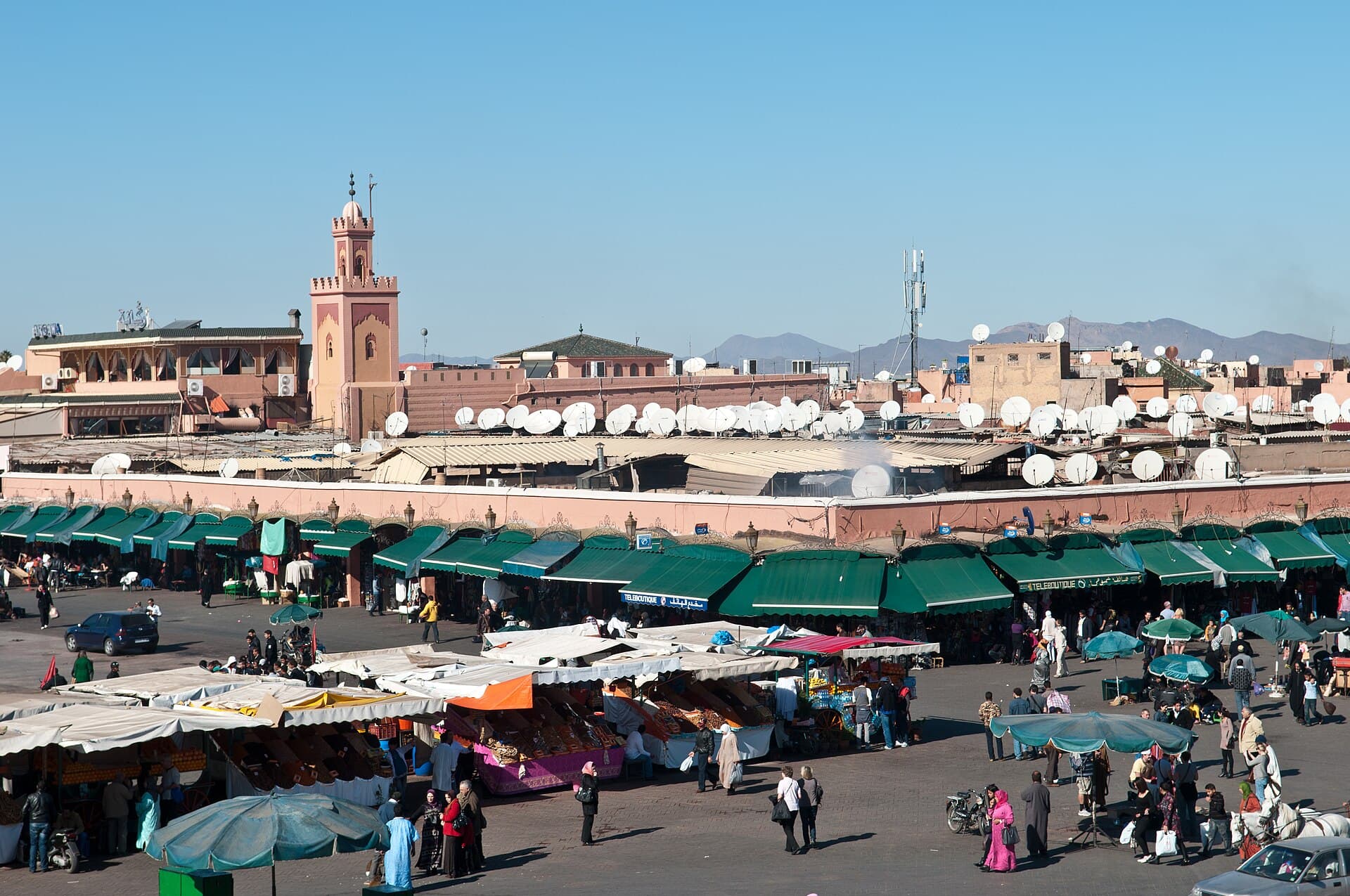 Jemaa el-FnaaThe great square of Marrakech's old city and its beating heart for centuries, wh11 minutes walk
The huge walls, the courtyard, pool, gardens and remains of halls; the precious decoration was stripped centuries ago, but the scale still conveys its old grandeur.