
Lazama Synagogue
Blue and white zellij.
Misa.stefanovic.07 — CC BY-SA 4.0 · karel291 — CC BY 3.0 · Yastay — CC BY-SA 4.0 · Yastay — CC BY-SA 4.0 · Ellywa — CC BY-SA 4.0 · Yamen — CC BY-SA 4.0 · David Berkowitz from New York, NY, USA — CC BY 2.0 · Yamen — CC BY-SA 4.0
The historic quarter of Marrakech's Moroccan Jews, founded by decree of the Saadian sultan Abdallah al-Ghalib in 1558 beside the walls of the royal kasbah, the second oldest quarter of its kind in Morocco. In the sixteenth and seventeenth centuries it was among the city's busiest trading districts, a walled quarter whose gates were closed at night. Today you wander its narrow lanes and markets, among them jewellery, fabric and spice sellers, and notice houses with balconies facing the street. Most of its Jewish residents left in the twentieth century, but it still keeps landmarks of their history. Its best-known landmark is the Lazama Synagogue, one of the old synagogues still standing, with walls in blue and white zellij and a small exhibition of photographs and community history. At the edge of the quarter lies the large Miâara cemetery with its white tombs. Wandering the quarter is free, with small fees for the synagogue and the cemetery. It lies between El Badi Palace and the Bahia Palace, so combine it with both on one walk.
Blue and white zellij.
Jewellery and spices.
Wide white tombs.
Mellah quarter, near El Badi Palace, medina, Marrakech
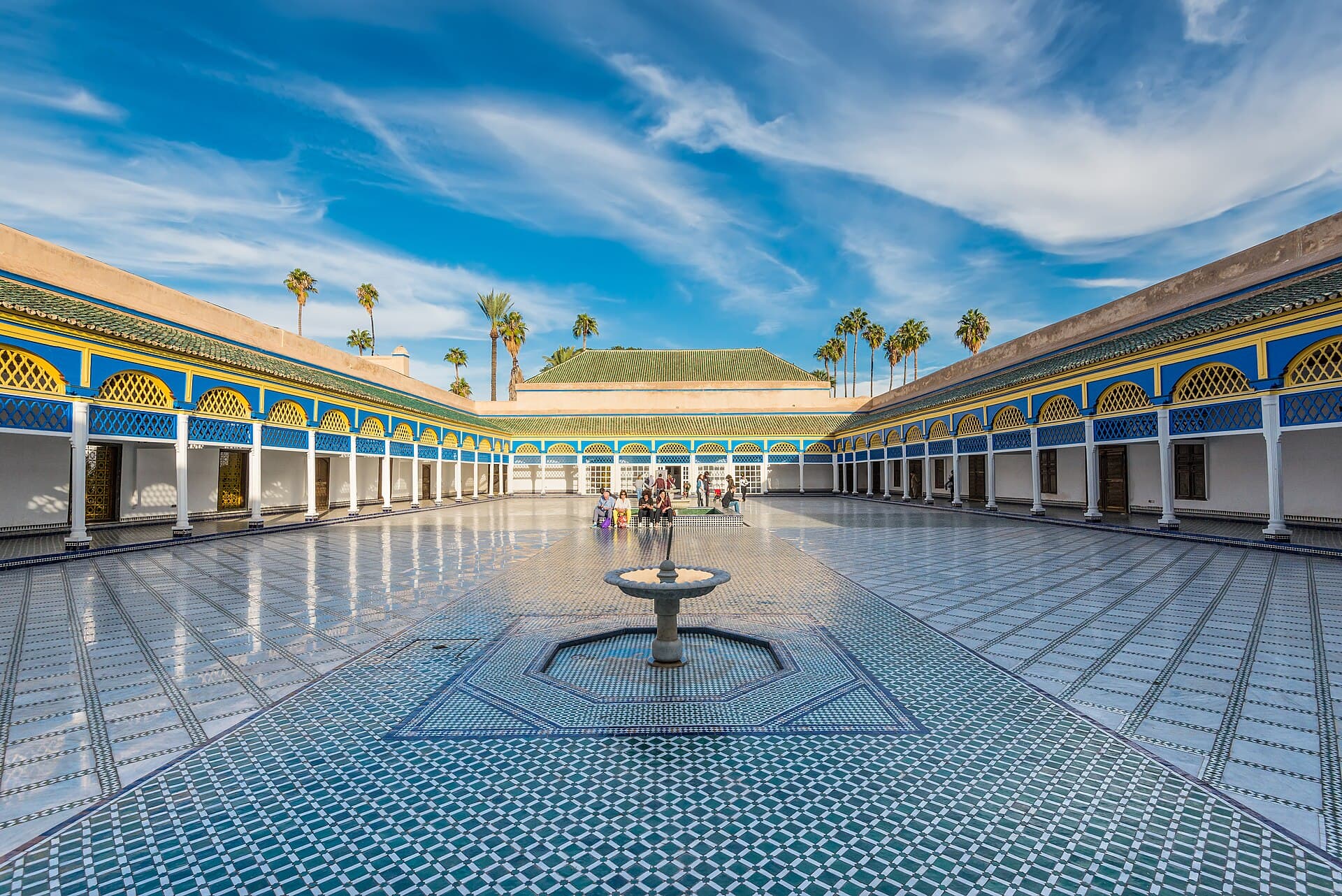 Bahia PalaceA nineteenth-century palace in the medina, begun by the grand vizier Si Musa in 2 minutes walk
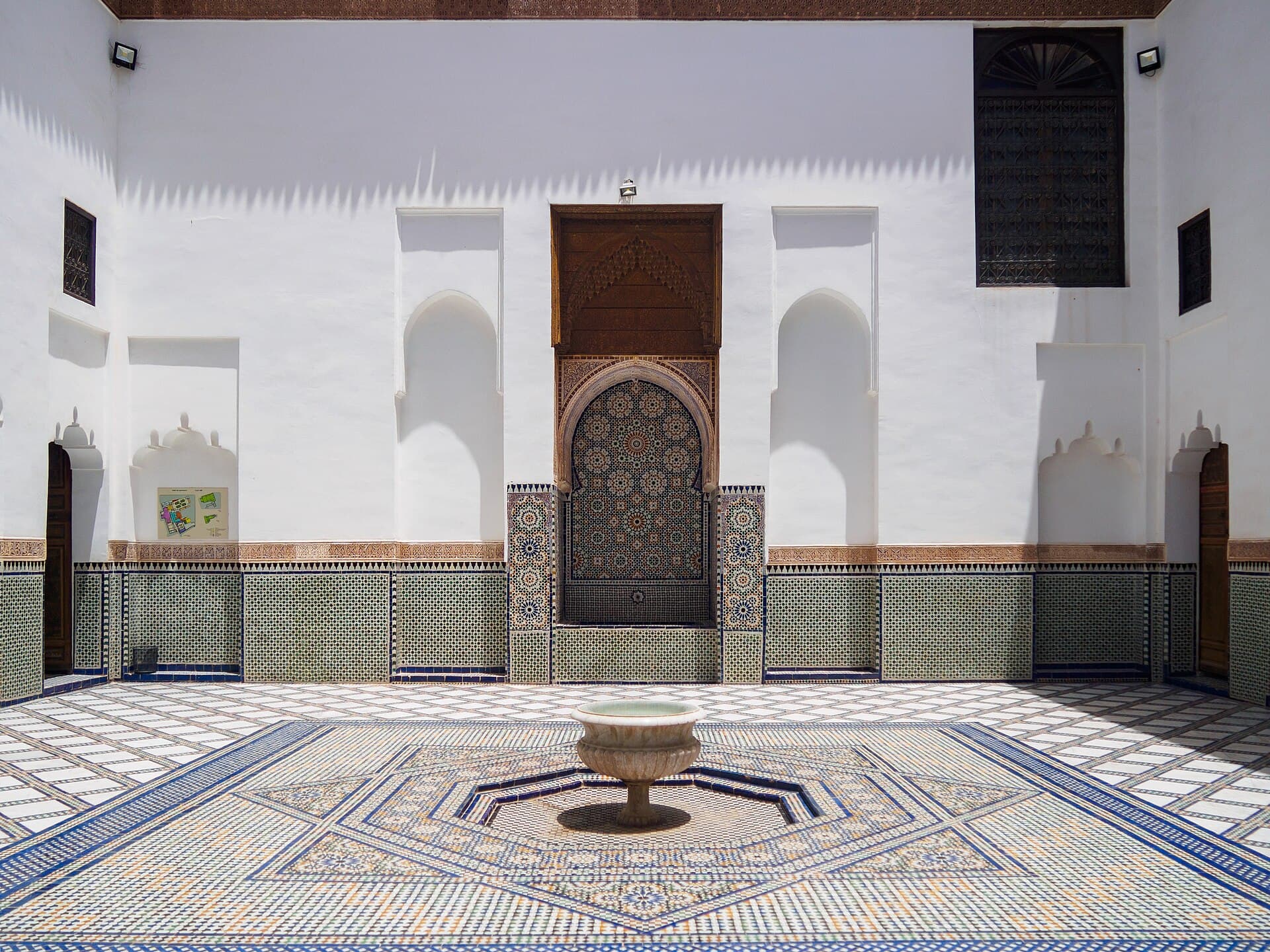 Dar Si Said MuseumA late nineteenth-century palace in the medina, built between 1894 and 1900 by S5 minutes walk
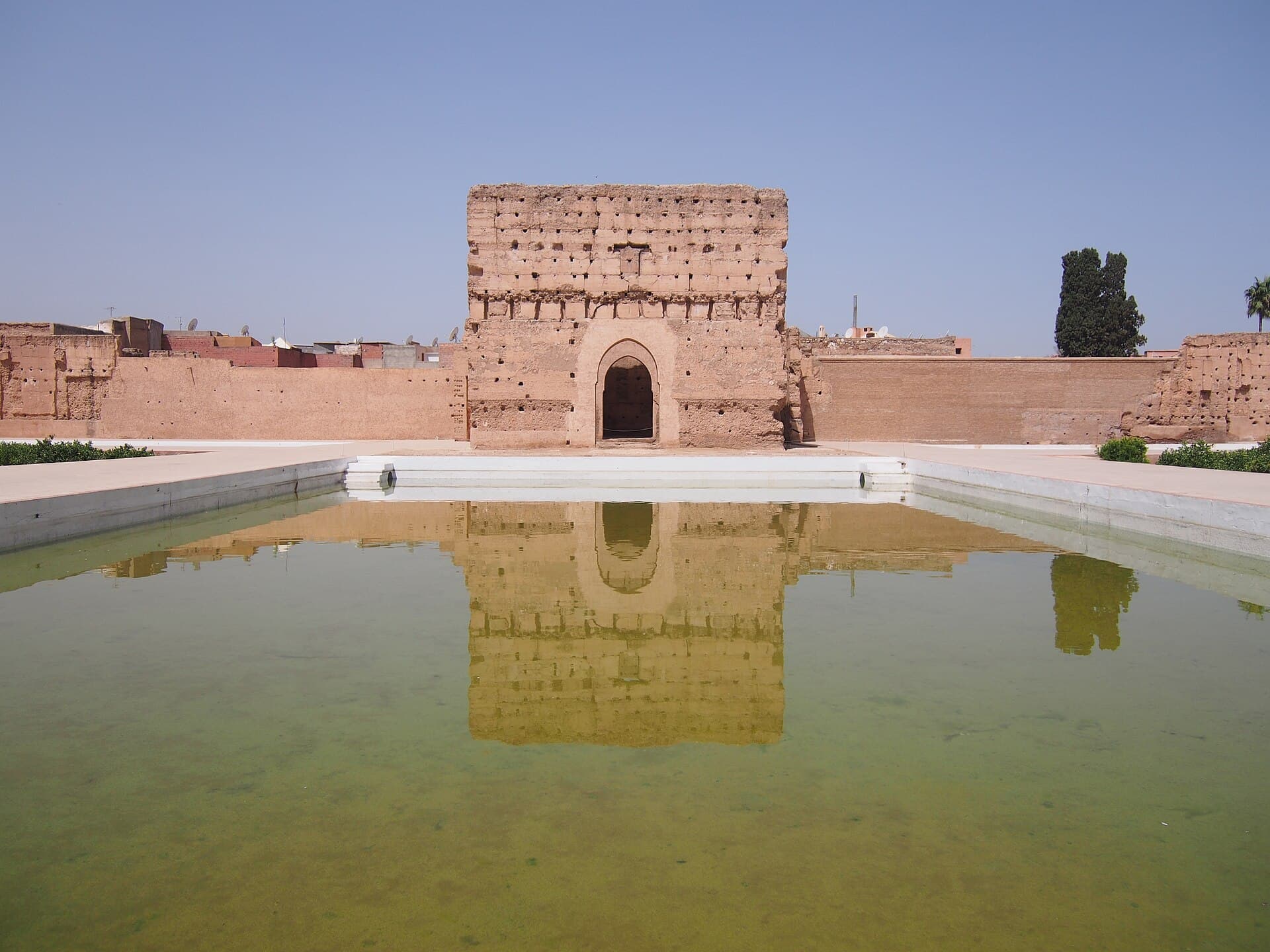 El Badi PalaceThe ruins of a lavish palace commissioned by the Saadian sultan Ahmad al-Mansur 5 minutes walk
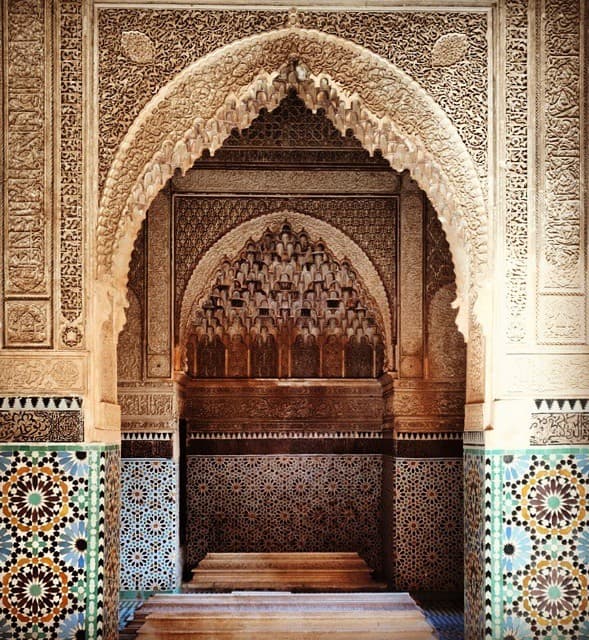 Saadian TombsThe royal necropolis of the Saadian sultans and their families, behind the Kasba8 minutes walk
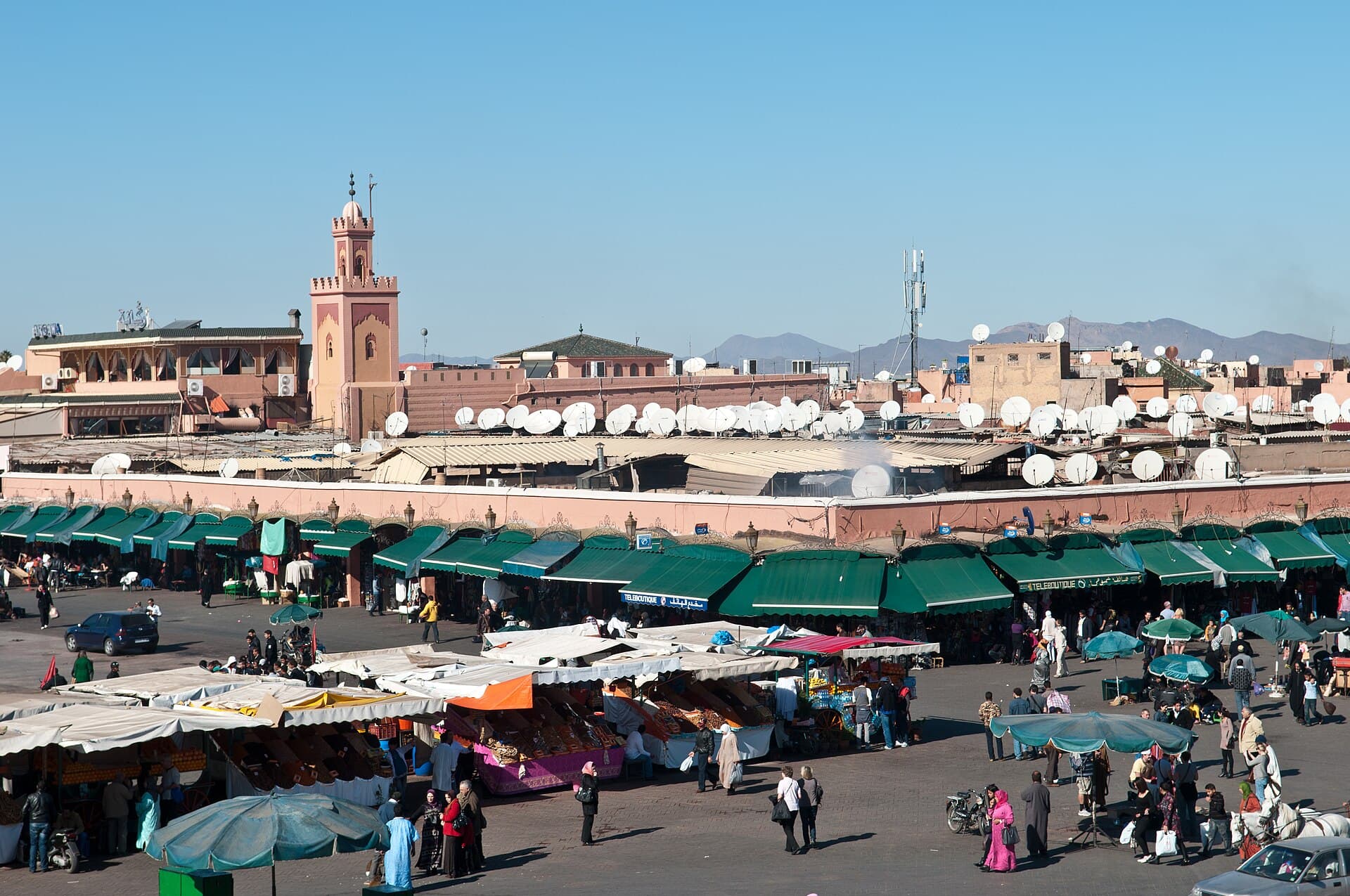 Jemaa el-FnaaThe great square of Marrakech's old city and its beating heart for centuries, wh11 minutes walk
It is the name used in Morocco for the Jewish quarters of cities; Marrakech's was the second oldest after that of Fes.