
The doves mosaic
Malta's most famous Roman floor.
Frank Vincentz — CC BY-SA 3.0 · Justlettersandnumbers — CC BY-SA 4.0 · Justlettersandnumbers — CC BY-SA 4.0 · Continentaleurope — CC BY-SA 4.0
A wealthy Roman house found by accident in 1881 while planting a tree: the Domvs Romana on Mdina's edge was the residence of a notable of Melite — Malta's Roman name — and a museum was built over its remains in 1882, making it one of the Mediterranean's oldest purpose-built museums. Its treasure is the mosaic: first-century BC floors of a quality rivalling those of Pompeii and Sicily, the best known showing drinking doves and a scene of women musicians — among the oldest and finest mosaics in the western Mediterranean, seen in their original position inside the house's roofed courtyard. Around the mosaics stand statues of the Emperor Claudius and his family, with household objects, glass and jewellery, and a section on the Islamic period: an eleventh-century Arab cemetery found directly above the house, its headstones carved in Kufic script — two layers of Malta's history on one site.
Malta's most famous Roman floor.
Malta's Islamic layer above its Roman one.
Wesgħa tal-Mużew, Rabat
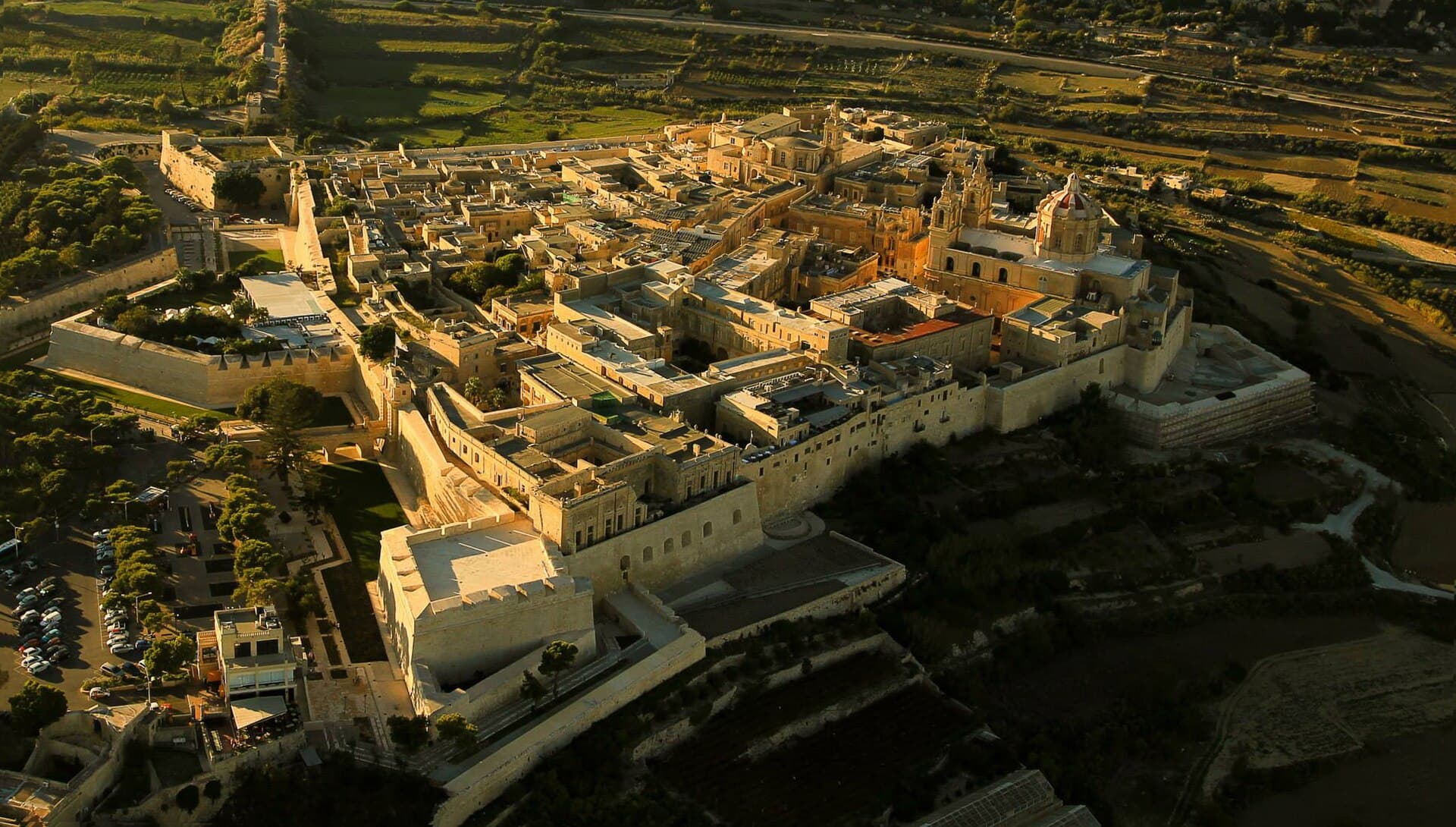 Mdina, the Silent CityMalta's old capital, and its name is Arabic: Mdina ruled the island for some two3 minutes walk4.8
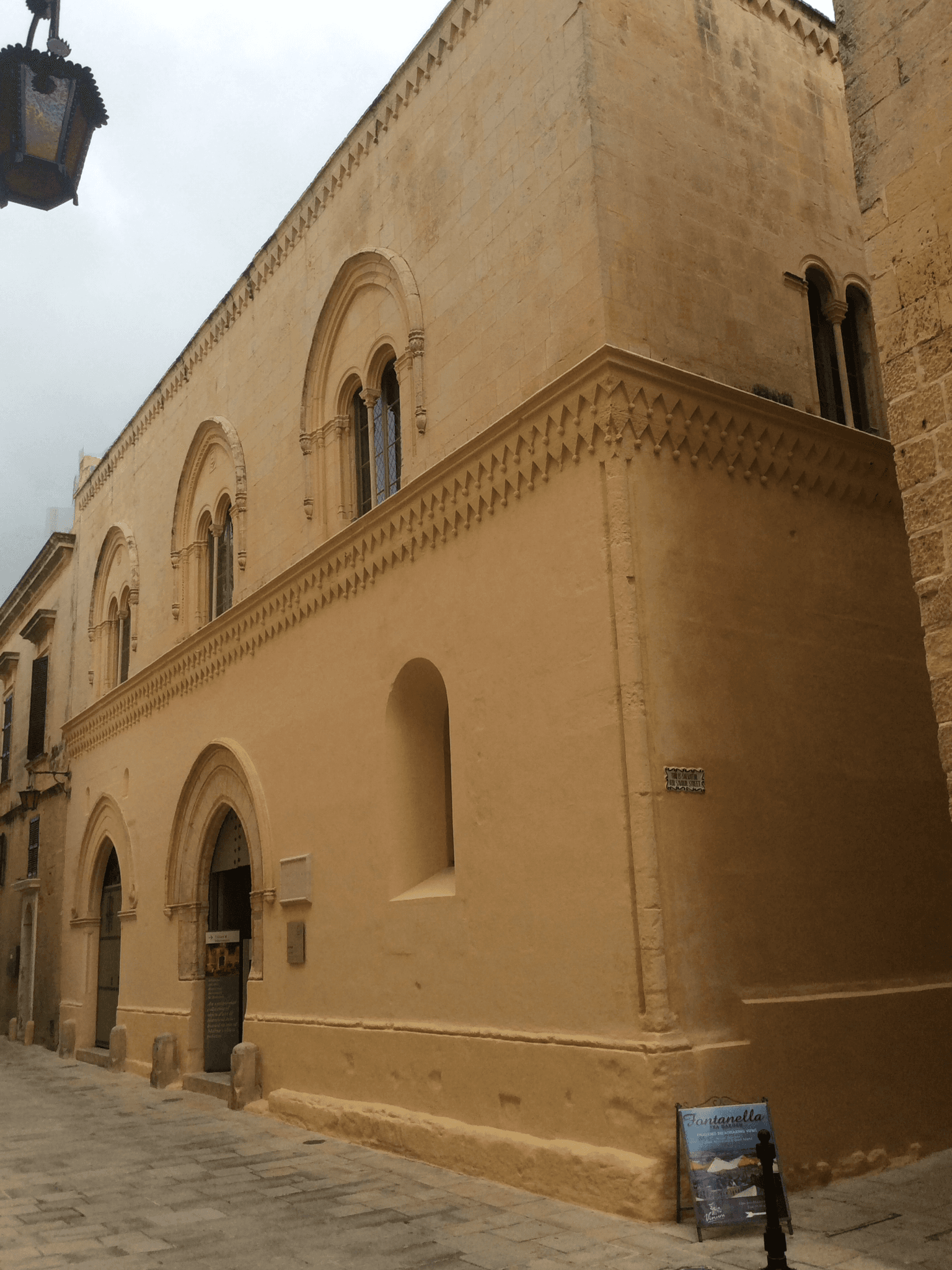 Palazzo FalsonMdina's second-oldest building and the finest house to visit in it: Palazzo Fals4 minutes walk4.7
 Collegiate Church of St PaulA Baroque church in the town of Rabat next to Mdina, built above the grotto wher5 minutes walk4.8
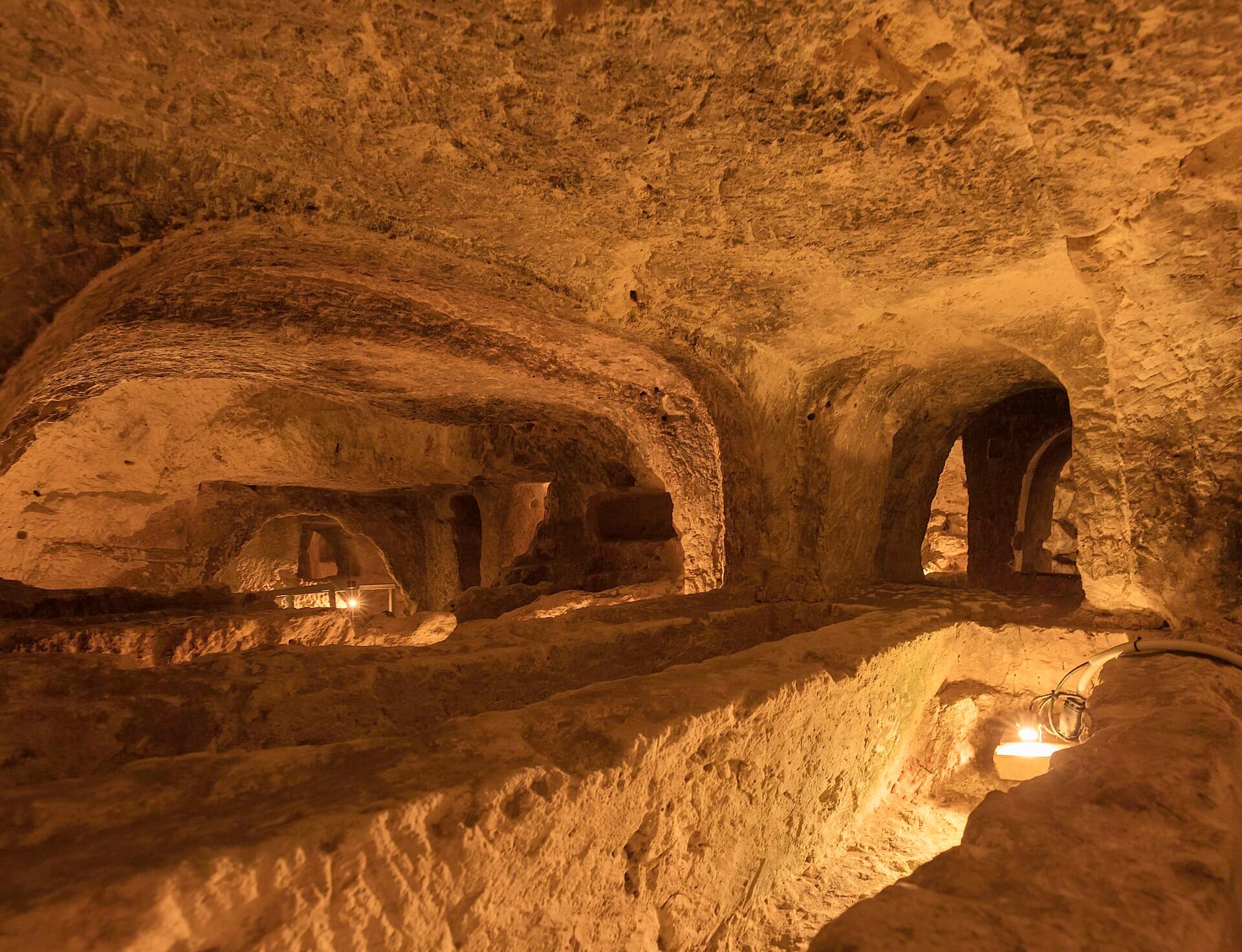 St Paul's CatacombsMalta's largest underground burial complex: the Rabat catacombs are a network of7 minutes walk4.2
The Maltese language itself: the only Semitic language official in the European Union, descended from Siculo-Arabic with Italian and English vocabulary — which is why an Arabic speaker recognises much of its everyday wording.