
The Minčeta tower
The high round crown — the city's symbol and circuit's peak.
JSB — CC BY-SA 3.0 · Bracodbk — CC BY-SA 3.0 · Marcin Konsek — CC BY-SA 4.0 · Hons084 — CC BY-SA 4.0
Dubrovnik's walls are medieval Europe's most complete, outright: two unbroken kilometres ringing the entire old city — up to six metres thick seaward and mightier landward, never once breached in the whole history of the Ragusan republic. Walking them is Dubrovnik's central visit: the two-hour circuit above the tiled roofs with the sea at every angle — the round Minčeta tower its landward crown (the city's symbol), Bokar fort on the sea corner, St. John's guarding the harbour — and the camera never leaves the hand: every ten metres a new postcard. Its rules are strict: one obligatory direction (anticlockwise), and summer is decided by timing — eight at opening or four in the afternoon once the cruise ships drain, midday an exposed furnace without shade or much water. Lovrjenac is included in the ticket for three days — never discard it.
The high round crown — the city's symbol and circuit's peak.
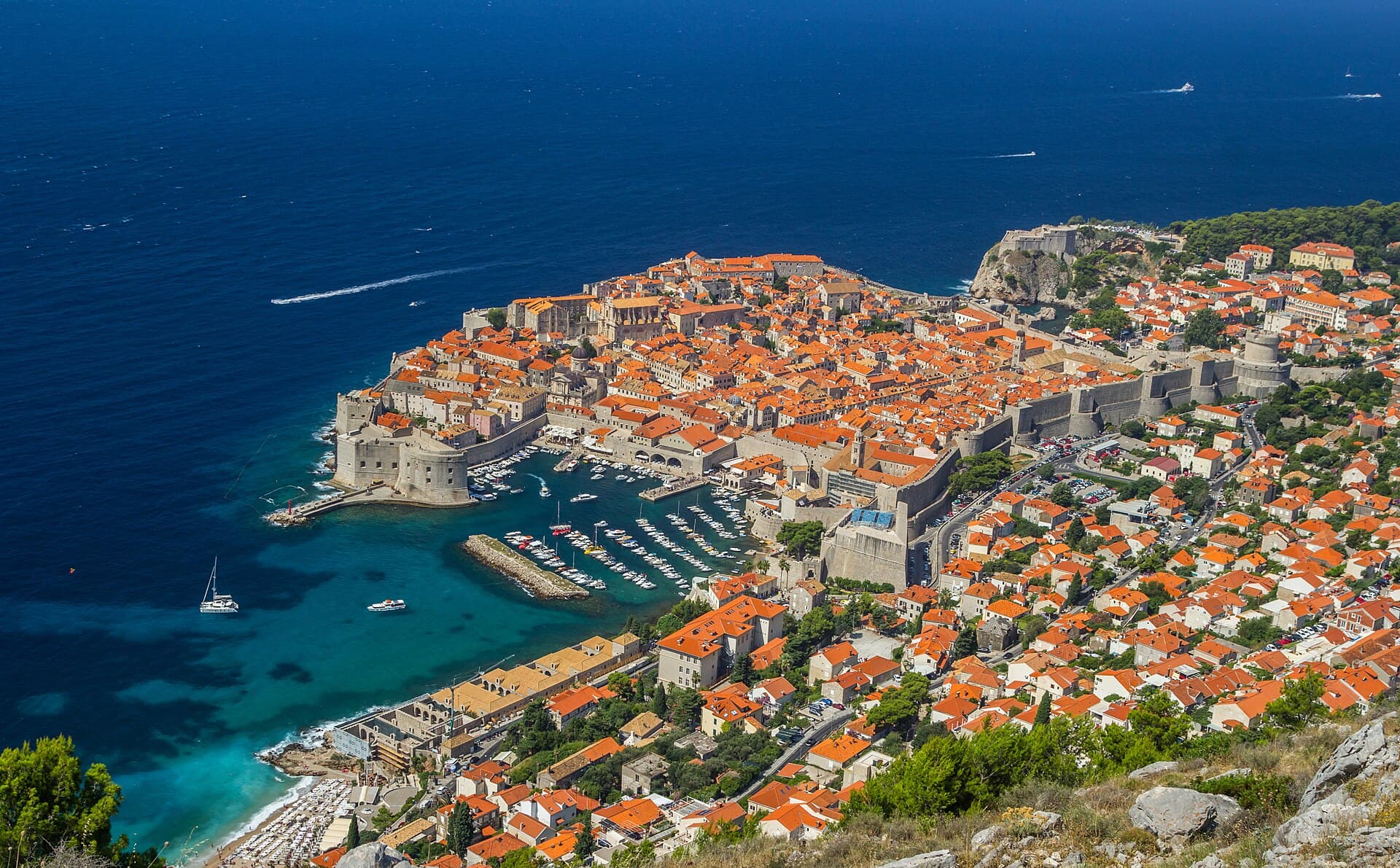
The famous red sea from above.
The sea corner facing Lovrjenac.
Old Town, 20000 Dubrovnik
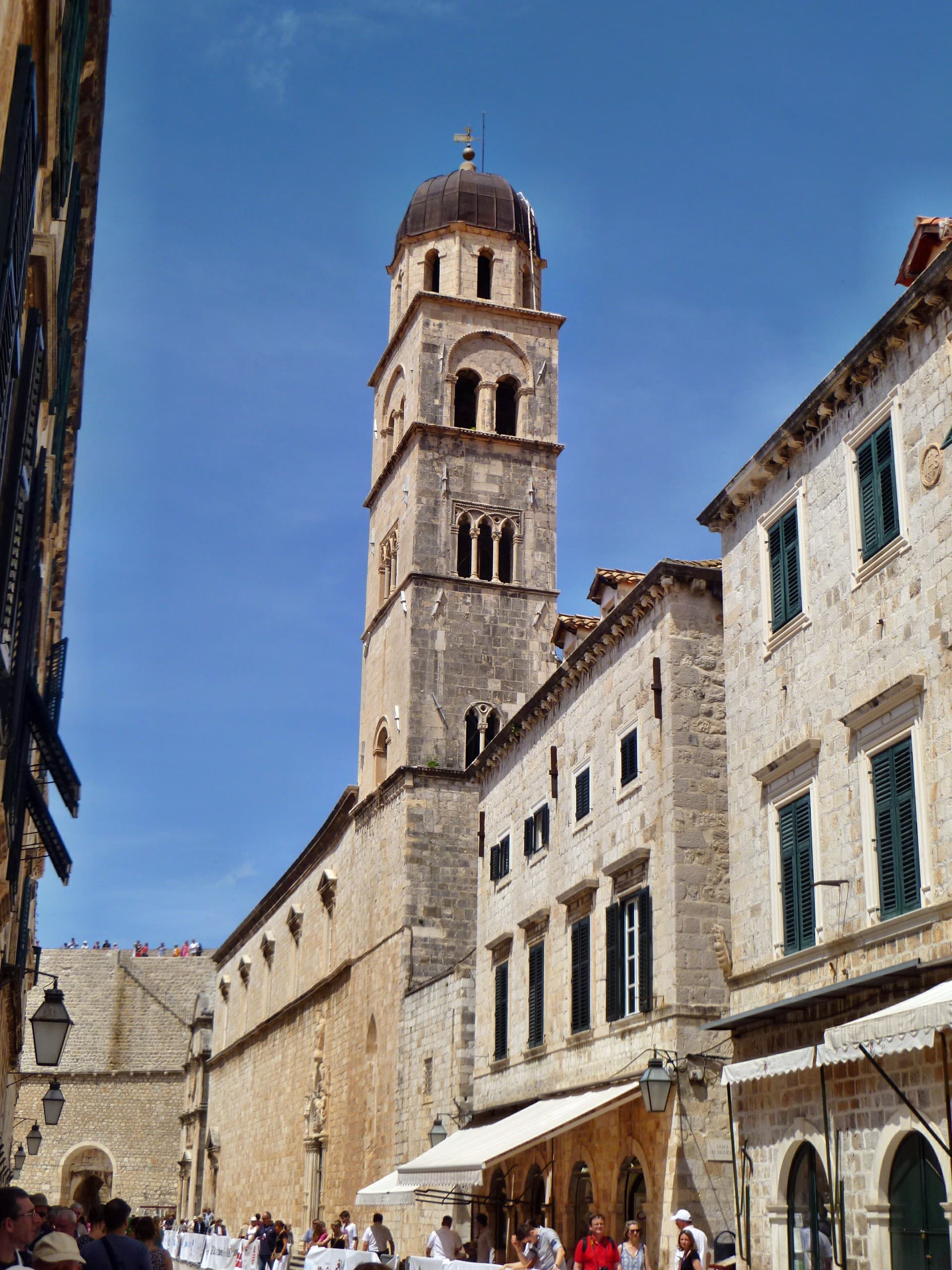 Franciscan Monastery and the Old PharmacyIt stands at the very start of the **Stradun**, just inside the Pile Gate, and h1 minute walk4.3
 The Stradun & Old TownThe Stradun is Dubrovnik's marble salon: the three-hundred-metre main street of 1 minute walk4.7
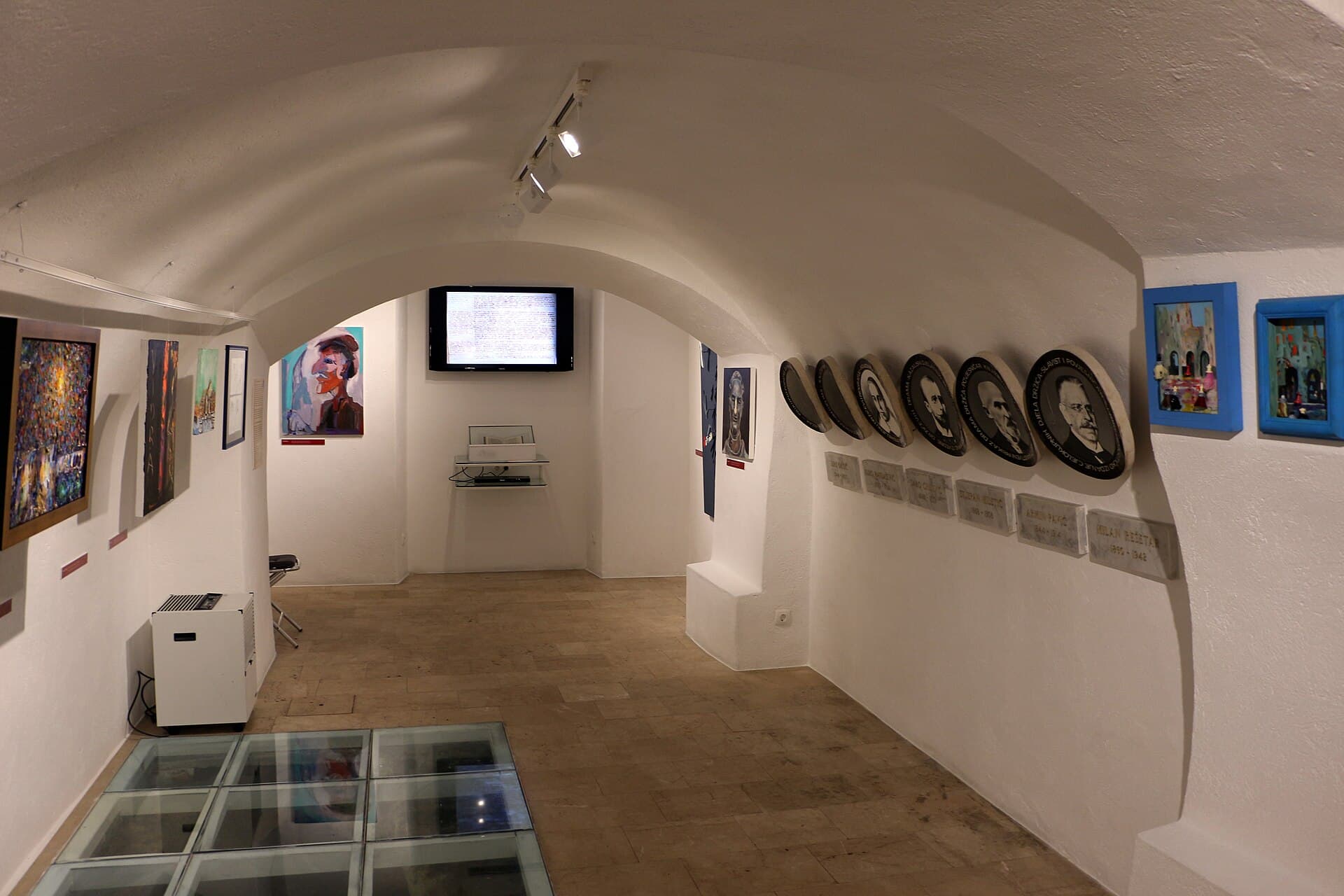 The House of Marin DržićA small museum in Dubrovnik's old town devoted to Marin Držić, the most importan1 minute walk4.2
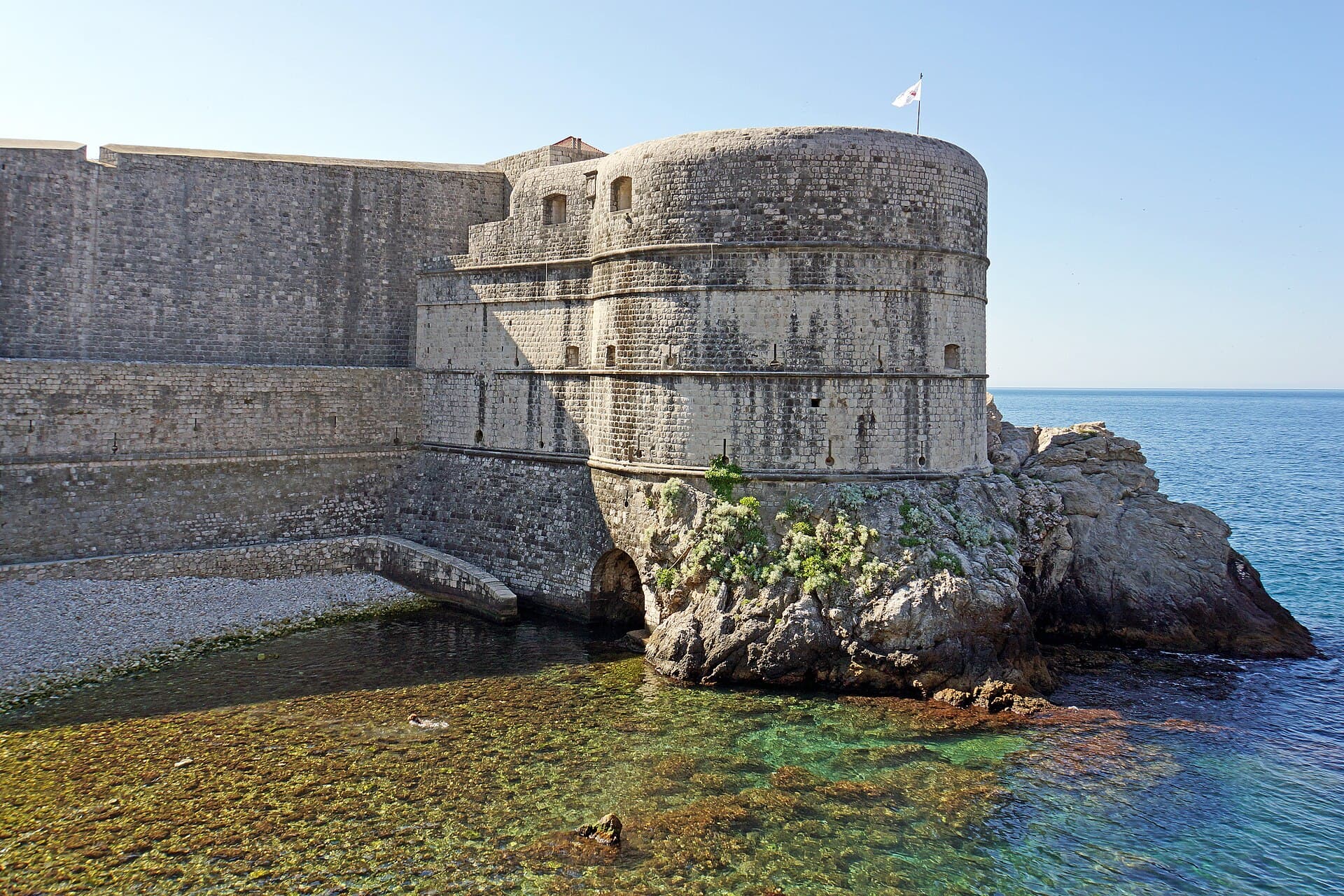 Bokar FortressA sea fortress at the western end of Dubrovnik's walls, standing on a rock proje3 minutes walk4.7
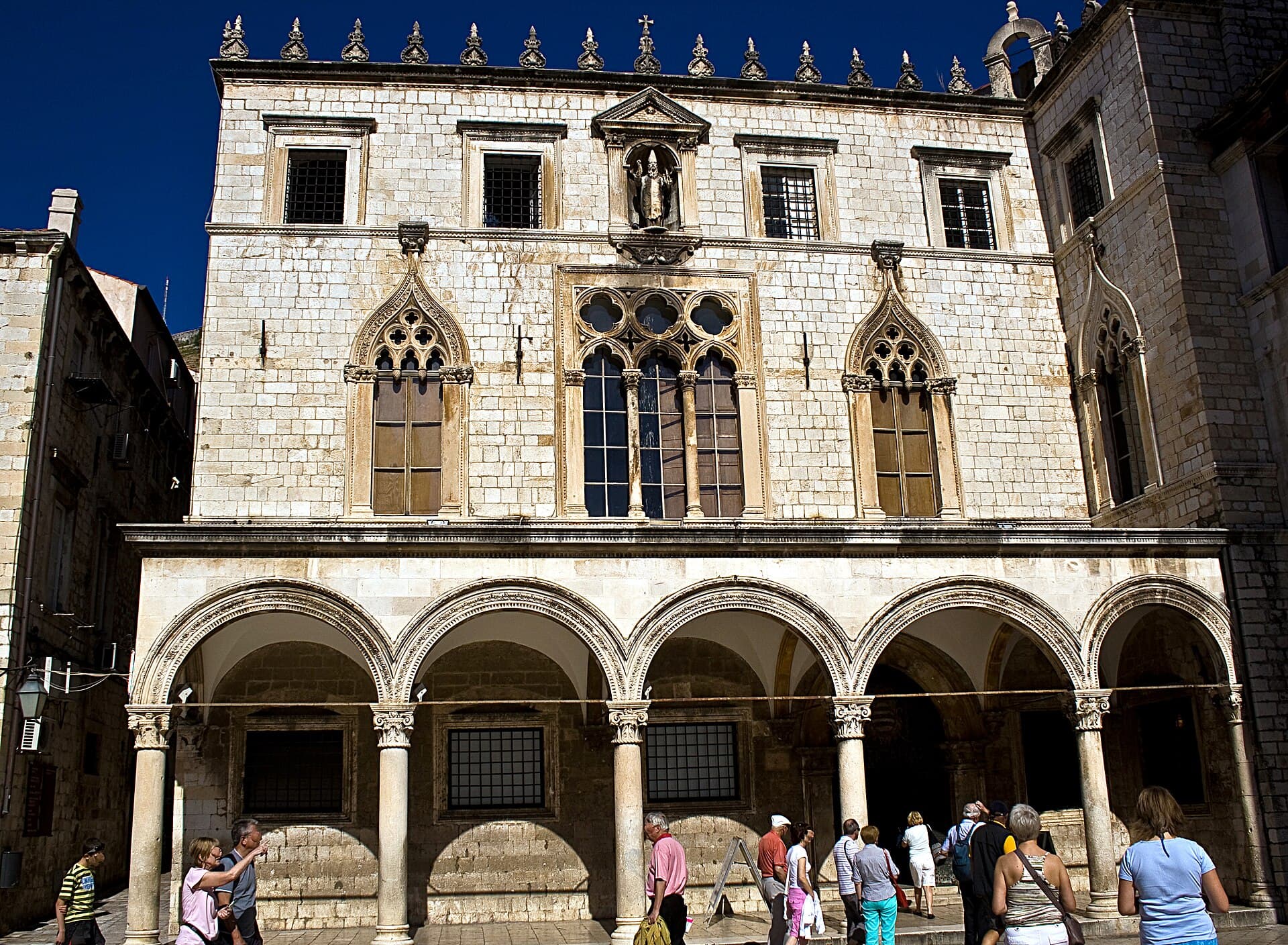 Sponza PalaceThe building that survived. When the **1667 earthquake** destroyed medieval Dubr3 minutes walk4.4
The war's map read in roofs: the bright new replaced what the 1991-92 siege shelling smashed (two-thirds of the town's buildings were hit) — the dark old is what survived. From the walls the visitor reads the whole story without a plaque — and the city restored itself to UNESCO standards until lovelier than before.
Three are ideal: walls-and-town day, Srđ-and-Lokrum day, and a sea day (the Elaphiti islands, or Montenegro's Kotor across the border) — heat dictating the southern rhythm: mornings and evenings active, middays swimming. July-August is the choking price peak: June and September the trip's gold.