
A sacred lecture hall
One open nave so that everyone sees the pulpit.
Lamiot — CC BY-SA 4.0 · Lamiot — CC BY-SA 4.0 · Lamiot — CC BY-SA 4.0 · Lamiot — CC BY-SA 4.0
A Jesuit church in old Nice, built in the seventeenth century and known locally as the Gesù after the mother church of the Jesuits in Rome. This is no coincidence: the Jesuits built their churches across Europe on the model of the Roman Il Gesù — a single wide nave without side aisles, chapels set into the walls, and an open space in which everyone present sees the pulpit clearly. The reason is functional: the Jesuit order rested on preaching and teaching, so the church is designed as a sacred lecture hall rather than a maze of aisles. The interior is covered in dense baroque stucco, angel figures, gilded relief and a painted ceiling — among the richest interiors in Nice, and a surprise to anyone entering from a modest front on a narrow lane. A working place of worship with normally free entry and limited hours.
One open nave so that everyone sees the pulpit.
Angels, gilded relief and a painted ceiling.
Giving no hint of what lies inside.
Old Nice, near Place Rossetti
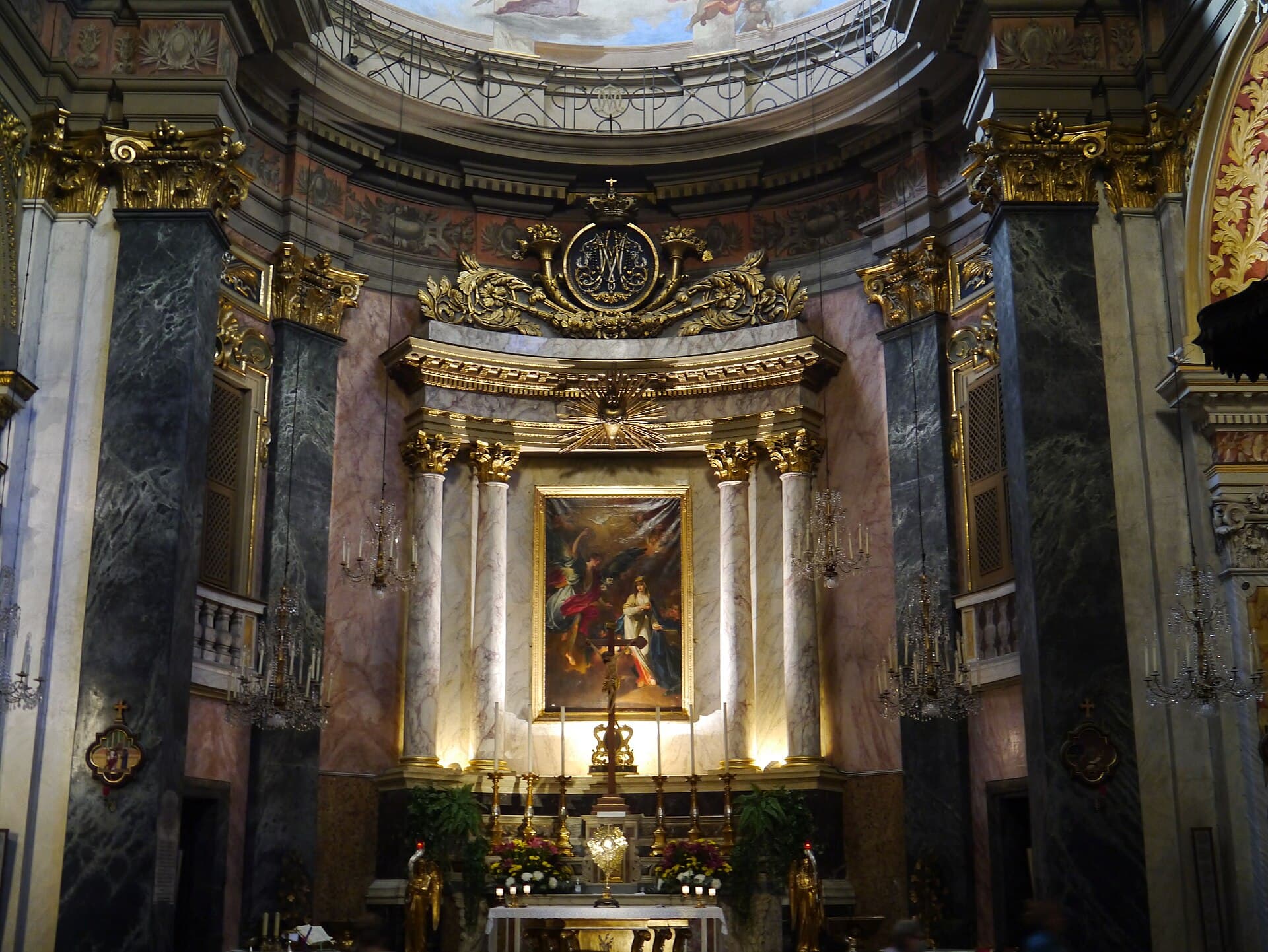 The Church of the AnnunciationThe oldest church in old Nice, known among residents as Santa Rita after Saint R1 minute walk4.9
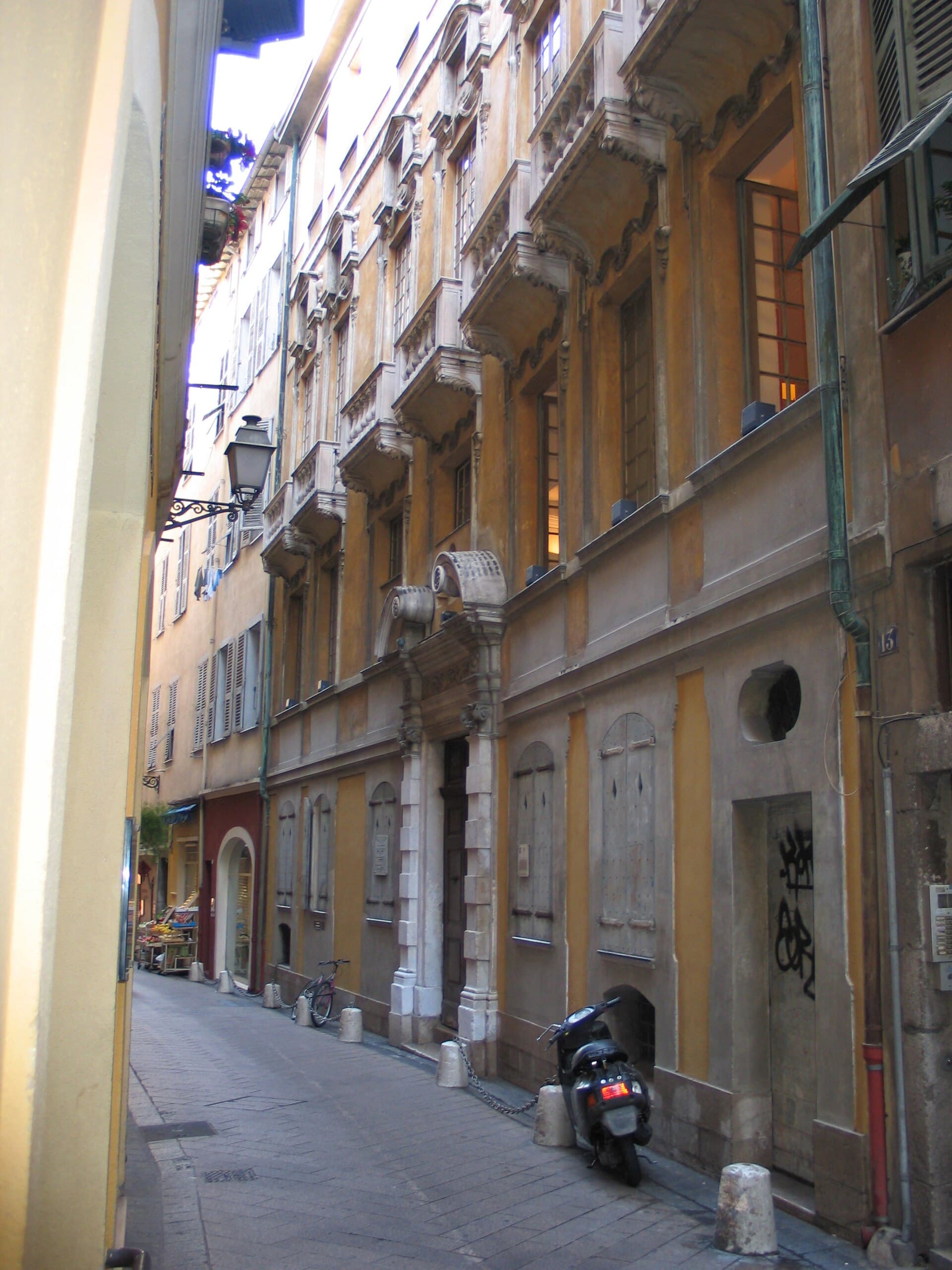 Palais LascarisThe Palais Lascaris hides in the narrowest lanes of old Nice: a façade that prom1 minute walk4.5
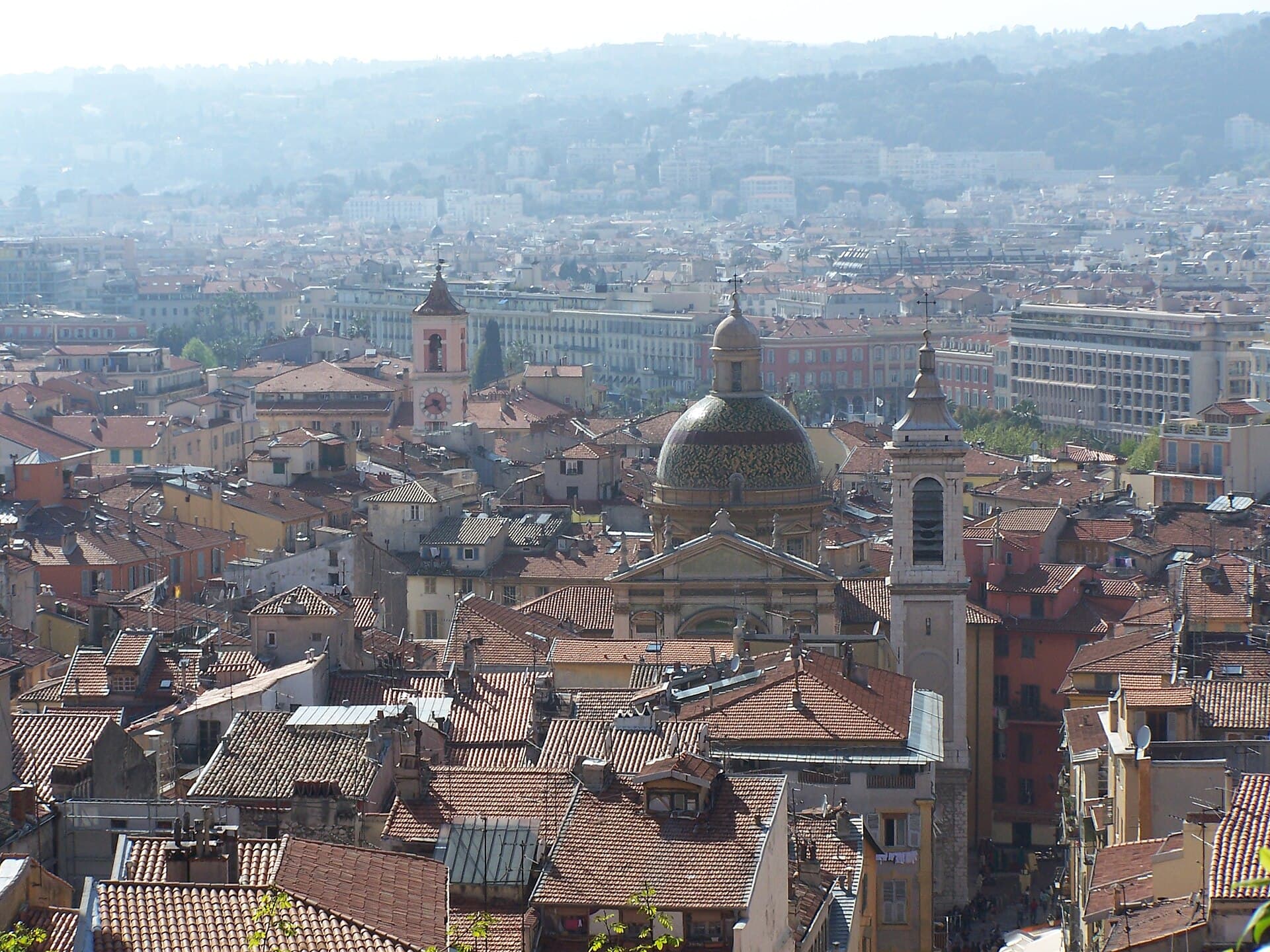 Old NiceOld Nice is the maze between the castle hill and the sea: a dense network of nar1 minute walk
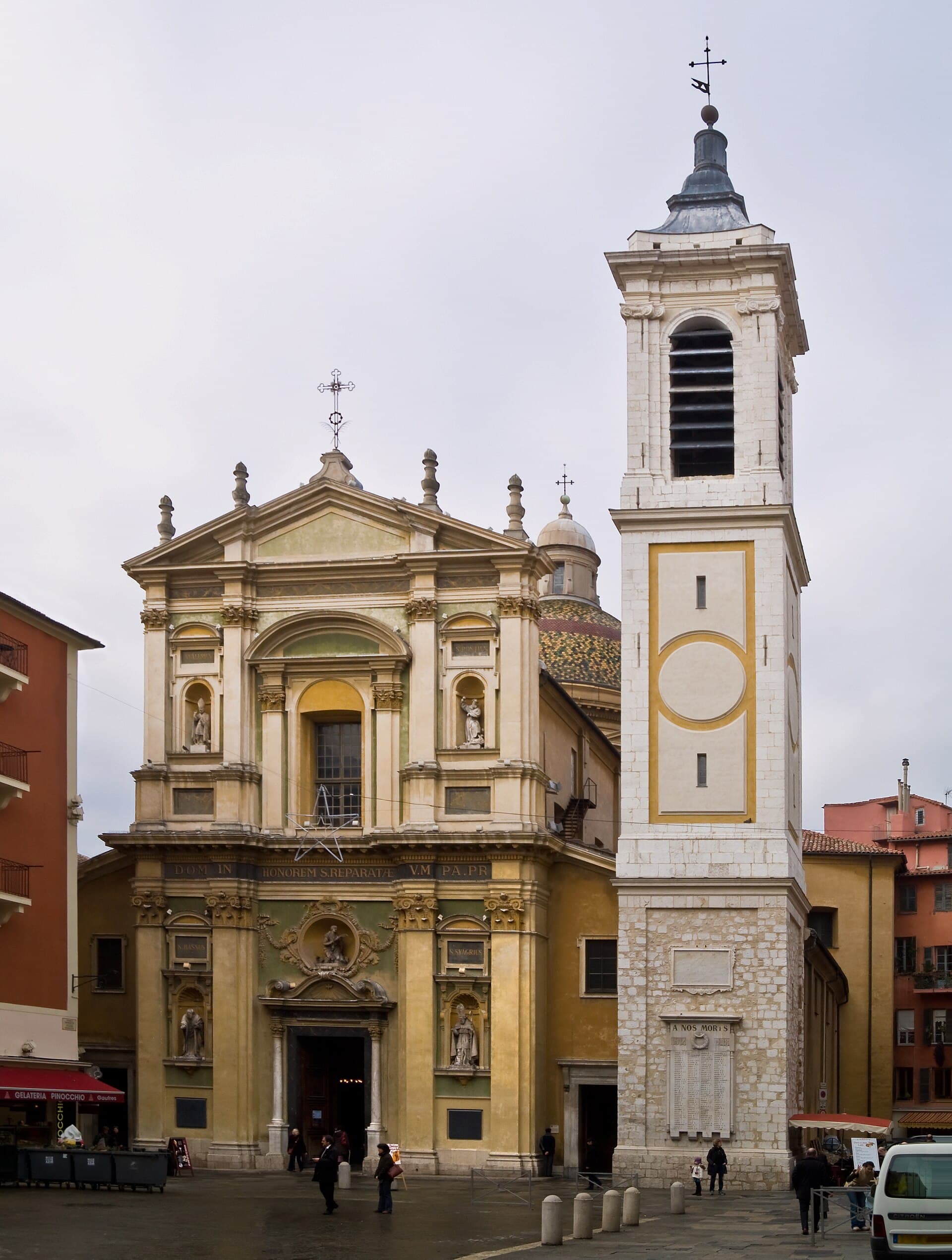 Cathédrale Sainte-RéparateIn old Nice's lane-maze, Place Rossetti opens suddenly onto a Baroque cathedral 2 minutes walk4.7
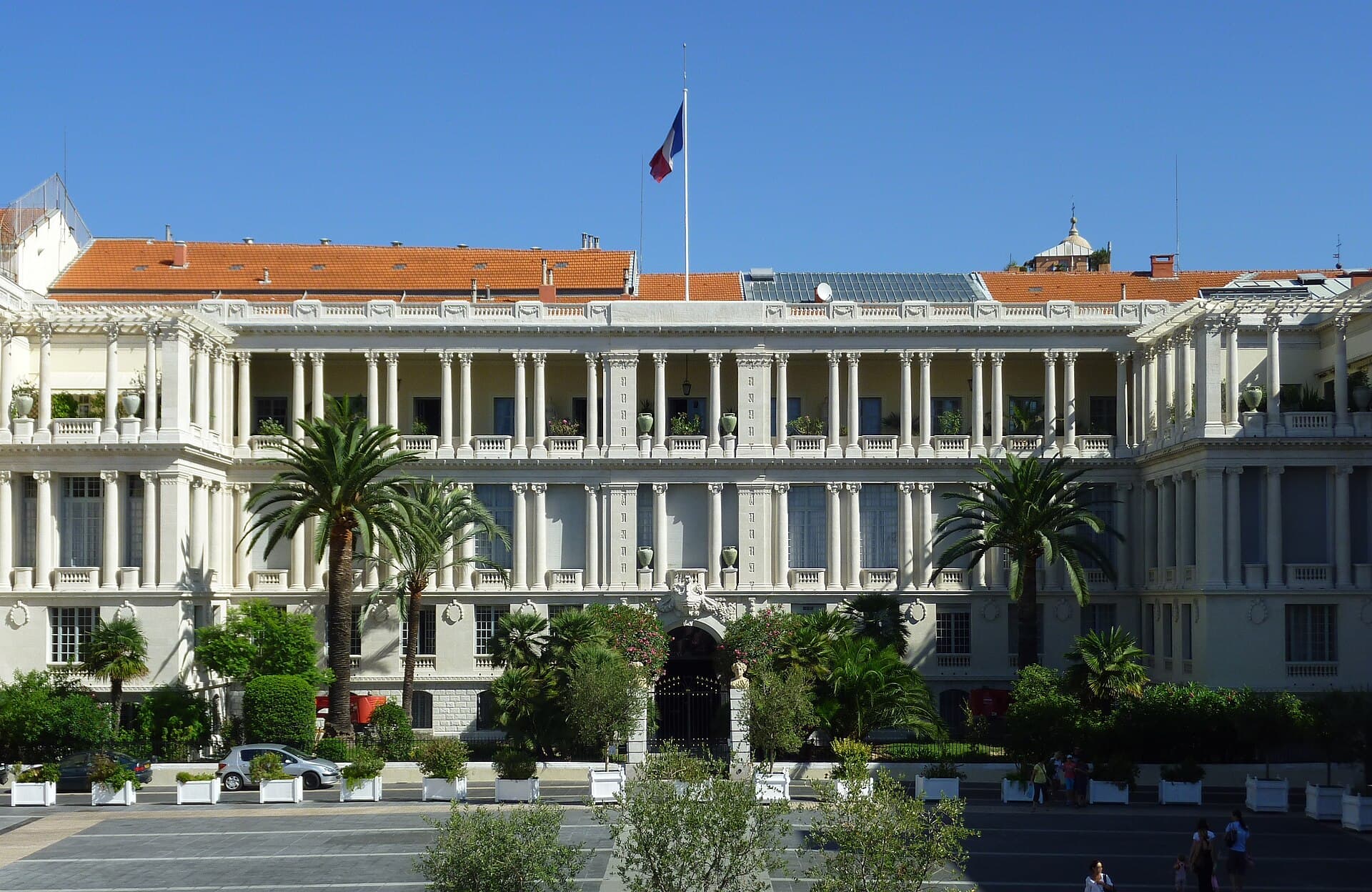 The Prefectoral PalaceA palace at the edge of old Nice, once the residence of the rulers of Savoy and 2 minutes walk4.6
A Catholic order founded by Ignatius of Loyola in 1540, distinguished from earlier orders by not withdrawing into monasteries but engaging with the world: teaching, mission and work at courts. It founded hundreds of schools and universities and became the largest educational network in the world of its time. The order was suppressed under political pressure in 1773 and restored in 1814. Its architecture followed its teaching and preaching function.
Sainte-Réparate cathedral on Place Rossetti with its coloured tiled dome — the most important in the old town. The Chapel of Mercy on the Cours Saleya. And the Église de l'Annonciation, the oldest church in the old town and the most used by residents. All are minutes apart on foot, and their hours are limited and different, so check each.