
The brick gate
A gate of 1550 buried inside the bastion, then found.
AnonymousUnknown author — Public domain · Bernardo Bellotto — Public domain · Herausgeber: Otto Richter (1852–1922) — Public domain · Lupus in Saxonia — CC BY-SA 4.0
Under the Bruehlsche Terrasse lie the surviving parts of Dresden's Renaissance fortifications. Work began in fifteen forty-six on the orders of Elector Moritz of Saxony, directed by Caspar Vogt von Wierandt and Melchior Trost, giving Dresden one of the earliest bastion-system fortresses in Germany rather than a medieval curtain wall. The brick gate went up around fifteen fifty and was then buried inside the structure when Paul Buchner extended the bastion eastwards between fifteen ninety and fifteen ninety-two. The vaults stayed sealed for centuries. Excavation began in nineteen ninety-one and a museum opened here in nineteen ninety-two. Since twenty nineteen the site has been presented under a new name and a new method: an audiovisual walk across roughly fifteen hundred square metres of cellar, with three-hundred-and-sixty-degree projections and three-dimensional sound delivered through a headset that knows where you are standing and changes as you move, in German or English. The route takes sixty to seventy-five minutes and ends at the original brick gate. A lift drops from the Bruehlsche Terrasse opposite the Lipsiusbau, which is the only comfortable way down. It stays cold underground all year, so carry a light jacket even in July. The show is dark and loud, is not recommended below the age of six, and does not work for blind or deaf visitors because the whole experience rests on sound and image.
A gate of 1550 buried inside the bastion, then found.
Drops straight from the terrace into the vaults.
Bruehlsche Terrasse / Terrassenufer, 01067 Dresden
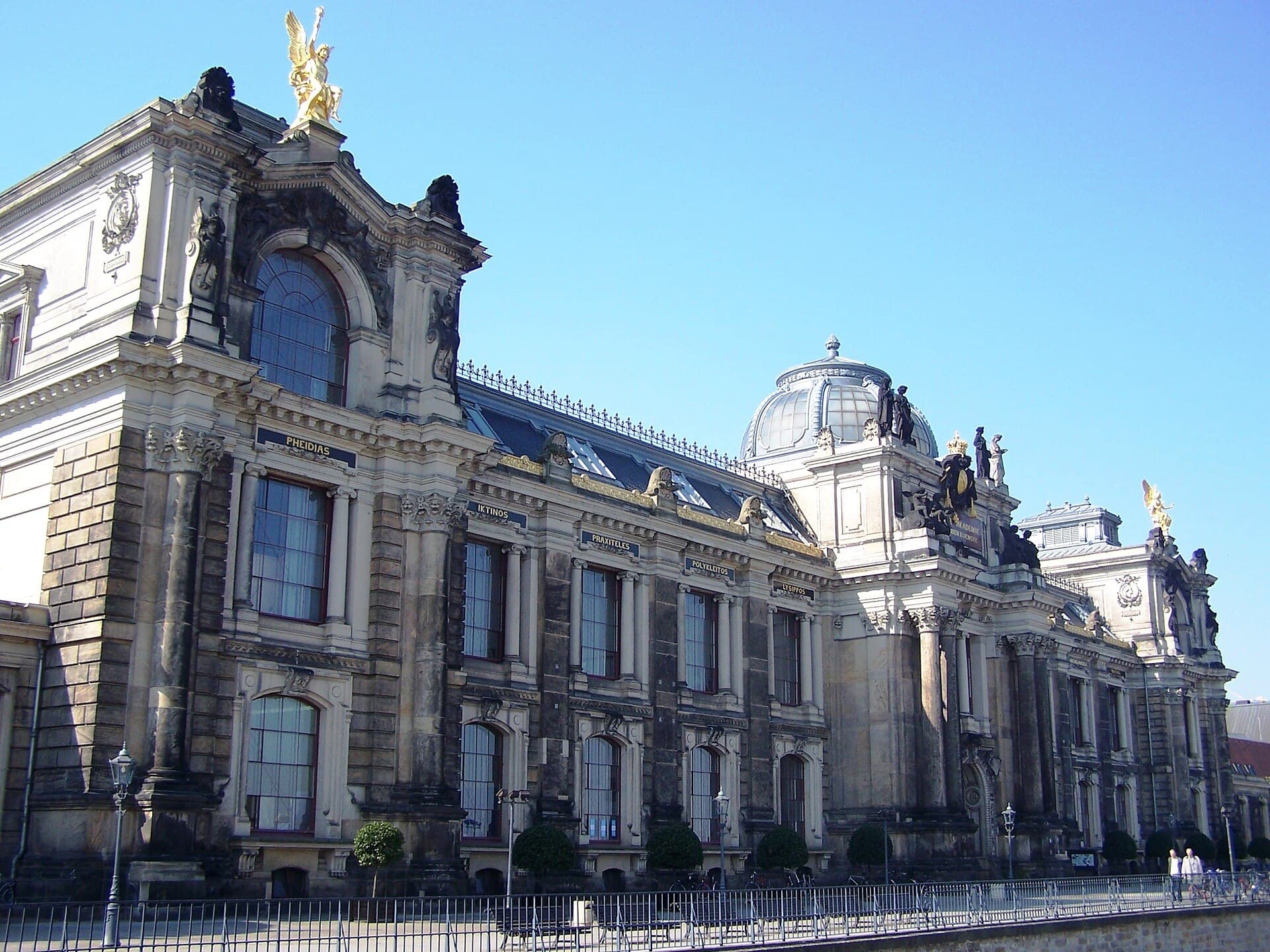 The Academy of Fine Arts and the Lipsius BuildingThe great mass closing the eastern end of Brühl's Terrace is the Academy of Fine1 minute walk4.5
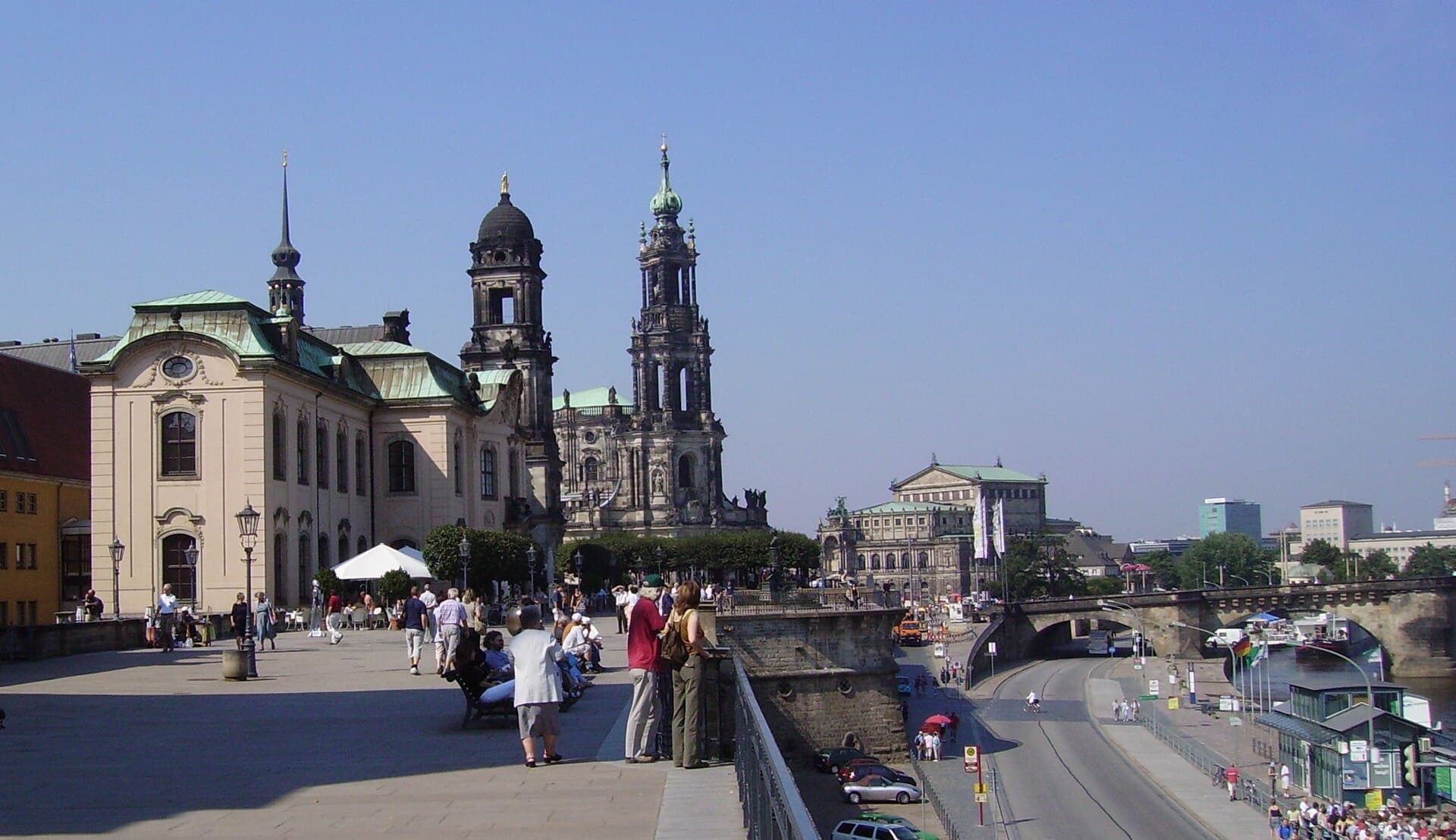 Brühl's TerraceBrühl's Terrace is a raised promenade above the river Elbe in the heart of old D1 minute walk4.8
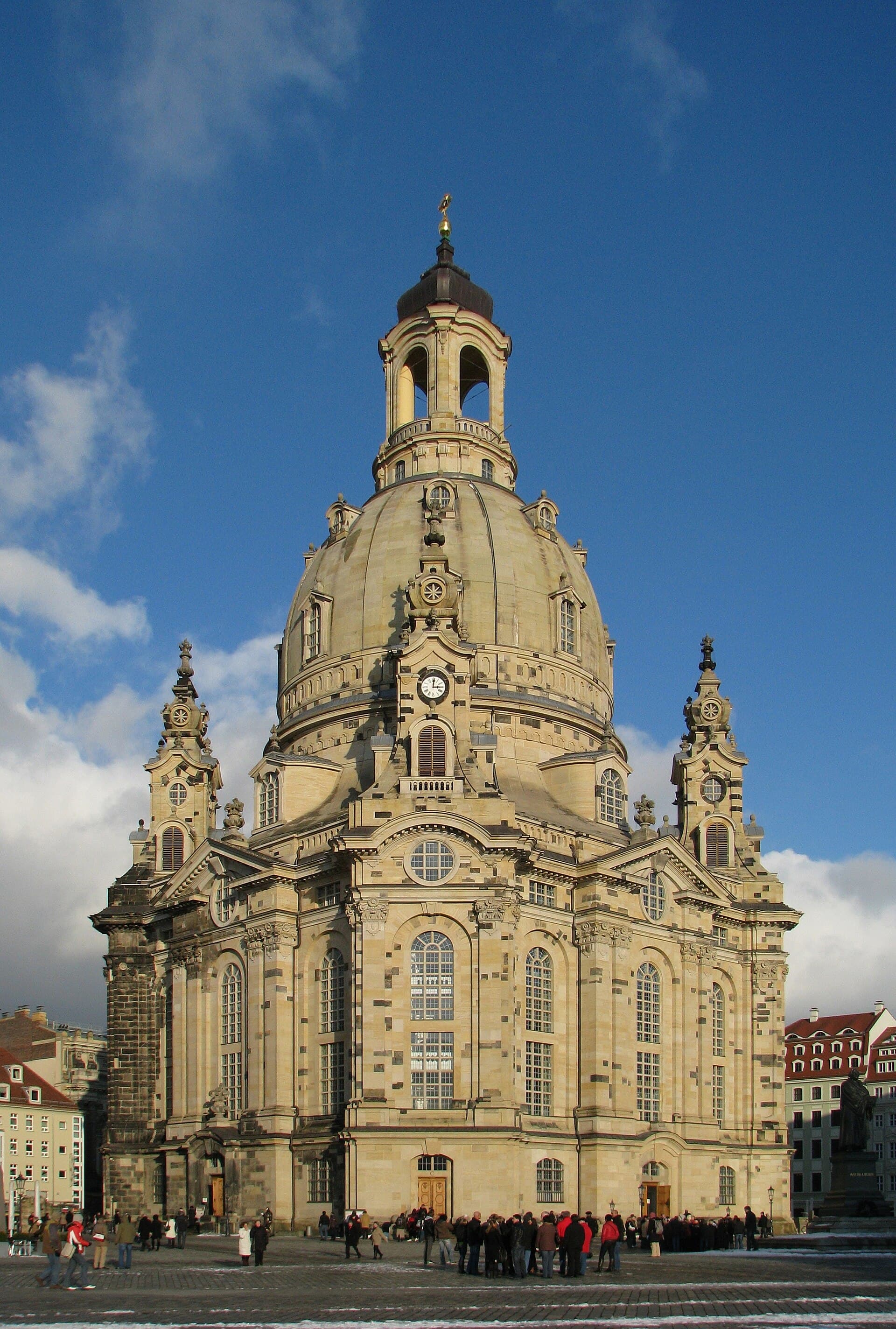 Frauenkirche DresdenThe Frauenkirche is Dresden's most important and most symbolic building. Built i2 minutes walk4.7
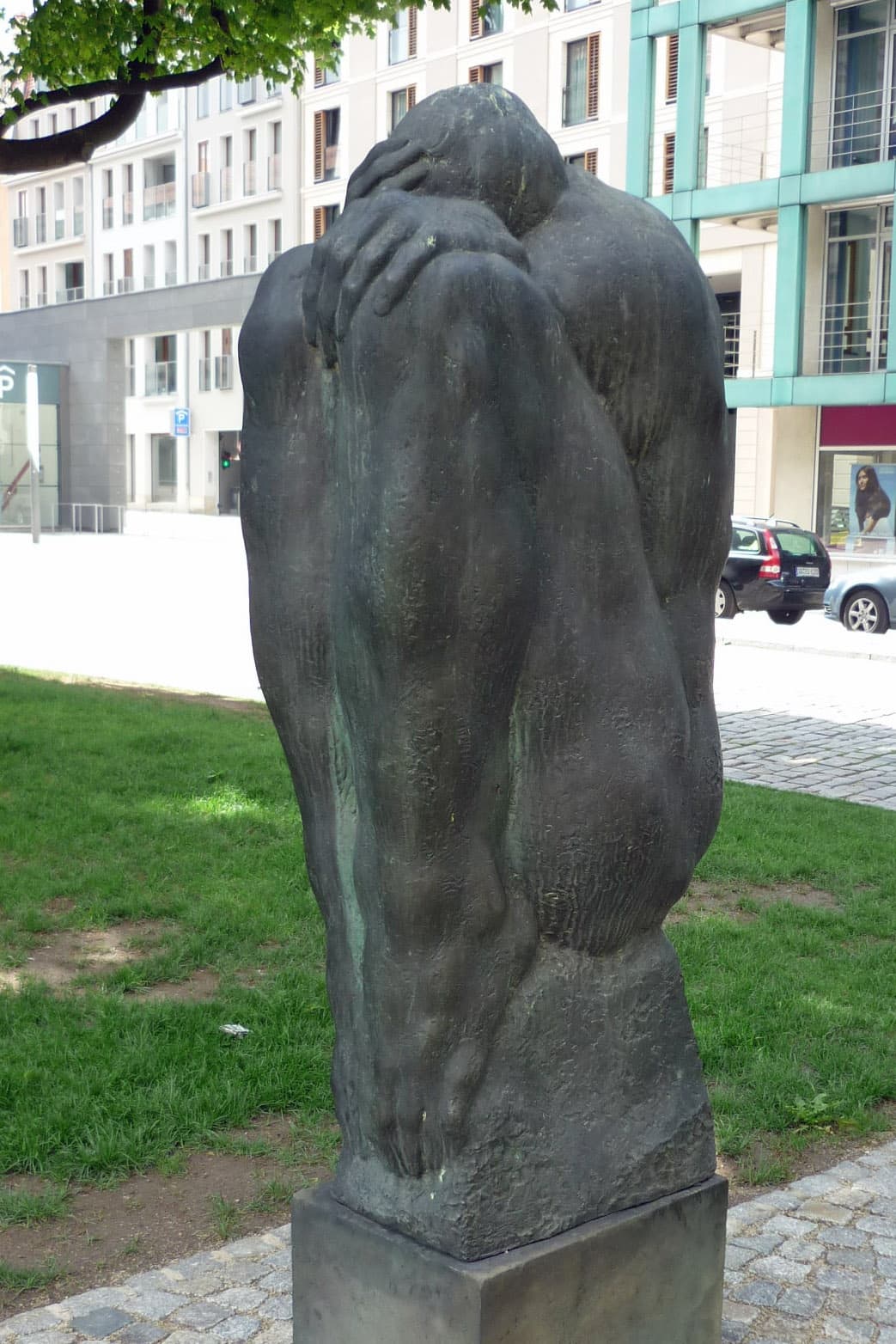 The Large Grieving ManA sculpture of a seated man with a bowed back in central Dresden, by the German 2 minutes walk4.3
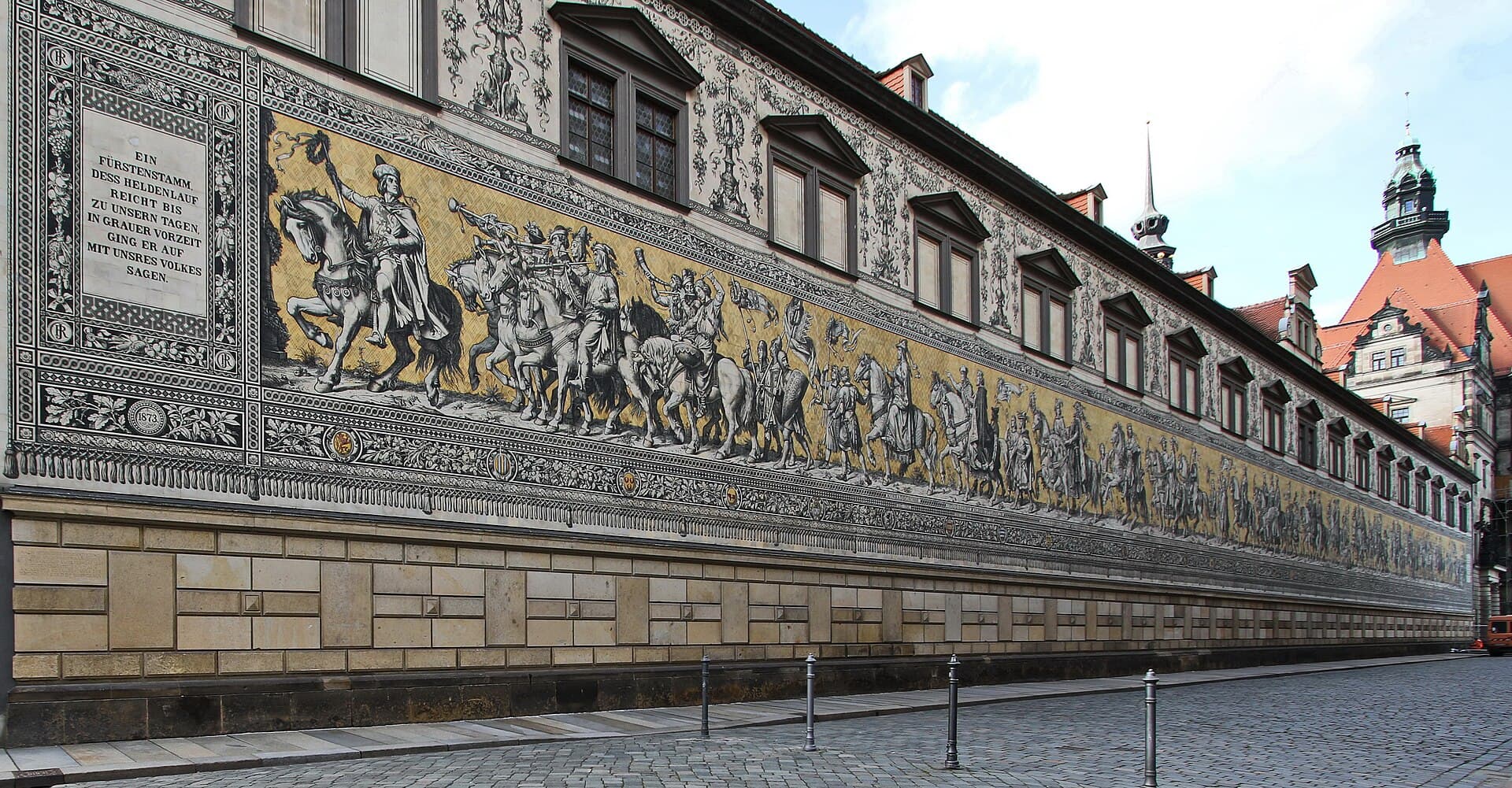 FürstenzugThe Fürstenzug is a huge mural on a wall along Augustusstraße, one hundred and t2 minutes walk4.7
A media show inside a genuine monument. The vaults and walls are original sixteenth-century work, but what you see and hear is projection and engineered sound. Anyone hoping for bare stone and written panels may feel they have bought a cinema ticket, so know that before you pay.