
The Fama figure
The gilded goddess of renown atop the dome.
X-Weinzar — CC BY-SA 2.5 · Lina.foe — CC BY-SA 4.0 · Rüdiger Stehn from Kiel, Deutschland — CC BY-SA 2.0 · Rüdiger Stehn from Kiel, Deutschland — CC BY-SA 2.0
The great mass closing the eastern end of Brühl's Terrace is the Academy of Fine Arts, built by the architect Constantin Lipsius between 1887 and 1894 in a neo-baroque manner heavy with ornament and sculpture — the most distinctive thing in Dresden's skyline after the church domes. Its best-known element is the faceted glass dome over the exhibition hall, topped by a gilded figure of Fama, the goddess of renown. The dome's odd shape earned it a popular Dresden nickname, the lemon squeezer, which locals use more often than the official name. The academy's history weighs more than its building: Caspar David Friedrich taught here, and Otto Dix and Gerhard Richter studied here — the latter leaving for the West months before the Wall went up. The building is a working teaching institution and is not open to wander, but the Kunsthalle in the Lipsius wing hosts ticketed temporary exhibitions, and the facade and dome are free for anyone to see from the terrace.
The gilded goddess of renown atop the dome.
Dresden's most distinctive skyline after the domes.
Brühlsche Terrasse 1, 01067 Dresden
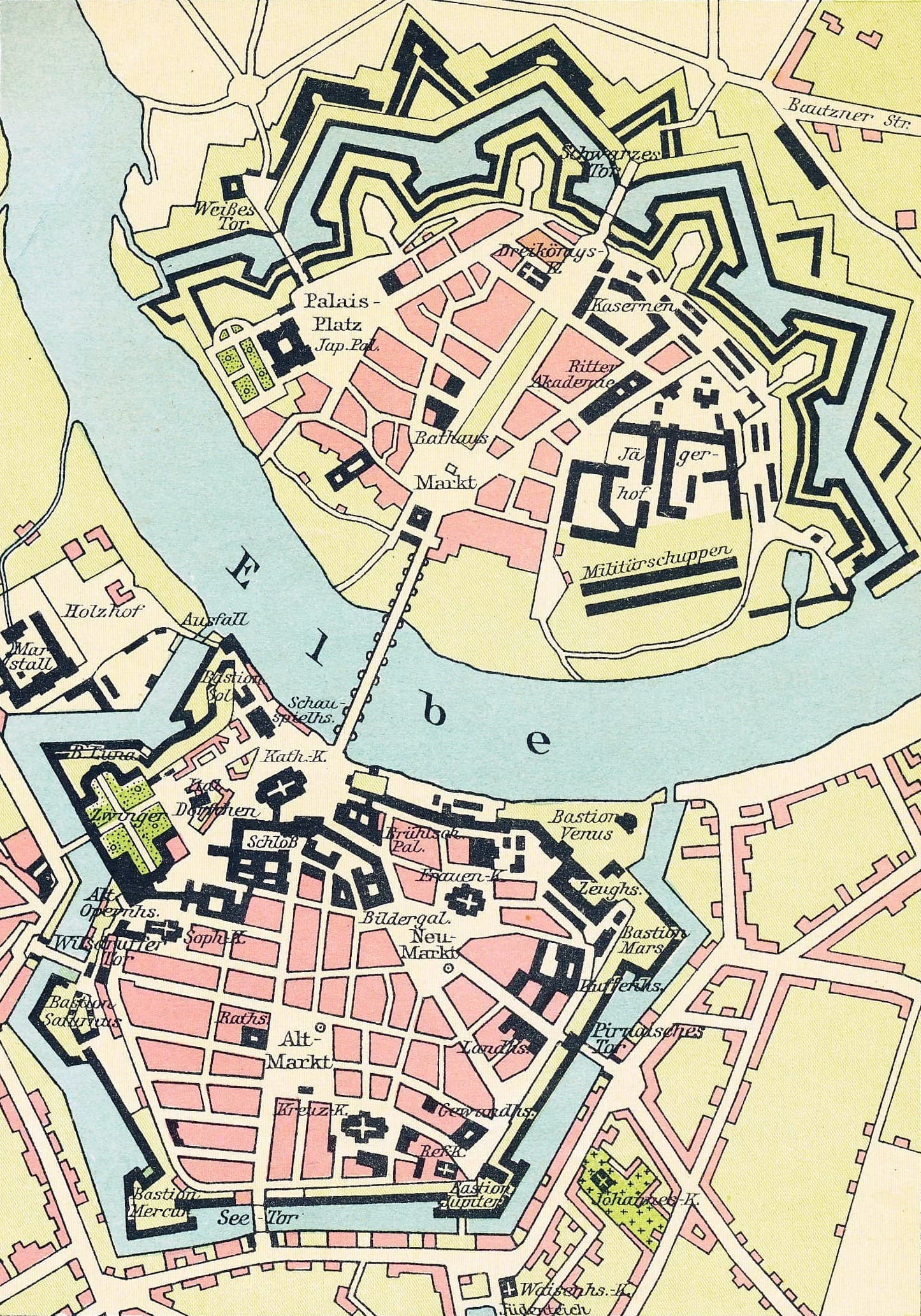 Fortress DresdenUnder the Bruehlsche Terrasse lie the surviving parts of Dresden's Renaissance f1 minute walk4.5
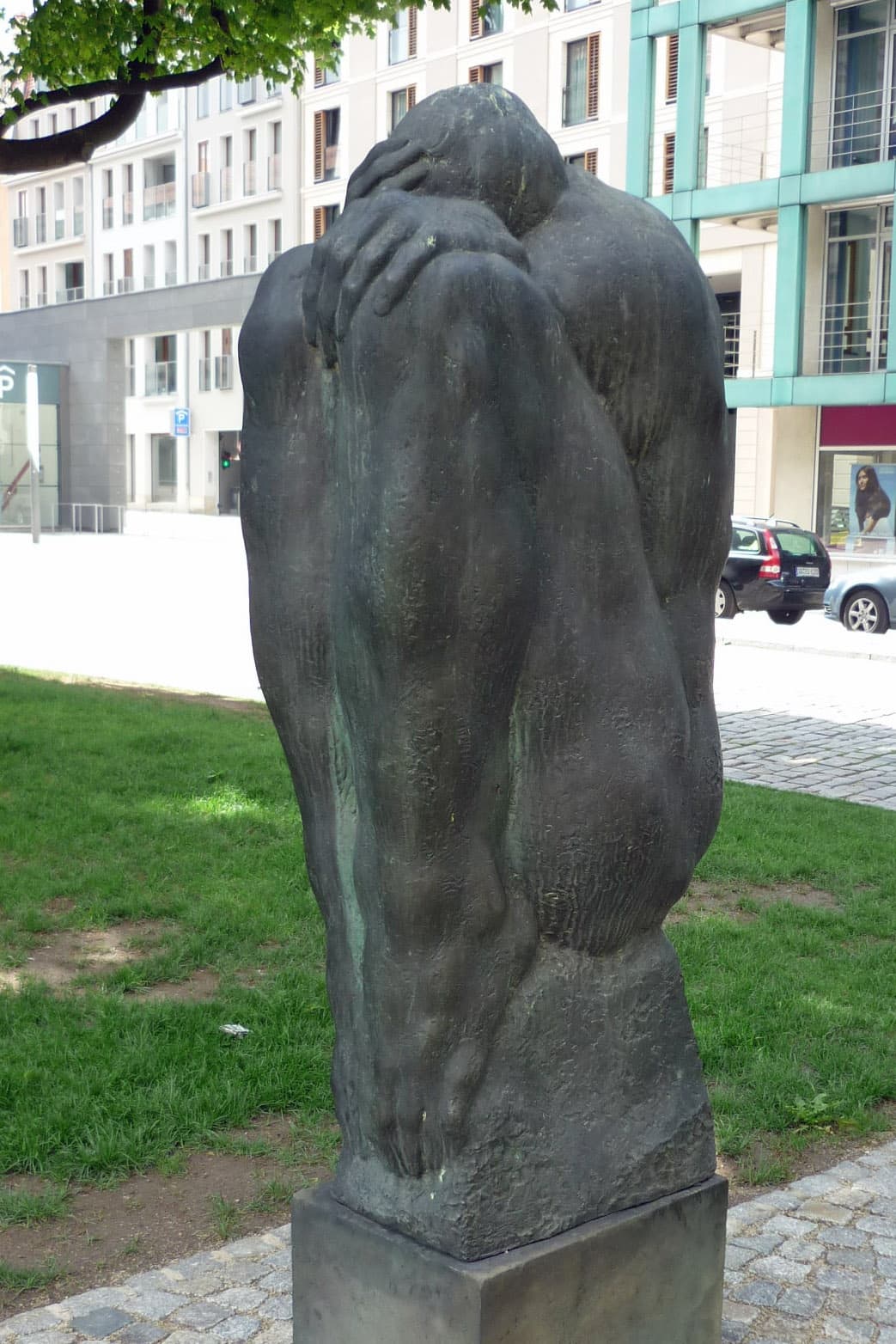 The Large Grieving ManA sculpture of a seated man with a bowed back in central Dresden, by the German 1 minute walk4.3
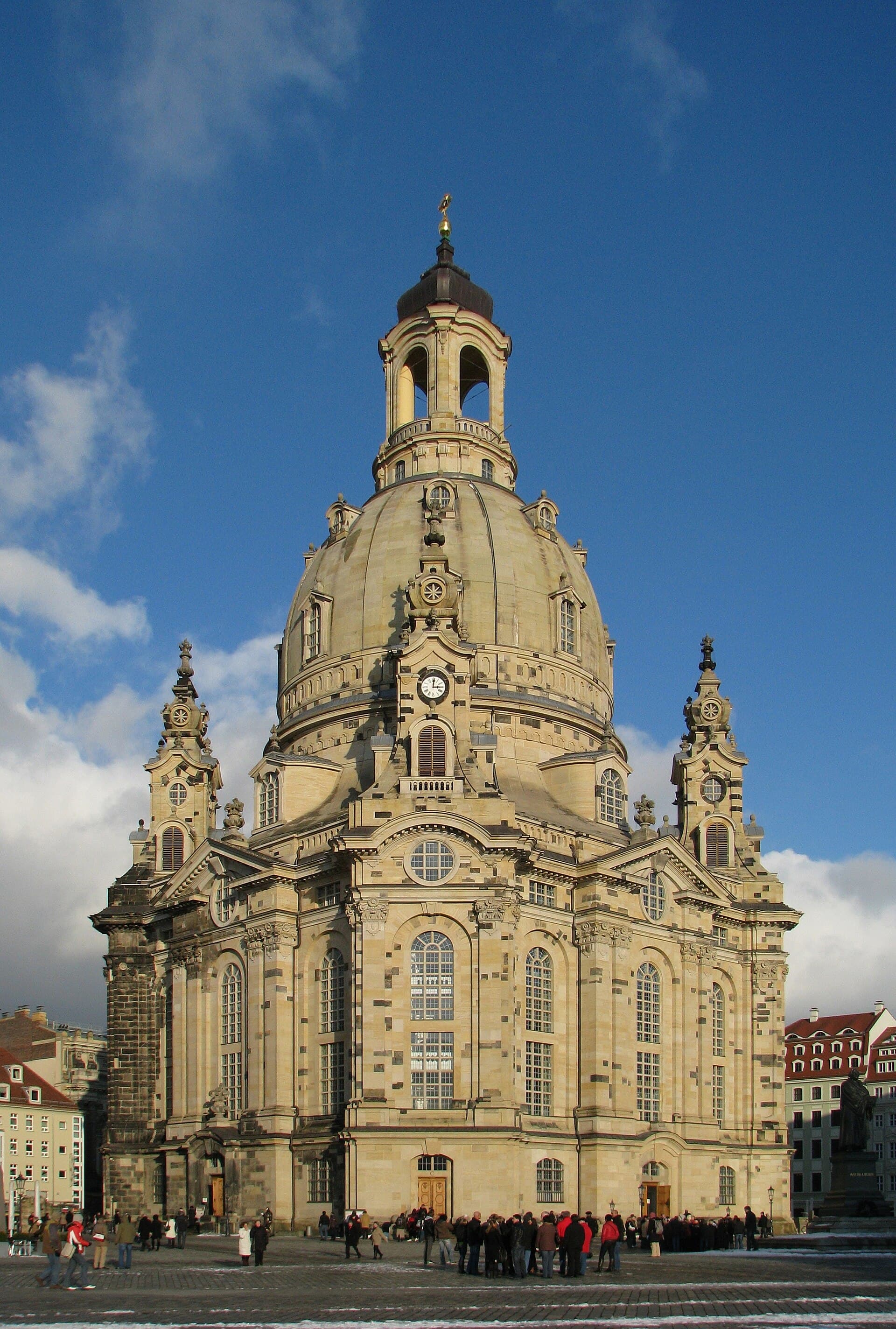 Frauenkirche DresdenThe Frauenkirche is Dresden's most important and most symbolic building. Built i1 minute walk4.7
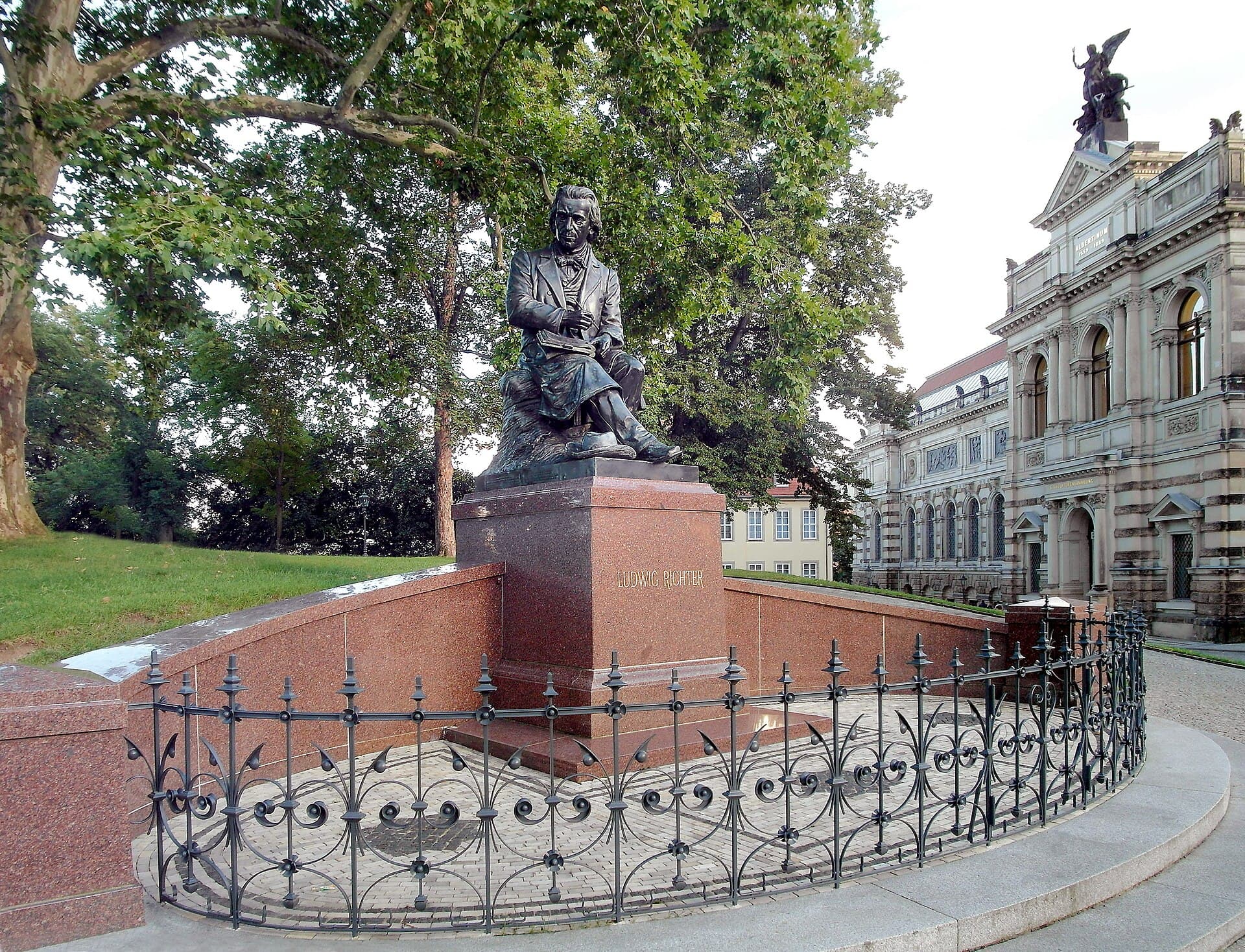 The Ludwig Richter MonumentA late nineteenth-century monument to the German painter and engraver Ludwig Ric2 minutes walk4.9
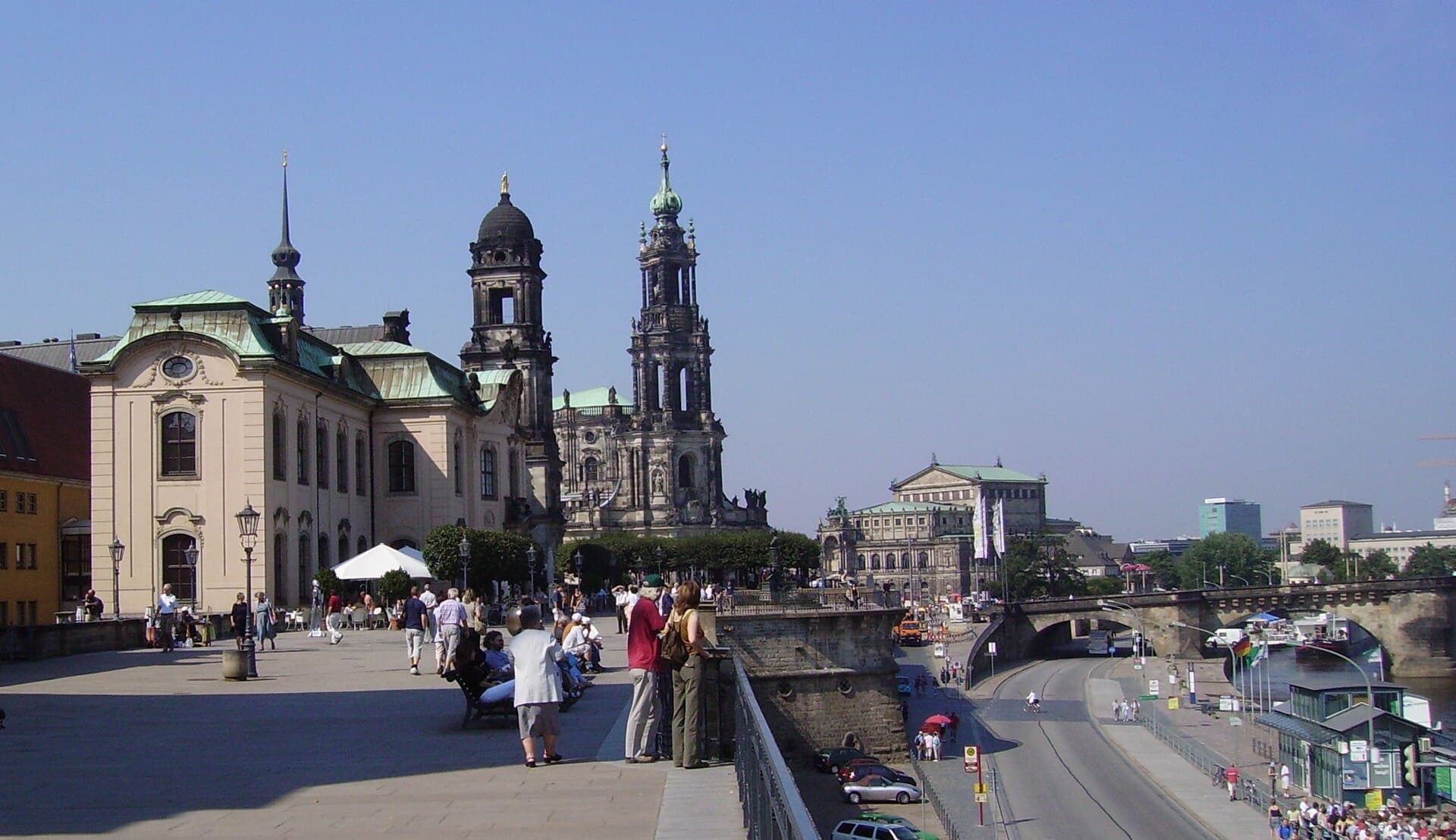 Brühl's TerraceBrühl's Terrace is a raised promenade above the river Elbe in the heart of old D2 minutes walk4.8
From the opposite bank in the Neustadt, along the Elbe between the Augustus and Carola bridges — from there the dome appears within the full skyline with the Frauenkirche and the Residenzschloss, and it is precisely the angle Canaletto painted in the eighteenth century, known locally as the Canaletto view. The best time is before sunset, when the light rakes across the sandstone.