
Weighted bodies
Elongation and thinning make the body appear to carry an invisible weight.
A sculpture of a seated man with a bowed back in central Dresden, by the German sculptor Wilhelm Lehmbruck, and a work of early German expressionism. Lehmbruck worked before and during the First World War, and his manner rests on elongating and thinning bodies until they appear weighted by something invisible. The Grieving Man belongs to a series he made after working in a military hospital during the war and seeing the wounded and the dying at close range. That context is necessary to reading the work: German expressionism was not an optional aesthetic style but a response to a real collapse, which is why the Nazi regime later classified it as degenerate art and removed such works from museums. Lehmbruck himself died by suicide in 1919. The work's presence in Dresden carries additional weight: a city almost entirely destroyed in the bombing of 1945 displaying a sculpture about grief from an earlier war. Practical points: free and always open in public space. The visit is minutes on a walk through the centre.
Elongation and thinning make the body appear to carry an invisible weight.
German expressionism came from a real collapse, not an aesthetic choice.
The Nazi regime removed works of this school from the museums.
Central Dresden
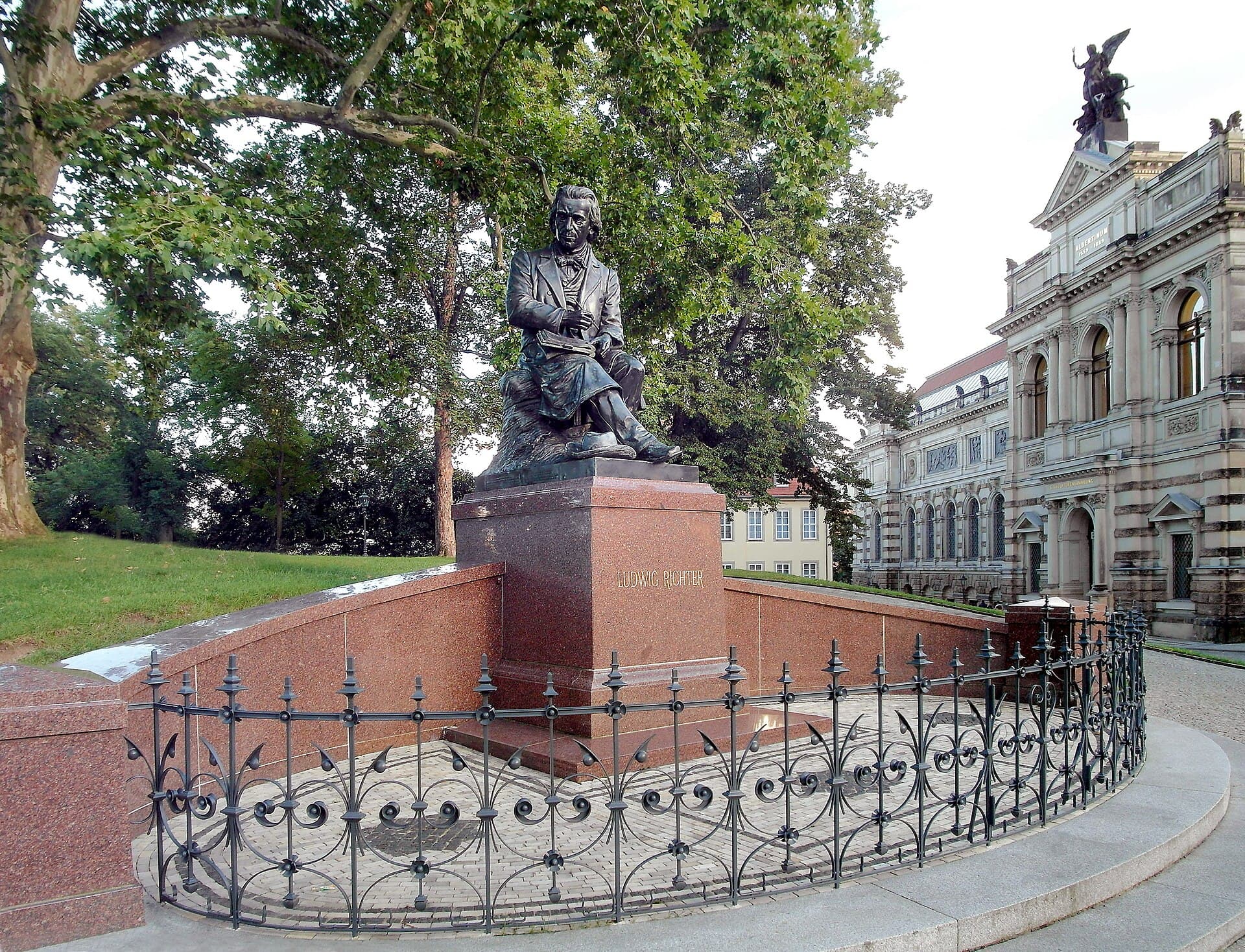 The Ludwig Richter MonumentA late nineteenth-century monument to the German painter and engraver Ludwig Ric1 minute walk4.9
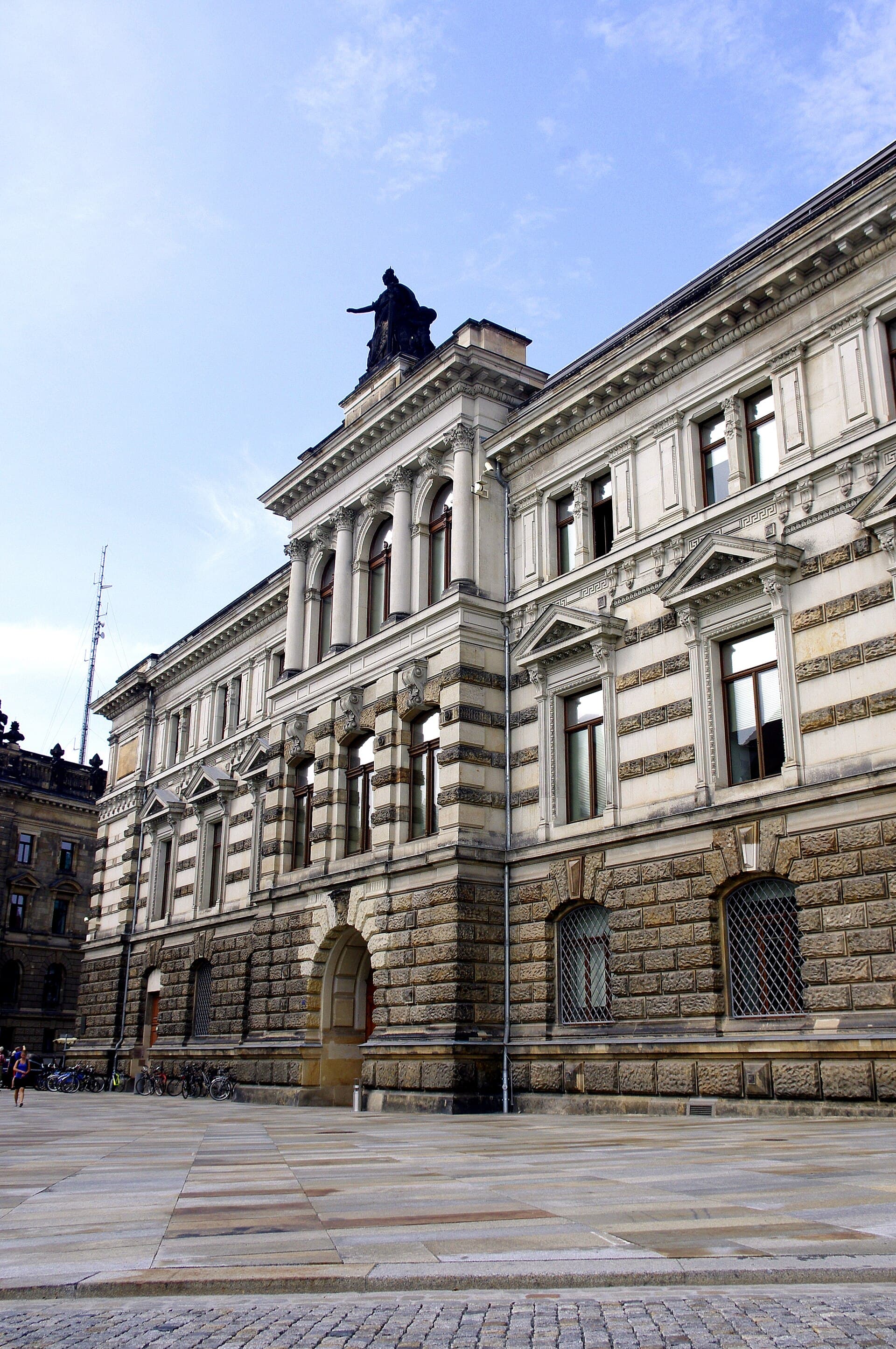 AlbertinumThe Albertinum is a large late nineteenth-century building at the end of the Brü1 minute walk4.5
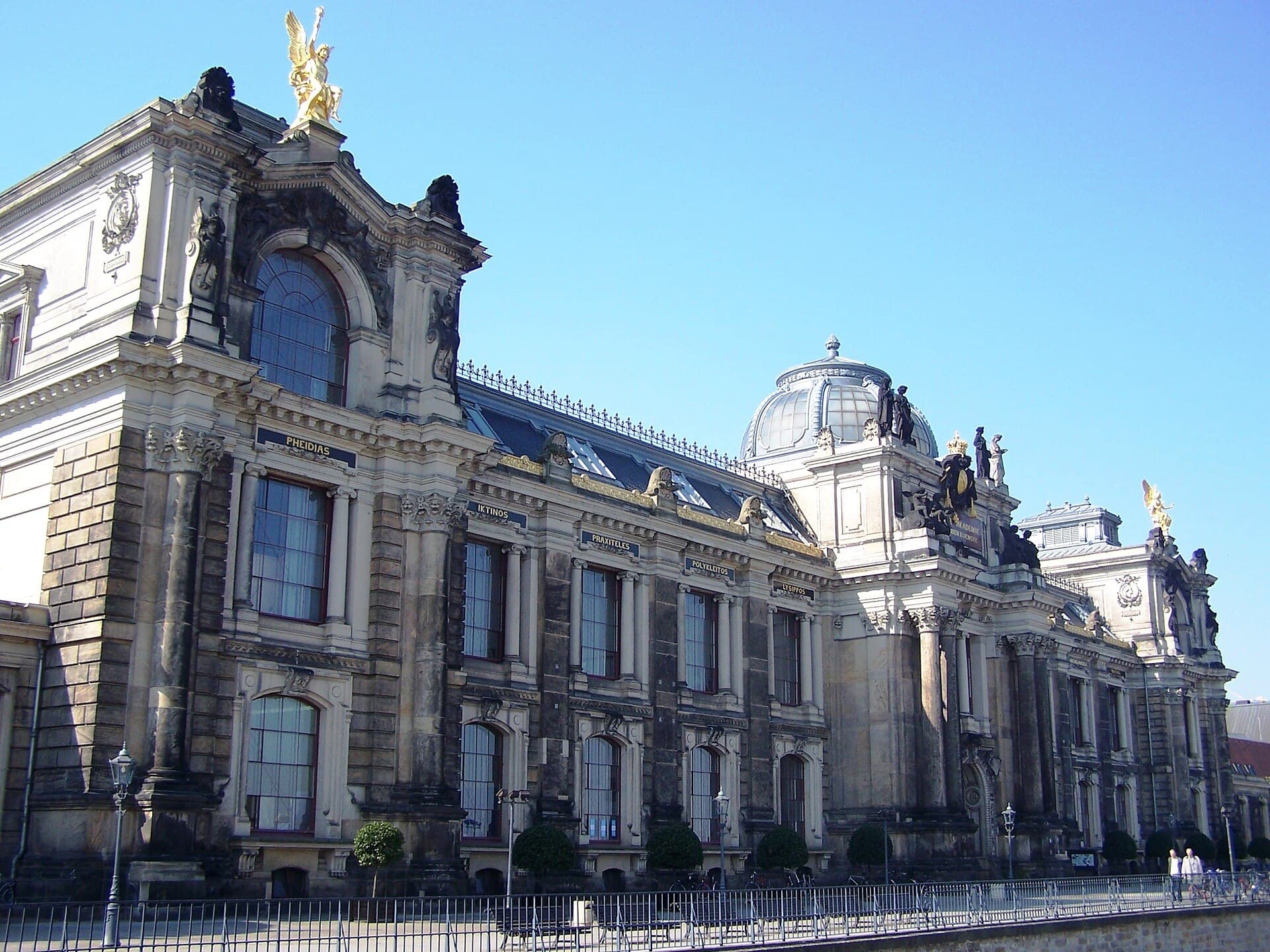 The Academy of Fine Arts and the Lipsius BuildingThe great mass closing the eastern end of Brühl's Terrace is the Academy of Fine1 minute walk4.5
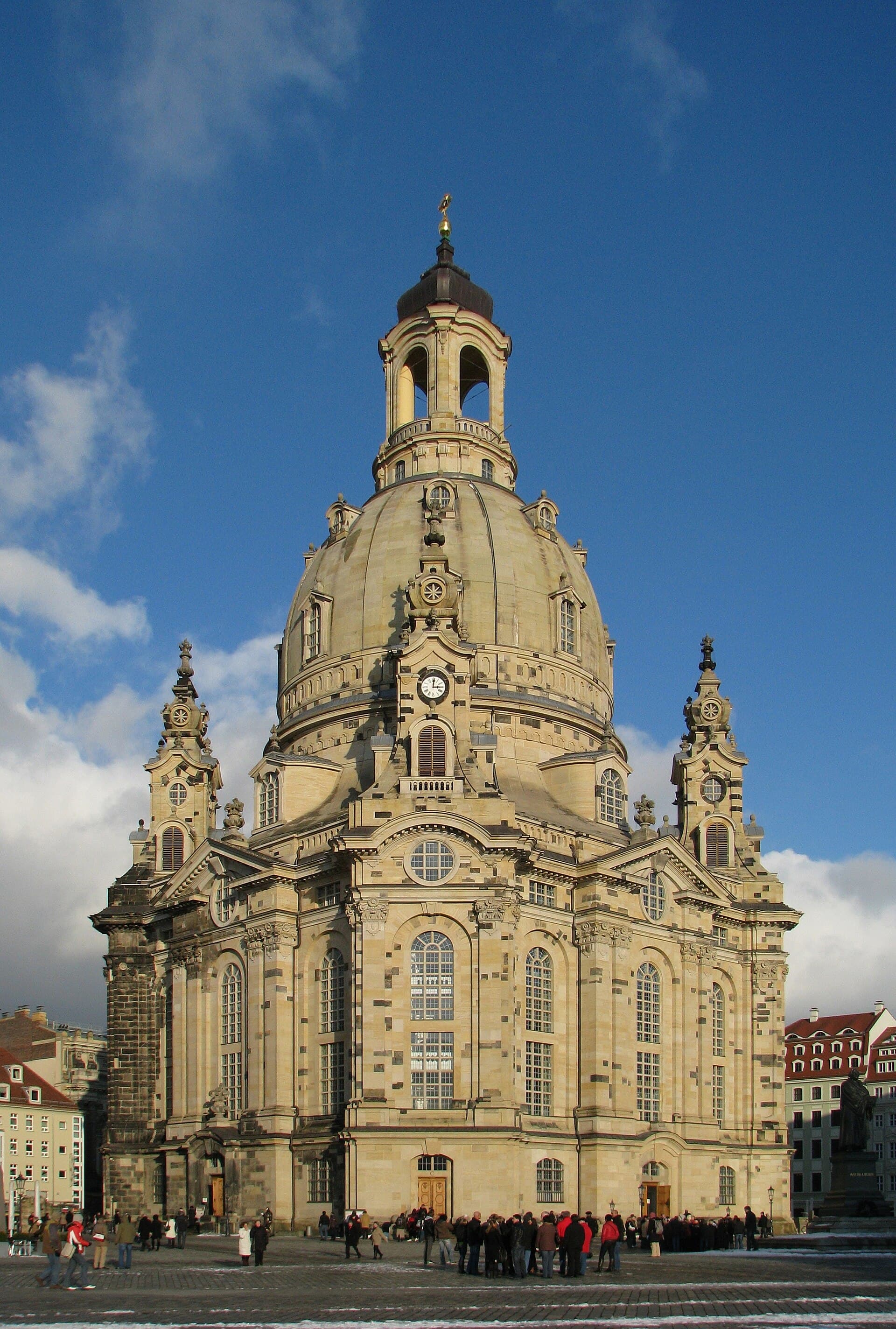 Frauenkirche DresdenThe Frauenkirche is Dresden's most important and most symbolic building. Built i2 minutes walk4.7
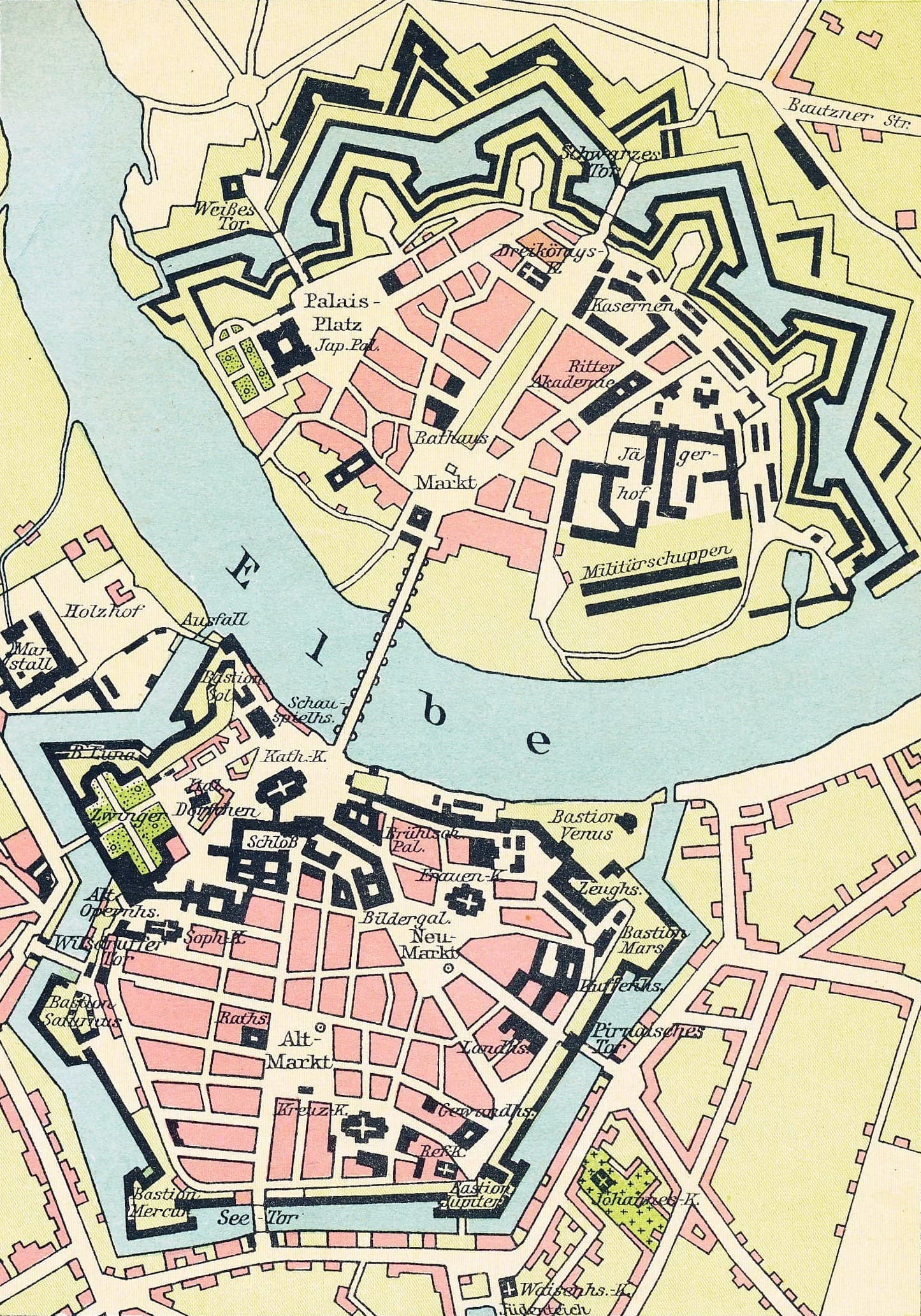 Fortress DresdenUnder the Bruehlsche Terrasse lie the surviving parts of Dresden's Renaissance f2 minutes walk4.5
A movement in art, literature, theatre and film that arose in Germany before the First World War and peaked in the 1920s. Its core is the deliberate distortion of form to convey an inner state rather than represent what is seen — harsh colour, elongated bodies, tilted angles. In cinema it produced films such as The Cabinet of Dr Caligari and Metropolis. The Nazi regime ended it by classifying it degenerate art, confiscating the works and driving its artists into exile or silence.
The Albertinum holds the Galerie Neue Meister with work from the nineteenth century to the present, including expressionist pieces. Dresden itself was the birthplace of Die Brücke, the first German expressionist group, founded here in 1905 — which makes the city central to the movement's history rather than incidental to it.