
From pride to silence
The succession of memorials in German towns reads the whole twentieth century.
Photo: Andreas Praefcke — CC BY 3.0 · Walter Giolda, Erlangen — CC BY-SA 4.0 · Tilman2007 — CC BY-SA 4.0 · Tilman2007 — CC BY-SA 4.0
A war memorial in a quiet corner of Nuremberg's old town, raised after the Franco-Prussian War of 1871 to the city's fallen soldiers. This kind of monument stands in almost every German town, and visitors rarely notice it. But reading it reveals something: it was raised in a moment of victory and unification, and its wording is celebratory — the soldiers died for a fatherland just born. Half a century later, names from the First World War would be added to comparable monuments in entirely different language, and thirty years after that, names from a war for which nobody could find any language at all. Walking a German town and noticing this succession of memorials gives a reading of the whole century that museums do not: the passage from pride to mourning to silence. The monument itself is small and plain and needs no more than a short stop. It stands in a side corner of the old town, away from the usual tourist route despite being close to it.
The succession of memorials in German towns reads the whole twentieth century.
Raised when war was still framed as the birth of a nation rather than a loss.
Close to the centre, but few people pass it.
Köpfleinsberg, the old town
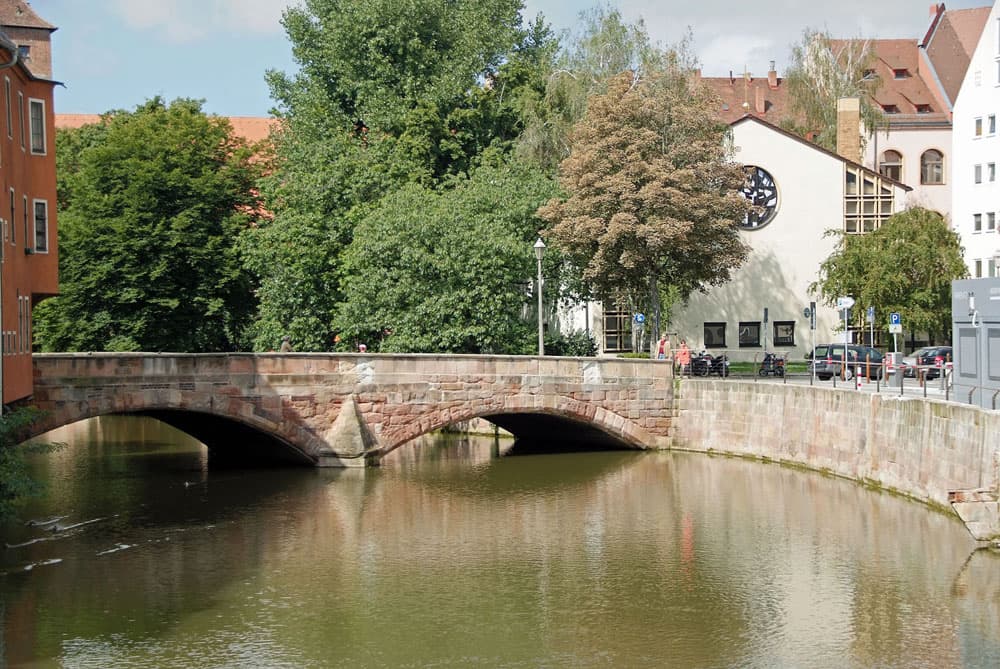 The KarlsbrückeA stone bridge over the Pegnitz in Nuremberg's old town, built in 1728 and named1 minute walk4.8
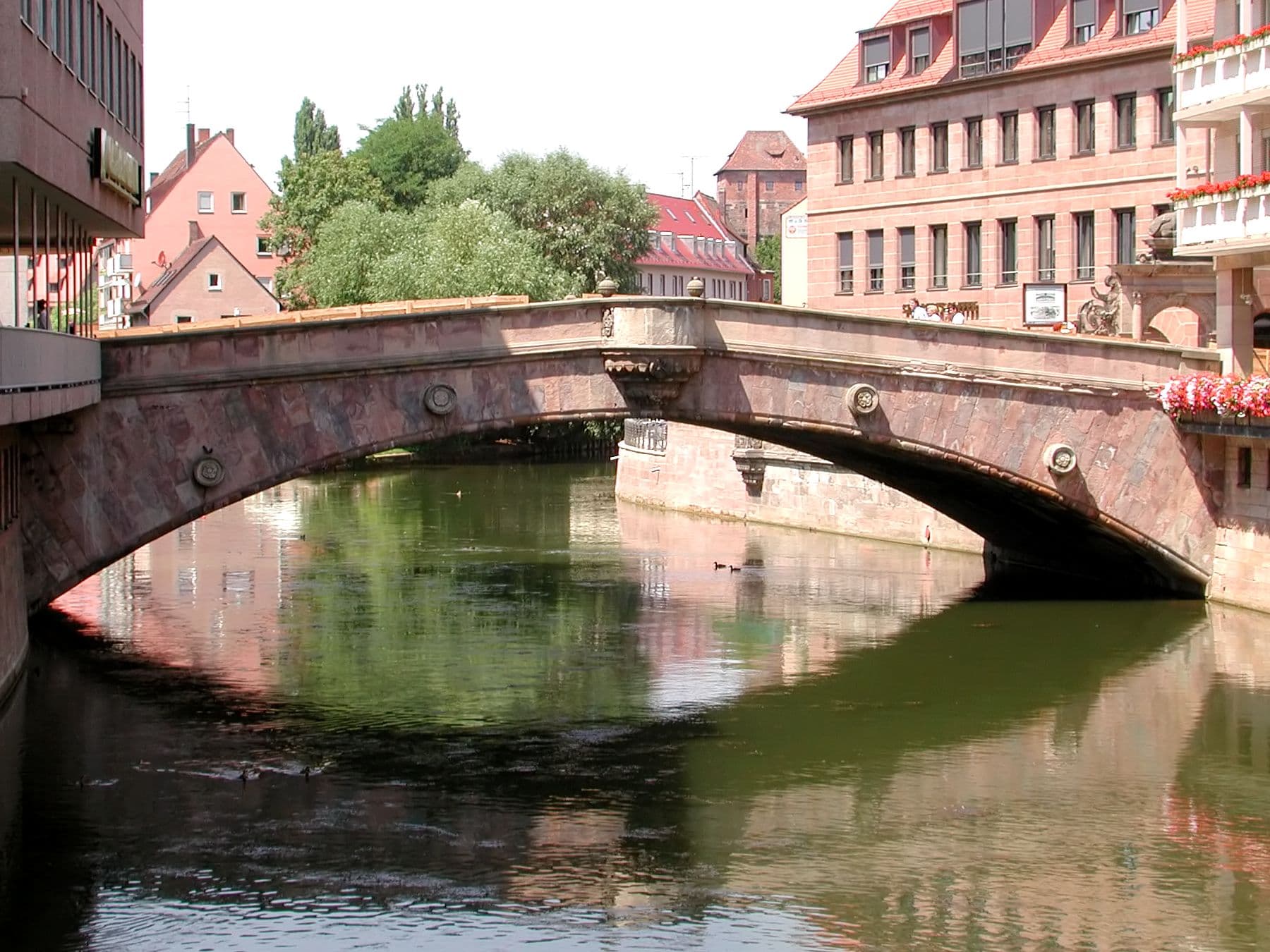 FleischbrückeThe Fleischbrücke is a single-arch stone bridge over the river Pegnitz in centra2 minutes walk4.5
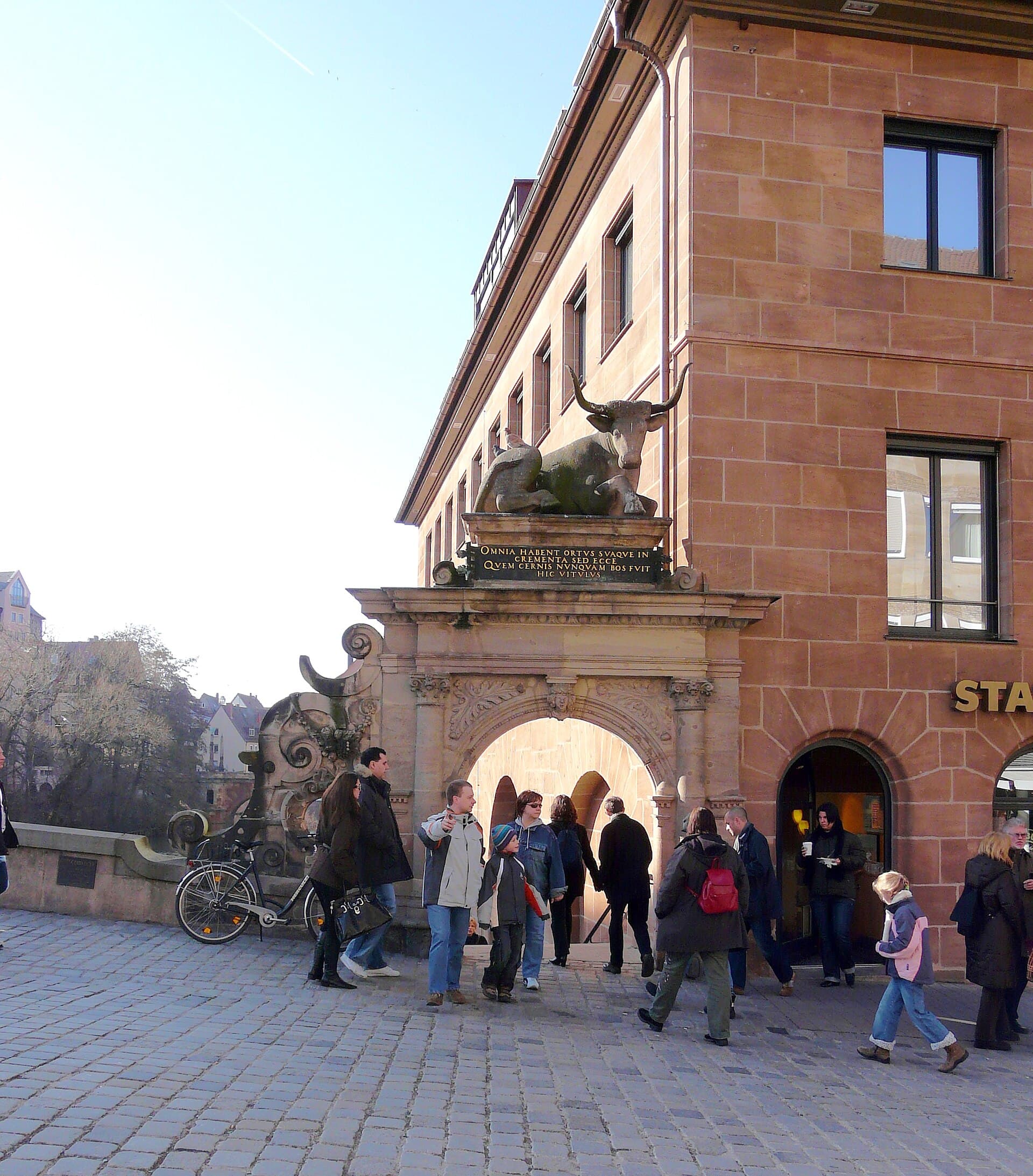 The Meat Hall and its Ox PortalA Renaissance building in central Nuremberg put up in the early seventeenth cent2 minutes walk4.8
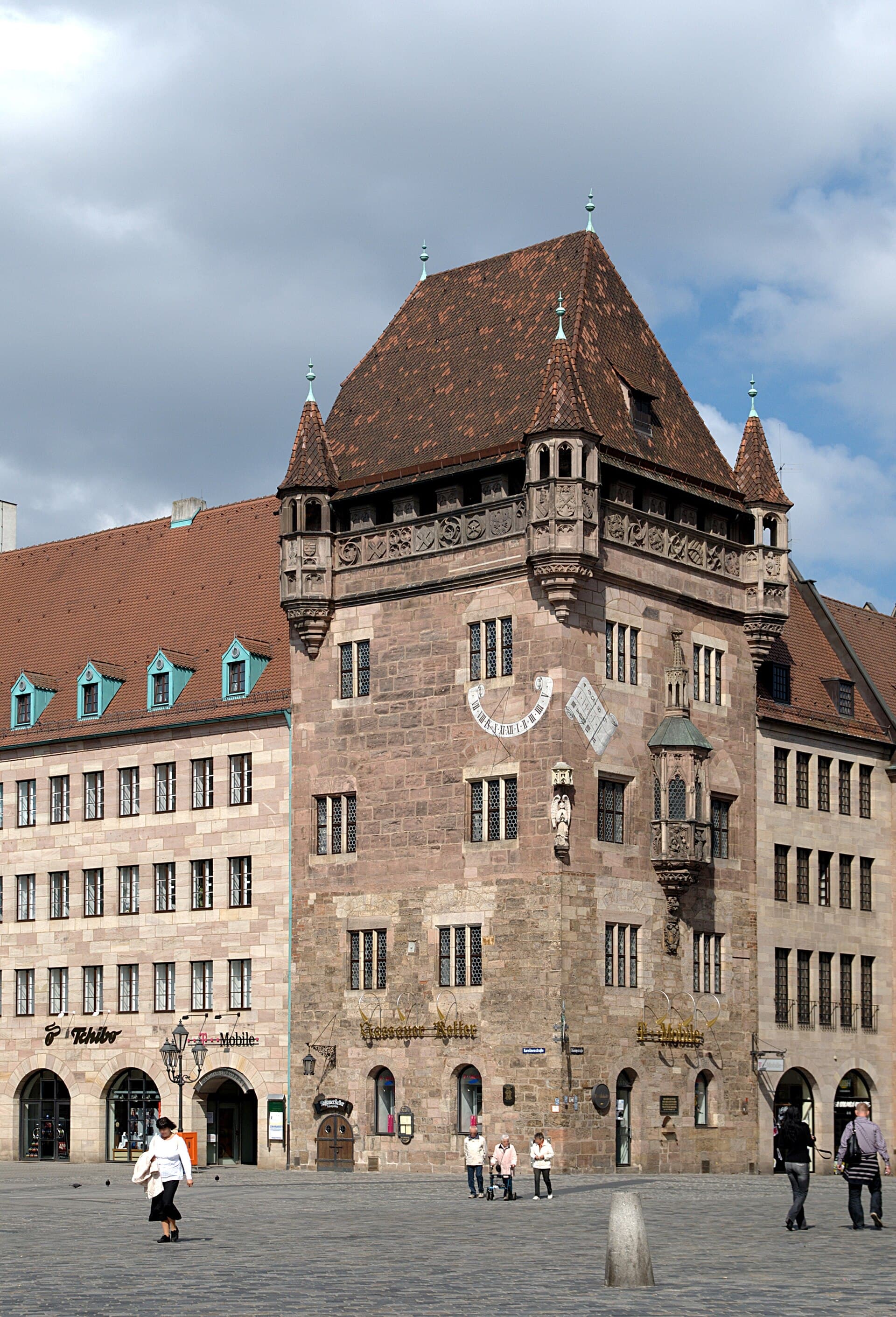 Nassauer HausThe last medieval residential tower still standing in Nuremberg, on the corner o2 minutes walk4.9
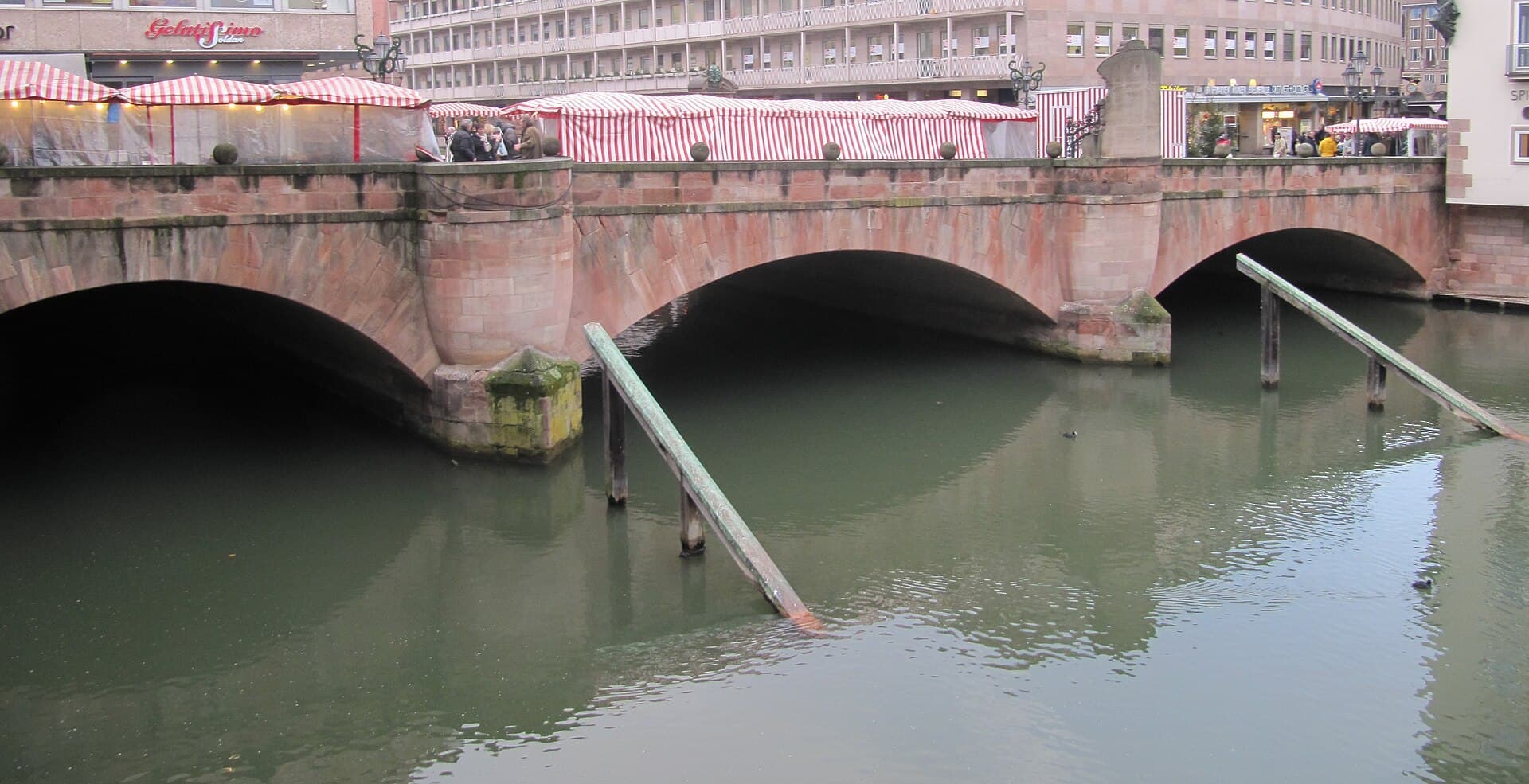 MuseumsbrückeThe Museumsbrücke is a short stone bridge over the river Pegnitz in the middle o2 minutes walk4.8
You will not make a trip for it, nor should you. But if you come across it while walking, two minutes standing at it adds a layer to your understanding of the city. Small monuments in side corners sometimes say more about how a town remembers its past than the large museums do.
At two sites south of the city: the documentation centre at the Nazi party rally grounds, a vast unfinished building turned into a museum explaining how the Nazi regime used this city in particular; and Courtroom 600 in the Palace of Justice, where the Nuremberg trials were held in 1945-1946 and the concept of crimes against humanity was established.