
A late-Gothic facade
Carved sandstone, a crenellated parapet and coats of arms.
M.Minderhoud — CC BY-SA 3.0 · Ludvig14 — CC BY-SA 4.0 · FrDr — CC BY-SA 4.0
An early sixteenth-century house on the Oude Delft canal, which since 1645 has been the seat of the Delfland water board and remains so today. The facade is among the finest late-Gothic fronts in the Netherlands: densely carved sandstone, arched windows, a crenellated parapet and carved coats of arms going back to the original owner. Most Dutch houses of this period have vanished or had their facades altered, so the survival of this one is exceptional. What makes the building important beyond its beauty is its function. Water boards are uniquely Dutch institutions going back to the thirteenth century, charged with managing the dykes, canals and water levels of their district. They are older than the Dutch state itself, and hold powers of taxation and their own elections which are still held today — because in a country a third of which lies below sea level, water cannot be left to general politics. It is a working administrative seat and is not visited — the facade from the street is the point.
Carved sandstone, a crenellated parapet and coats of arms.
Water boards date to the thirteenth century and predate the Netherlands.
Water boards levy their own taxes and hold their own elections today.
Oude Delft canal, Delft
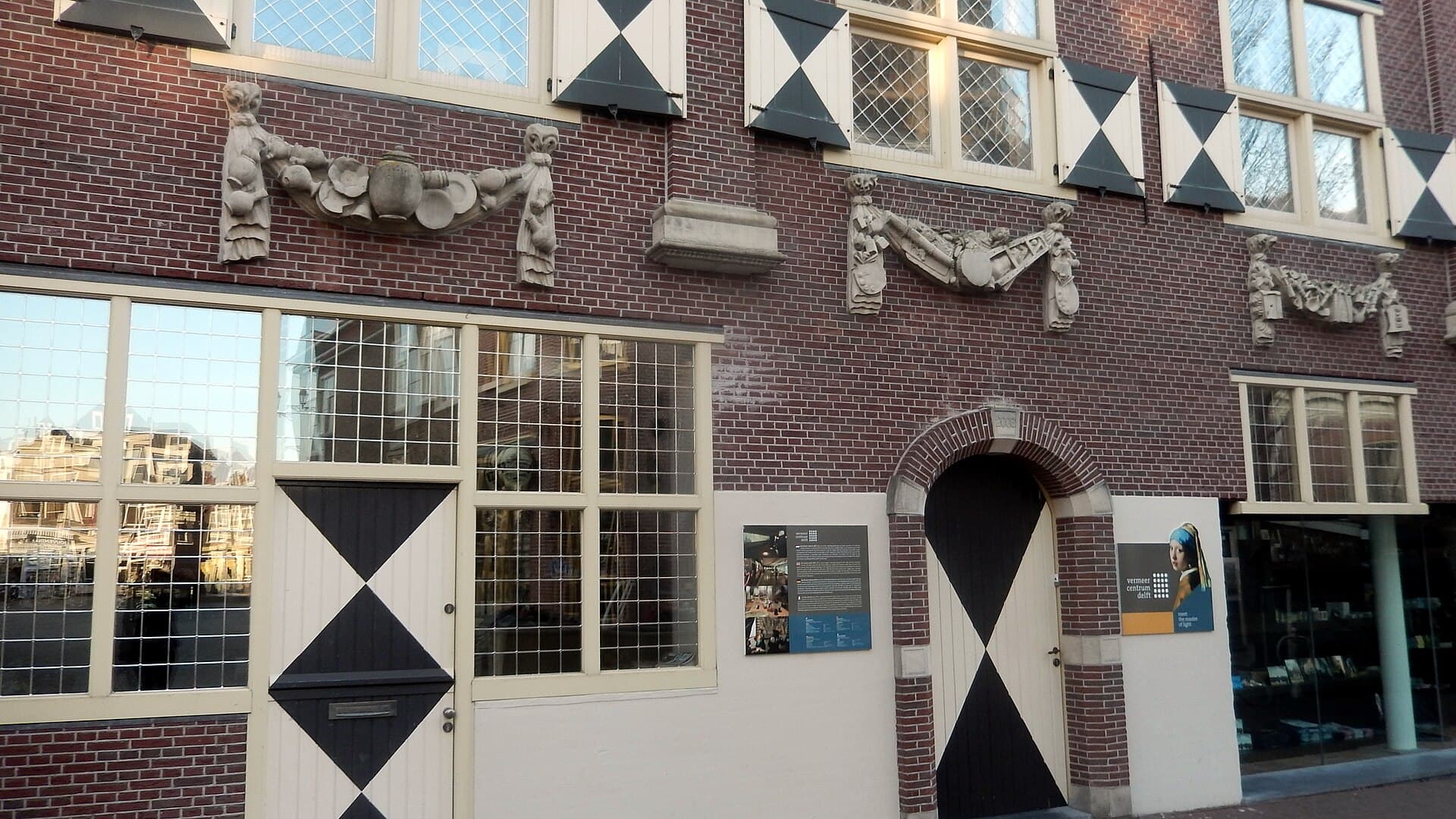 The Vermeer Centrum in DelftThe Vermeer Centrum in Delft faces an odd problem and says so plainly: Johannes 3 minutes walk4.4
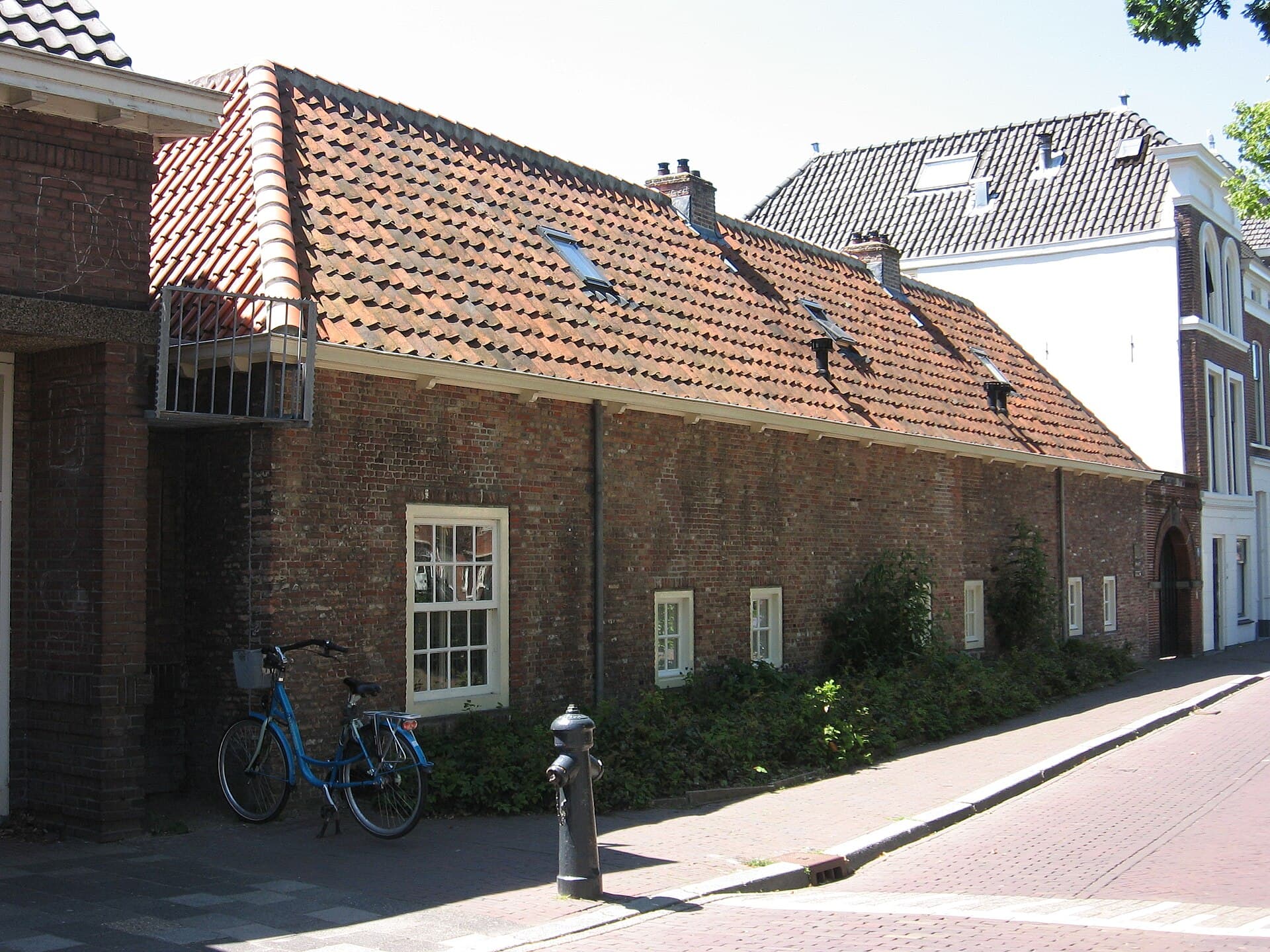 The Klaeuwshofje, DelftA small charitable courtyard in Delft dating from 1605, of the Dutch type called11 minutes walk4.5
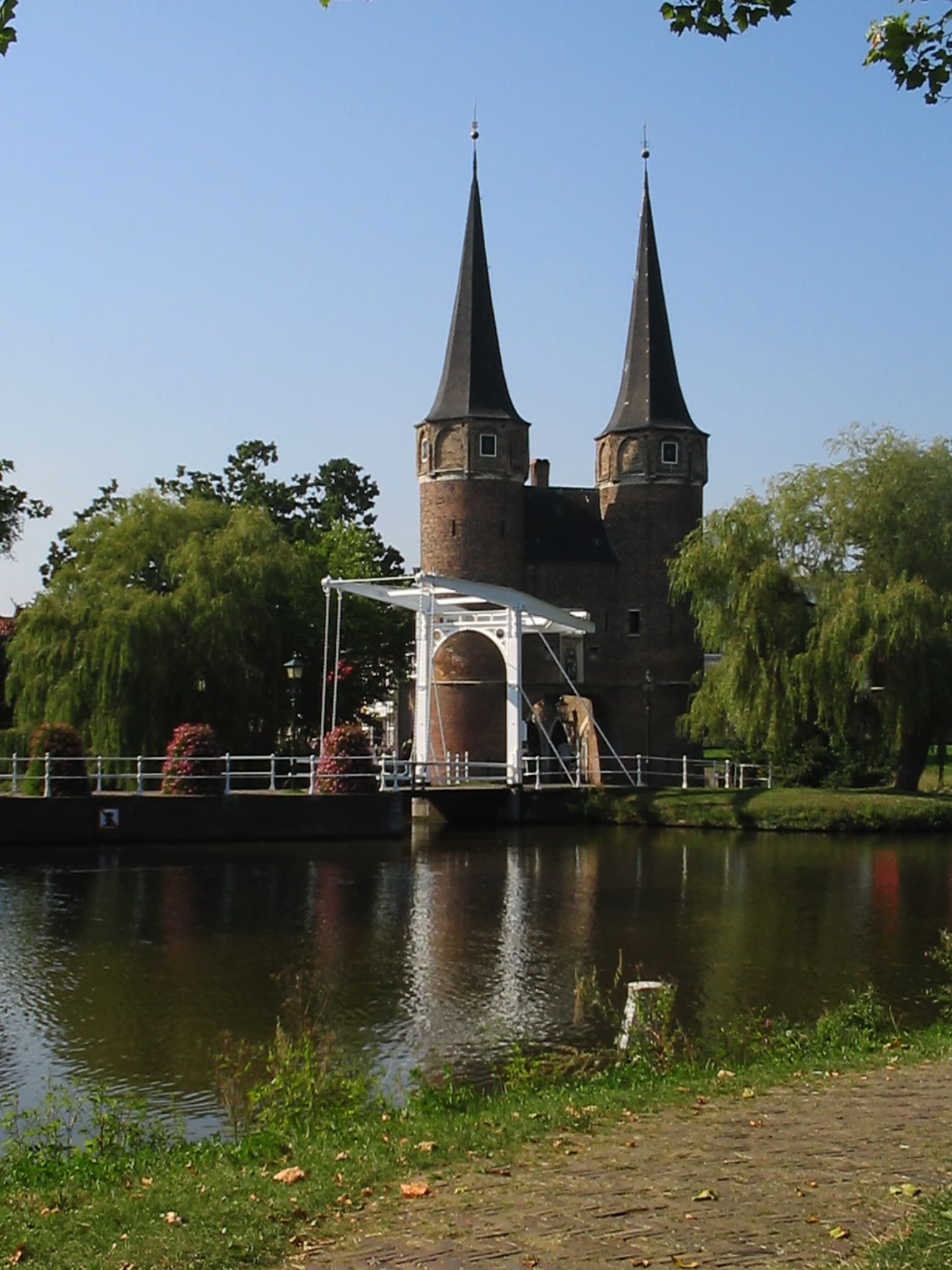 The Oostpoort in DelftThe Oostpoort is Delft's eastern gate, the only survivor of eight that once ring11 minutes walk4.5
Elected local bodies responsible for the dykes, pumps, water levels and water quality of their district. They arose in the Middle Ages when farmers were forced to cooperate on dyke maintenance because a single breach drowned everyone, producing an administrative model based on compulsory participation and election. The Dutch regard them as the origin of their consensus political culture, called the polder model: everyone sits at the table because water does not discriminate.
The two main churches: the Old Church with its visibly leaning tower, and the New Church holding the tomb of William the Silent and a climb to a wide view. Then the Oude Delft and Nieuwe Delft canals, the market square, and the surviving Delft blue pottery works. The town is Vermeer's birthplace and a route of his steps is marked in the streets. Half a day is enough but a full day is better.