
Social security before the state
Private endowments filled what the state did not yet do.
Michiel1972 — CC BY-SA 3.0 · Jaap Hoekstra — CC BY-SA 4.0 · Vysotsky — CC BY-SA 4.0 · Gerard Dukker — CC BY-SA 4.0
A small charitable courtyard in Delft dating from 1605, of the Dutch type called a hofje: a row of small houses around a shared inner court, built by a charitable endowment to house poor elderly women rent-free. This model spread through Dutch towns from the fourteenth century and peaked in the seventeenth. The idea was that a wealthy merchant endowed part of his fortune to build the courtyard and administer it after his death, guaranteeing housing to women with no provider. This was the shape of social security before the welfare state existed, and it was also a way of preserving the founder's name — most courtyards still carry their founders' names today. Reaching them is deliberately difficult: the entrance is usually a narrow passage from the street that a passer-by would not notice, behind which lies an entirely quiet court and a small garden. It is still inhabited, so the quiet asked for is a real requirement rather than a symbolic one. Entry is free in daylight.
Private endowments filled what the state did not yet do.
A narrow passage from the street hides an entirely quiet court.
Most courtyards still carry the names of those who founded them.
Oude Langendijk area, Delft
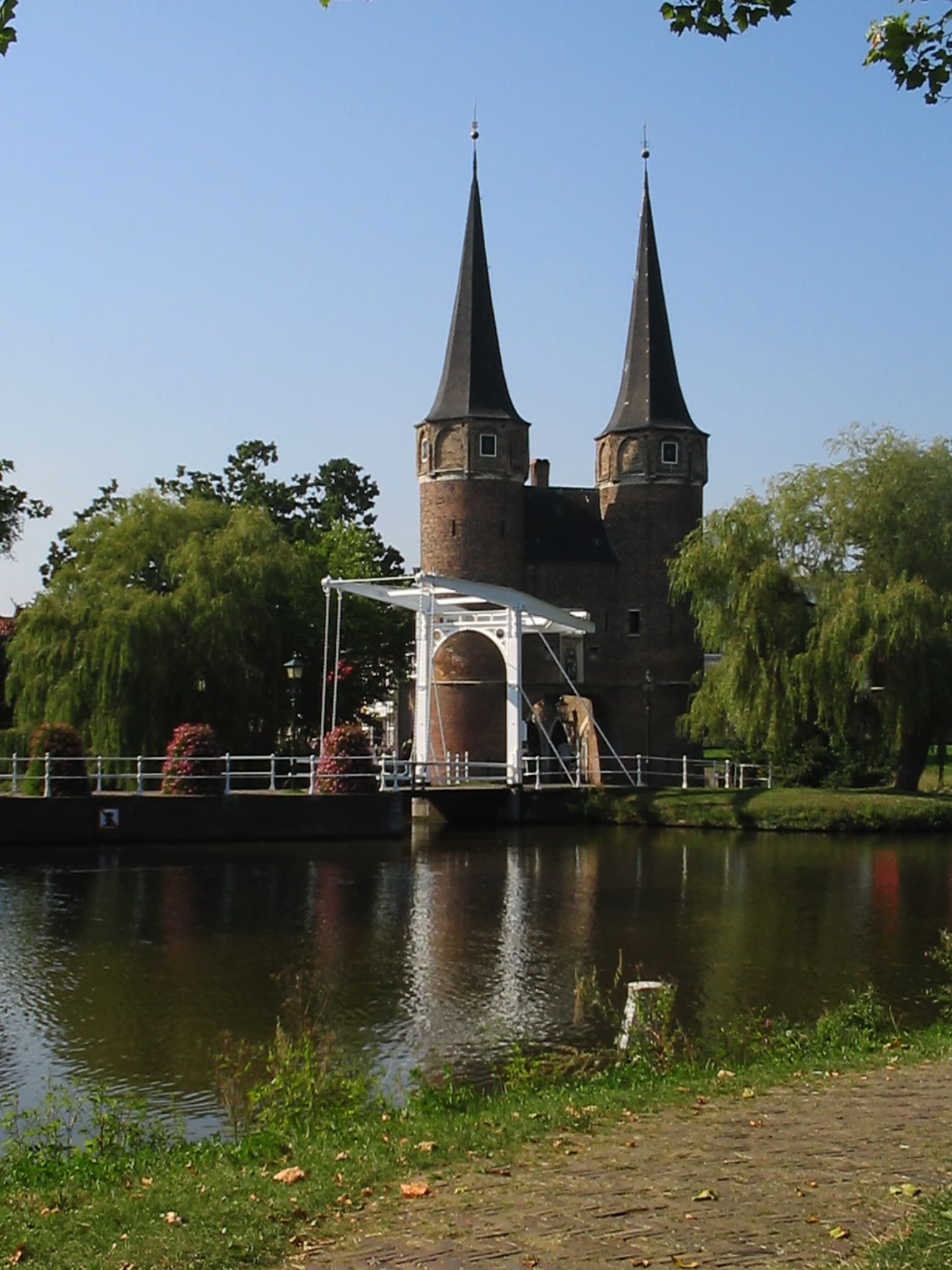 The Oostpoort in DelftThe Oostpoort is Delft's eastern gate, the only survivor of eight that once ring1 minute walk4.5
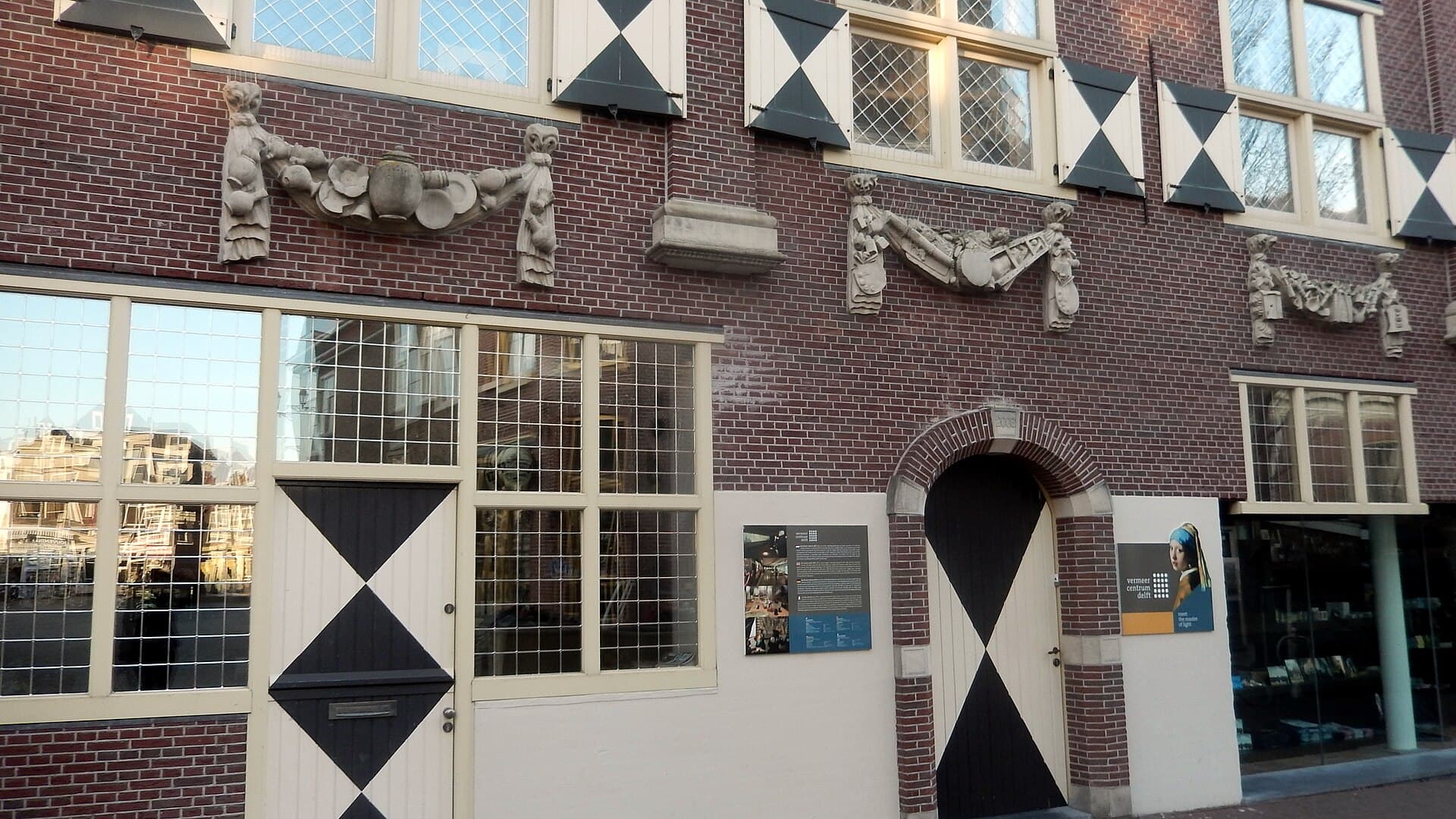 The Vermeer Centrum in DelftThe Vermeer Centrum in Delft faces an odd problem and says so plainly: Johannes 7 minutes walk4.4
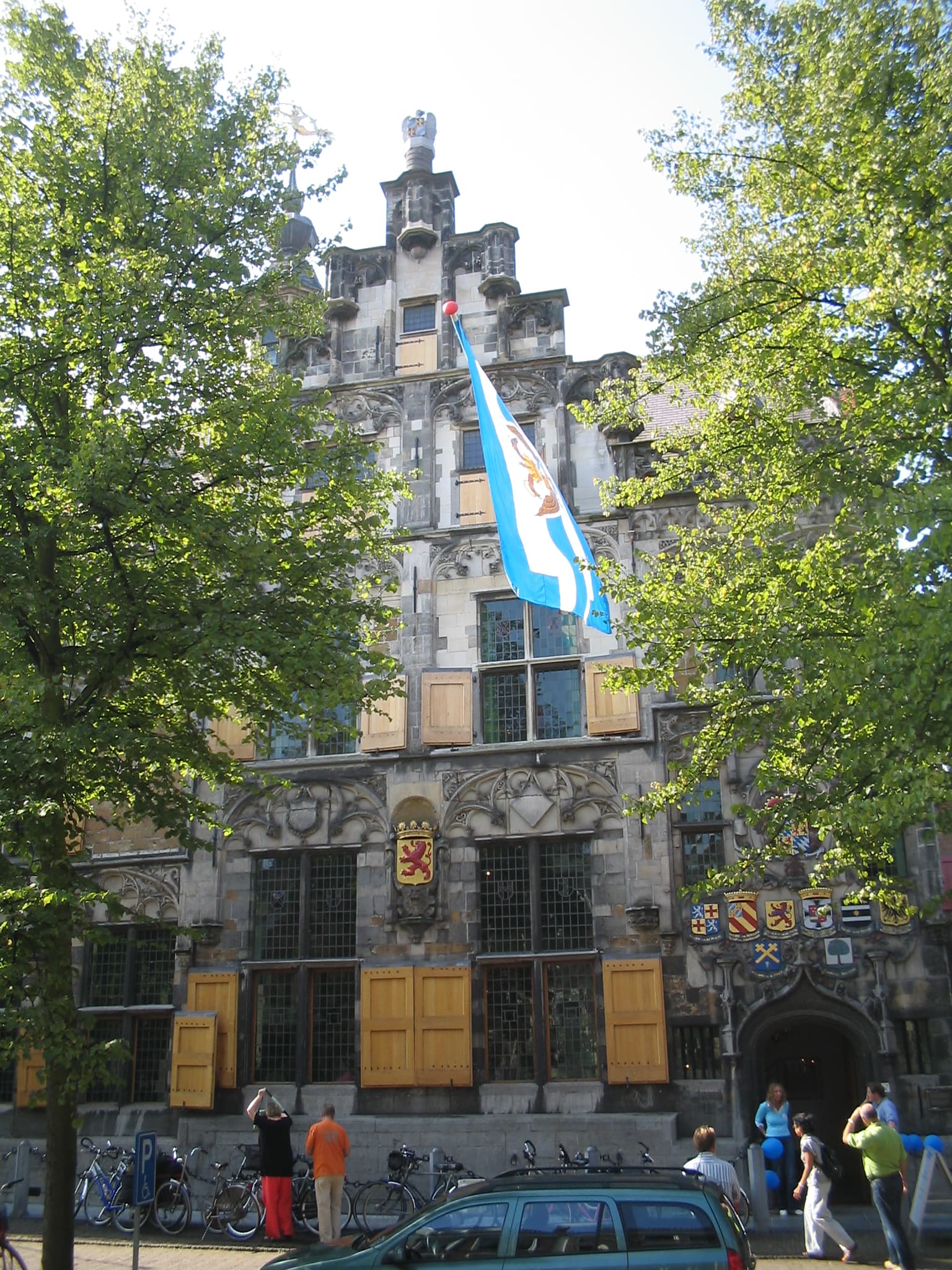 The Delfland Water Board HouseAn early sixteenth-century house on the Oude Delft canal, which since 1645 has b11 minutes walk4.9
More than a hundred still stand and function, most of them in Haarlem, Leiden, Amsterdam, Delft and Utrecht. Haarlem alone has around twenty, more than any other city. Most are still low-rent housing but not necessarily for the elderly today — many are let to students or individuals under conditions. They are usually run by independent charitable foundations that inherited the original endowment.
Enter only in daylight and only through an open door, never a closed one, keep silent and leave after a few minutes. Do not open house doors, photograph through windows or sit in the court. Groups of more than four are unwelcome. These are not formalities: residents in Delft and Haarlem have complained repeatedly about visitors, and some courtyards have been closed permanently because of it.