
The octagonal towers
Tall conical roofs added in the sixteenth century.
M.Minderhoud — CC BY-SA 3.0 · Michielverbeek — CC BY-SA 4.0 · Sander van der Wel from Netherlands — CC BY-SA 2.0 · Balthazar Jooss — Public domain
The Oostpoort is Delft's eastern gate, the only survivor of eight that once ringed the city — and the only gate of this brick Gothic type left anywhere in the Netherlands. It was built around 1400 as part of the city wall: two octagonal towers with tall conical roofs added in the sixteenth century, and a water gate beside the land gate — so that anyone arriving by boat passed through one opening and pedestrians and carts through another. Its survival is not a happy accident so much as other gates' bad luck: the seven others were demolished in the nineteenth century to widen the roads, and this one lived because it stood away from the line of expansion. It is seen free from outside at any hour — and the best-known angle is from the bridge over the canal in front, where the two towers reflect in the water.
Tall conical roofs added in the sixteenth century.
The best-known angle, from the bridge in front.
Oostpoort, 2611 Delft
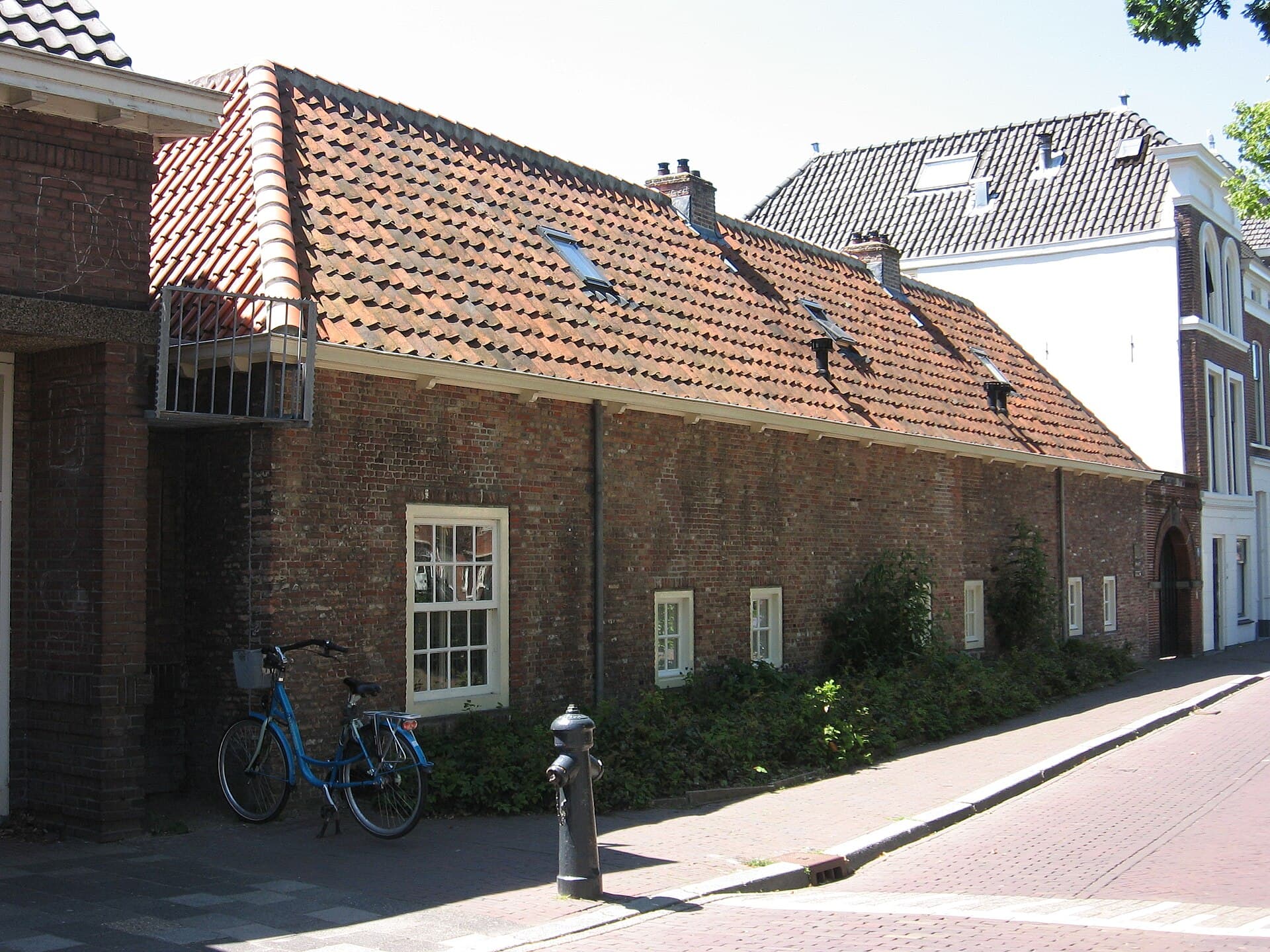 The Klaeuwshofje, DelftA small charitable courtyard in Delft dating from 1605, of the Dutch type called1 minute walk4.5
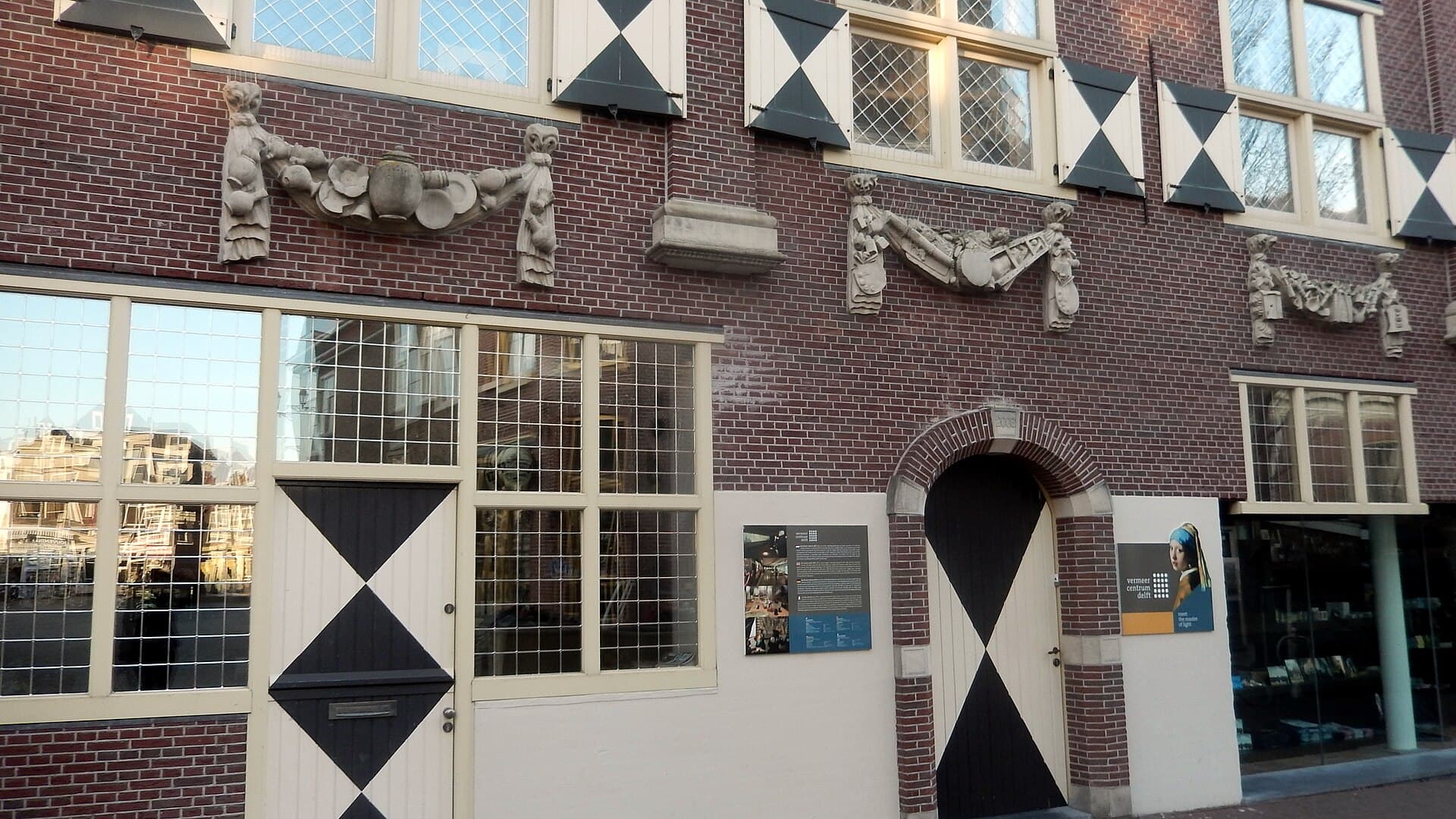 The Vermeer Centrum in DelftThe Vermeer Centrum in Delft faces an odd problem and says so plainly: Johannes 8 minutes walk4.4
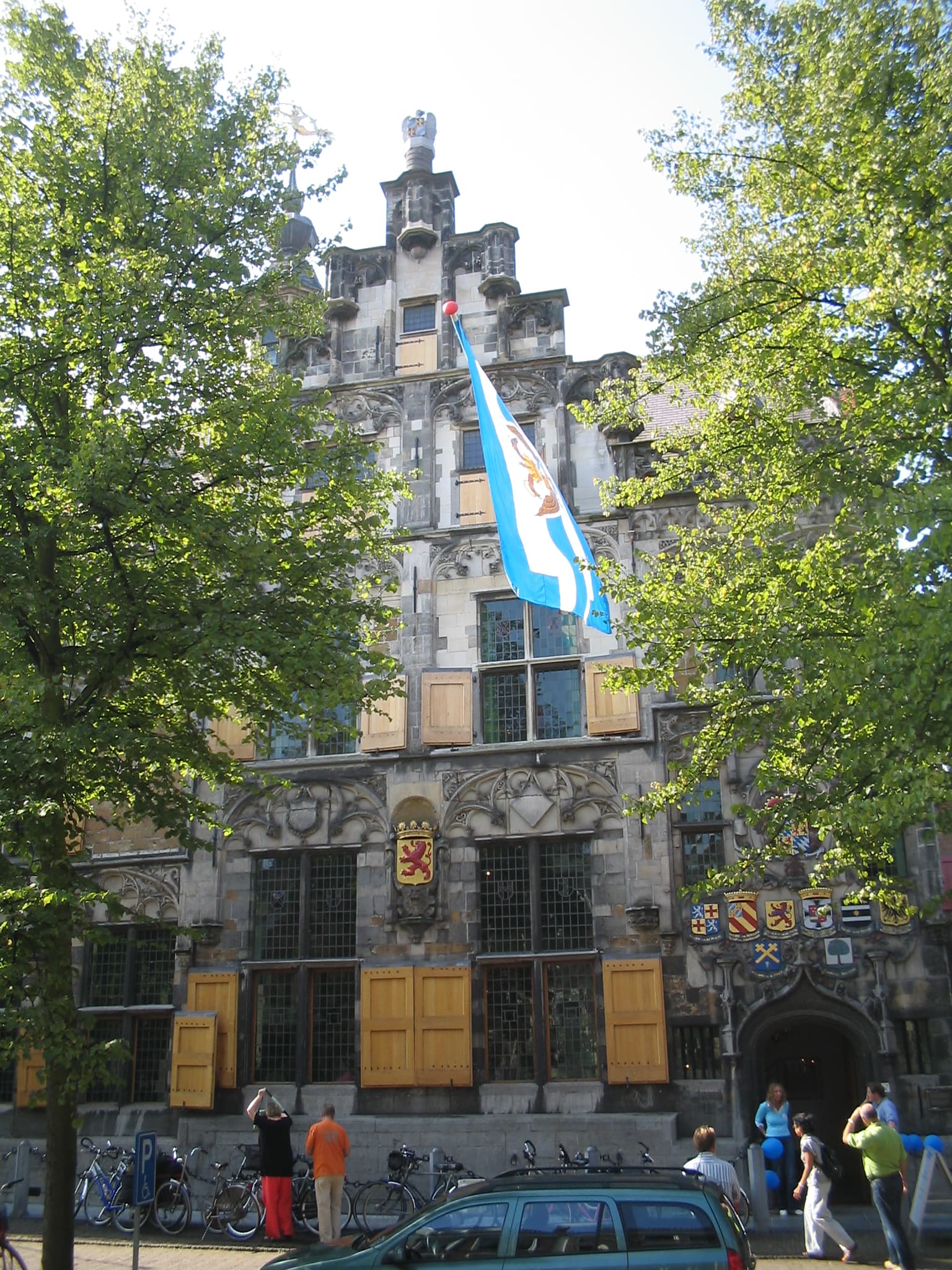 The Delfland Water Board HouseAn early sixteenth-century house on the Oude Delft canal, which since 1645 has b11 minutes walk4.9
The town is small and everything is walkable: the central market square with the Nieuwe Kerk and its climbable tower, the Oude Kerk with its visibly leaning tower, the Vermeer Centrum, the original Delft Blue pottery at Royal Delft where the ware is still hand-painted as it has been since 1653, the Oostpoort, and the canals themselves. A comfortable full day, and fifteen minutes by train from The Hague.