
The writing on the walls
Names and dates scratched by those held here.
Wolfmann — CC BY-SA 4.0 · Wolfmann — CC BY-SA 4.0 · Wolfmann — CC BY-SA 4.0 · Wolfmann — CC BY-SA 4.0
In the basement of an ordinary building on Veiten, two minutes from Torgallmenningen, the cells of the Gestapo's Bergen headquarters remain as they were under the German occupation. The German secret police took this building as their headquarters for western Norway between 1940 and 1945, and its basement was where people were held and interrogated. The museum is very small — a few rooms only — and its content is the place itself: the narrow cells, the walls where prisoners wrote their names and dates, and documents and photographs from the city's resistance years. The visit is hard, short and honest, and it does not soften anything. It completes the Theta Museum on Bryggen — the hidden room from which a resistance cell ran its radio — the two being sides of one story. **Opening hours are very limited** because it is run by volunteers; check before going. Not suitable for young children.
Names and dates scratched by those held here.
The resistance and its hunters in one city.
Veiten 3, 5012 Bergen
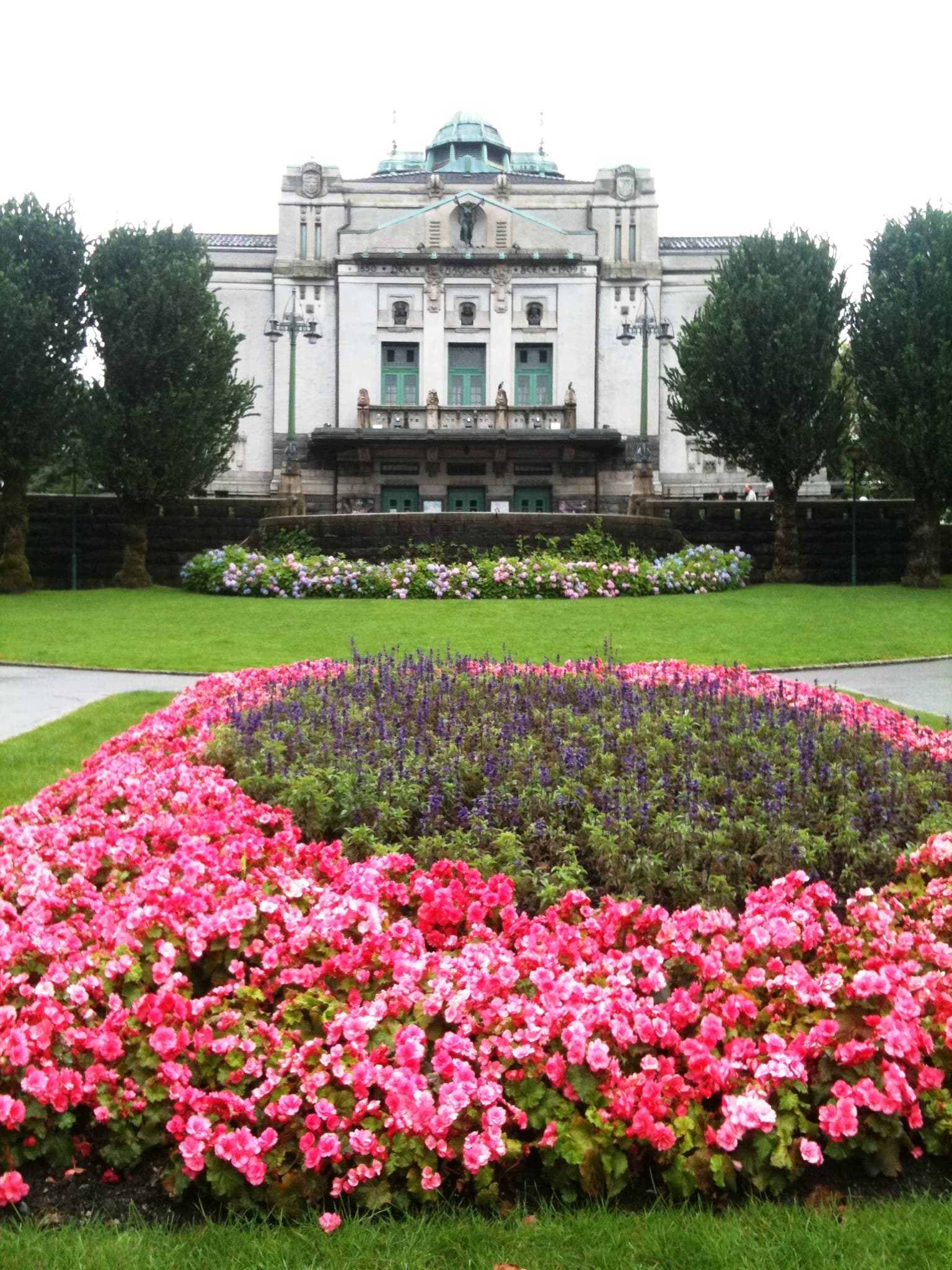 Den Nationale SceneDen Nationale Scene is Norway's oldest permanent theatre, founded by the violini1 minute walk4.4
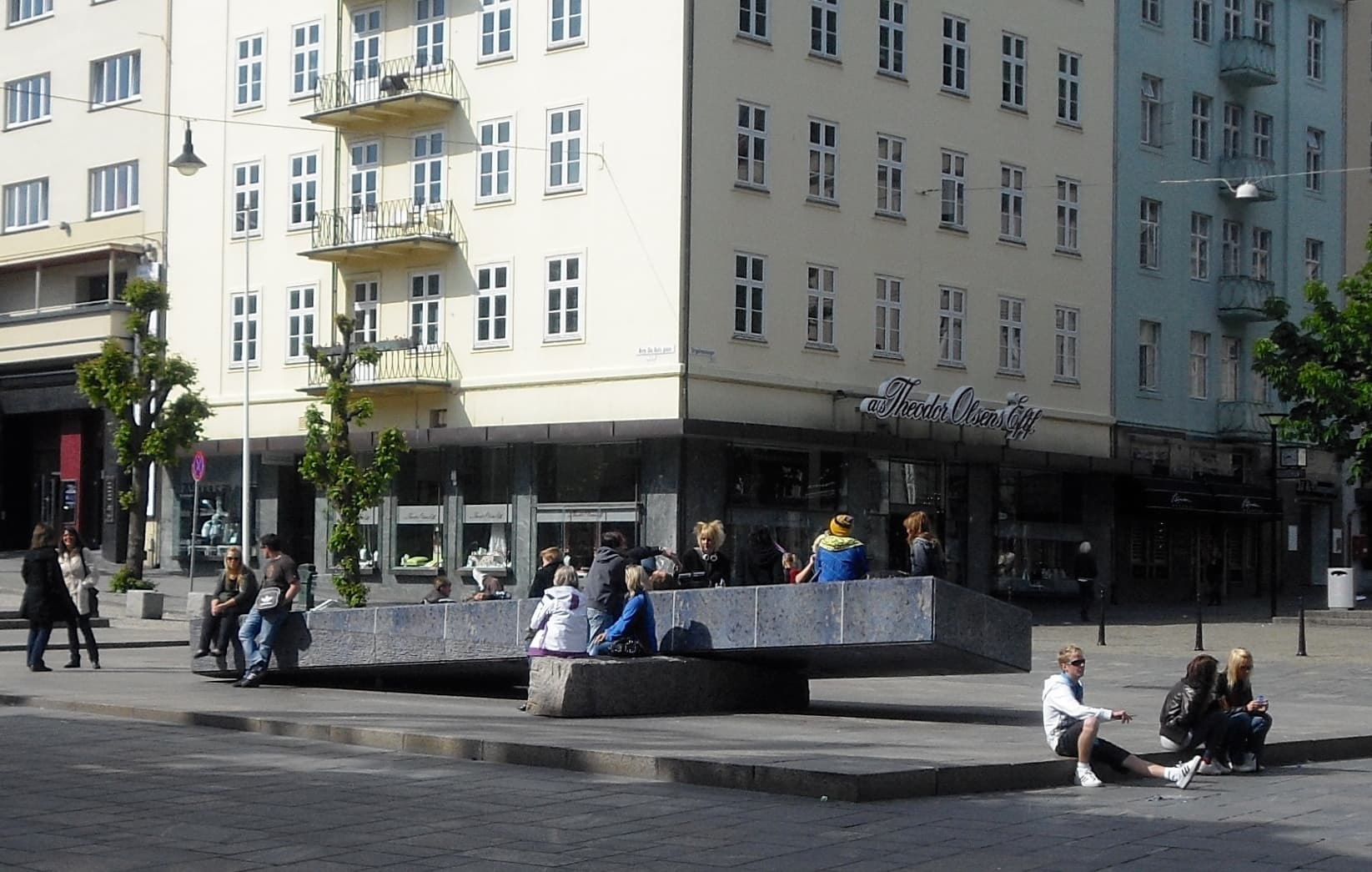 The Blue StoneThe Blue Stone is a long tilted slab lying across Ole Bulls plass, sculpted by A2 minutes walk4.5
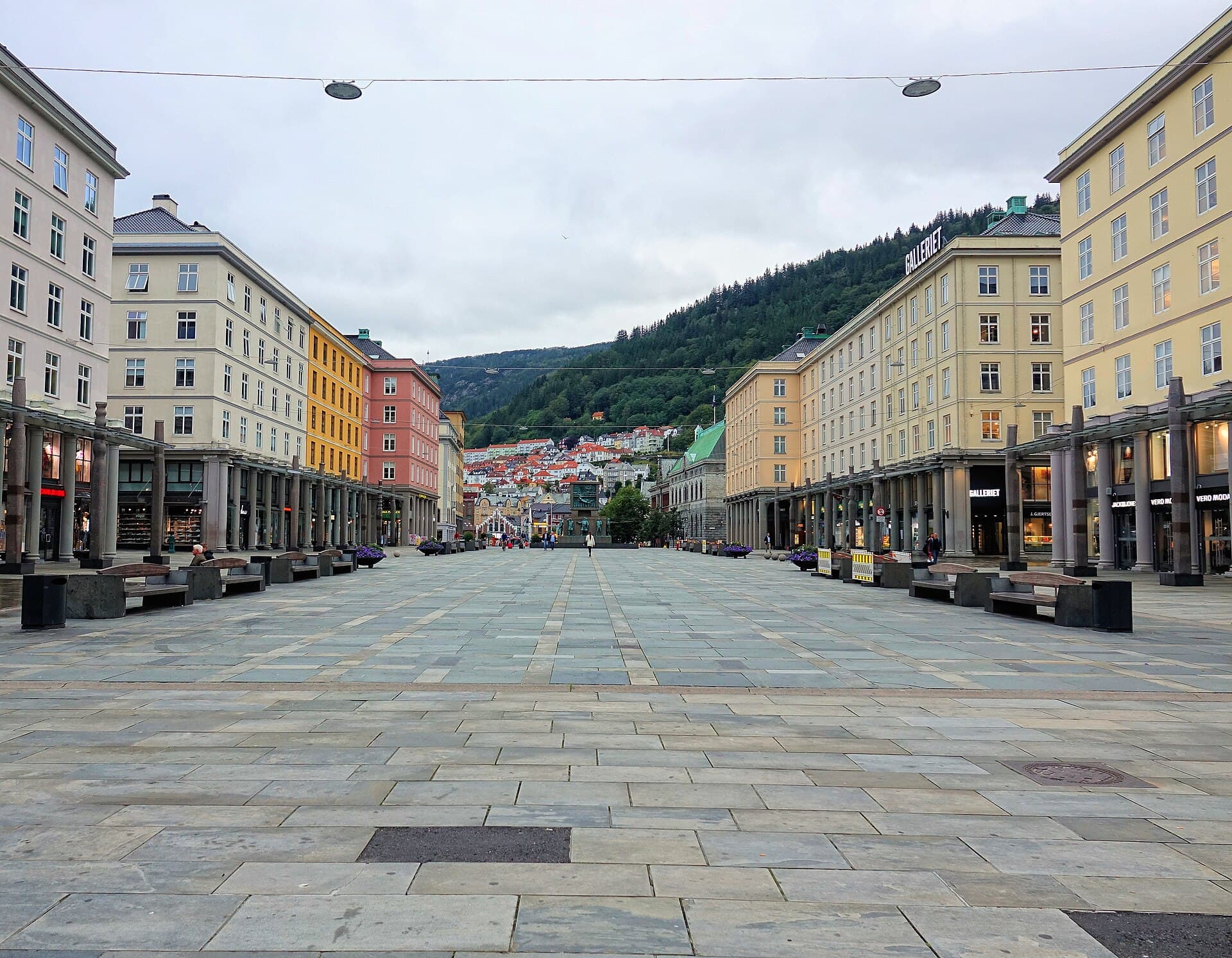 TorgallmenningenTorgallmenningen is Bergen's largest square and its commercial heart: a broad ca2 minutes walk4.1
 Seamen's MonumentA bronze monument on Torgallmenningen square in central Bergen, raised in 1950 i2 minutes walk4.6
 The Buekorps MuseumThe Buekorps is a tradition that exists nowhere but Bergen, and the small museum3 minutes walk4.4
Bergen was a strategic port for the Germans: U-boats sailed from it, and the concrete submarine pen Bruno built there still stands. That made the city both a resistance target and a bombing target. Cells operated in it passing shipping movements to Britain, the best known being Theta, which ran a transmitter from a hidden attic room on Bryggen for two years before it was found. And in 1944 a German ammunition ship exploded in the harbour, destroying part of the city and killing hundreds of civilians.