
The glacial potholes
Cylinders carved by meltwater beneath a glacier.
Roland zh, upload on 21. August 2009 — CC BY-SA 3.0 · Alessandro Gallo — CC BY-SA 3.0 · Gürkan Sengün — Public domain · Ernst Roepke — Public domain
In November 1872 a man in Lucerne was digging on his land to build a wine cellar when he struck deep cylindrical holes cut into the sandstone. They were not made by people: they are **glacial potholes**, ground out by swirling meltwater beneath a glacier that covered this spot at the end of the last ice age, around **20,000 years ago**. The site was left open and shown to visitors, becoming one of Lucerne's oldest attractions. The surprise is that the same rock carries evidence from far further back: shells and the remains of subtropical palms, from an age when this place was a warm sea shore millions of years ago. You are standing on two contradictory proofs — ice and a tropical beach — within a few square metres. A newer route, the **"rock world"**, has been cut through the sandstone and ends at a viewing terrace over the city. There is also something with nothing to do with glaciers at all, which children usually prefer to everything above: the **Alhambra mirror maze**, built in 1896 for the Swiss National Exhibition in Geneva and moved here in 1899. More than fifty mirrors sit inside a décor modelled on the **Alhambra palace in Granada** — an unexpected Andalusian echo in the middle of Switzerland.
Cylinders carved by meltwater beneath a glacier.
An 1896 mirror maze modelled on the Alhambra of Granada.
A cut passage through sandstone ending on a city terrace.
Denkmalstrasse 4, 6006 Lucerne
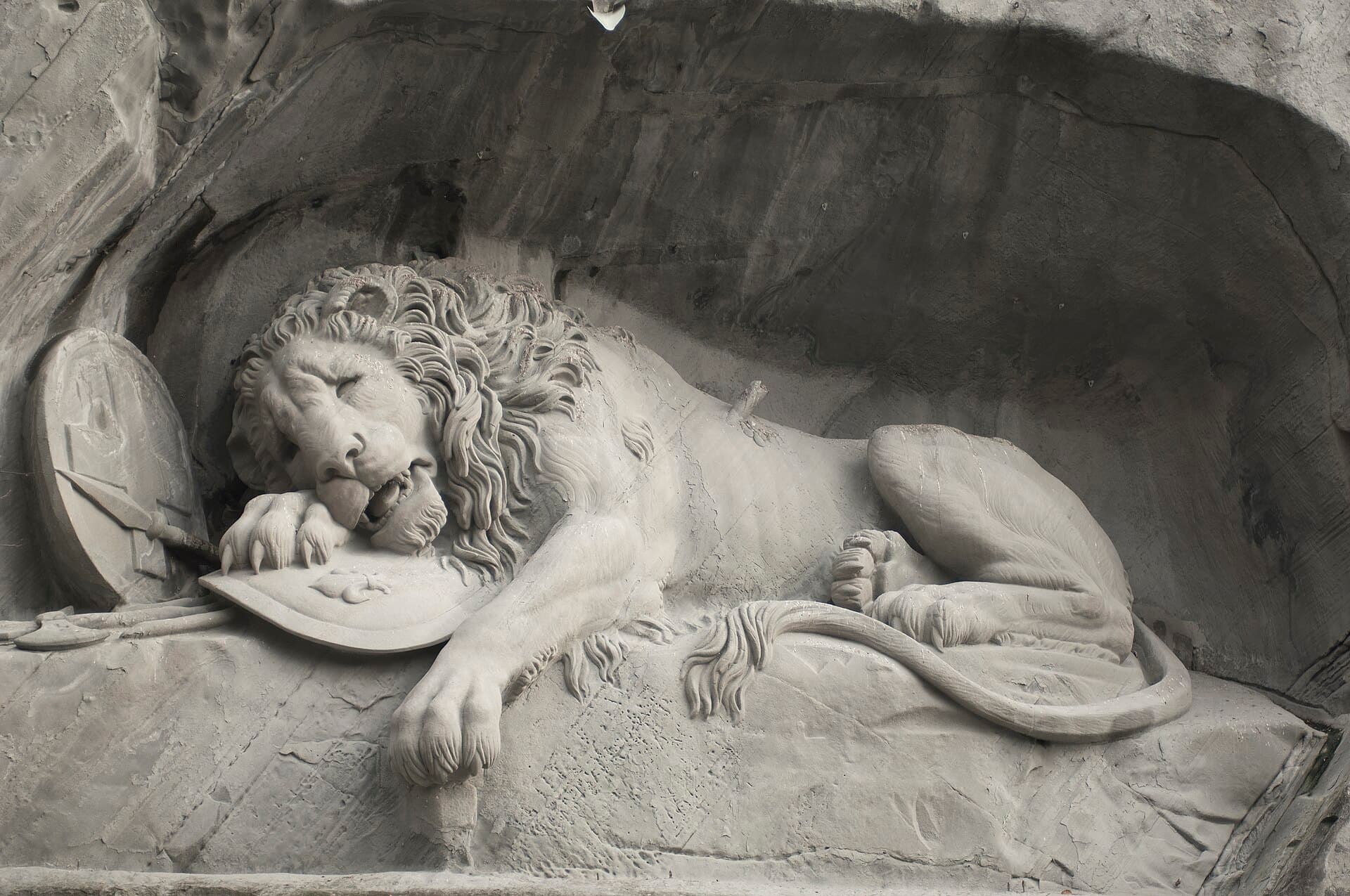 The Lion MonumentIn a sandstone cliff above a still pool a lion dies: Lucerne's monument, carved 1 minute walk4.6
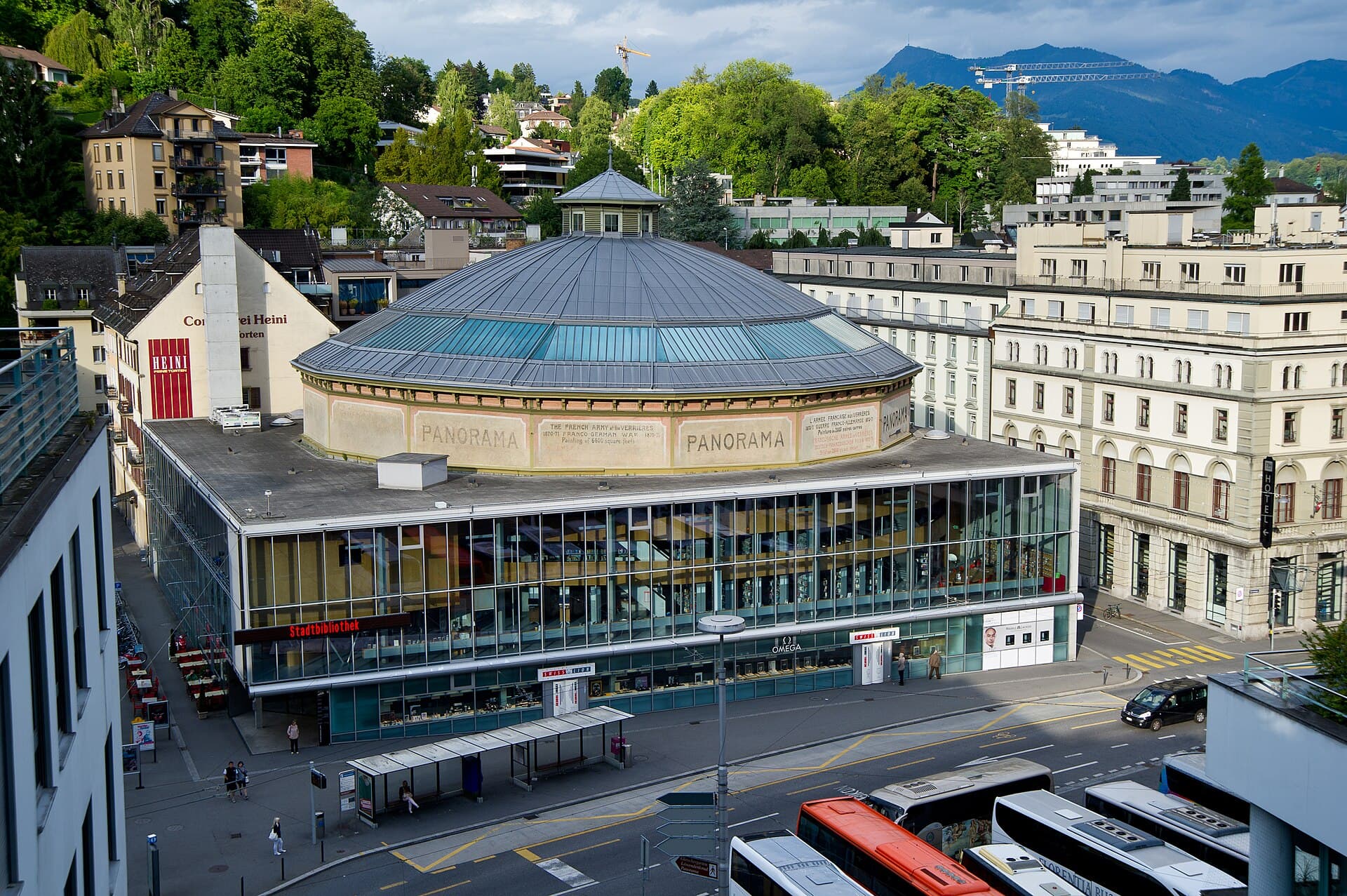 Bourbaki PanoramaBefore cinema, the panorama was the age's magic: giant circular paintings surrou3 minutes walk4.4
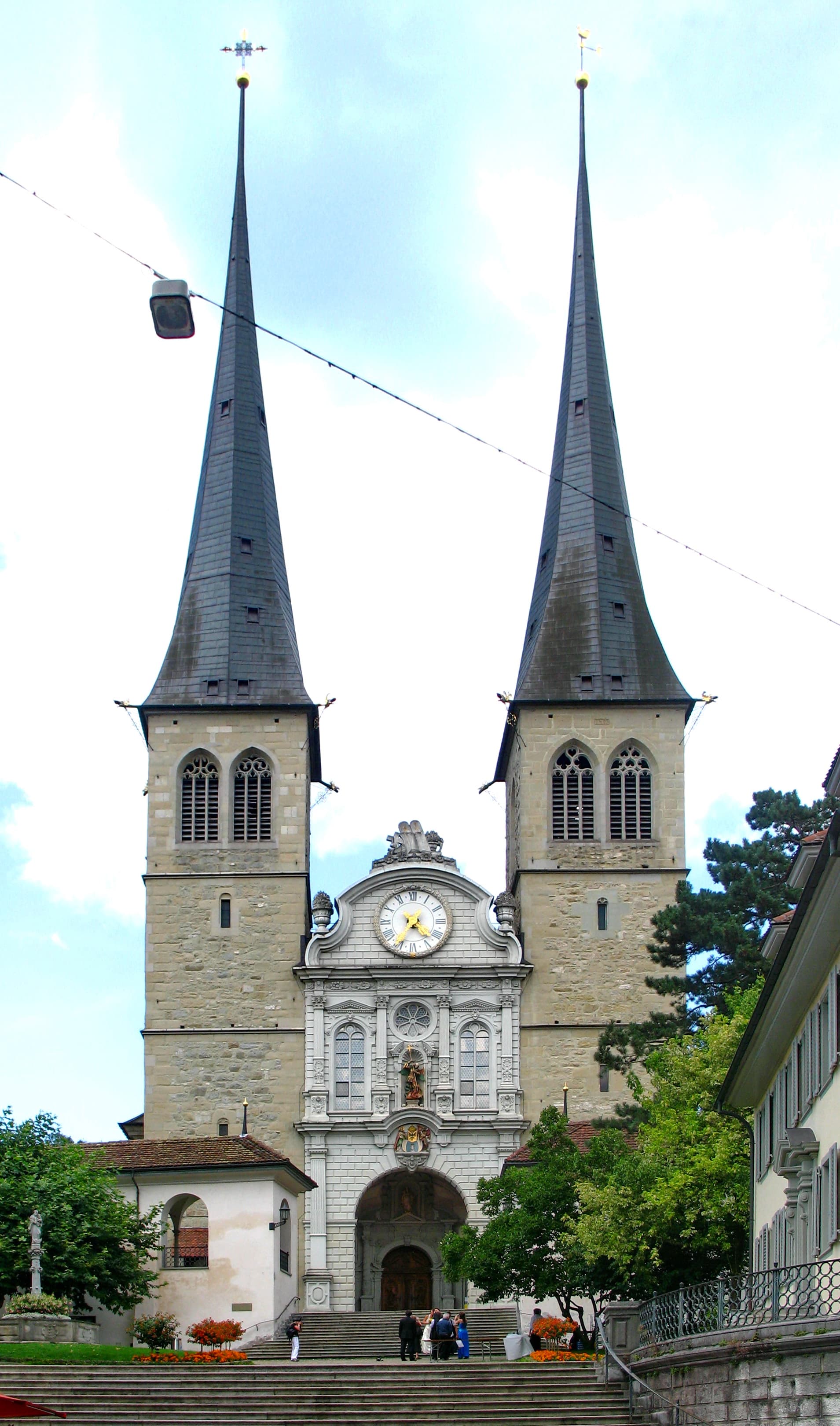 Hofkirche (Church of St. Leodegar)The two pointed towers in every photograph of Lucerne after the Chapel Bridge be6 minutes walk4.7
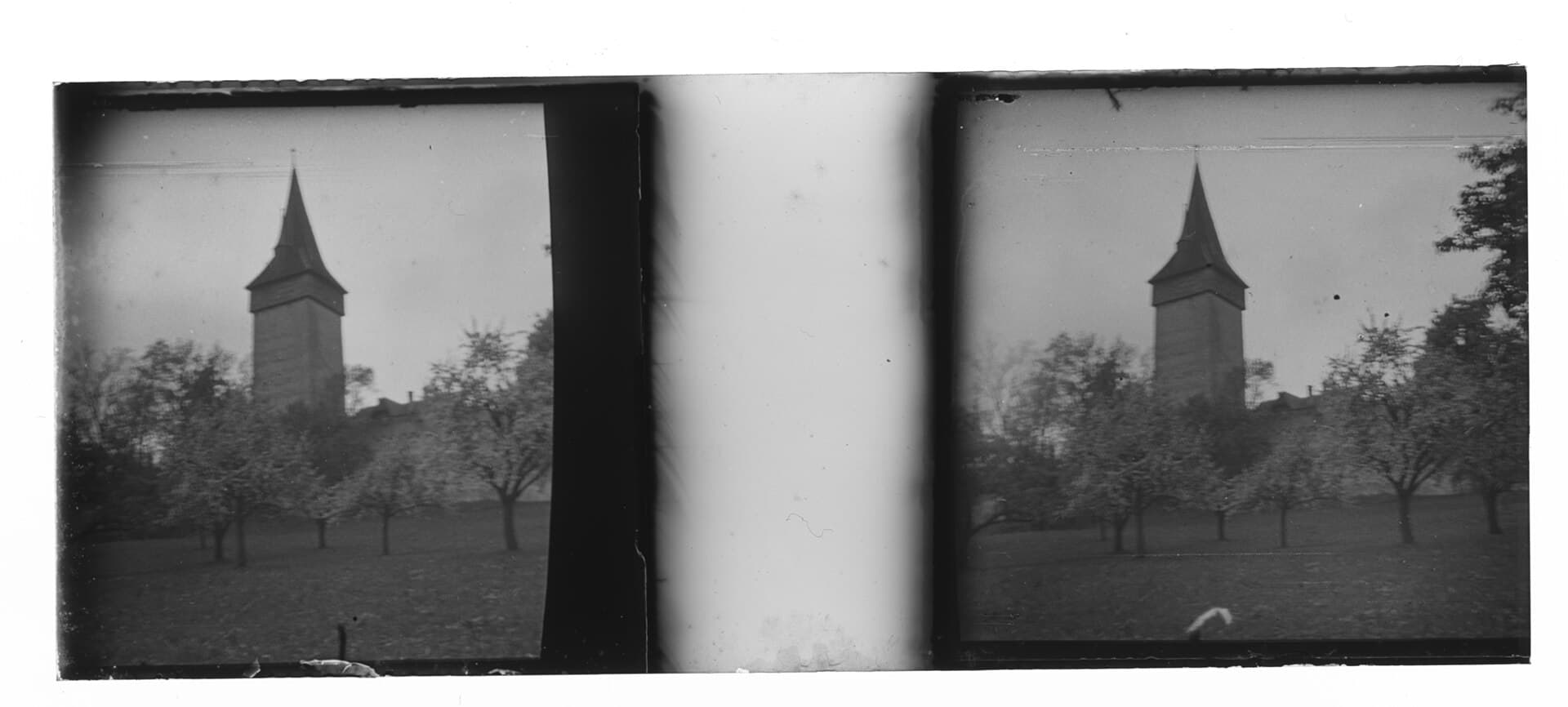 Musegg Wall & TowersAbove the old town runs Lucerne's medieval wall nearly whole — 870 metres of 1409 minutes walk4.5
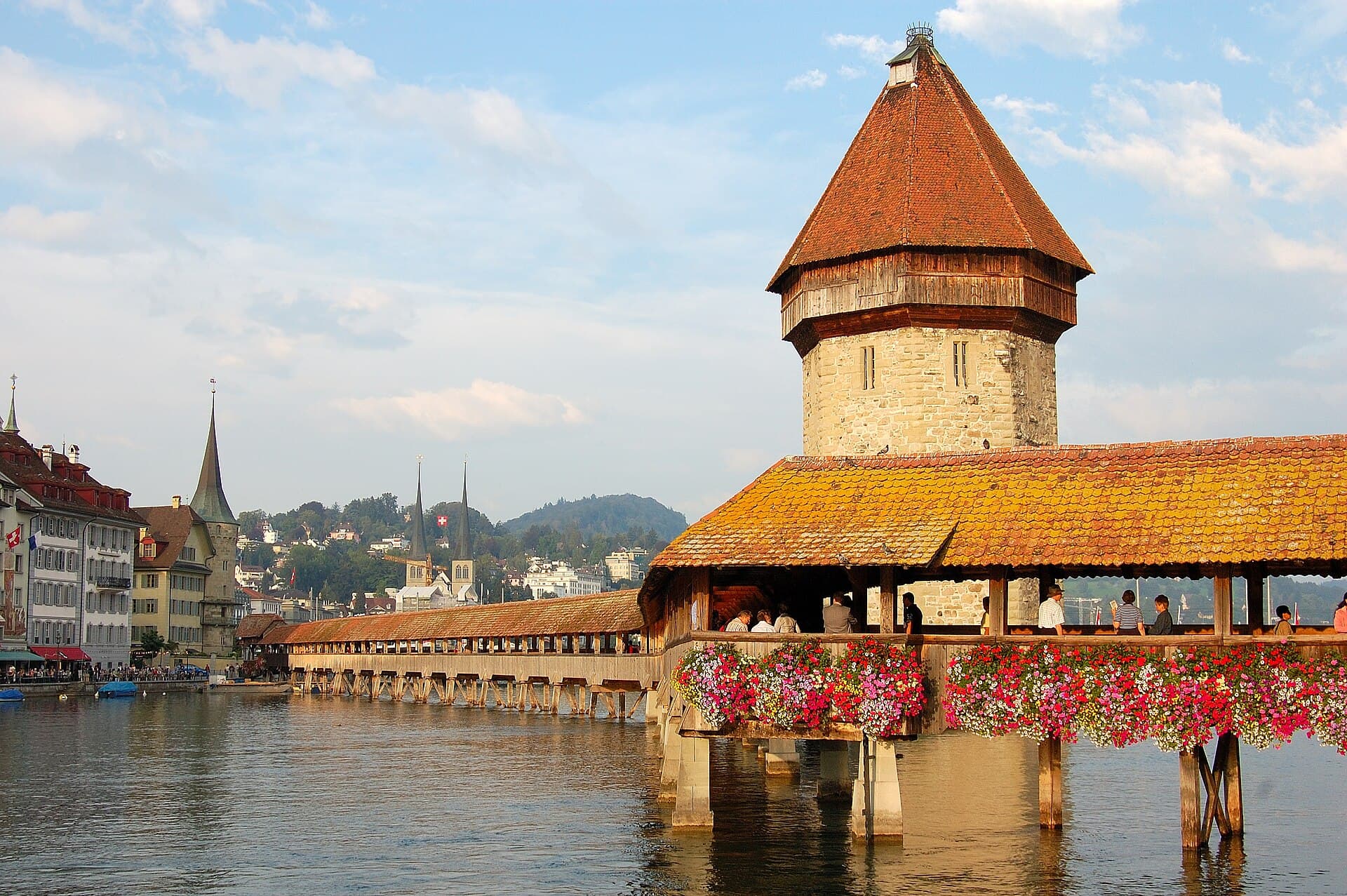 Chapel Bridge (Kapellbrücke)Europe's oldest covered wooden bridge and very nearly its most photographed stru10 minutes walk4.6
With children, or on a rainy day: yes — the mirror maze alone will occupy them, the rock passage and terrace add value, and an hour goes quickly. For two adults on a clear day with a tight schedule: no. The money is better spent on the boat or on the Rigi, and you can simply visit the **free Lion Monument** next door, which is Lucerne's most important symbol after the Chapel Bridge. Treat it as a pleasant extra, not a fixture.