
The writing room
A small top-floor room with a wooden desk. Goethe wrote his first works here as a young man.
Mylius — CC BY-SA 3.0 · Nemo bis — CC BY-SA 4.0 · Ernst Metz — CC BY-SA 3.0 · Munin2005 — CC BY 3.0
Johann Wolfgang von Goethe was born here in 1749 — the most famous writer in German history. The house is a wealthy eighteenth-century family home on four floors, with the furniture, crockery and clocks as they were in his time. On the top floor is the small room where he wrote his first works. The house you see is not quite the original. It was destroyed by bombing in 1944 and rebuilt after the war, using the same stone wherever possible. The furniture survived because the family removed and hid it before the raids, so what stands in the rooms is genuine. Next door is a newer museum, the German Romanticism Museum, and one ticket usually covers both. The visit is short and easy, an hour or two, and the house sits in the old town, minutes from the Römer square.
A small top-floor room with a wooden desk. Goethe wrote his first works here as a young man.
A large, odd-looking clock on the staircase — one of the original pieces that survived the war.
A small puppet theatre Goethe played with as a child. It is said to be what first sparked his imagination.
A modern building attached to the house, explaining German Romanticism in an engaging way.
Großer Hirschgraben 23-25, 60311 Frankfurt am Main
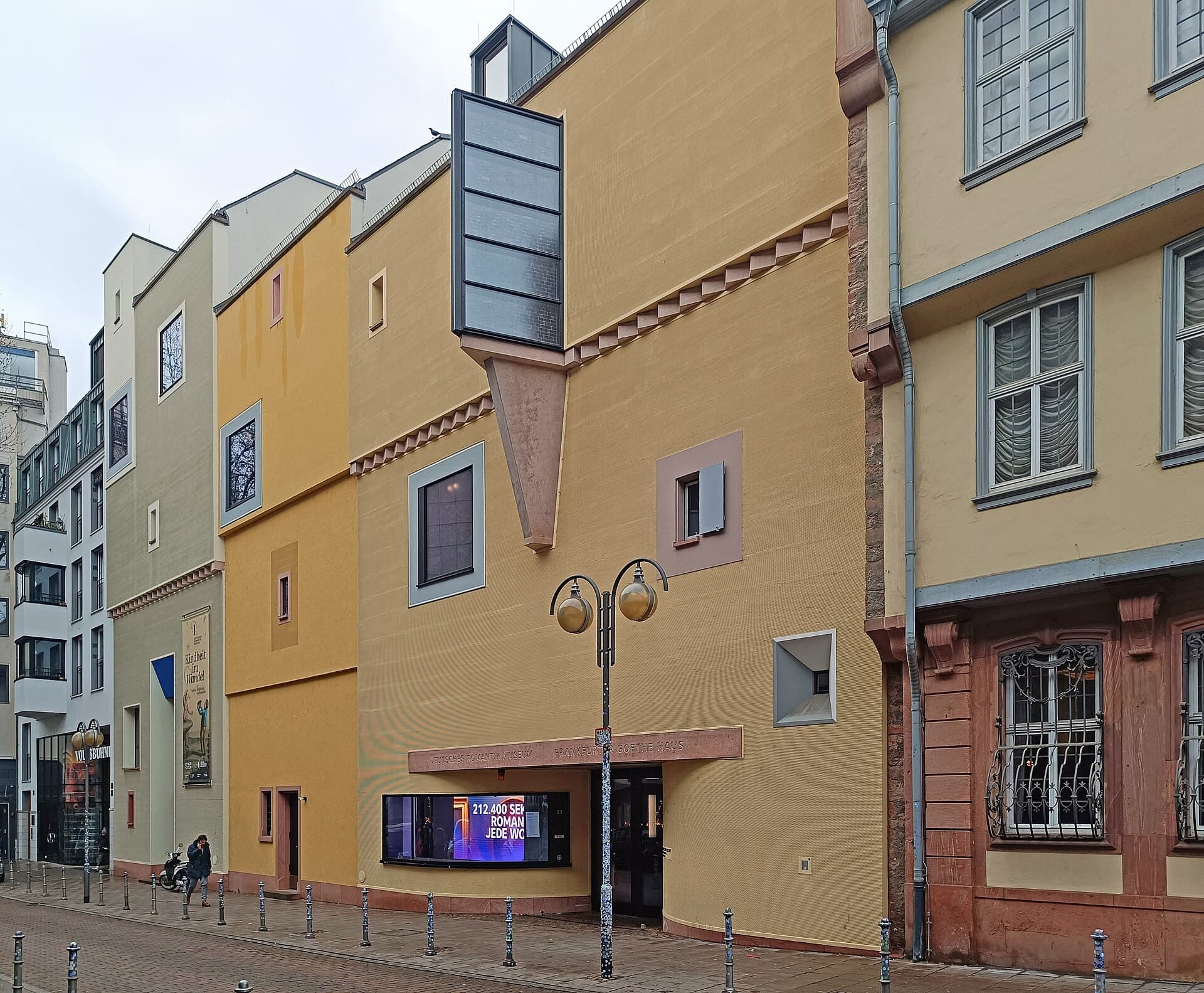 German Romanticism MuseumThe German Romanticism Museum opened on the fourteenth of September twenty twent1 minute walk4.8
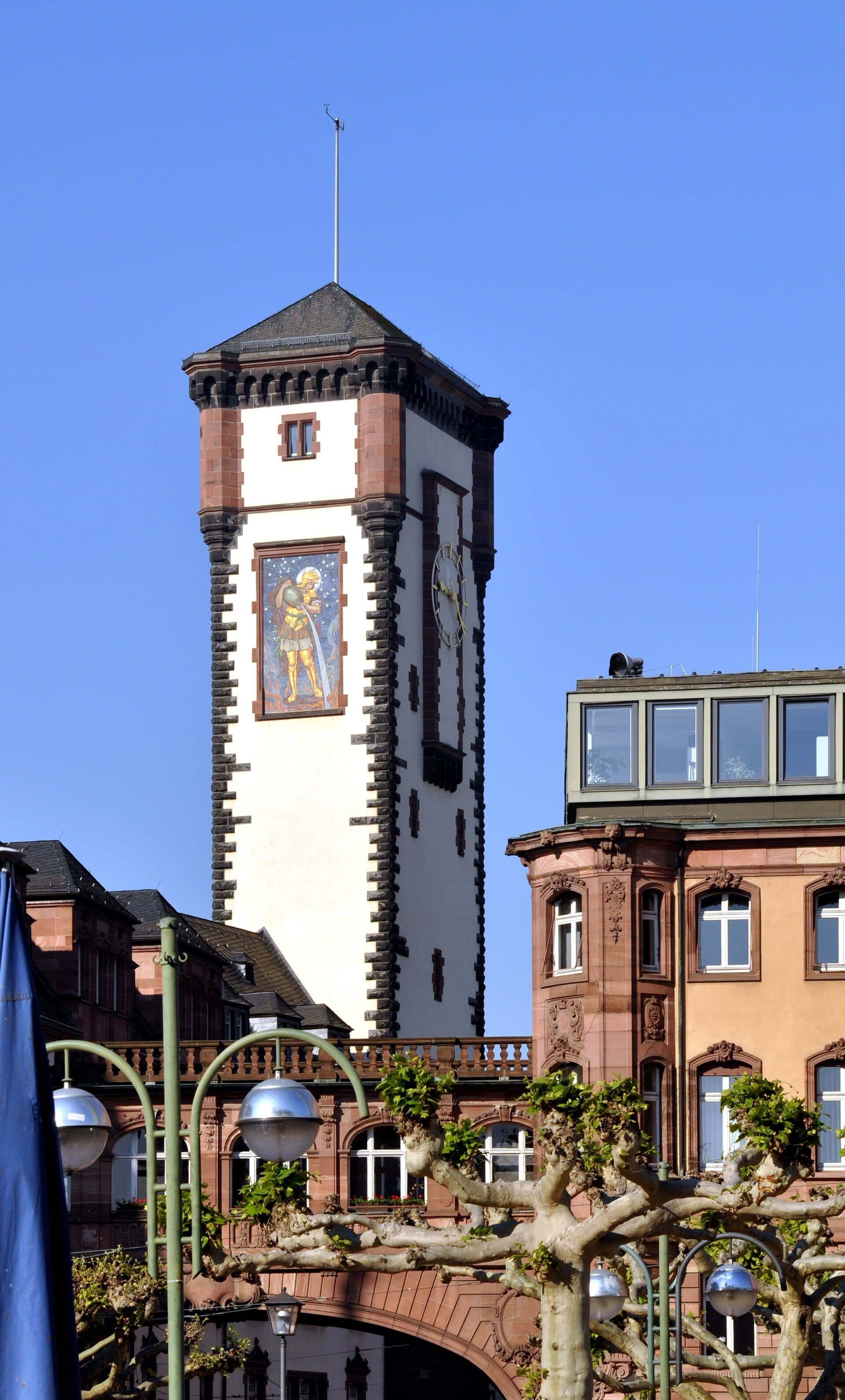 Langer Franz TowerA tower in Frankfurt's town hall complex, built between 1900 and 1908 as part of2 minutes walk4.4
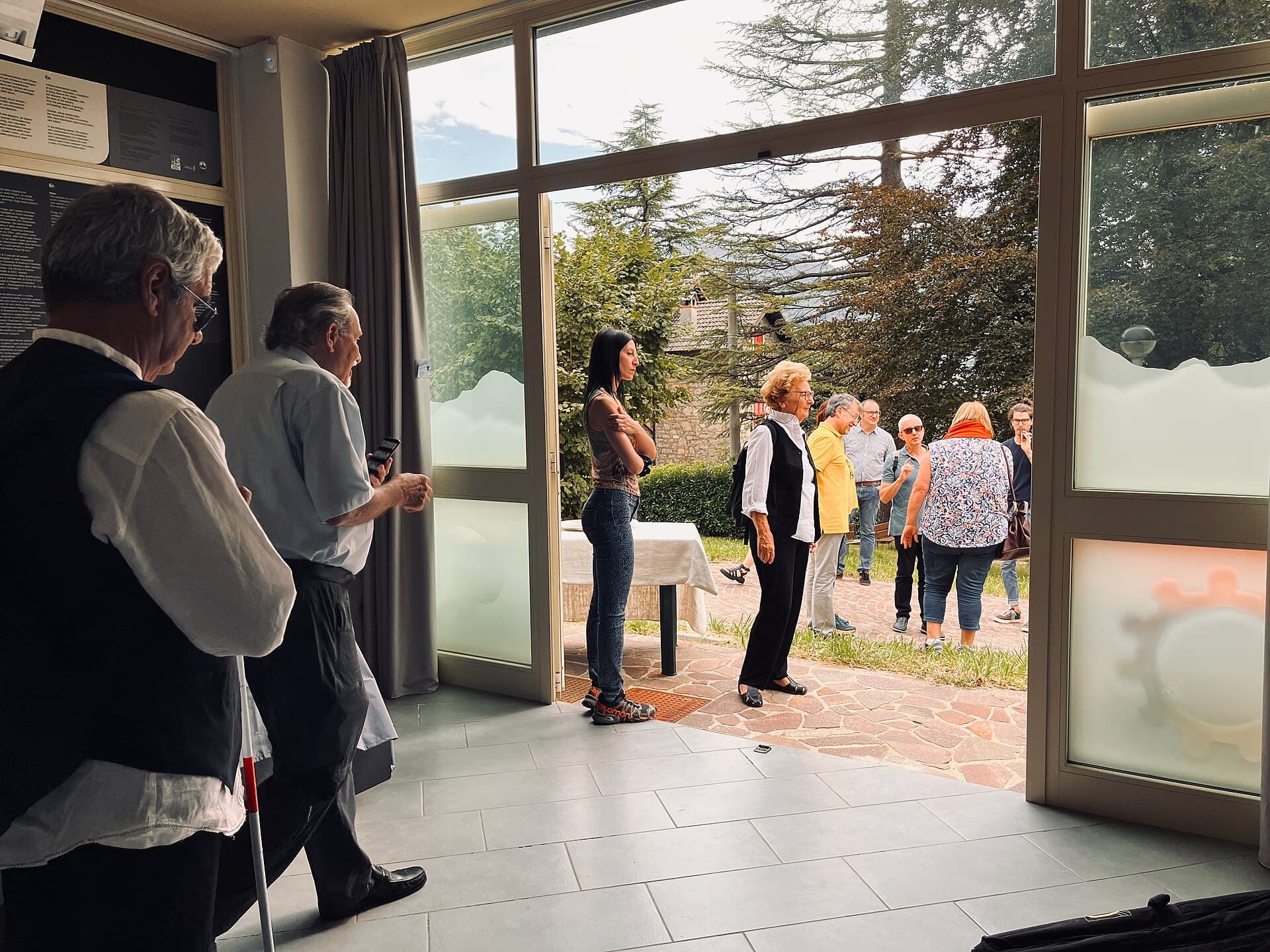 Dialogue MuseumThe Dialogue Museum is not a museum in the ordinary sense: there are no exhibits3 minutes walk4.6
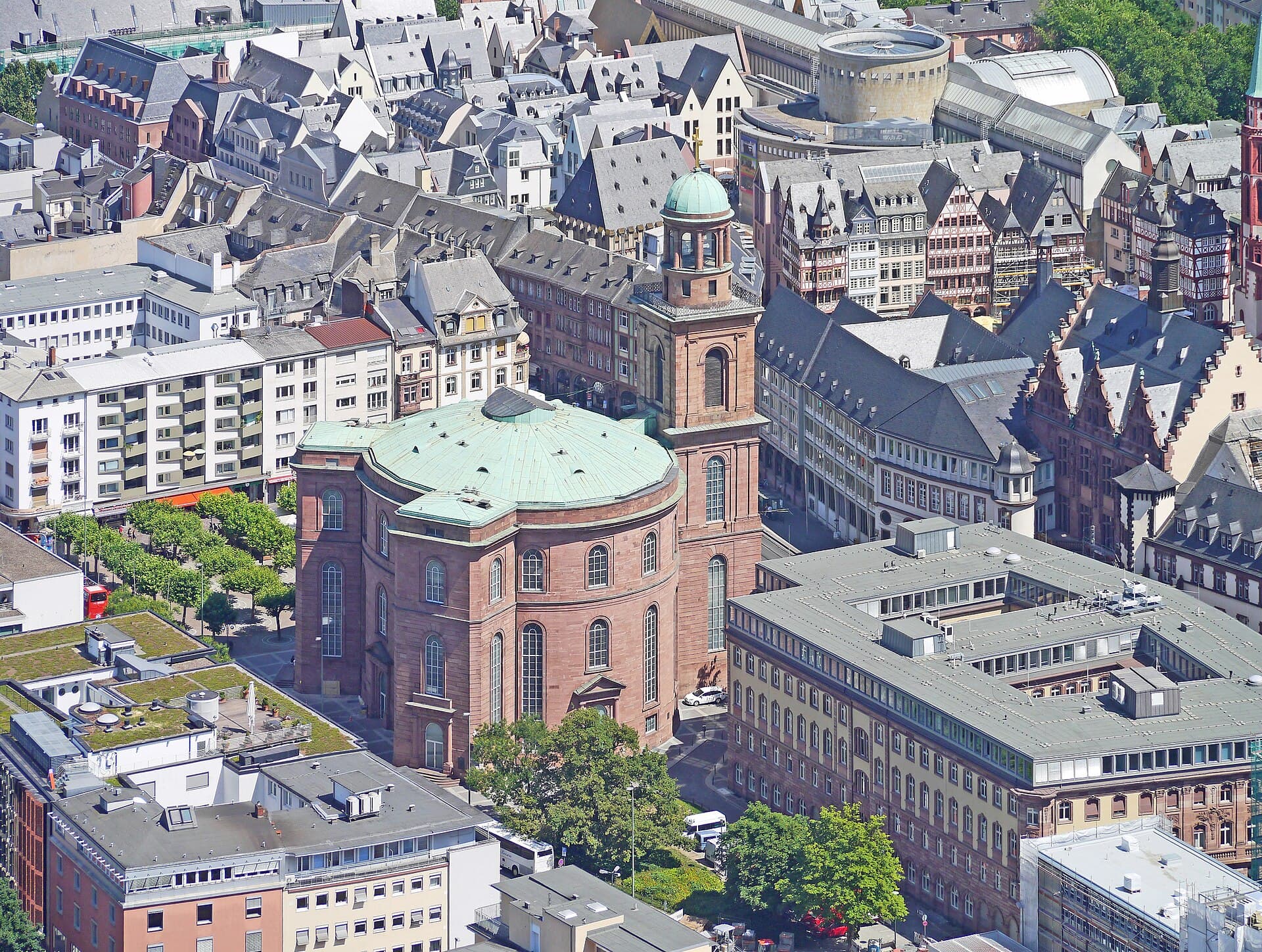 St. Paul's ChurchSt. Paul's is a round sandstone building in central Frankfurt. It matters not as3 minutes walk4.5
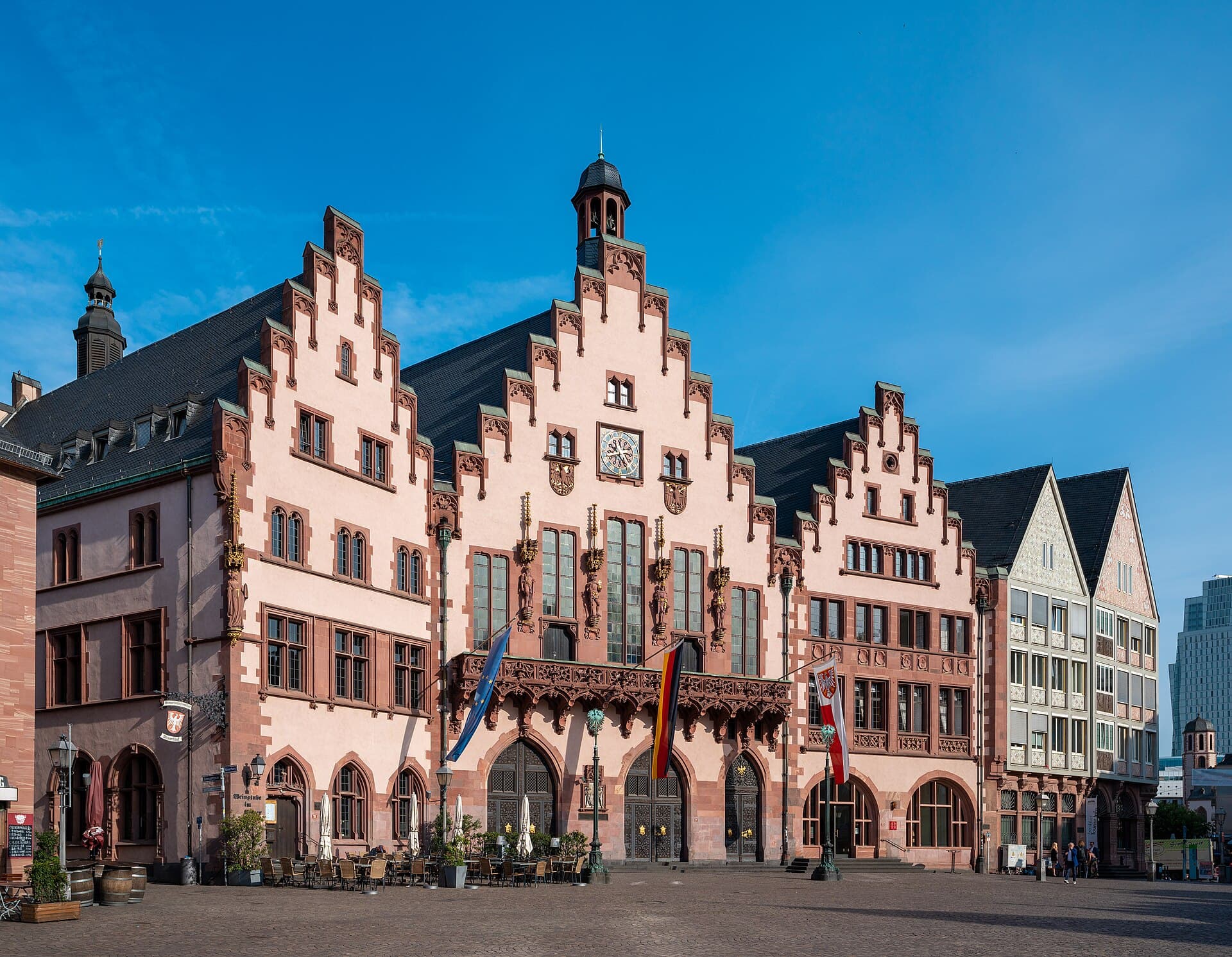 RömerThe Römer has been Frankfurt's city hall since 1405, and its three stepped gable4 minutes walk4.6
Reasonably, yes — the house shows how a wealthy eighteenth-century family cooked, sat and slept, which is interesting without knowing the literature. But if everyday history does not appeal either, you may find it ordinary.
The building was rebuilt after bombing destroyed it in 1944, reusing the original stone where possible. The furniture and objects inside are genuine, because the family removed and hid them beforehand.
The Römer square and the old town are minutes away, and the Alte Brücke over the Main is close too. You can walk all of them in half a day.