
Rebuilt shorter
Destroyed in 1944 and rebuilt lower and simplified.
Photo: Andreas Praefcke — CC BY 3.0 · Felix König — CC BY 3.0 · Dr. Thomas Liptak — CC BY-SA 4.0 · Lektorati — CC BY-SA 4.0
A tower in Frankfurt's town hall complex, built between 1900 and 1908 as part of an extension of the municipal building. The name carries local mockery: Langer Franz, meaning Tall Franz, refers to the mayor Franz Adickes who ordered it built — and who was short. Frankfurters gave the tower the name as a comment on that, and it stuck. The tower was destroyed in the bombing of 1944 that erased most of Frankfurt's old town, and was rebuilt after the war lower than the original and in simplified form. Anyone comparing old photographs with what stands today will notice the difference. The tower stands at the Römer, the town hall square that is the historic heart of Frankfurt and its most photographed image — stepped gables rebuilt carefully after the war, and the setting of the famous Christmas market. The tower cannot be entered or climbed. It is a detail you look at within the square, not a destination.
Destroyed in 1944 and rebuilt lower and simplified.
Frankfurt's historic heart and most photographed image, rebuilt after the war.
Look at it within the square as you pass; do not set aside time for it.
The Römer town hall, the old town
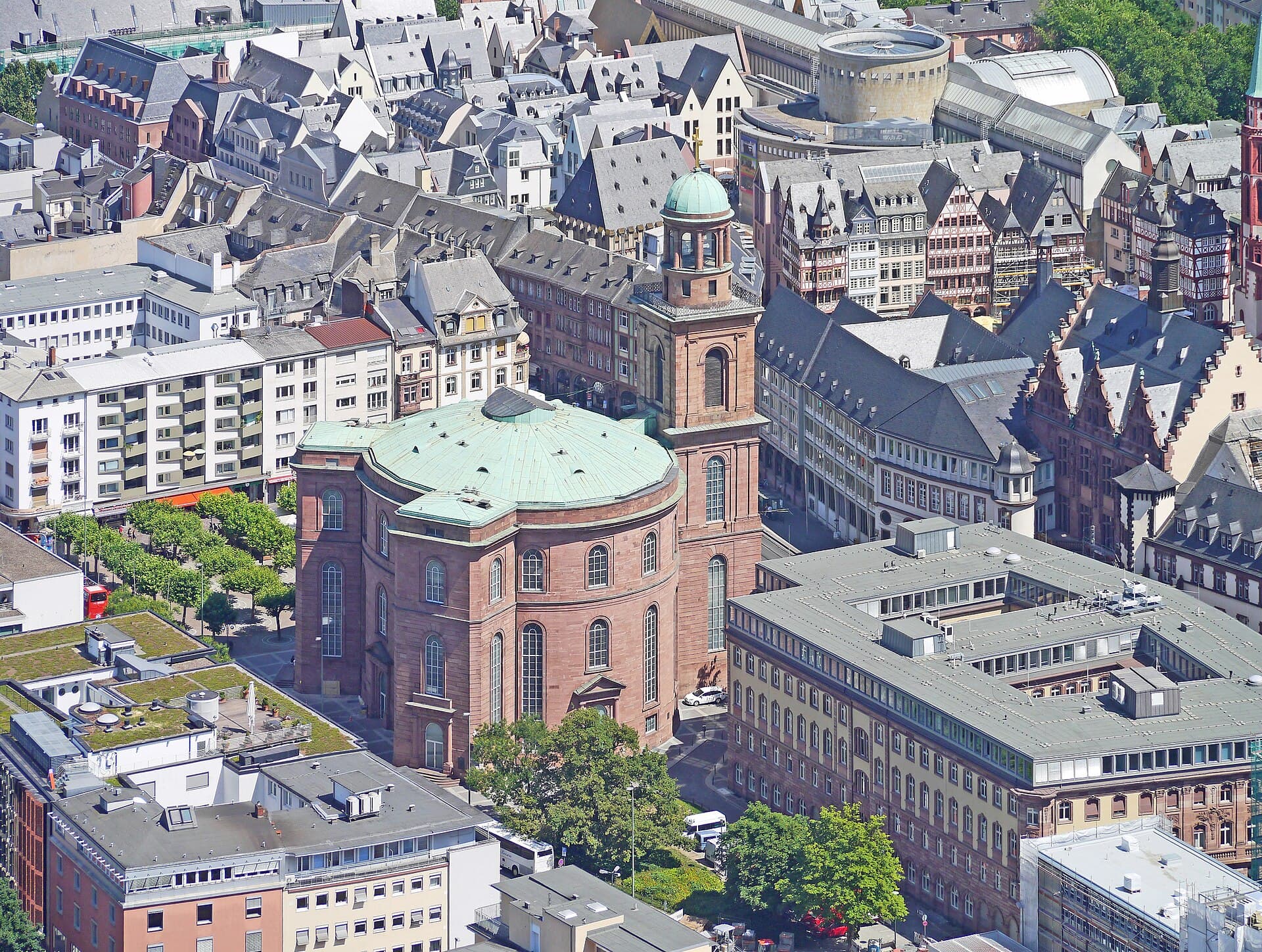 St. Paul's ChurchSt. Paul's is a round sandstone building in central Frankfurt. It matters not as1 minute walk4.5
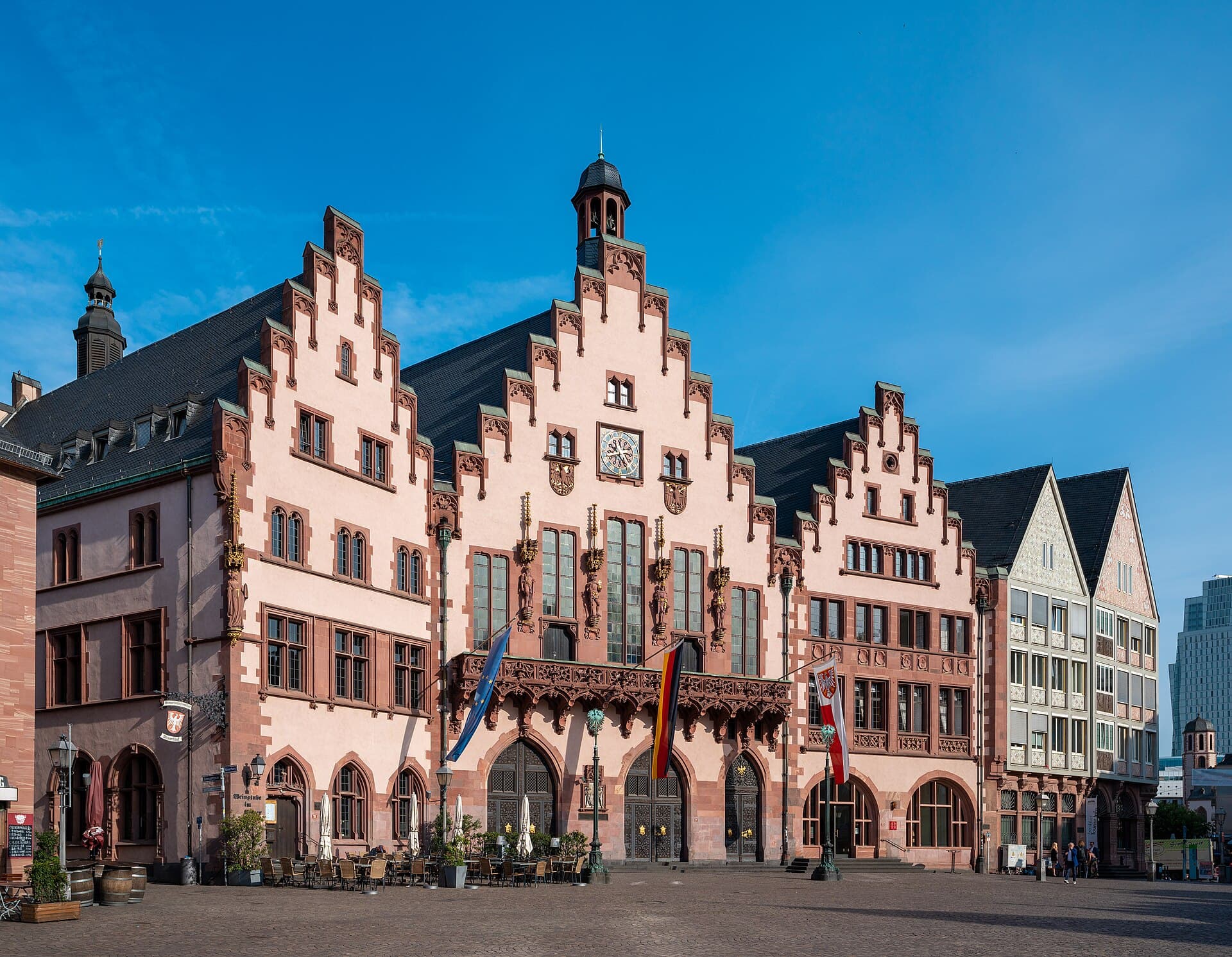 RömerThe Römer has been Frankfurt's city hall since 1405, and its three stepped gable2 minutes walk4.6
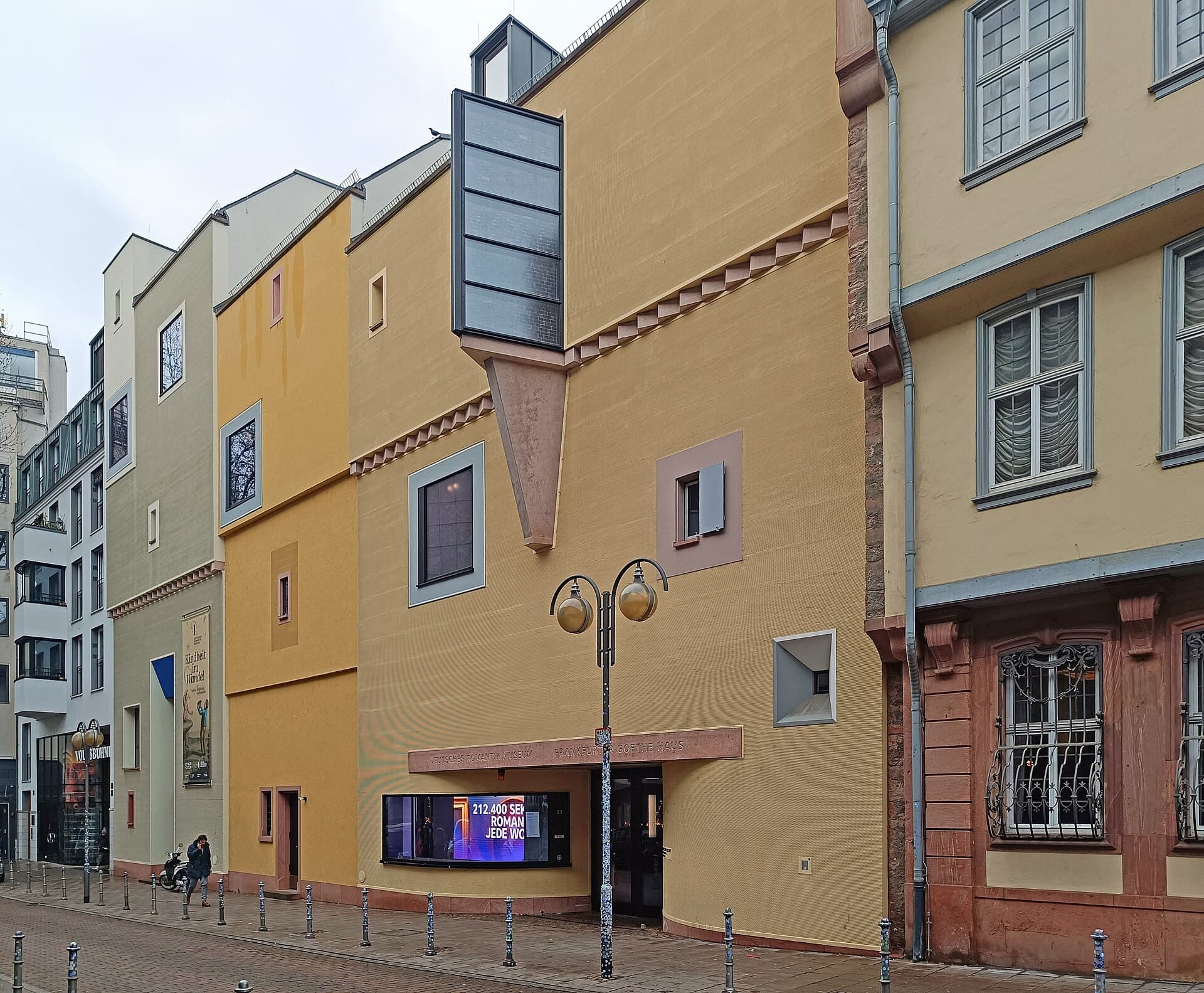 German Romanticism MuseumThe German Romanticism Museum opened on the fourteenth of September twenty twent2 minutes walk4.8
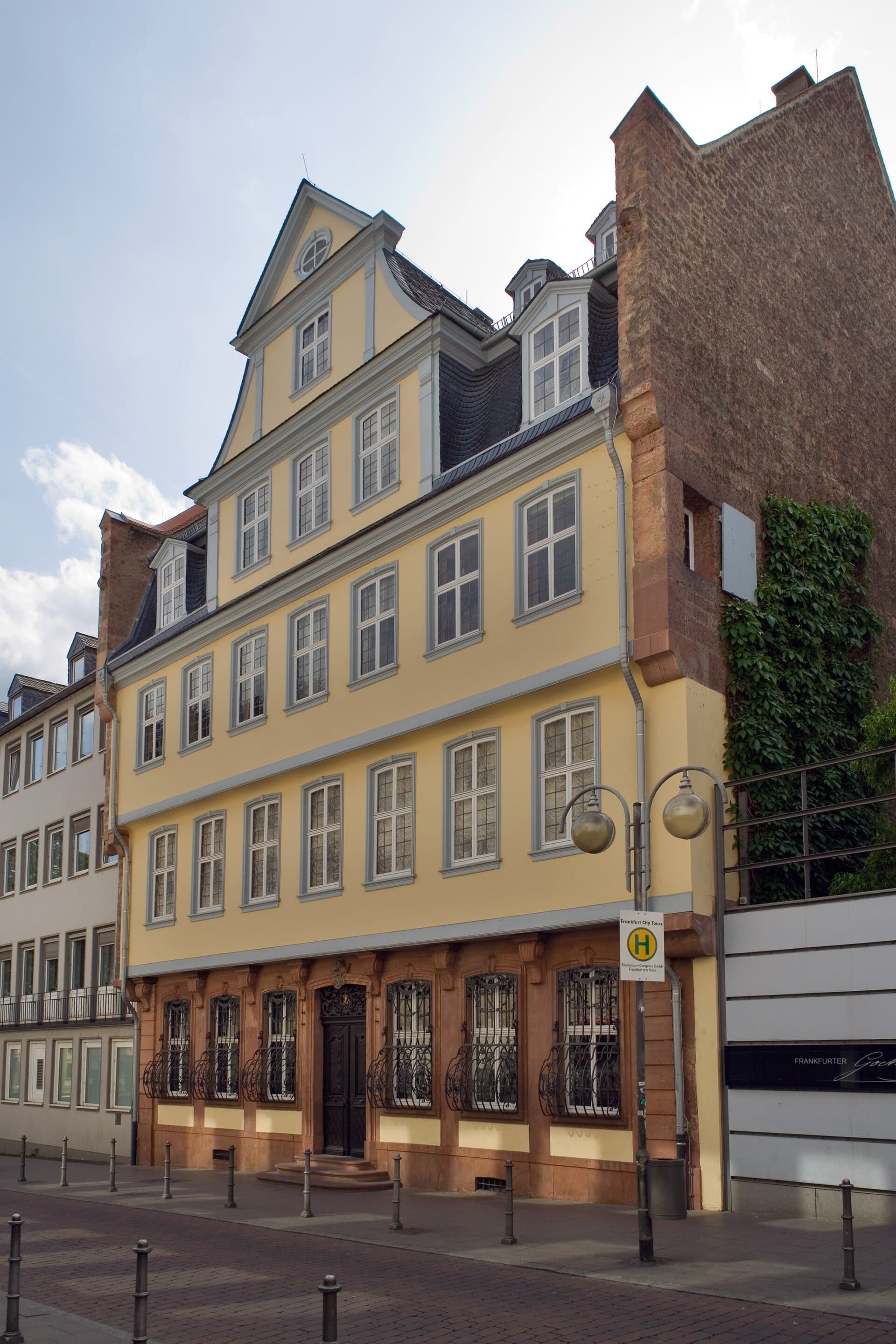 Goethe HouseJohann Wolfgang von Goethe was born here in 1749 — the most famous writer in Ger2 minutes walk4.3
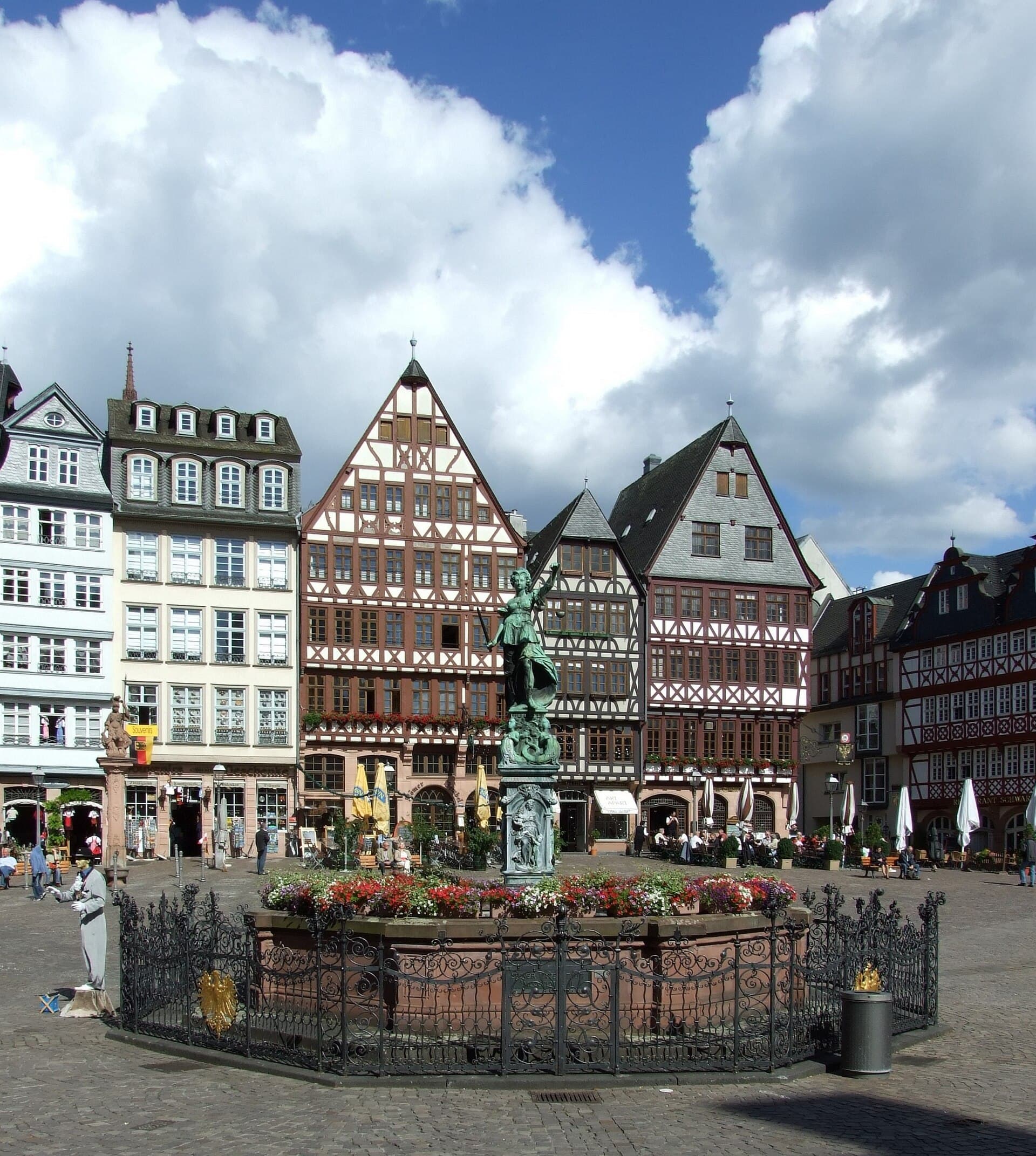 Fountain of JusticeThe Fountain of Justice stands at the centre of Römerberg in front of the Römer,2 minutes walk4.8
Very little. The city was bombed in March 1944 and its historic centre — among the largest concentrations of medieval timber-framed houses in Europe — was almost entirely destroyed. The Römer facades were rebuilt after the war, and between 2012 and 2018 the New Old Town quarter between the Römer and the cathedral was rebuilt with fifteen buildings reconstructed on the originals.
The Römer square and the New Old Town quarter, the imperial cathedral where Holy Roman Emperors were crowned, the Goethe House, and the museum embankment along the river. The old town is small and can be walked in half a day.