
The twin drums
The inner fort's cylinders — Rhodes' icon.
Burkhard Mücke — CC BY-SA 4.0 · Jorge Láscar from Australia — CC BY 2.0 · Burkhard Mücke — CC BY-SA 4.0 · Burkhard Mücke — CC BY-SA 4.0
The Grand Master's Palace is the Knights' city's crown: a fortress within the fortress behind twin drum towers — seat of the order's masters and their sea empire's centre, wrecked by a magazine blast (1856) and rebuilt by the Italians (1930s) in Fascist pomp for a Mussolini who never came — so you now walk huge marble halls floored with genuine Roman mosaics they shipped from Kos, the ground floor holding two excellent exhibitions of ancient and medieval Rhodes. And up to it climbs the Street of the Knights, Europe's most complete medieval street: six hundred metres of uniform stone lining the Inns of the Tongues — the order's seven national houses with carved blazons (France's the grandest) — a dim-cornered walk dropping you five centuries at once, finest early before the crowds or lamplit at night. The pair fills two and a half hours — and the combined ticket (palace, museum, Our Lady of the Castle) computes for two-day stayers.
The inner fort's cylinders — Rhodes' icon.
Seven nations' houses in blazon.
Kos' Medusa beneath your steps.
Ippoton, 85100 Rhodes
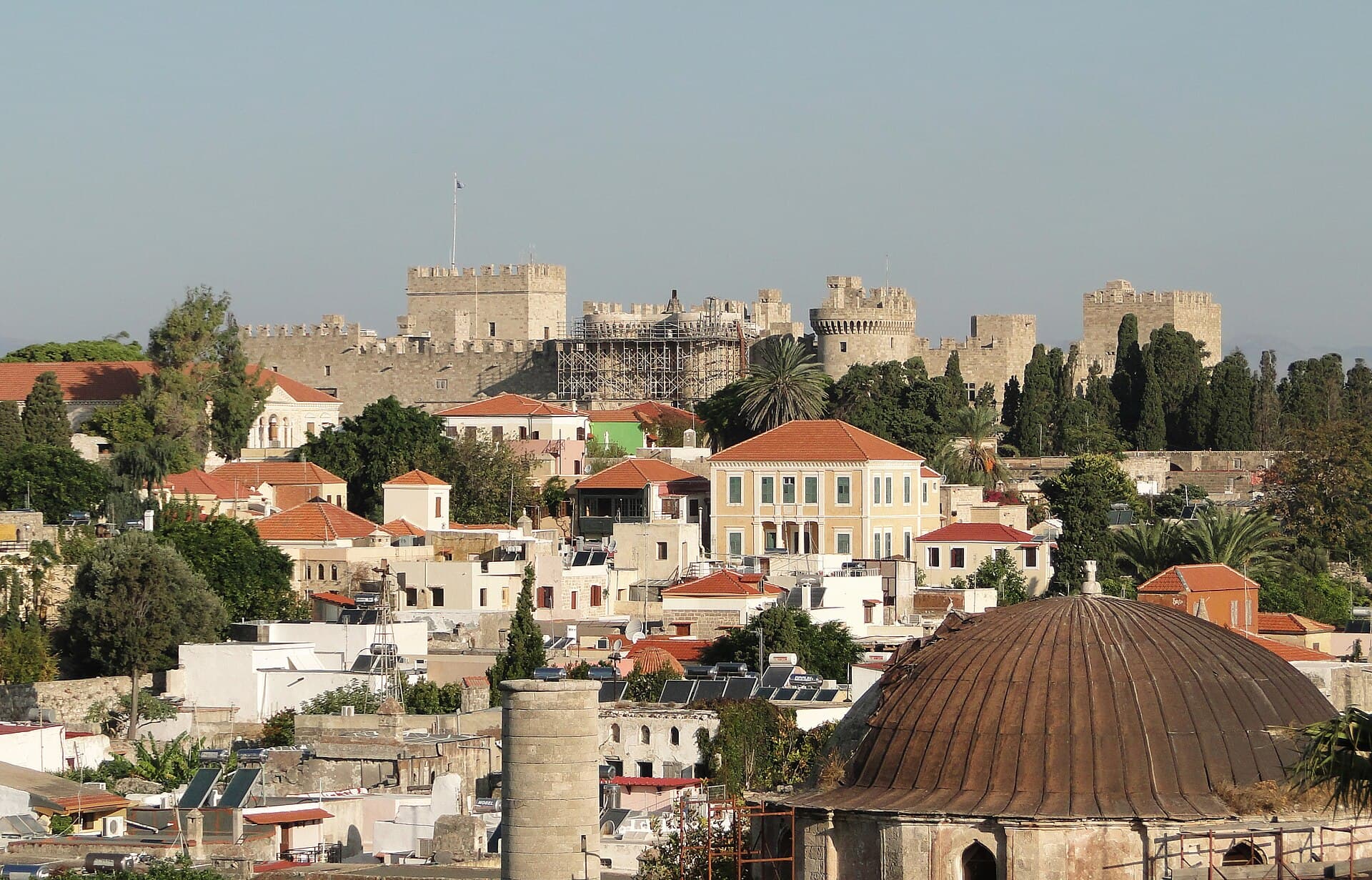 The Medieval City of RhodesRhodes' old town is Europe's largest inhabited medieval city: the Knights of St.2 minutes walk4.7
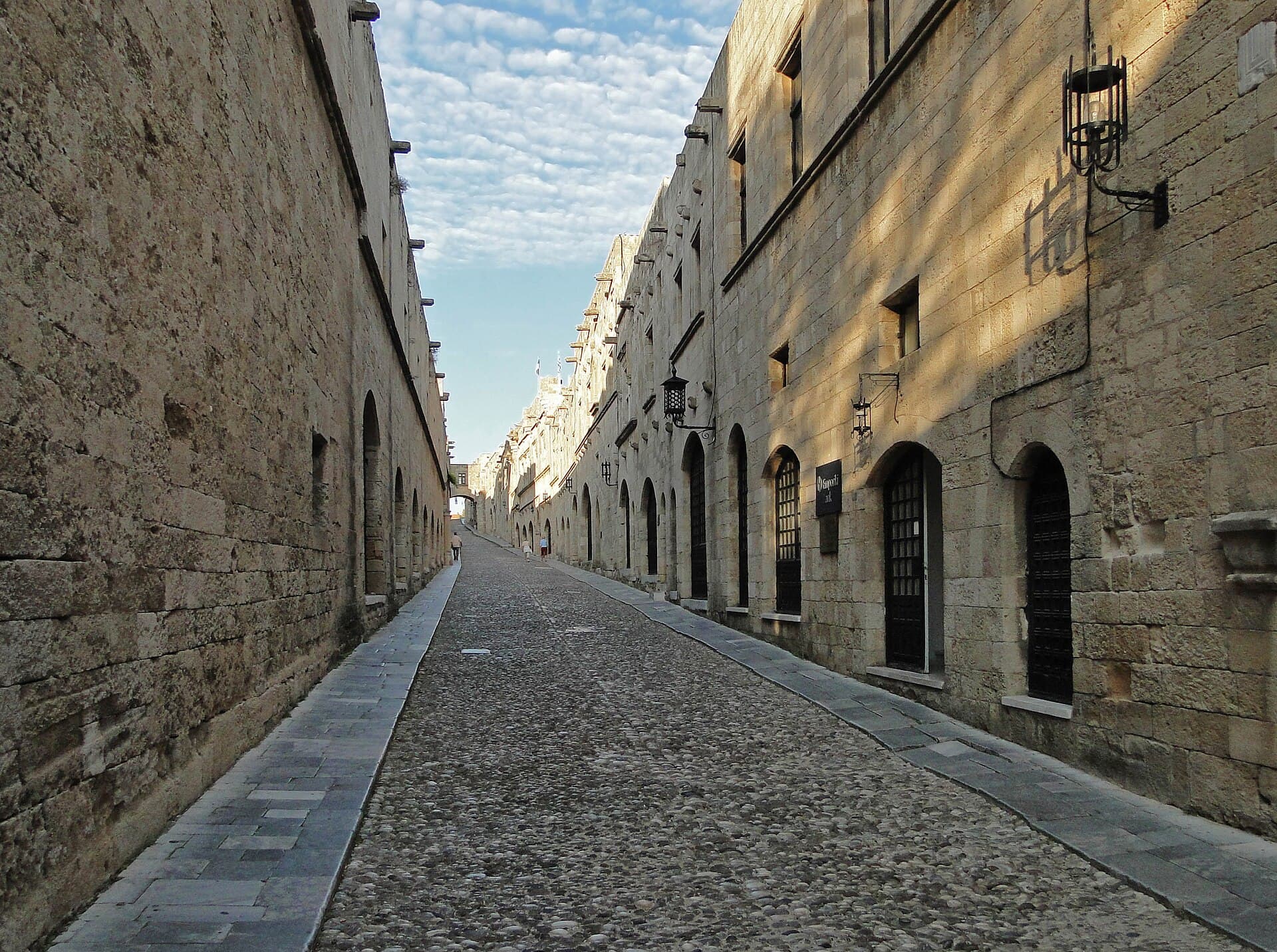 Street of the KnightsA paved stone street climbing some six hundred metres from the harbour to the Pa3 minutes walk4.7
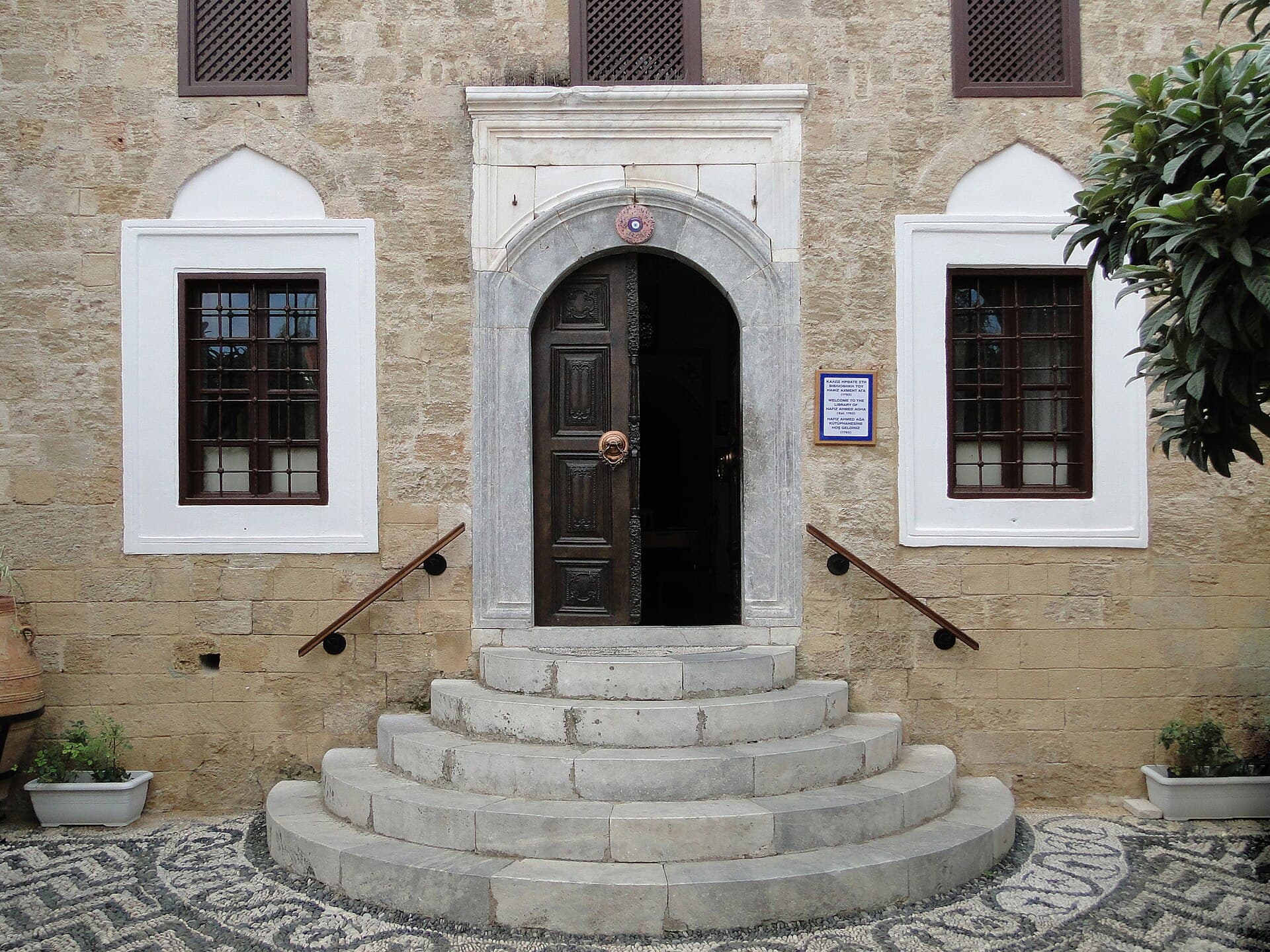 Hafiz Ahmed Agha LibraryA small Ottoman building with a stone frontage and a latticed window on **Sokrat3 minutes walk4.4
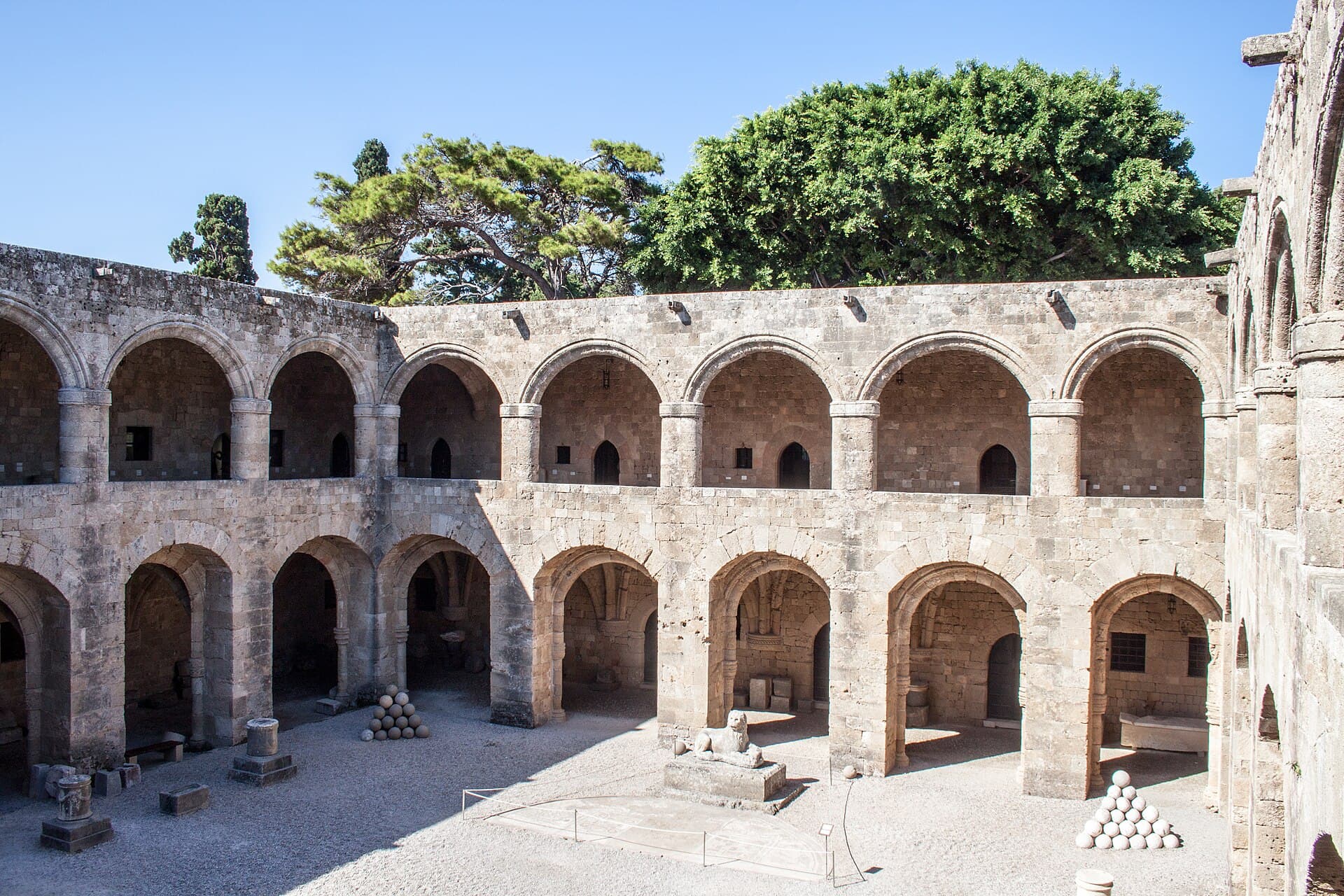 The Archaeological Museum (Knights' Hospital)Rhodes' museum is a building before a collection: the Knights' New Hospital (1484 minutes walk4.5
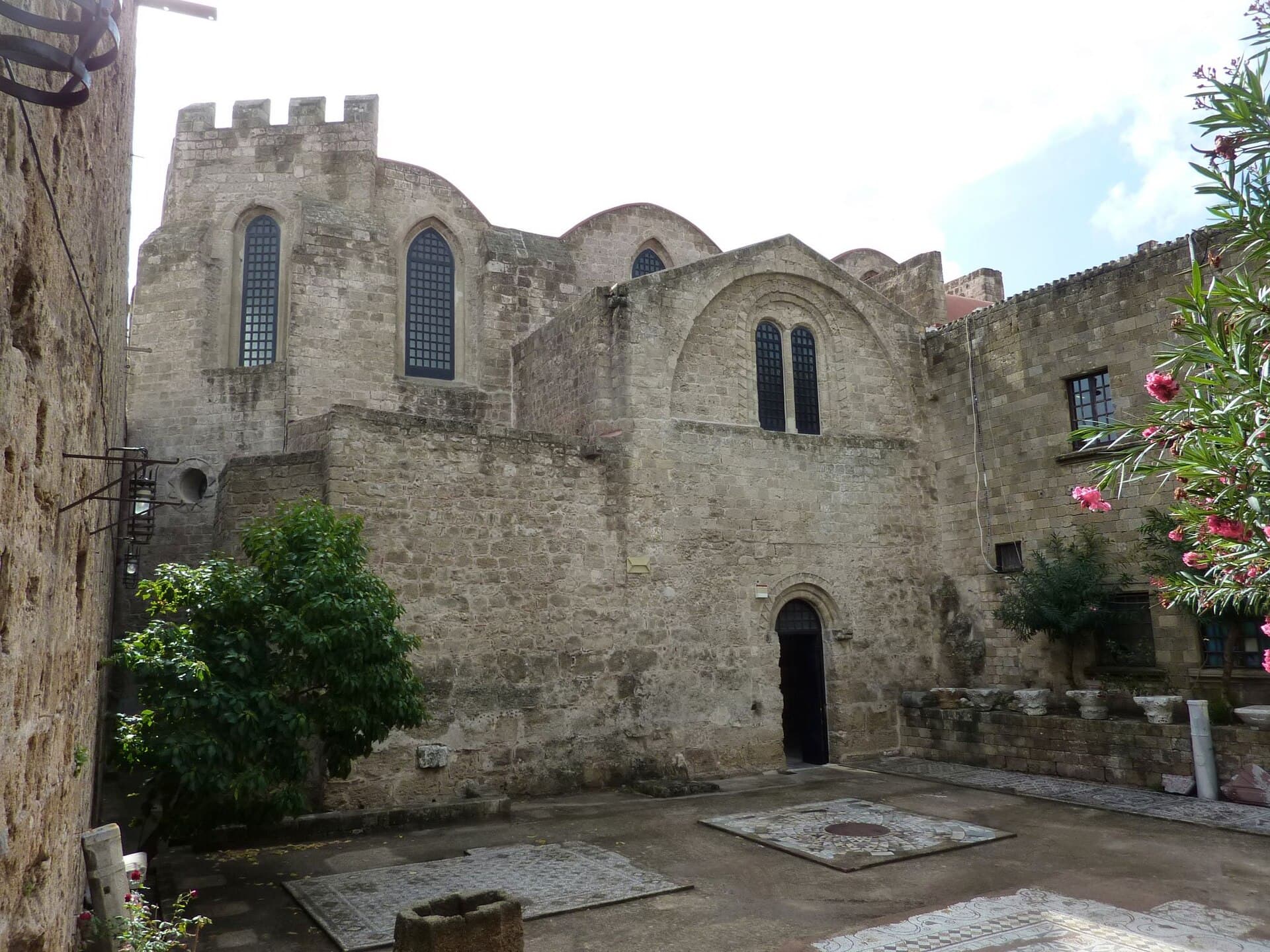 Panagia tou KastrouA large stone building near the Street of the Knights whose history sums up the 4 minutes walk4.3
Outer walls and drum towers are Knights' original that survived the blast — the interiors a plush Italian remake in genuinely looted materials: honest as fortress, deceptive as palace. Take it so: an exhibit of how Fascists imagined the Middle Ages upon a true shell — and the ground-floor exhibitions alone repay the ticket.