
The eleven gates
d'Amboise, Marine and kin — the centuries' doorways.
Bernard Gagnon — CC BY-SA 4.0 · ianpudsey — CC BY 3.0 · Matthias Schmitt Rhodos — CC BY-SA 4.0 · Notafly2 — CC BY-SA 4.0
Rhodes' old town is Europe's largest inhabited medieval city: the Knights of St. John's four kilometres of wall ringing six thousand residents genuinely living inside the centuries — a complete World Heritage of moats, eleven gates and towers. It walks in three layers: the crusader Knights' city (1309-1522) in honey-toned stone and the seven Tongues' blazons, then four Ottoman centuries (the rose Suleiman Mosque and its minaret, the bazaar, a still-working hamam) — then the Turkish and Jewish quarters' lanes with their earthquake arches and the Jewish Martyrs' square with its seahorse fountain. Strike deep, away from commercial Socratous street: the southeastern lanes stand empty even at peak — and walk the green moat's full circuit (free — a garden within walls), with the wall-top walk partly open by ticket. Evening returns the town to its own: stone lit, restaurants as courtyards.
d'Amboise, Marine and kin — the centuries' doorways.
Rose minaret over the bazaar.
Green between two walls — the town's quiet secret.
Black-and-white pebble paving as Rhodian art.
Old Town, 85100 Rhodes
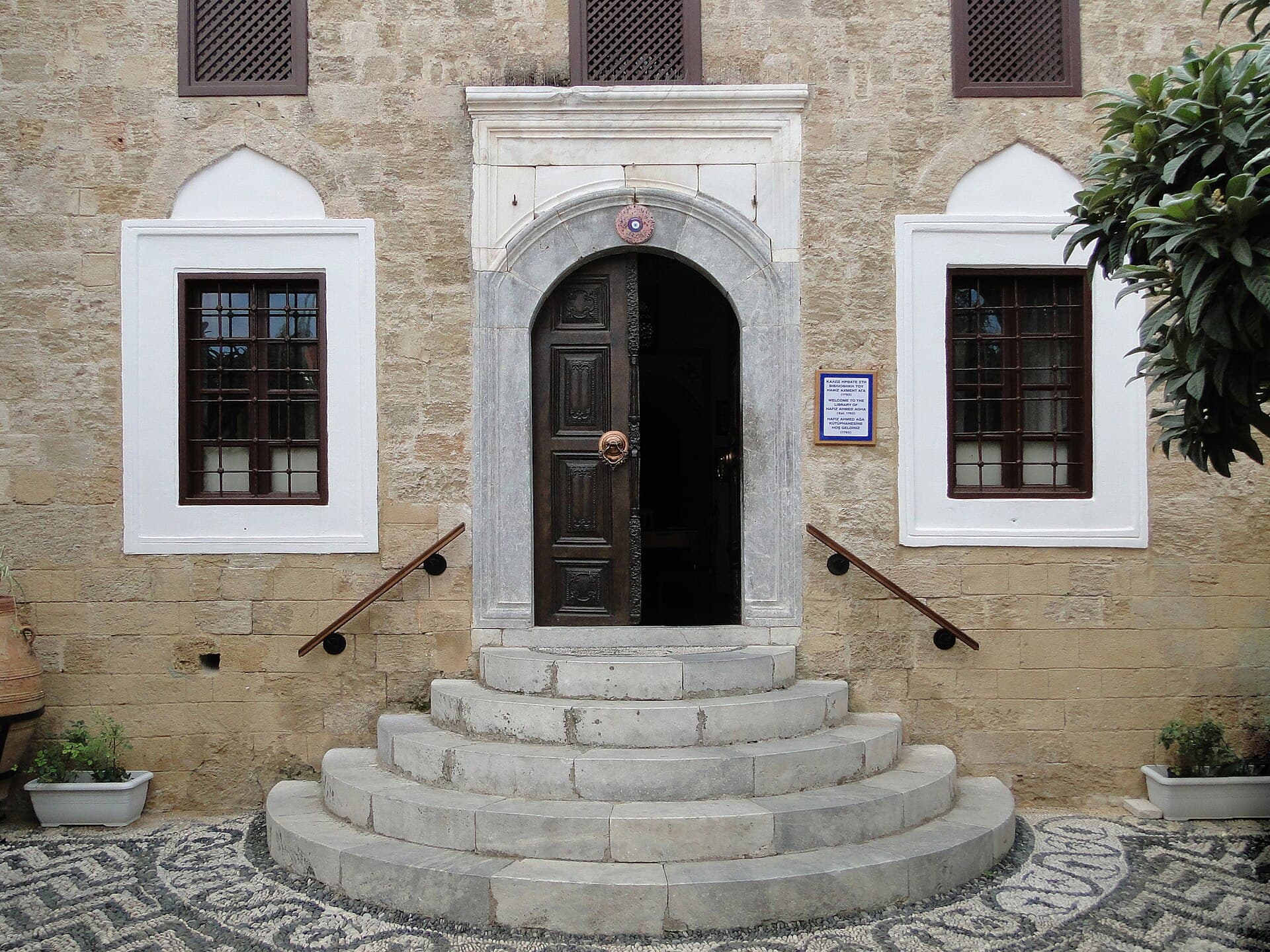 Hafiz Ahmed Agha LibraryA small Ottoman building with a stone frontage and a latticed window on **Sokrat1 minute walk4.4
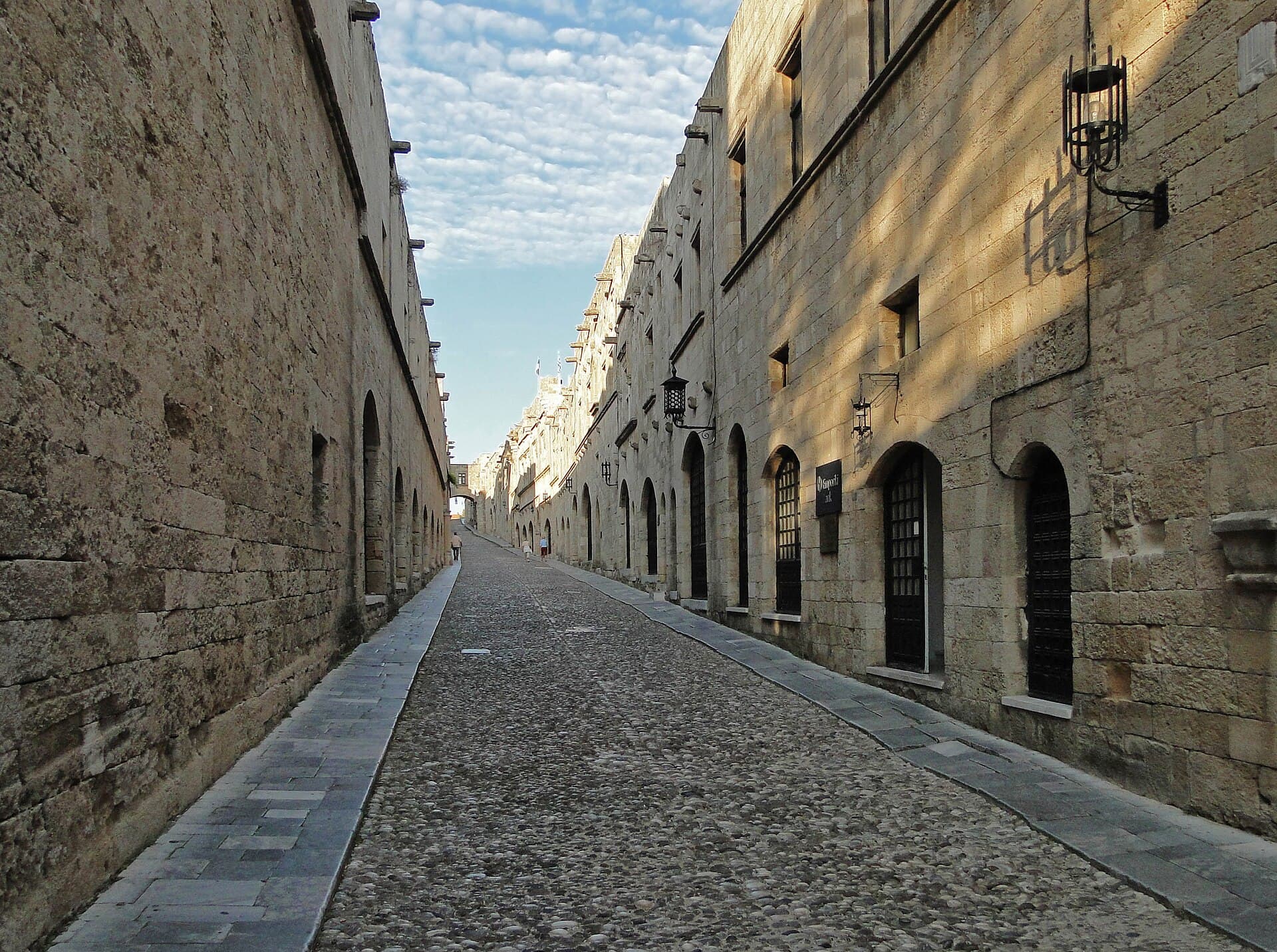 Street of the KnightsA paved stone street climbing some six hundred metres from the harbour to the Pa2 minutes walk4.7
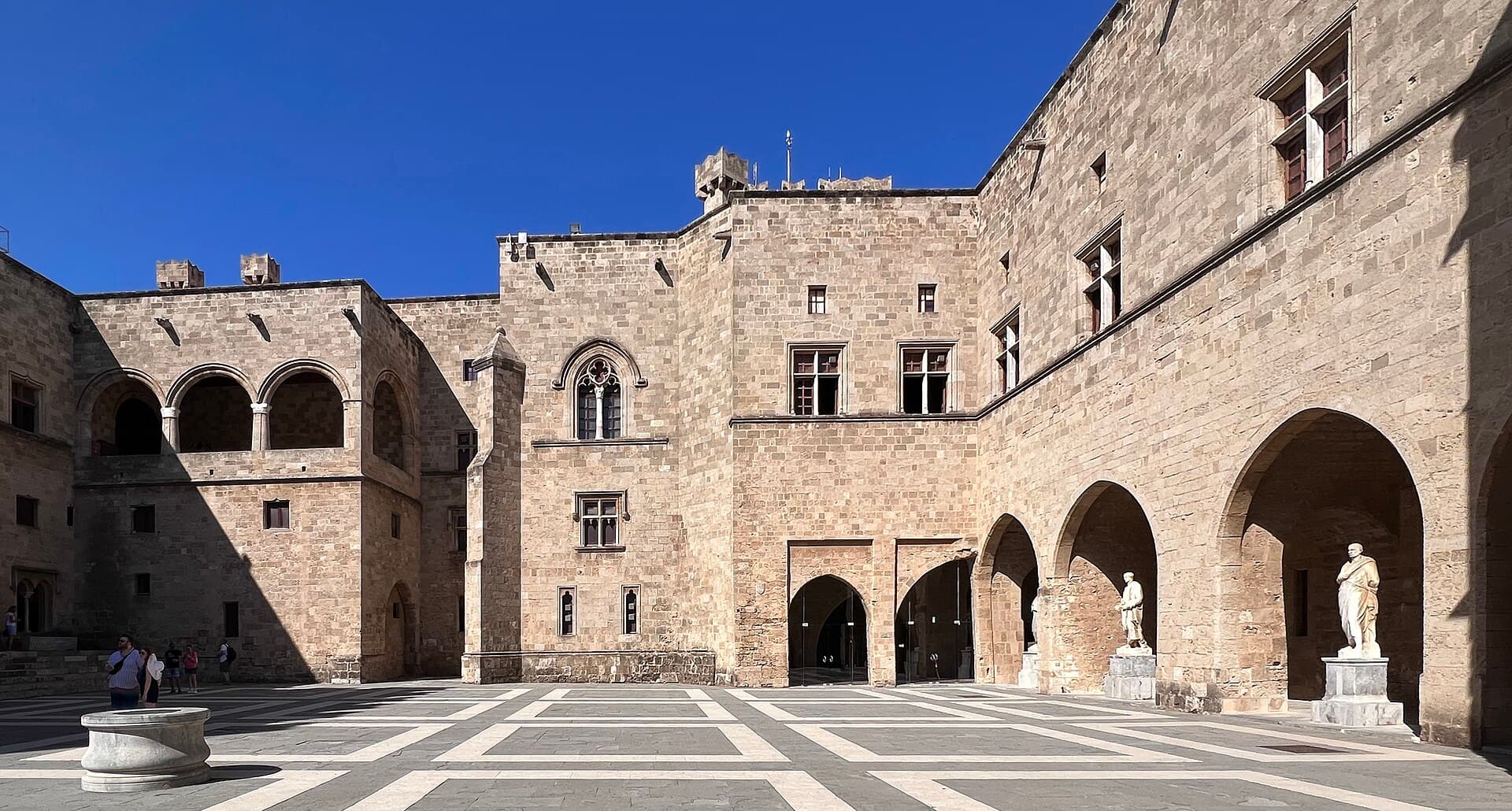 The Grand Master's Palace & Street of the KnightsThe Grand Master's Palace is the Knights' city's crown: a fortress within the fo2 minutes walk4.7
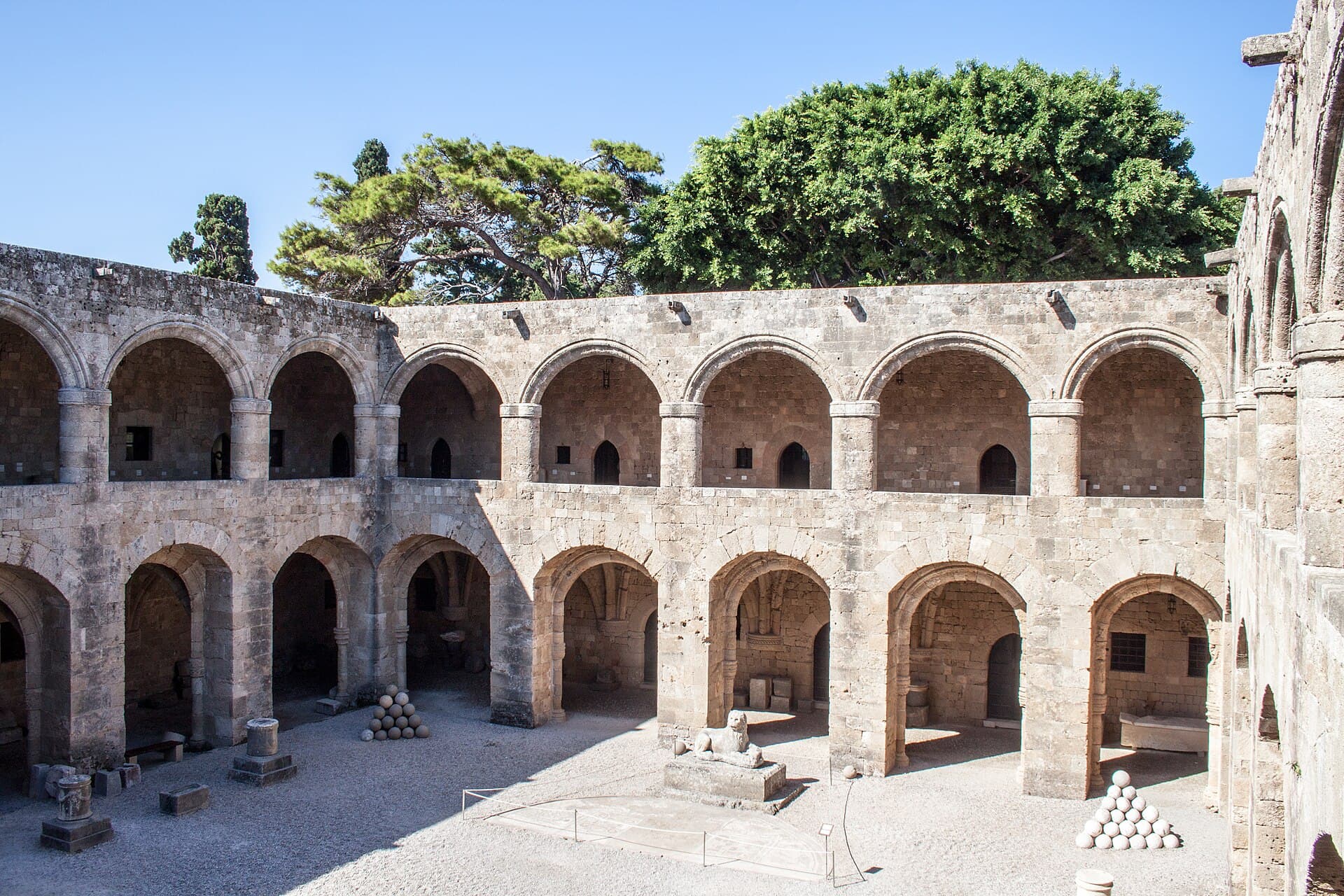 The Archaeological Museum (Knights' Hospital)Rhodes' museum is a building before a collection: the Knights' New Hospital (1483 minutes walk4.5
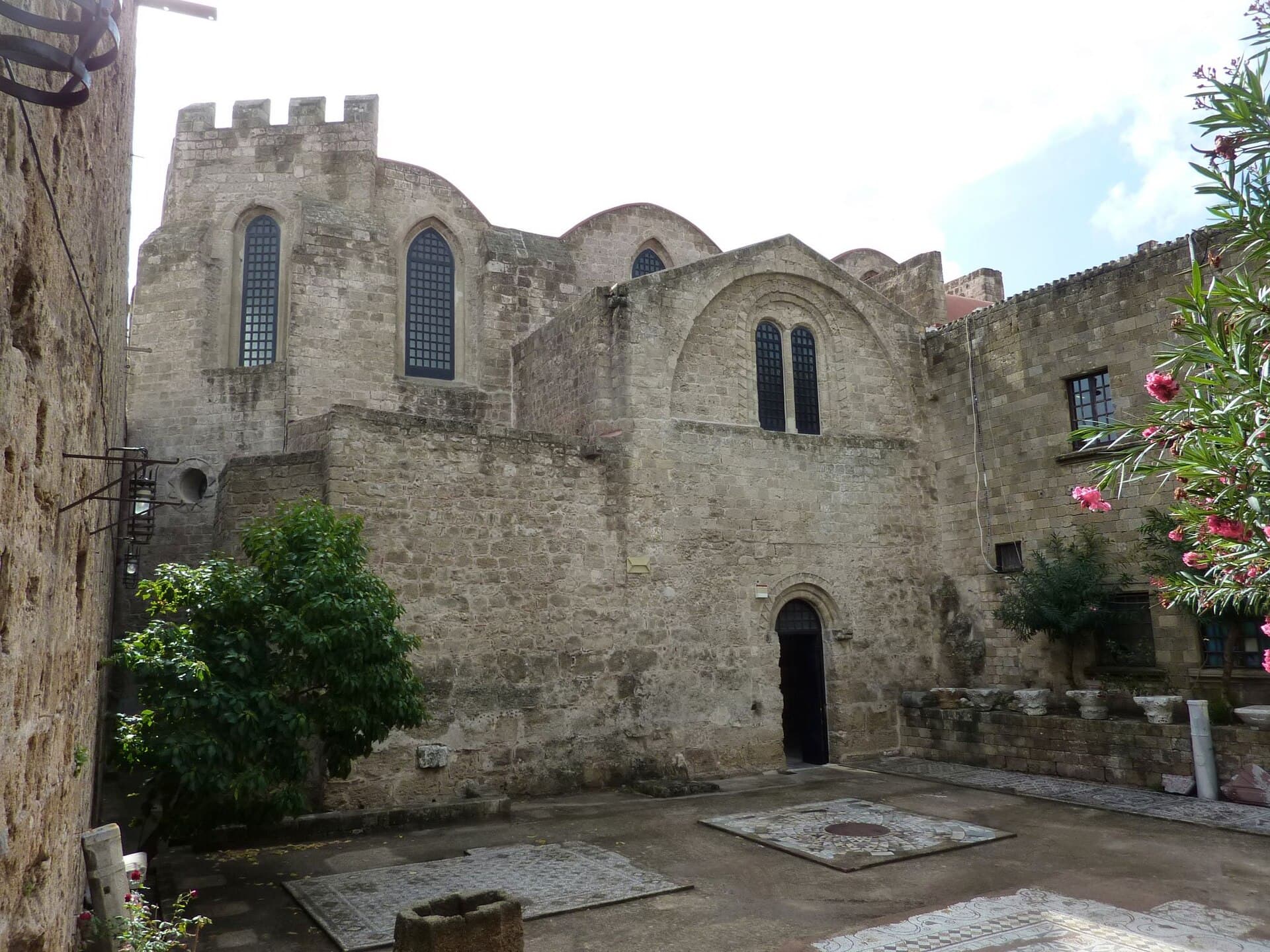 Panagia tou KastrouA large stone building near the Street of the Knights whose history sums up the 3 minutes walk4.3
A fighting order born of Jerusalem's crusader hospital — moved to Rhodes (1309) and ruled it two centuries as a sea fortress facing the Levant, organised in seven national Tongues. Suleiman besieged them six months (1522); they left with honours for Malta — where their surviving name lives: the Knights of Malta.
Three are ideal: a full old-town day (palace, museum, walls, evening), a Lindos-and-south day, a Filerimos-Butterflies-Kallithea or east-beach day. The one-day passer chooses: town morning and Lindos afternoon is a feasible summer race.