
The moment of alignment
The seconds when all forty-two layers line up and Kafka's face appears whole — wait for it rather than shooting at random.
Jindřich Nosek (NoJin) — CC BY-SA 4.0 · Kritzolina — CC BY-SA 4.0 · Kritzolina — CC BY-SA 4.0 · Kritzolina — CC BY-SA 4.0
On a small plaza outside a shopping centre near Národní třída stands a mirrored steel head some eleven metres high. Up close you find it is not one mass but forty-two separate horizontal layers, each turning on its own motor. The layers start to move, the face breaks apart into a chaos of metal slices, and then slowly realigns into the features of Franz Kafka. The work is by the Czech artist David Černý, Prague's best-known and most provocative contemporary sculptor, and was installed in 2014. The choice of Kafka is not arbitrary: he was born, lived and died in Prague, and wrote about identities that come apart and are reassembled, about individuals dissolving into machinery they do not understand. The sculpture says that without a word. It is free to watch from the street, and a full cycle takes only a few minutes and repeats through the day. The visit is very short, yet it is one of the things travellers remember longest — and it sits halfway between Wenceslas Square and the river, so it costs you almost no detour.
The seconds when all forty-two layers line up and Kafka's face appears whole — wait for it rather than shooting at random.
The surface is a mirror: surrounding buildings and sky fracture across the moving layers, so the image changes every second.
If the style appeals, hunt down his other pieces around Prague: the crawling babies on the Žižkov tower, the upside-down horse in the Lucerna passage.
Night lighting makes the steel sharper and the plaza emptier — the best time for a clean shot with nobody in frame.
Outside the Quadrio centre, Spálená street, Prague 1
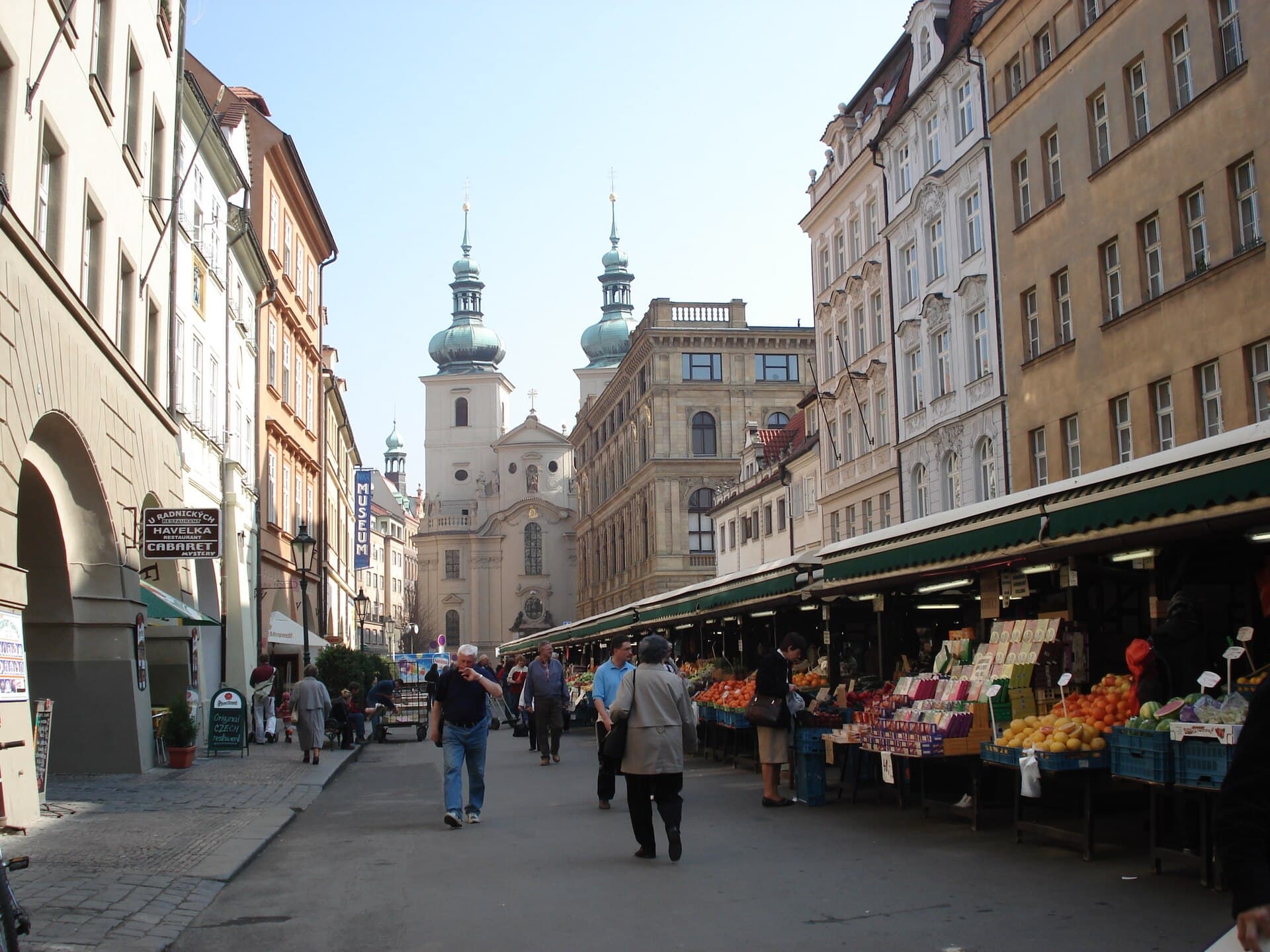 Havelské tržištěHavel's Market is the last open-air market left in the heart of old Prague, trad4 minutes walk4.3
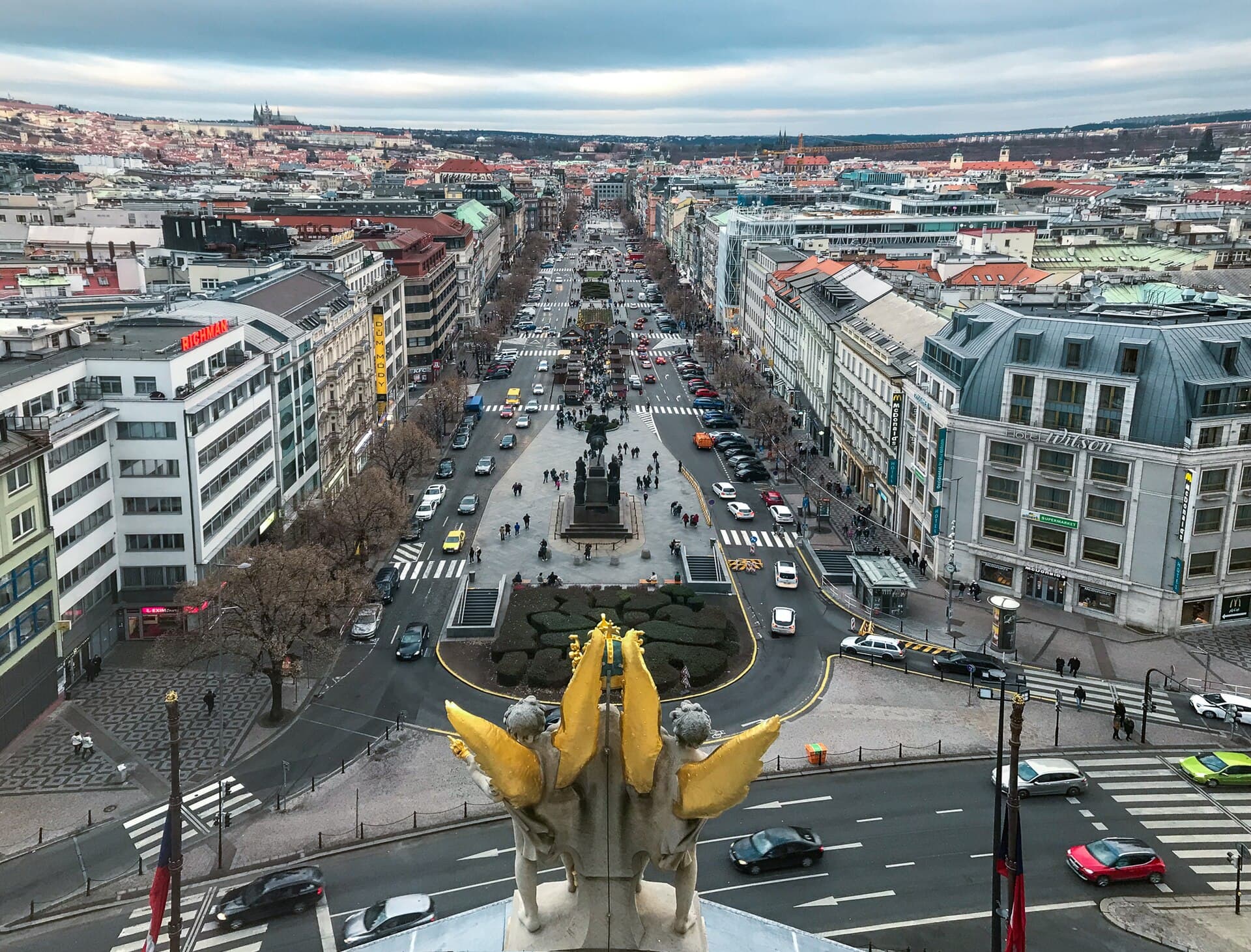 Wenceslas SquareWenceslas Square is not a square in the usual sense but a broad boulevard some 75 minutes walk
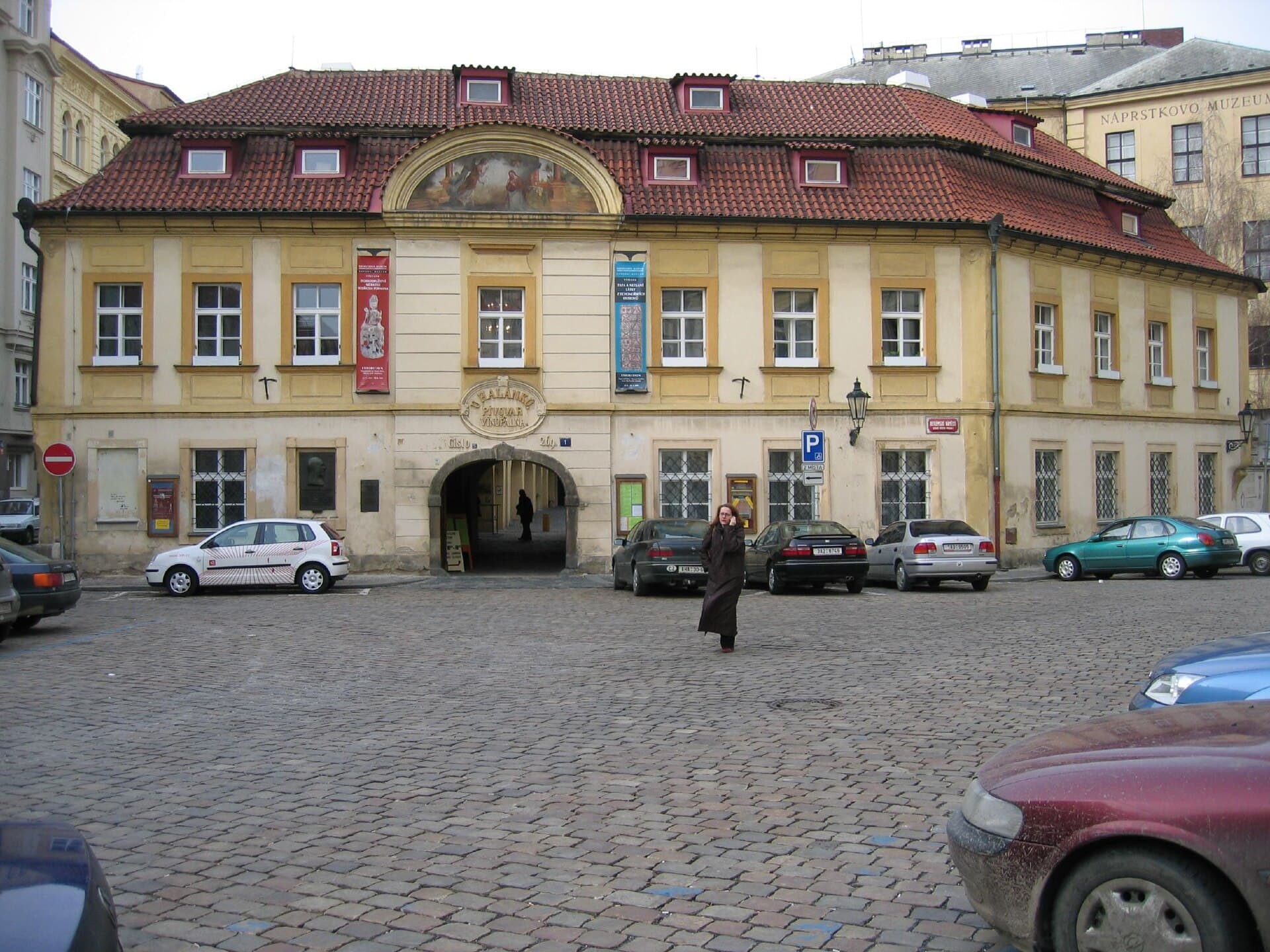 Náprstek MuseumA museum of Asian, African and American cultures in the Old Town, a branch of th5 minutes walk4.4
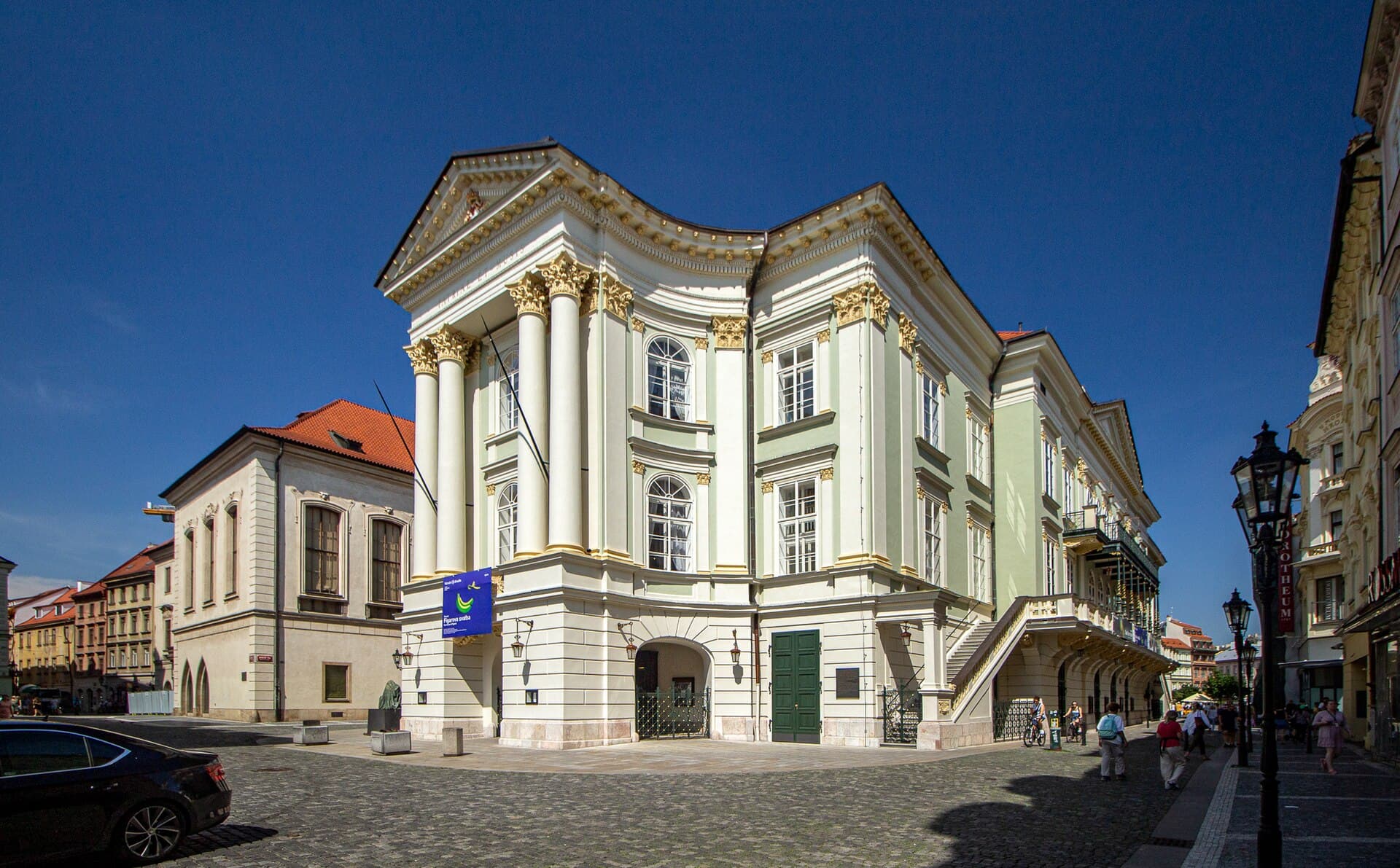 Estates TheatreThe Estates Theatre is a green-and-white classical building in the Old Town, ope7 minutes walk4.6
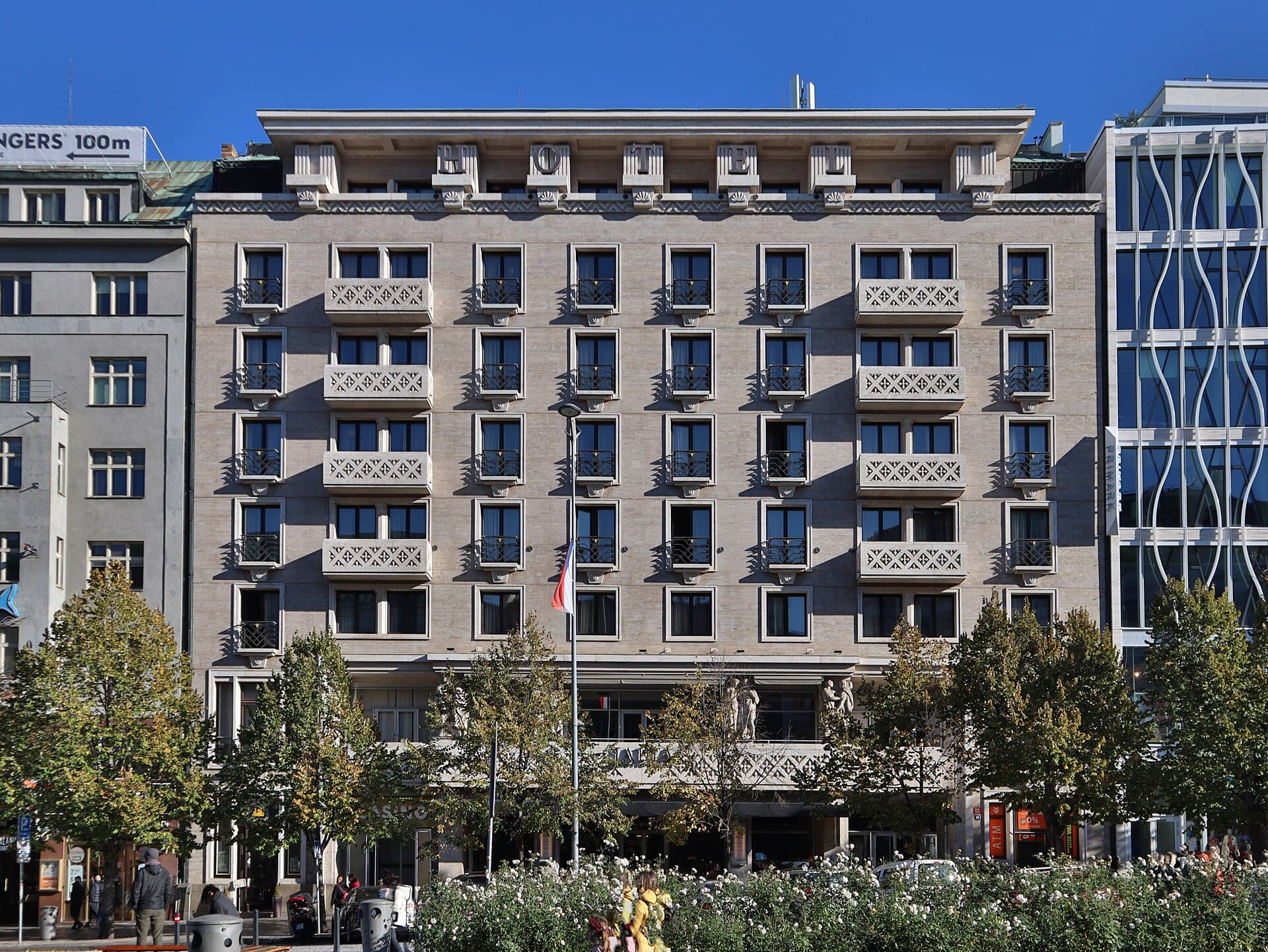 Cold War Museum, Hotel JaltaA secret nuclear shelter beneath the Hotel Jalta on Wenceslas Square, opened to 7 minutes walk4.6
Not a trip of its own, but certainly a five-minute detour if you are near Wenceslas Square or heading for the river. It is far more impressive in person than in photographs.
It generally runs in repeated cycles through daytime hours, and stops occasionally for maintenance or in severe weather. If you find it still, wait a few minutes before giving up.
He was born here in 1883, lived most of his life within metres of the Old Town Square, and wrote all his work in this city. Kafka sites are everywhere: his birth house, his museum near Charles Bridge, and his grave in a Jewish cemetery east of the centre.
Národní třída with its 1989 revolution memorial, the National Theatre on the river, and Wenceslas Square — all within a ten-minute walk.