
The giant torii
Over the road.
Zairon — CC BY-SA 4.0 · syvwlch — CC BY 2.0 · KimonBerlin — CC BY-SA 2.0 · KimonBerlin — CC BY-SA 2.0 · Daderot — Public domain · Zairon — CC BY-SA 4.0 · Zairon — CC BY-SA 4.0 · 663highland — CC BY 2.5
A Shinto shrine in Okazaki, built in 1895 as a five-eighths scale reproduction of the old Heian imperial palace to mark 1,100 years since Kyoto was founded as the capital Heian-kyō. It is dedicated to Emperor Kanmu, who moved the capital here, and Emperor Kōmei was added in 1940. Visitors approach through a giant orange torii that stands over the road before the shrine, one of the largest torii in Japan. Inside is a broad courtyard of white gravel ringed by orange and green buildings in an old Chinese-influenced style. Behind the buildings lies the Shin-en Japanese garden, taking up about half the shrine's land at around 33,000 square metres, with ponds, round stepping stones and weeping cherries that bloom in spring. The shrine and courtyard are free; the garden costs about 600 yen and opens from 8:30 until 17:00 or 18:00 depending on the season, per visitor guides. Its Jidai Matsuri festival in October is a parade in costumes of Japan's historical eras.
Over the road.
Across the garden pond.
In spring.
Okazaki, Sakyō, eastern Kyoto
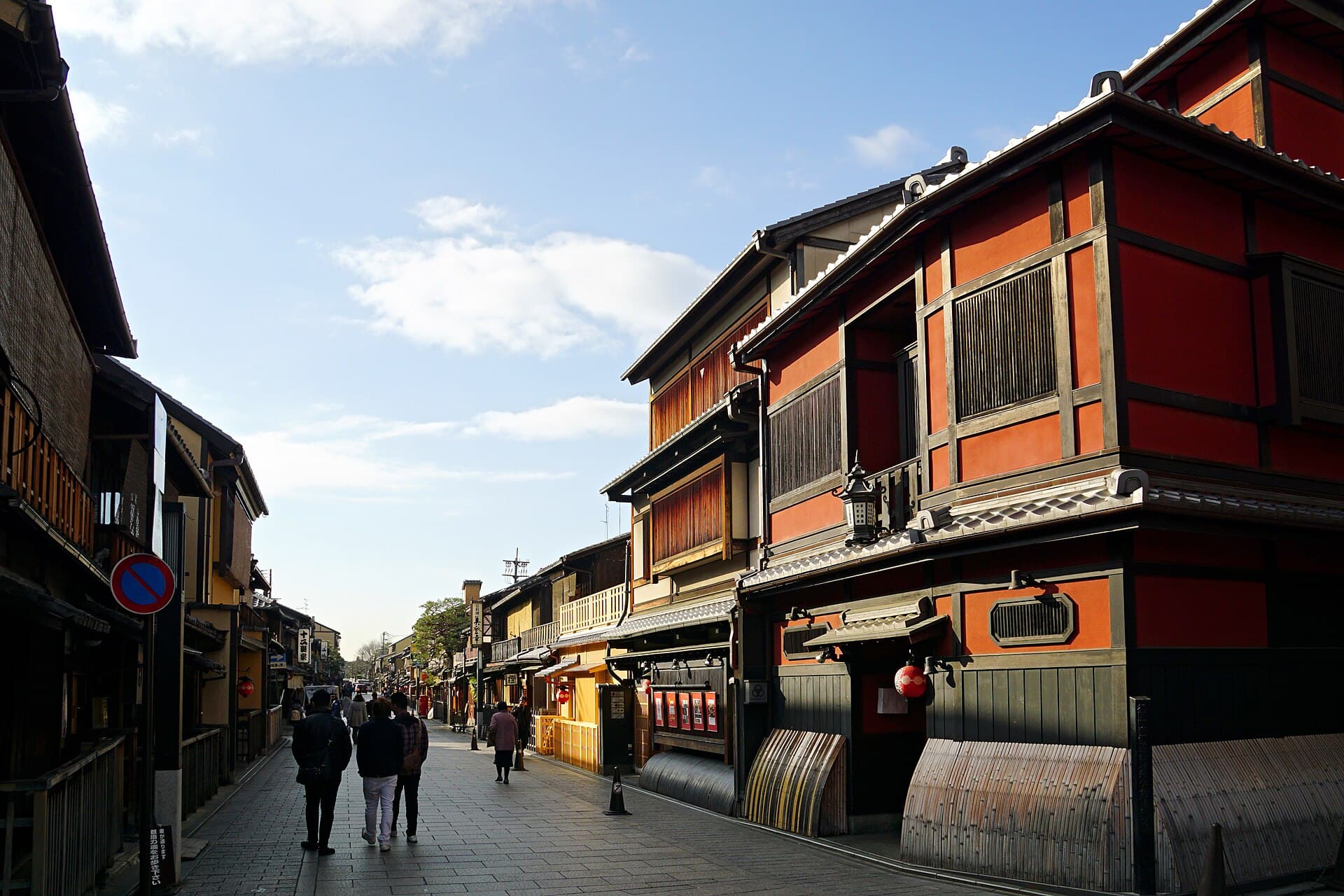 Gion and Hanamikōji StreetKyoto's best-known traditional district. It began as an entertainment quarter in17 minutes walk
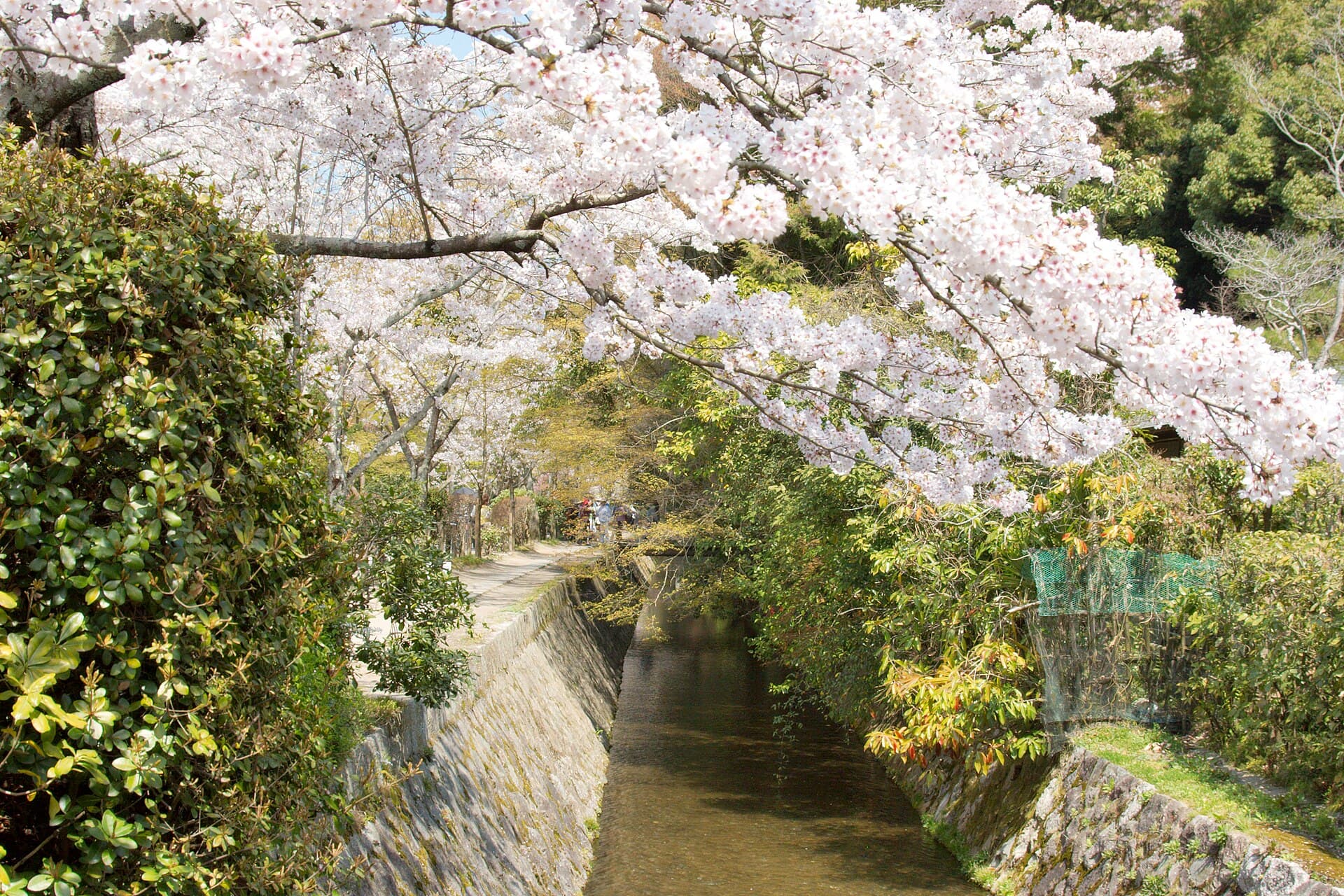 Philosopher's PathA quiet footpath along a shallow, cherry-lined canal in eastern Kyoto, between G21 minutes walk4.7
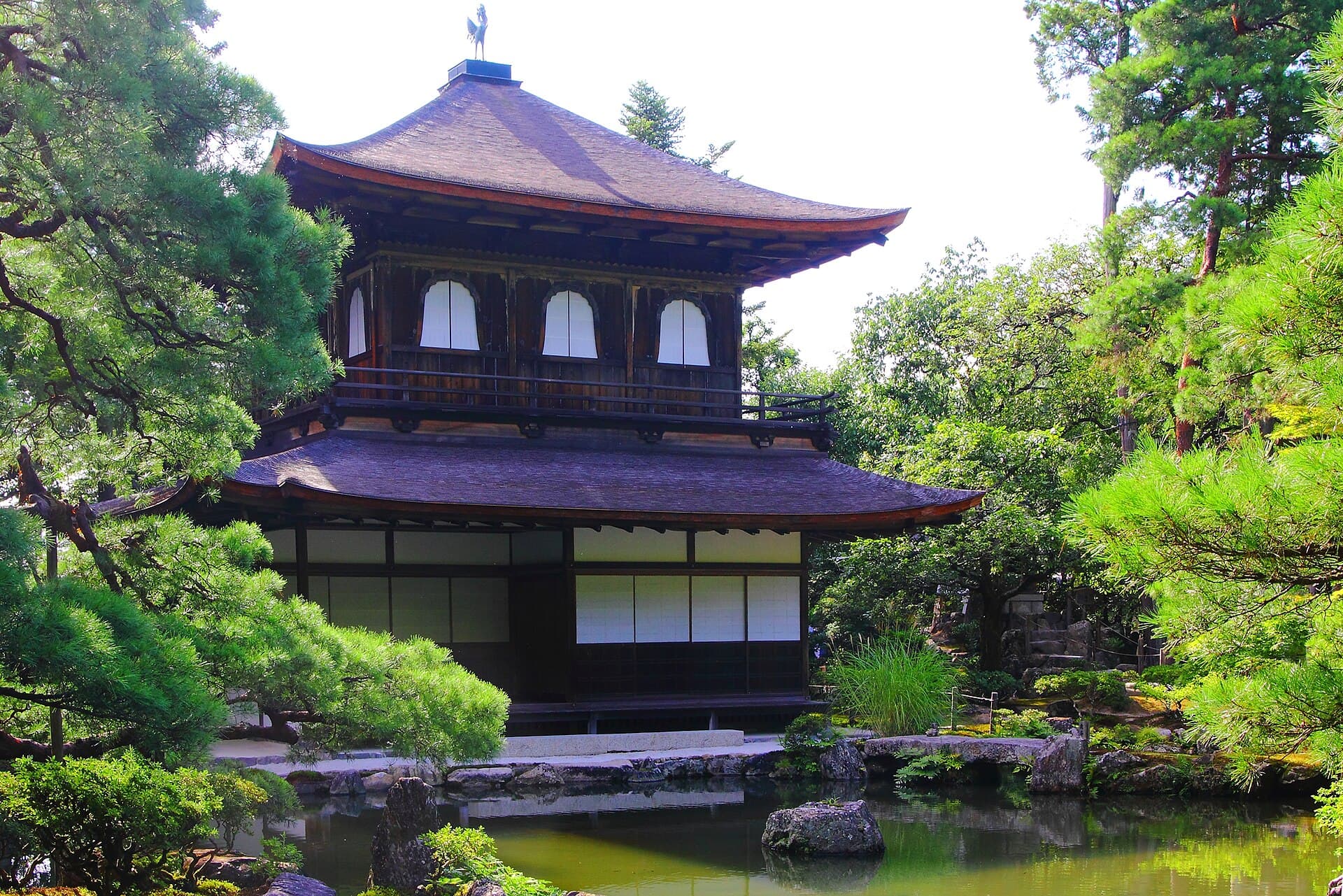 Ginkaku-ji (Silver Pavilion)A Zen temple in Sakyō, eastern Kyoto, officially Jishō-ji, and a symbol of the H24 minutes walk4.4
Yes, the shrine and courtyard are free; the Shin-en garden behind costs about 600 yen, per visitor guides.