
The chains
Iron from eighteen twenty-four, bearing the load again.
Dr. Bernd Gross — CC BY-SA 3.0 · Tilman2007 — CC BY-SA 4.0 · Leonhard Lenz — CC0 · Thomas Woodtli from Zürich, Switzerland — CC BY-SA 2.0
A sixty-eight-metre footbridge crossing the river Pegnitz at the western end of the old town, opened on the thirtieth of December eighteen twenty-four. It was designed and built by the mechanic Konrad Georg Kuppler, and at the time it was a piece of engineering news rather than a pleasant walk: the first freely suspended river bridge in Germany, carried on heavy iron chains with no pier standing in the water. The chains gave it its name. Its claim now is that it is the oldest surviving iron chain suspension bridge on the European mainland — an original witness to the moment bridge building moved from stone to iron. It did not reach us untouched, though. After the flood of nineteen hundred and nine the original oak pylons were replaced with steel lattice ones, and in nineteen thirty-one a supporting structure was fitted underneath that took the load off the chains entirely, leaving it a suspension bridge in name only. The rebuild of two thousand and ten removed the intermediate supports and put the load back on the chains, so it once again works on the principle it was built for. The visit is two minutes, free and possible at any hour. It gives slightly underfoot, which is half the pleasure, and from the middle you look out at the remains of the old wall, the Hallertor tower and the water splitting around the small islands. Fold it into a short riverside walk taking in the Weinstadel and the Henkersteg rather than making a separate trip for it.
Iron from eighteen twenty-four, bearing the load again.
Old fortification towers seen from midstream.
Kettensteg, 90403 Nuremberg
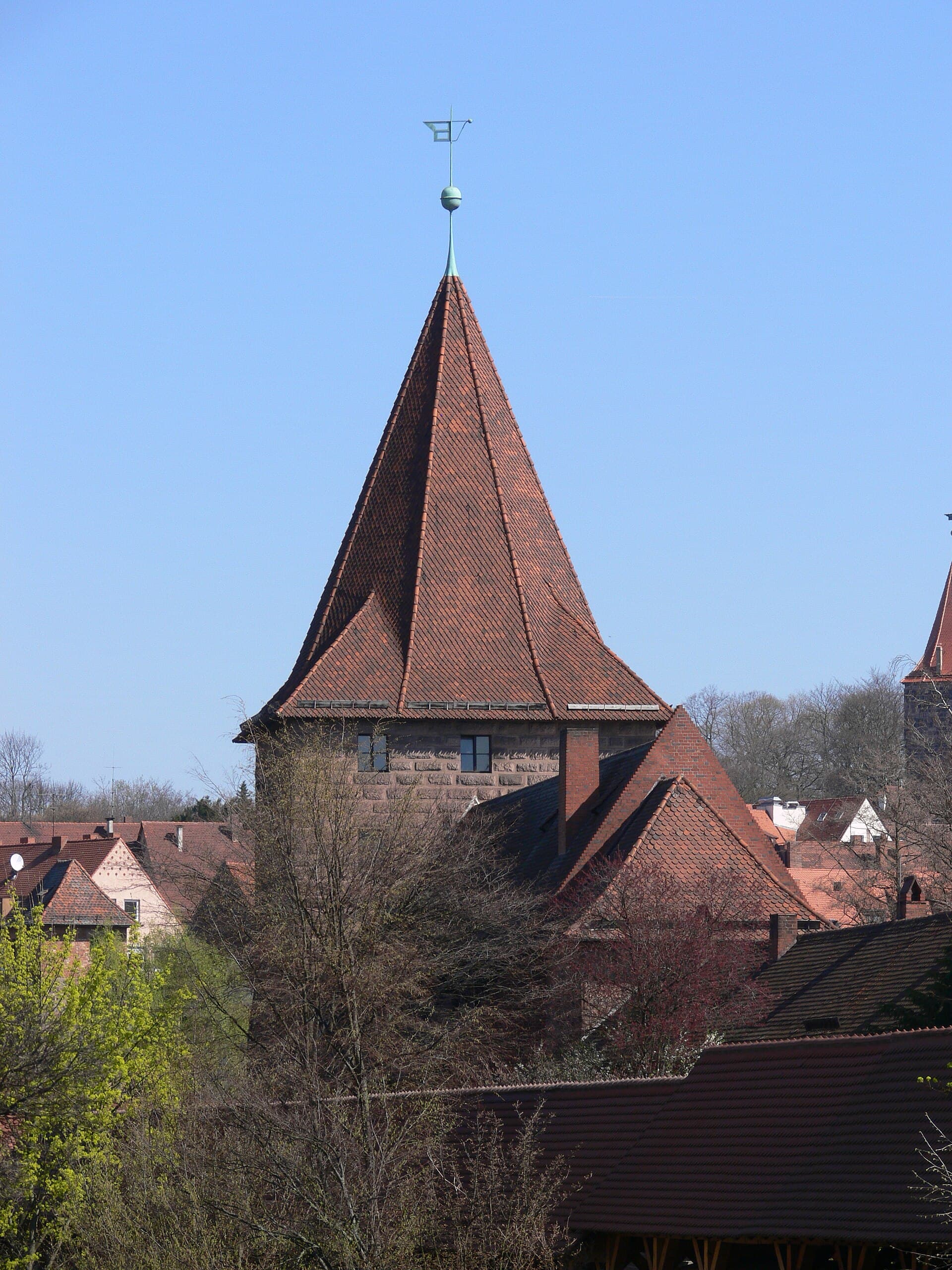 The SchlayerturmThe Schlayerturm is one of the water towers in Nuremberg's medieval wall: it sta1 minute walk4.6
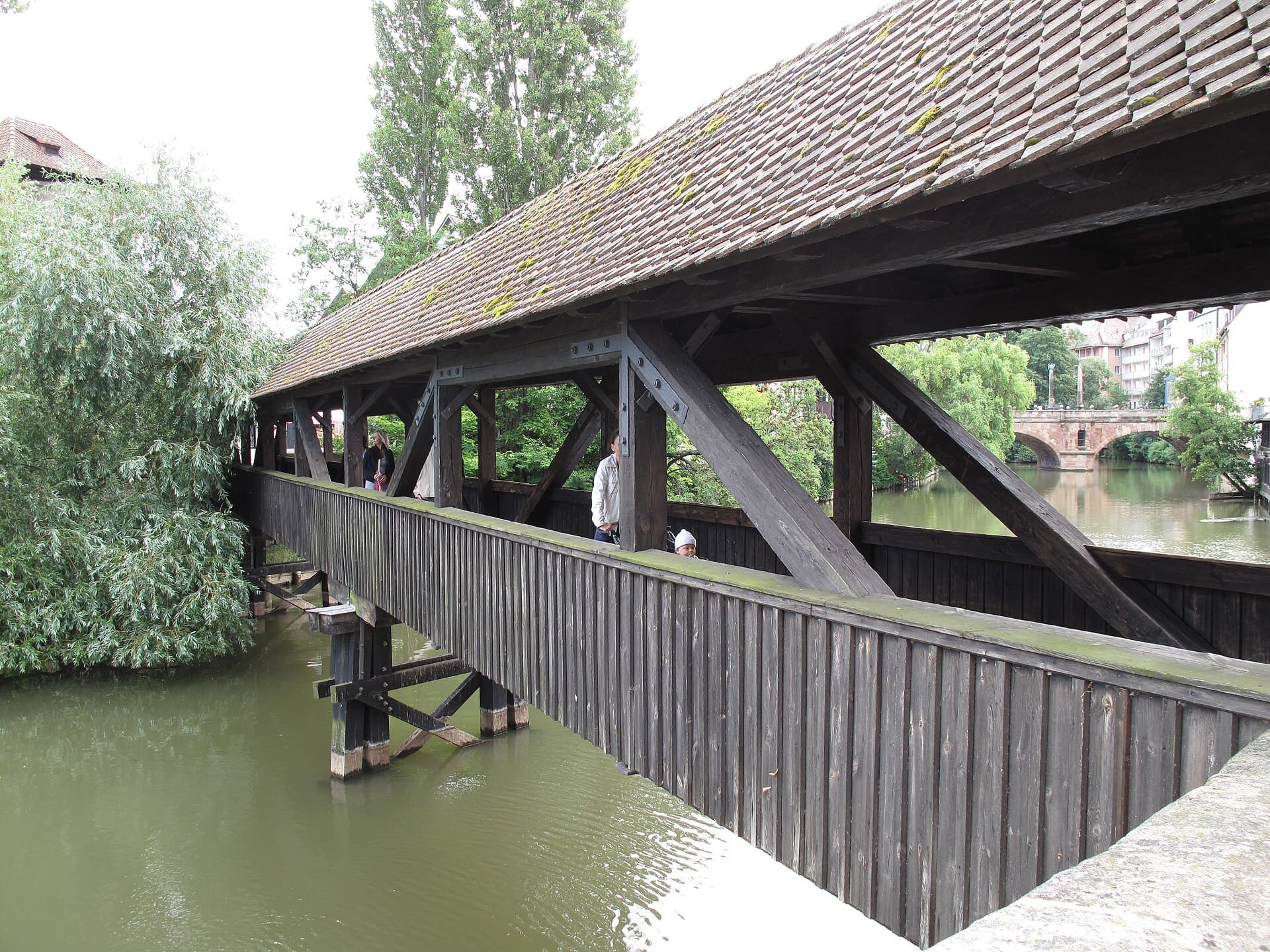 Hangman's Bridge & HouseA covered wooden bridge crosses the Pegnitz to a stone tower and a half-timbered3 minutes walk4.9
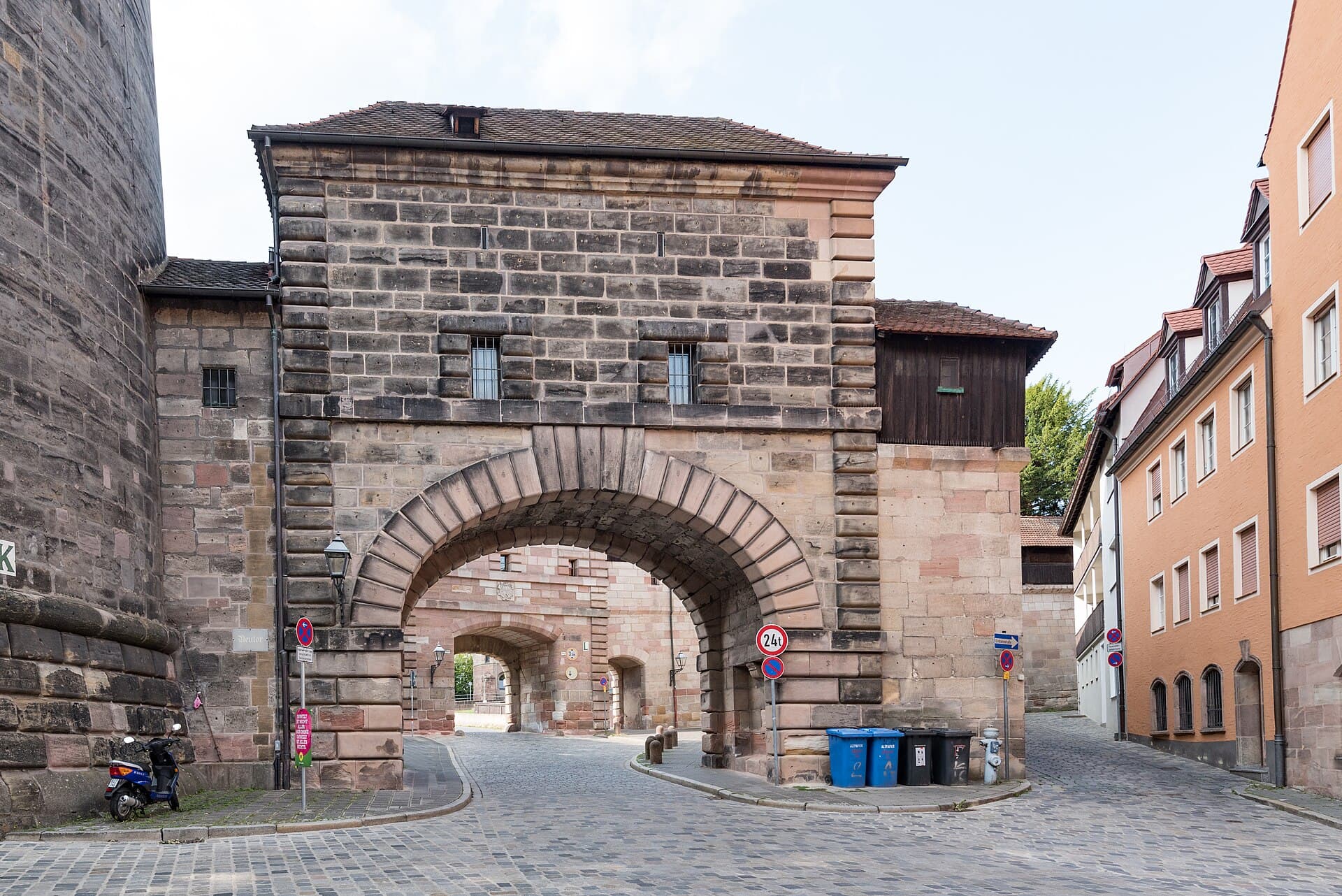 The Neutor BastionThe Neutor bastion is part of the advanced fortifications of Nuremberg's wall, b3 minutes walk4.5
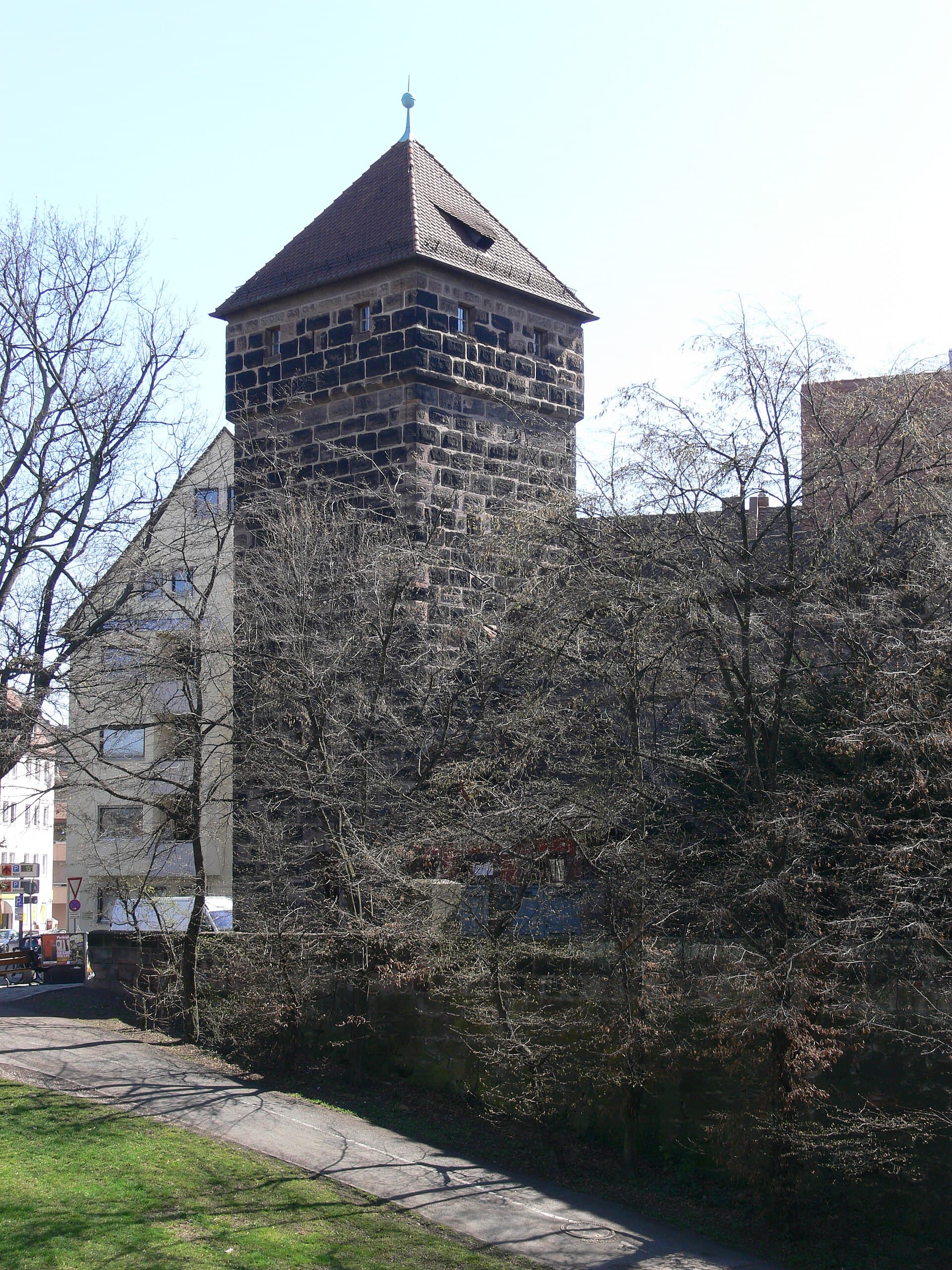 The Tower of the SensesThe Turm der Sinne is an interactive science museum inside a medieval defensive 3 minutes walk4.1
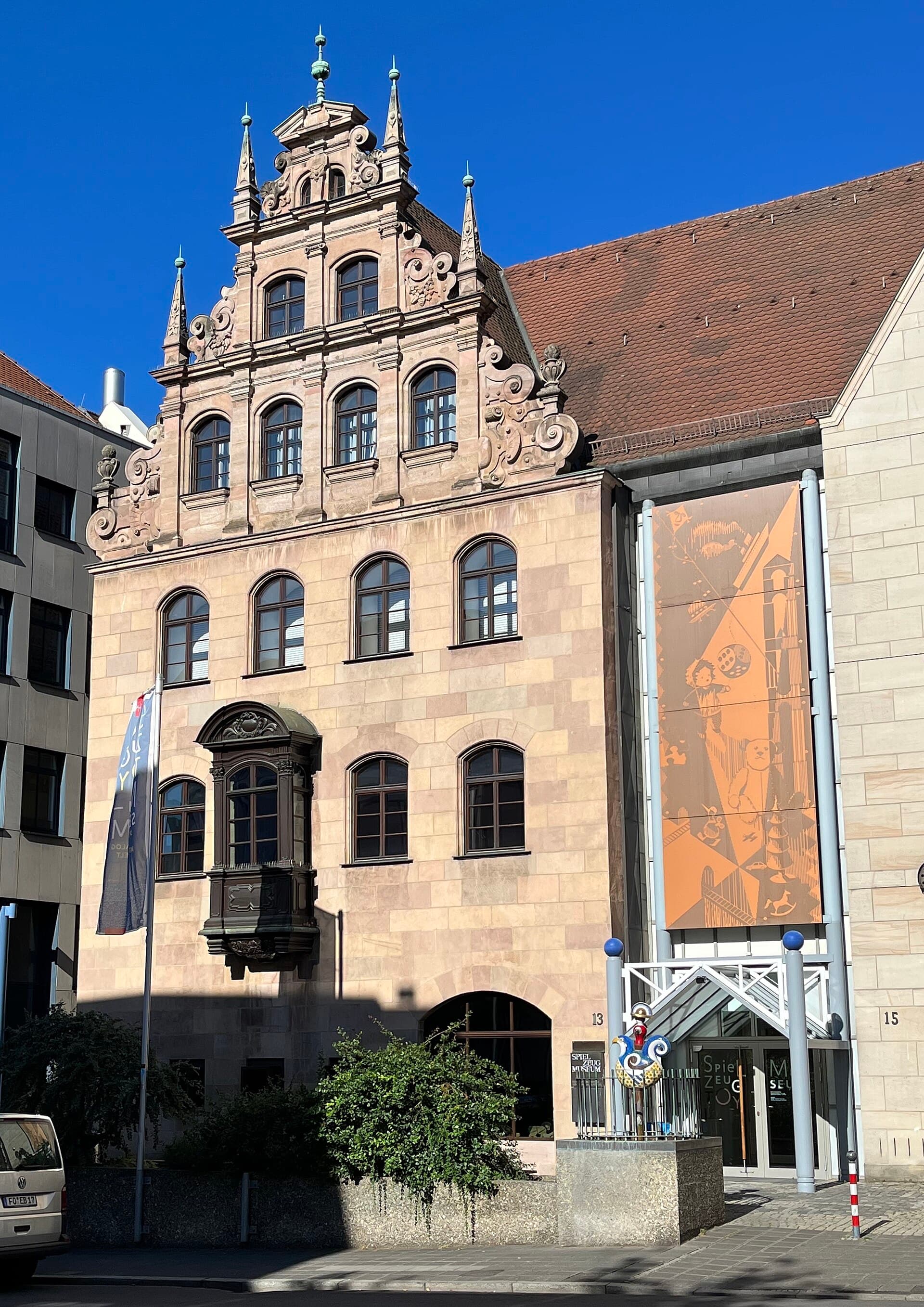 Nuremberg Toy MuseumThe Nuremberg Toy Museum is among the best-known toy museums in the world, and i3 minutes walk4.6
If engineering history interests you, yes — nothing older of its kind survives on the continent. For most visitors it is better taken in passing on a riverside walk between the Hallertor and the Weinstadel, because the crossing itself is a two-minute affair and there is nothing to visit at either end.