
The crimson facade
Astronomical clocks, statues and crests.
Diliff — CC BY-SA 3.0 · Photograph: Radomianin — Public domain · Chris06 — CC BY-SA 4.0 · Nikolay Yagunov / Николай Ягунов — CC BY-SA 4.0
Latvia's most famous facade — and only thirty years old: the House of the Blackheads, crimson and crowded with astronomical clocks and statues, stands on Town Hall Square, originally built in 1334 as the hall of the Brotherhood of Blackheads: unmarried foreign merchants in Riga who took the African St Maurice as their patron, and from his black head on their crest came the name. German bombs destroyed it in 1941 and the Soviets bulldozed the ruins in 1948 — its site an empty square for half a century. After independence it was rebuilt entirely from photographs and drawings and opened in 1999 for Riga's eight hundredth anniversary: an exact copy of a dead building. Inside are ceremonial halls with chandeliers and paintings, the original medieval cellars surviving underground, and an exhibition on the brotherhood and its trade. The Roland statue stands before it in the square, and St Peter's Church with its spire behind.
Astronomical clocks, statues and crests.
What survived of the 1334 building, underground.
Rātslaukums 7, Riga
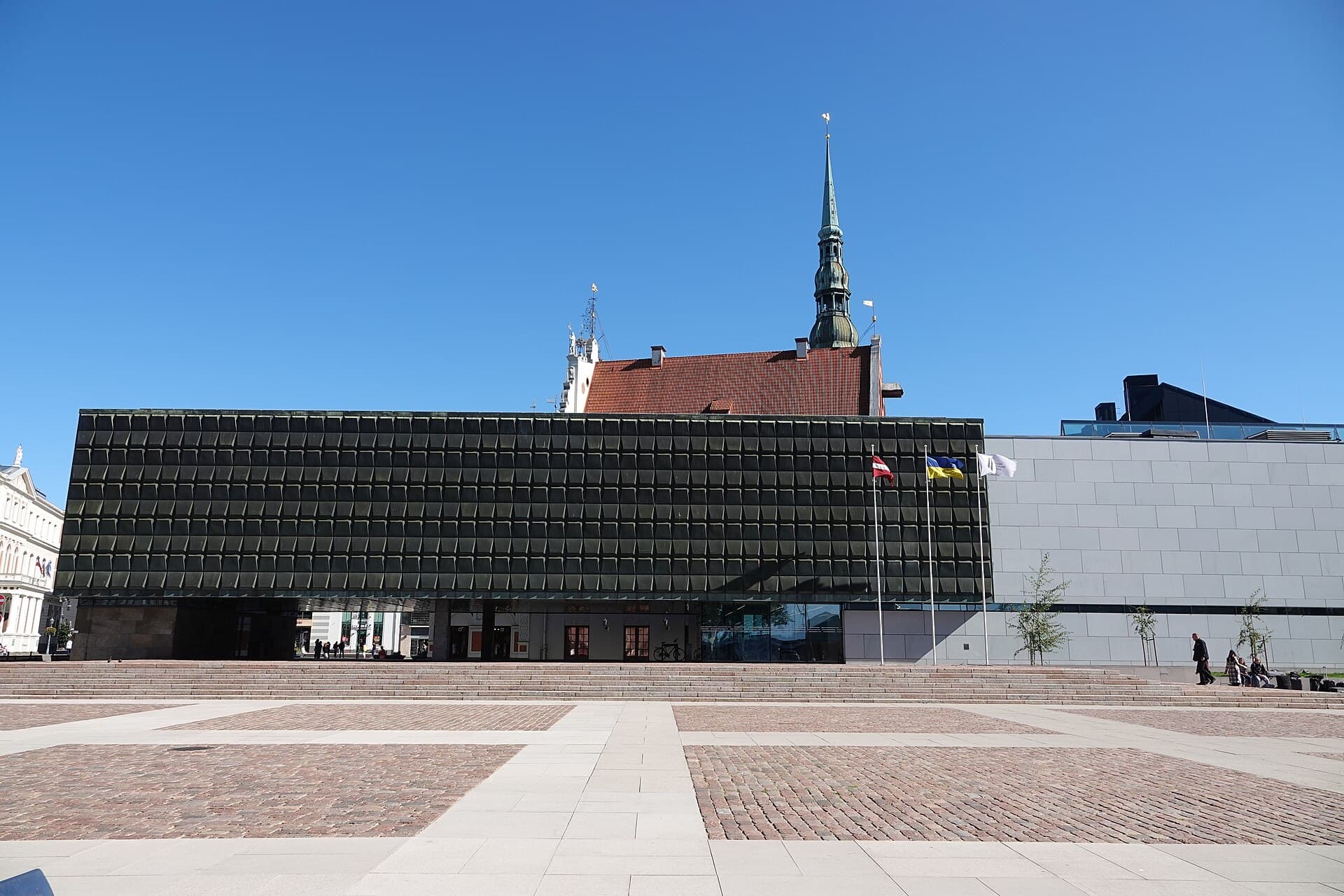 Museum of the Occupation of LatviaA black box on a square in the heart of Riga: the museum occupies a building rai1 minute walk4.5
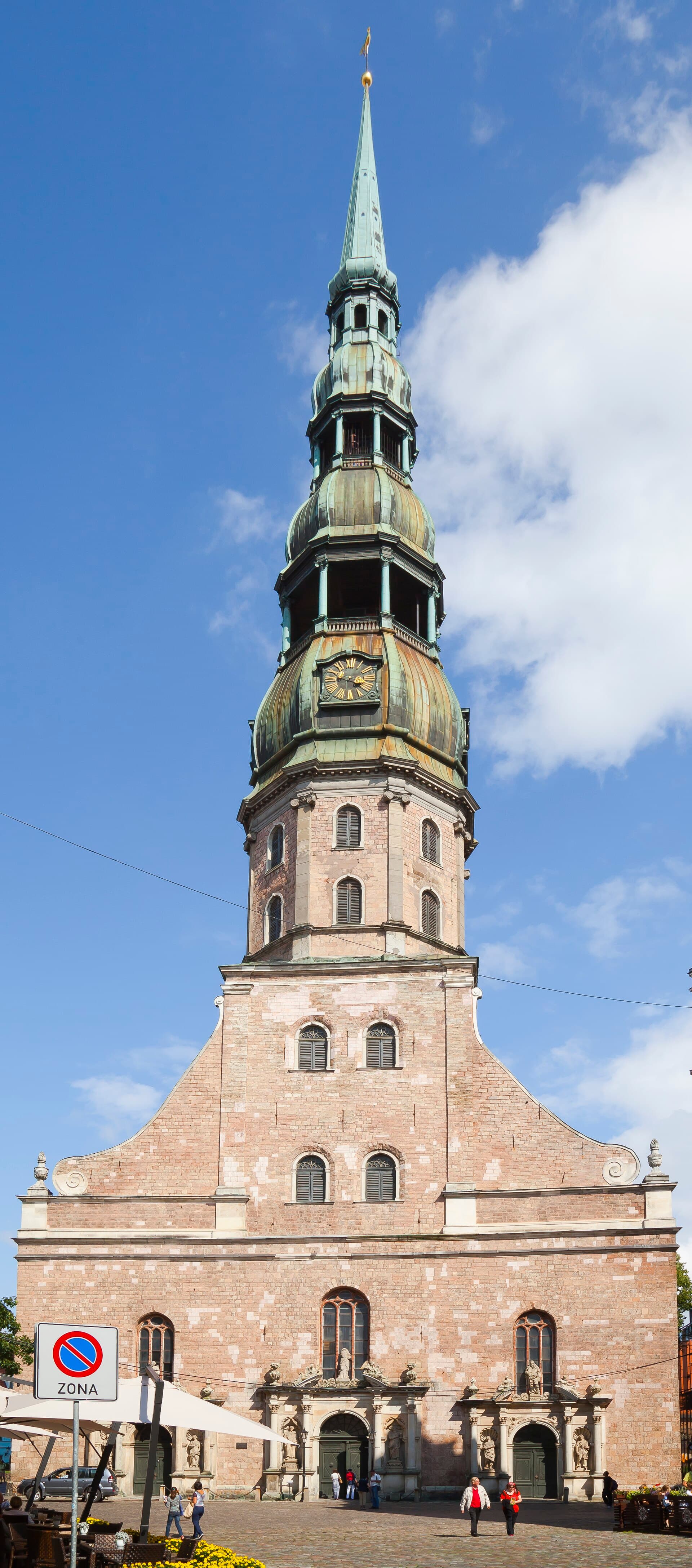 St Peter's ChurchOld Riga's tallest spire and its best view: the Gothic brick church of St Peter 2 minutes walk4.7
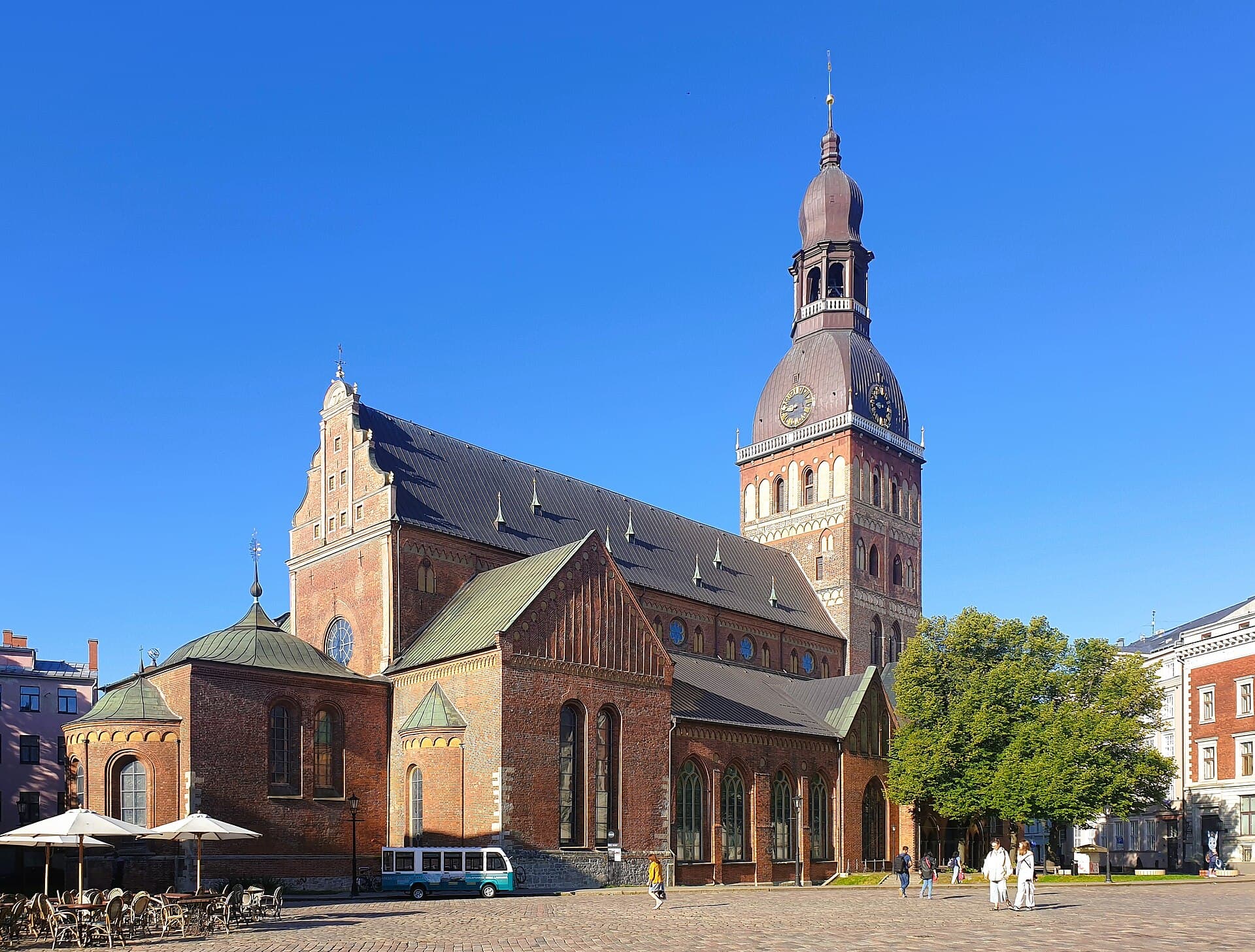 Riga Cathedral and Dome SquareThe largest medieval church in the Baltic states, with an organ that was once th3 minutes walk4.8
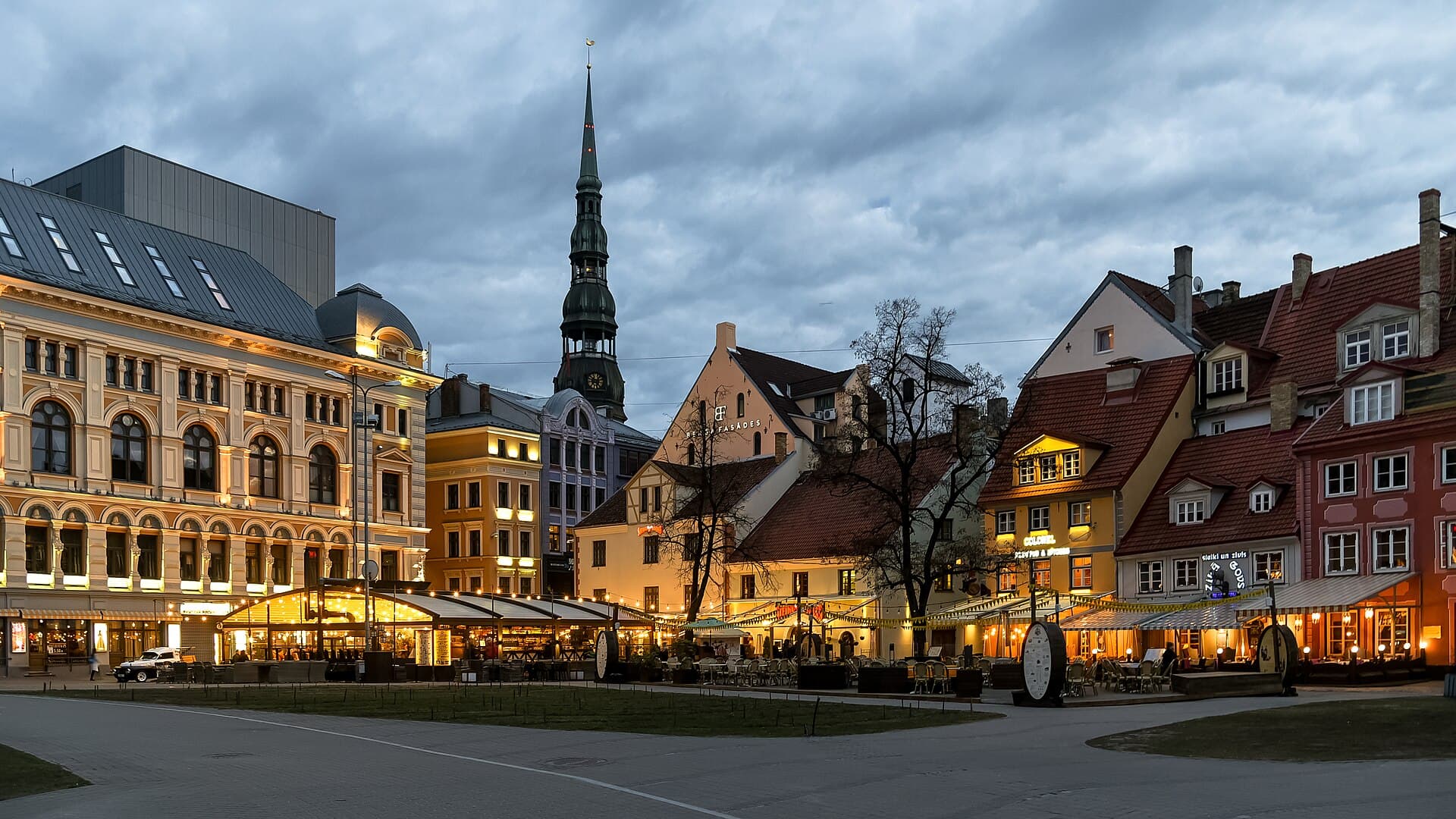 Līvu SquareAn open square in the heart of Riga's old town, ringed by cafés and restaurants 4 minutes walk4.5
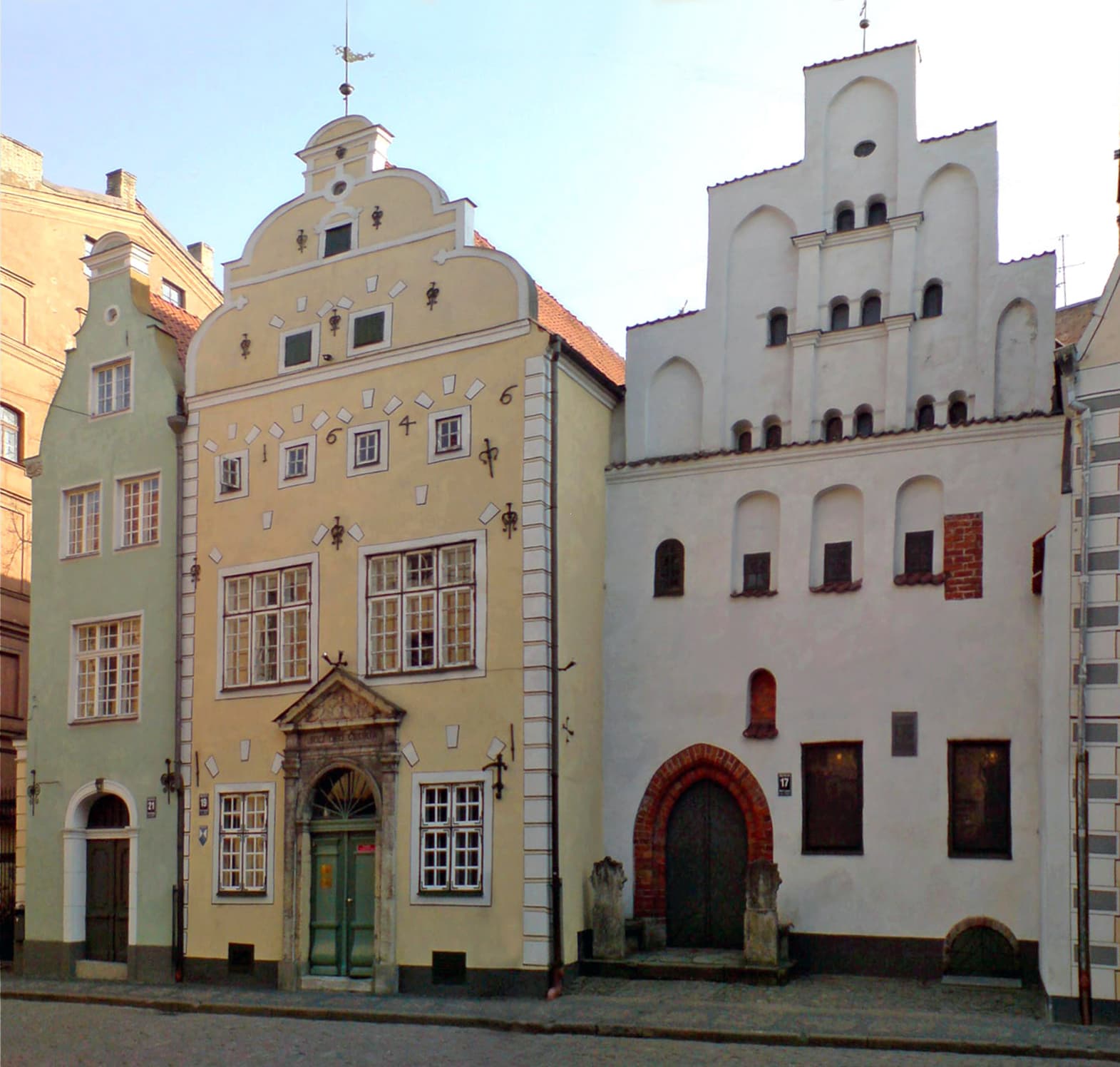 The Three BrothersThree joined houses that condense five centuries of domestic architecture: the T5 minutes walk4.5
An association of unmarried foreign merchants in the Baltic Hanseatic cities (Riga and Tallinn above all), known for feasting and celebration, and credited with one claim to the first public Christmas tree — in Riga in 1510.