
The eldest brother
Gothic of 1490 with stone benches at its door.
Martin Thirolf — CC BY-SA 2.0 de · Diego Delso — CC BY-SA 3.0 · Diego Delso — CC BY-SA 3.0 · Davisbarbars — CC BY-SA 4.0
Three joined houses that condense five centuries of domestic architecture: the Three Brothers on Mazā Pils street are the oldest surviving group of dwellings in Latvia, each from a different century, so the evolution of the Riga house reads across one frontage. The eldest (number 17, about 1490) is narrow Gothic with small windows, stone benches at the door and a hoist beam for goods — a merchant's house storing wares in the attic. The middle one (number 19, 1646) is wider with a Dutch-derived facade and larger windows, because tax was no longer levied on window width. The youngest (number 21, late seventeenth century) is narrower and plainer, squeezed into what space remained. The inner courtyard is open to walk through, and one of them holds the Latvian Museum of Architecture. The street is among the old town's quietest, and it answers Tallinn's Three Sisters — a well-known pairing between the two cities.
Gothic of 1490 with stone benches at its door.
Why the middle brother's windows grew.
Mazā Pils iela 17-21, Riga
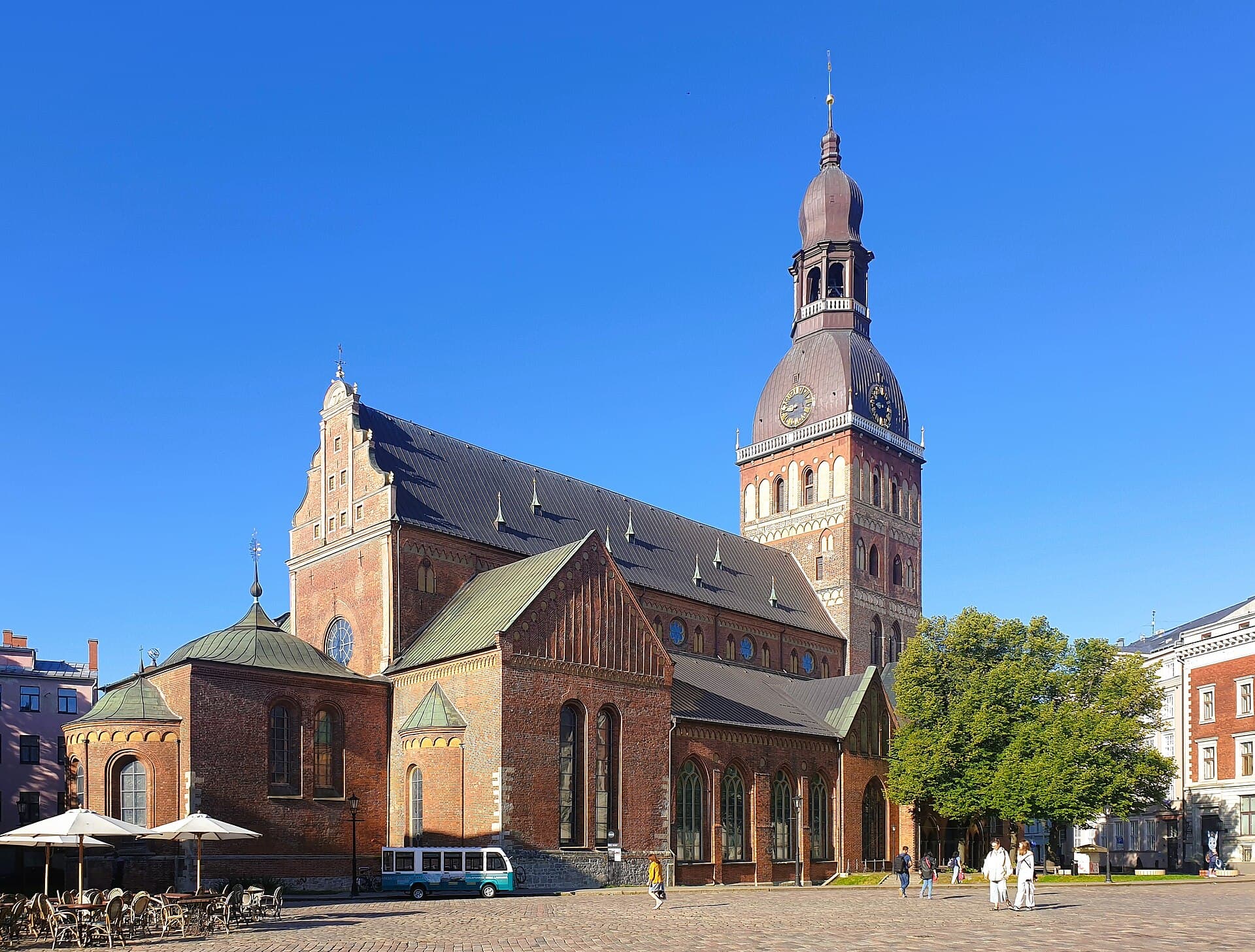 Riga Cathedral and Dome SquareThe largest medieval church in the Baltic states, with an organ that was once th2 minutes walk4.8
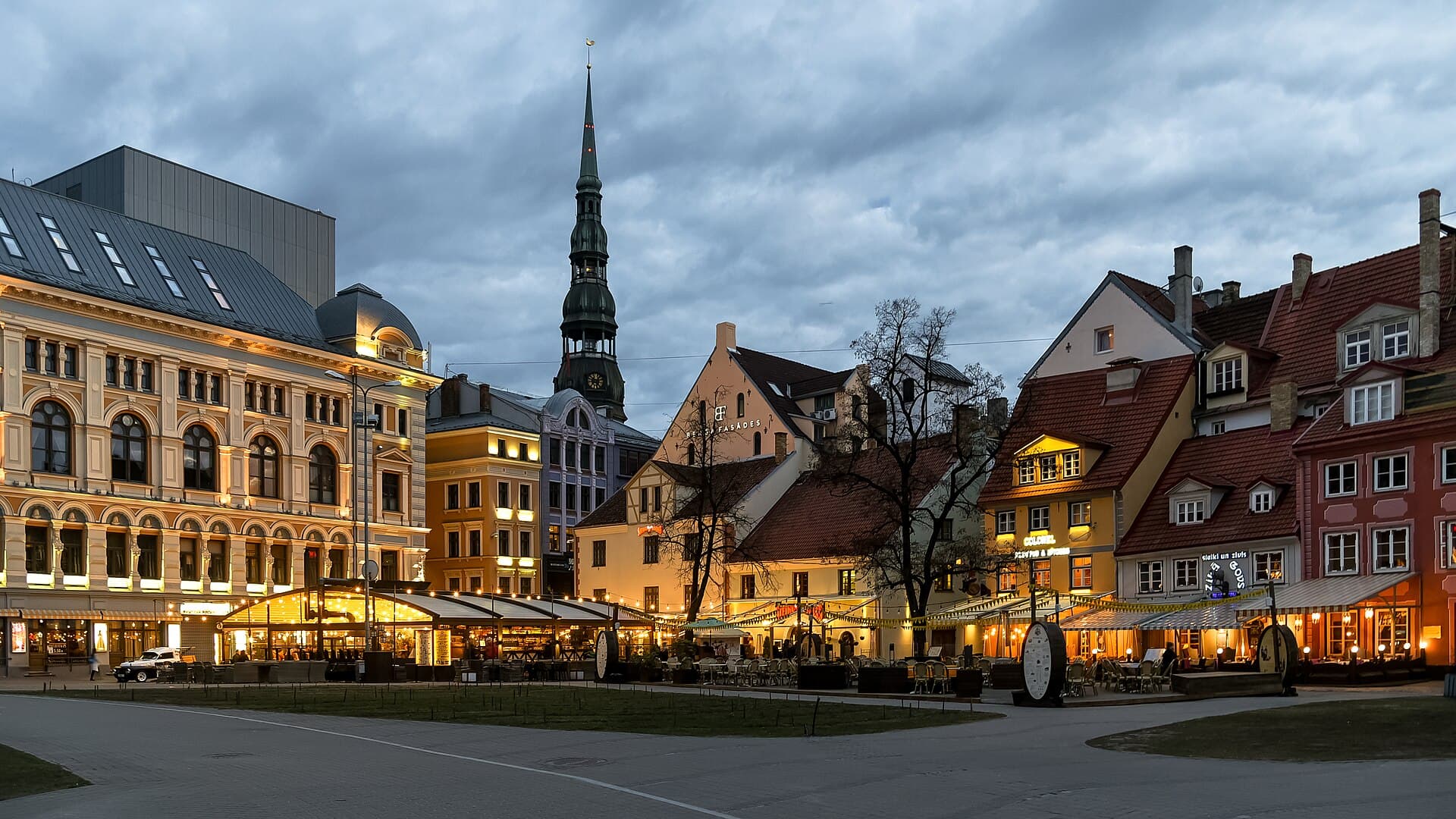 Līvu SquareAn open square in the heart of Riga's old town, ringed by cafés and restaurants 3 minutes walk4.5
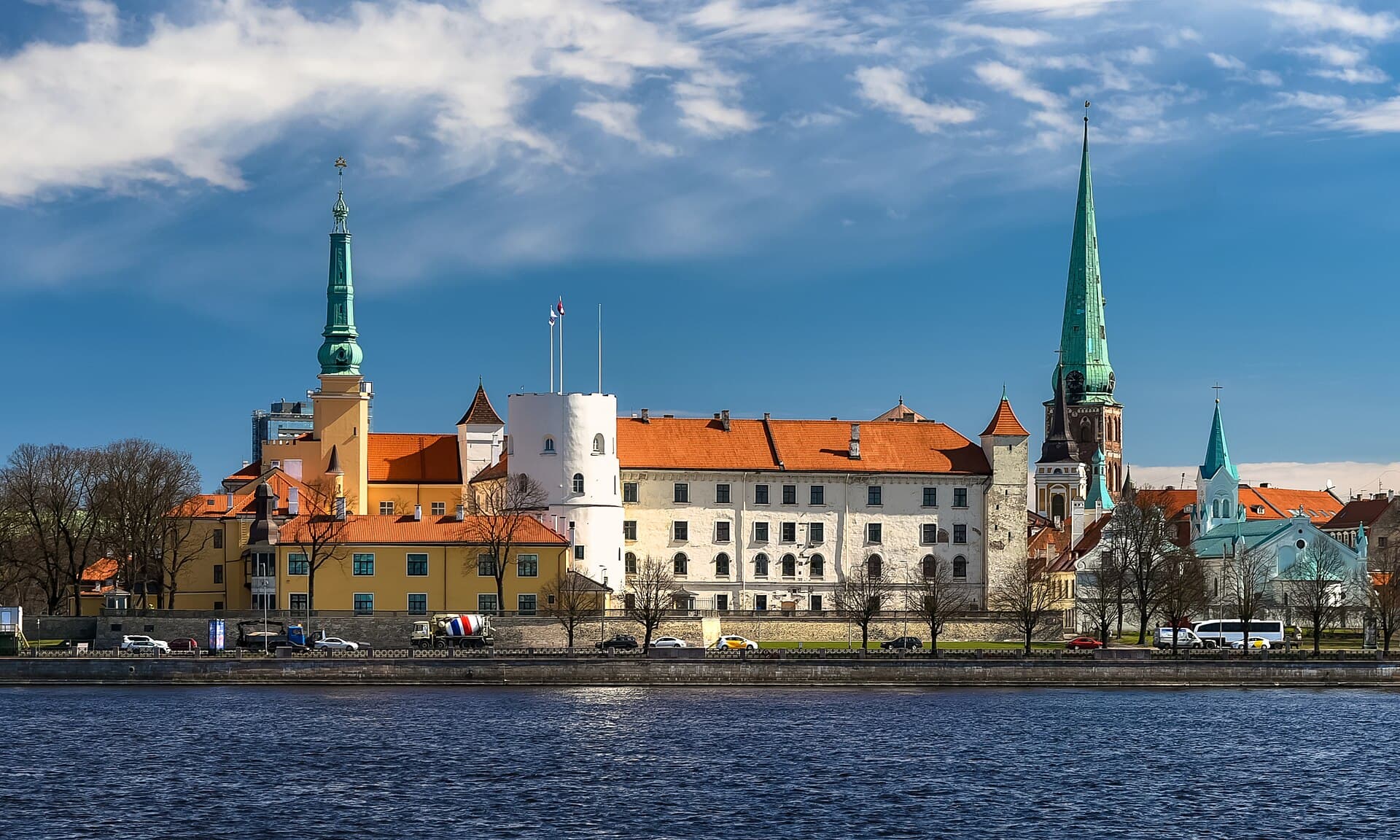 Riga CastleThe knights' castle that became the President's palace: the Livonian Order built3 minutes walk4.3
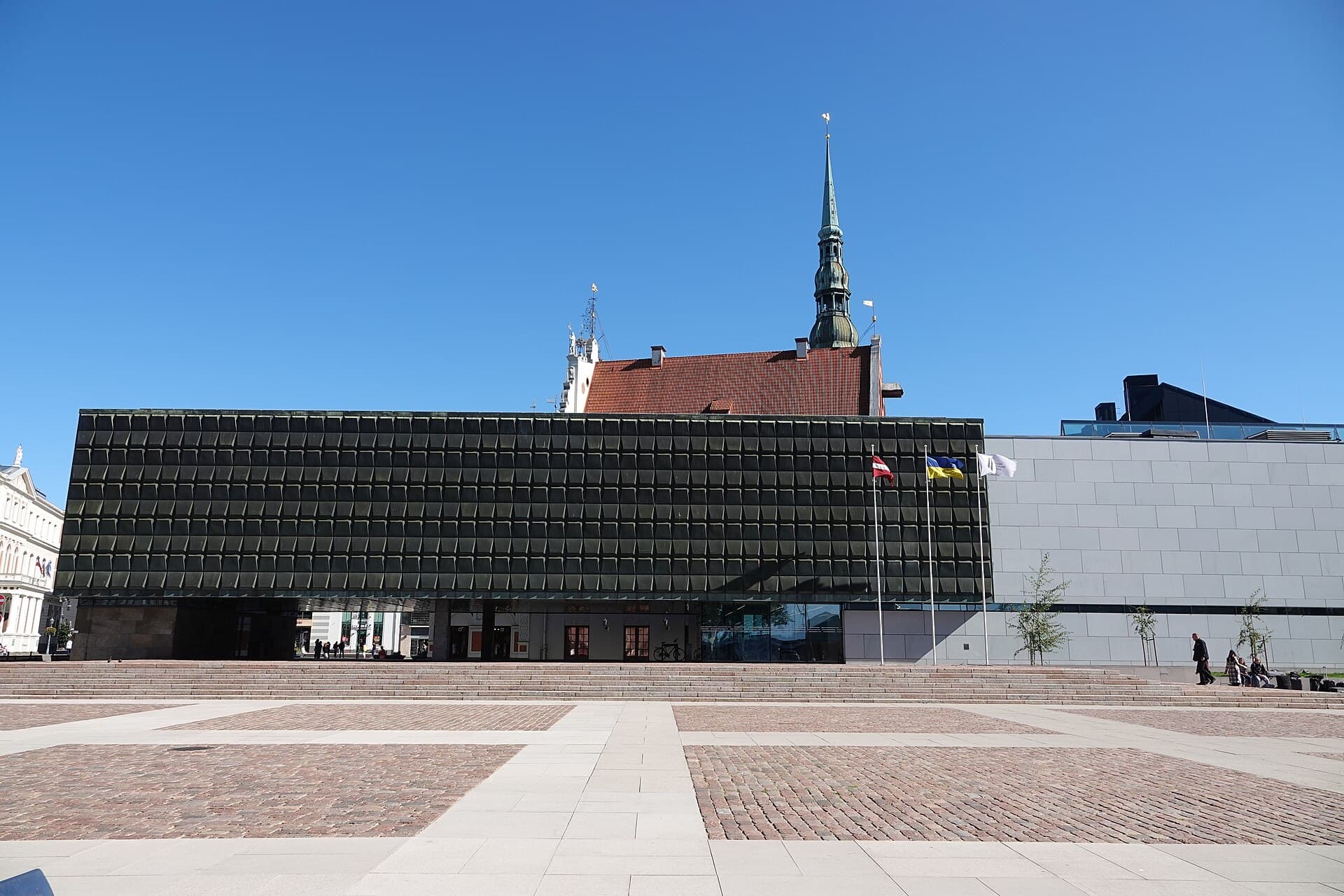 Museum of the Occupation of LatviaA black box on a square in the heart of Riga: the museum occupies a building rai5 minutes walk4.5
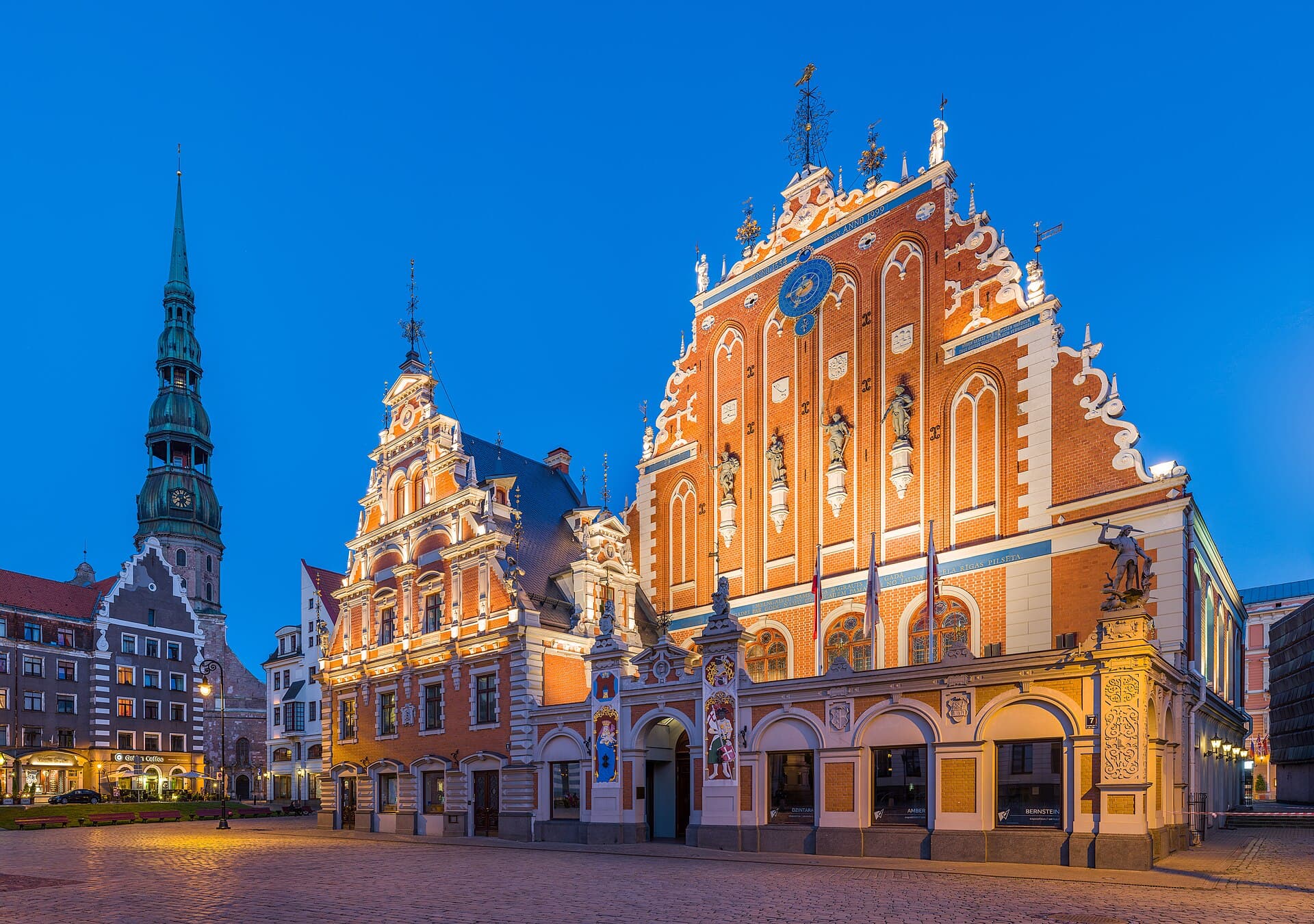 House of the BlackheadsLatvia's most famous facade — and only thirty years old: the House of the Blackh5 minutes walk4.7
Three joined fifteenth-century merchant houses in Tallinn, similar in idea and form — the two cities cross-reference them as a Hanseatic pairing.