
The Flower Clock
Six thousand plants around real hands — horology's floral salute.
Romano1246 — CC BY-SA 3.0 · karlheinz klingbeil — CC BY 4.0 · MHM55 — CC BY-SA 4.0 · Daniel Jolivet — CC BY 2.0
At the Mont Blanc bridge's exit the English Garden opens its arms — Geneva's green lakefront face since 1855: lawns, veteran trees, a grand bronze fountain, and the giant Jet spraying the horizon before it. Its star is the Flower Clock: a dial of six thousand plants changing with the seasons around genuinely working hands — Geneva's homage to its mother industry since 1955, and the city's most photographed spot without contest. Its second hand ranks among the world's longest, and the design renews every planting season. The garden is point zero for outings: the historic paddle steamers leave from it, the sunset quays wrap it, and the old town climbs directly behind — tourist Geneva's heart in three hundred metres.
Six thousand plants around real hands — horology's floral salute.
Lawns on the water with the great Jet always in frame.
The central 1862 bronze — the garden's quiet heart.
Quai du Général-Guisan, 1204 Geneva
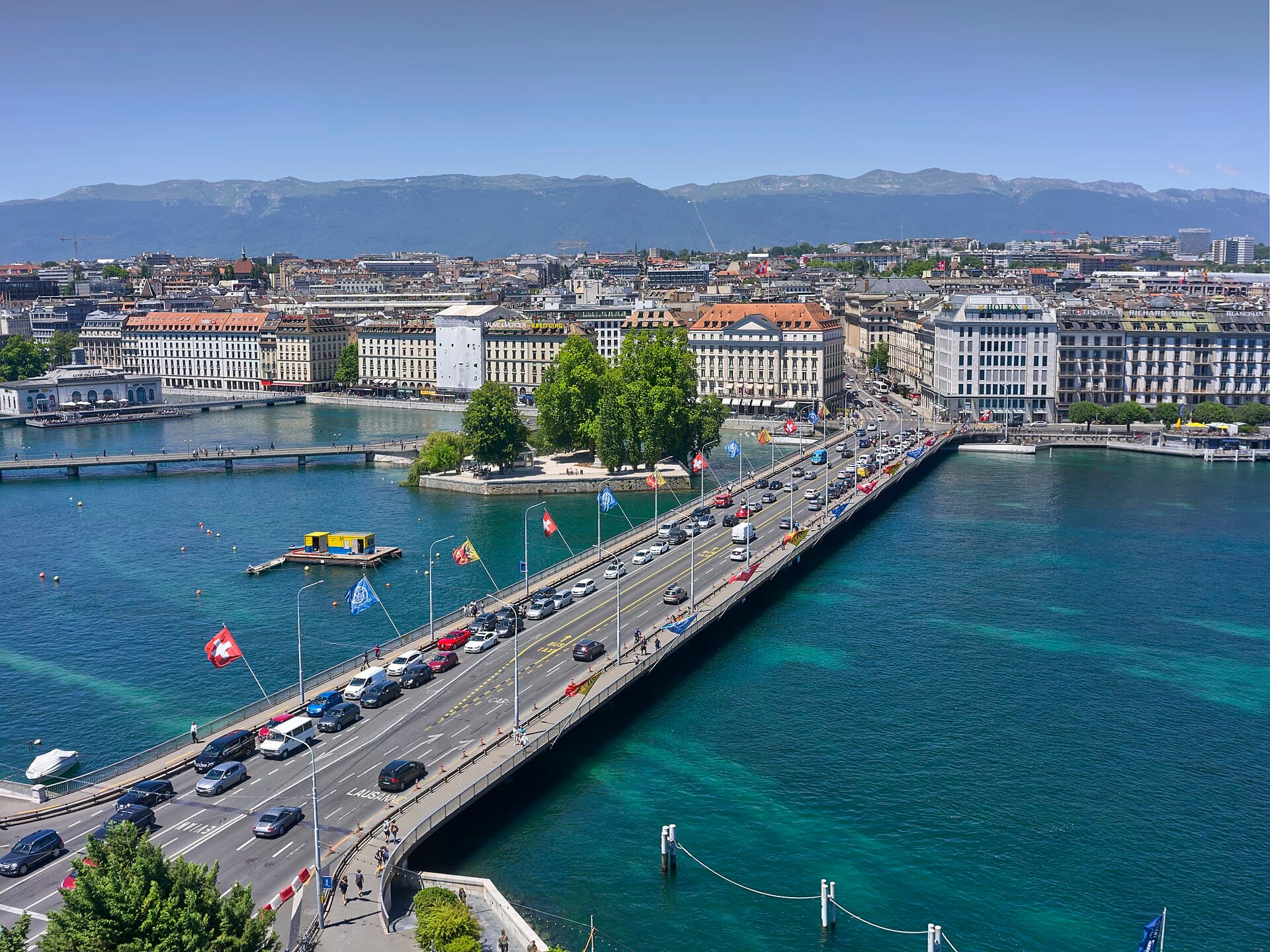 Pont du Mont-BlancThe Pont du Mont-Blanc is Geneva's principal bridge, standing at the point where3 minutes walk4.7
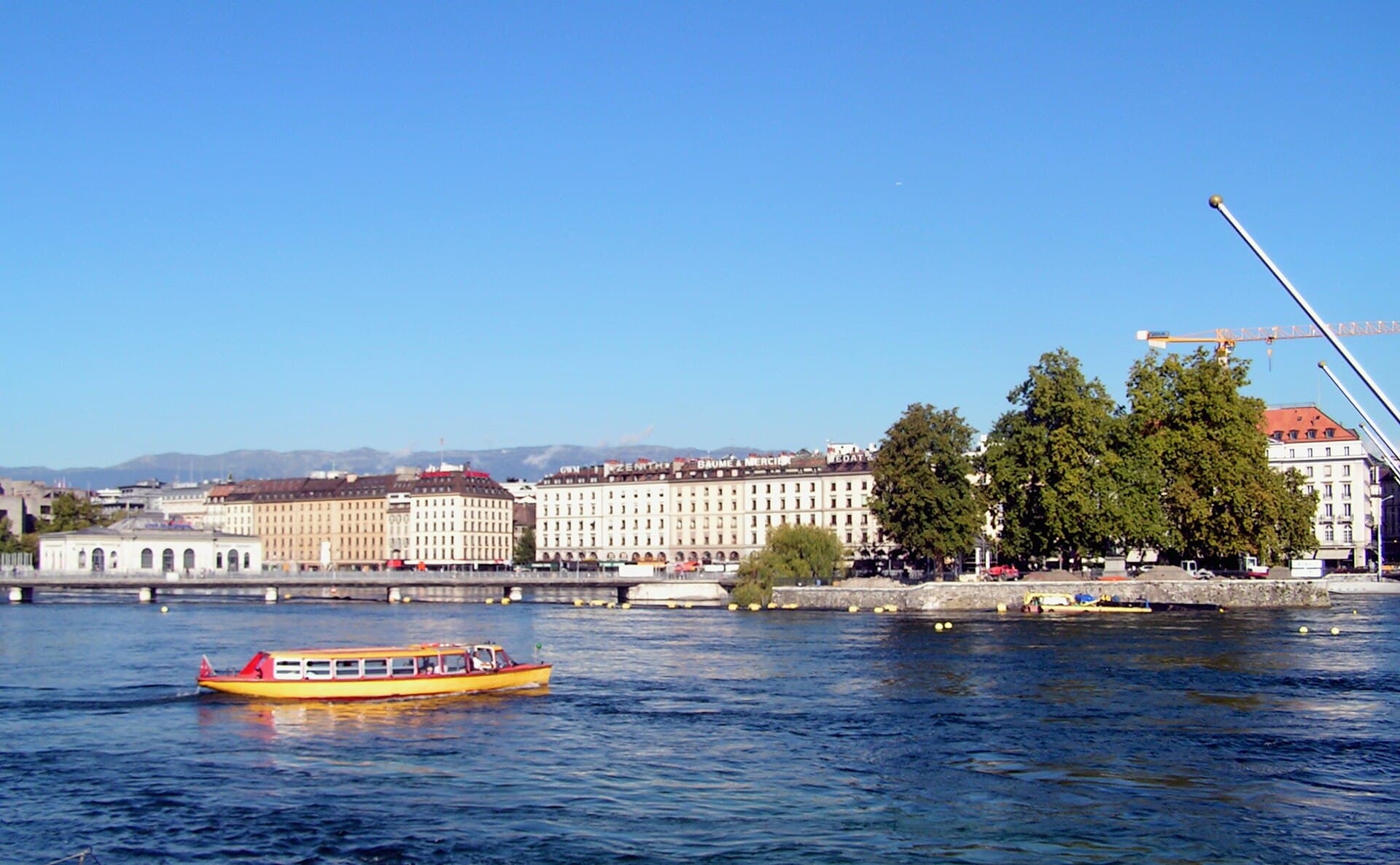 Île RousseauÎle Rousseau is a small island in the Rhône where the river leaves Lake Geneva, 5 minutes walk4.7
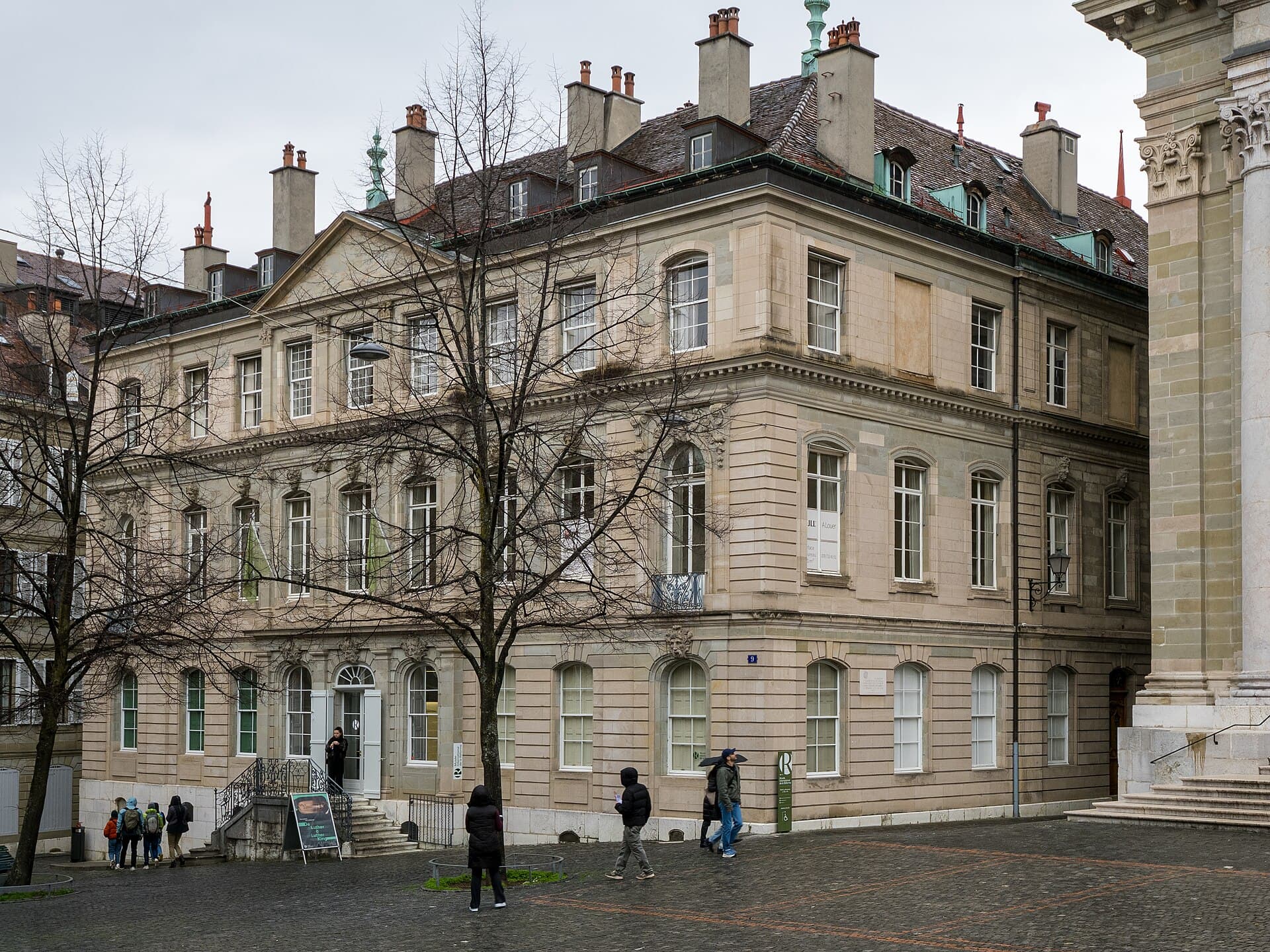 International Museum of the ReformationThe museum occupies the **Maison Mallet**, a small mansion built in 1723 by the 5 minutes walk4.6
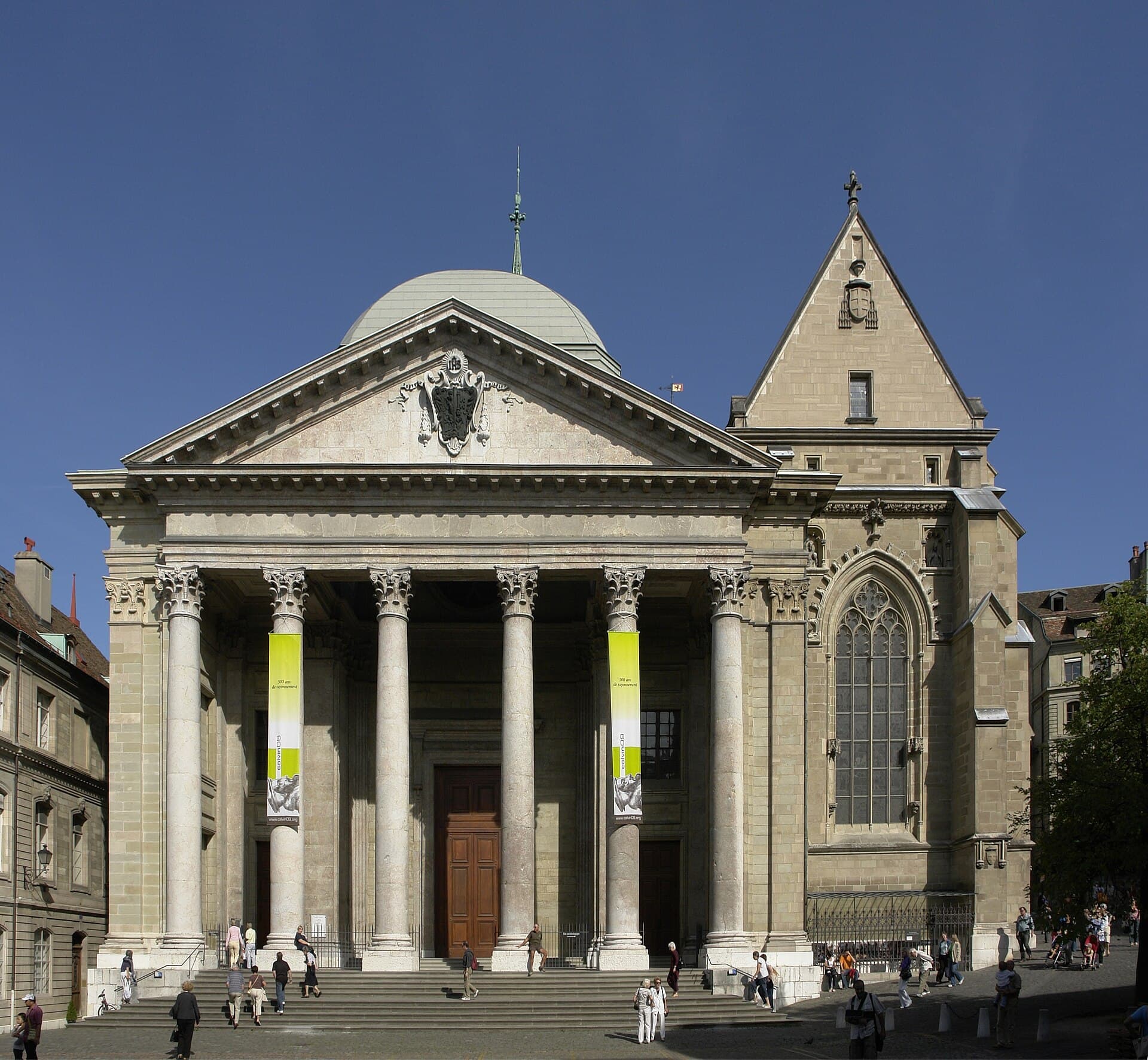 St Pierre CathedralAtop the old town sits Geneva's cathedral in its strange mixture: a twelfth-cent5 minutes walk4.7
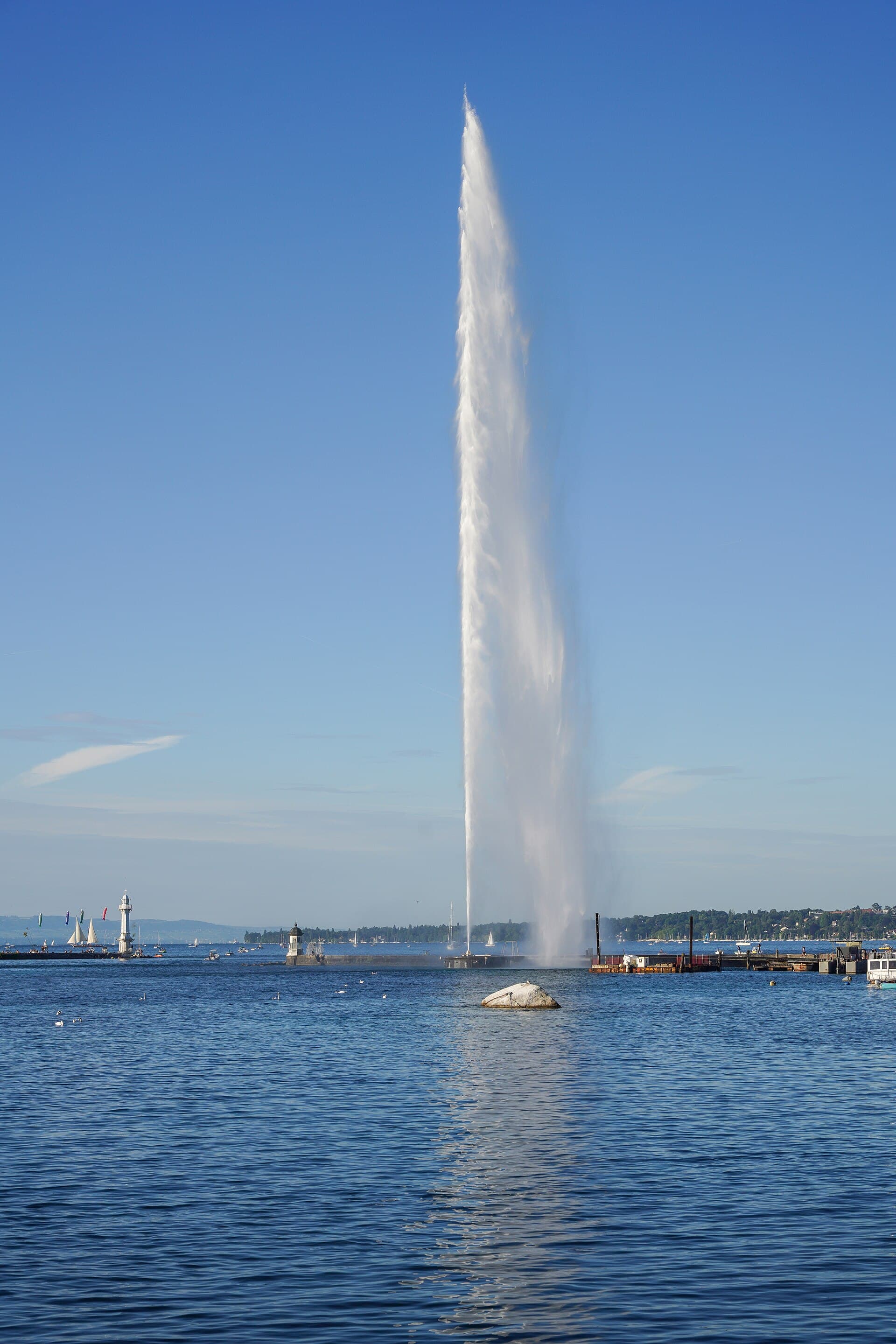 Jet d'EauA 140-metre column of water standing over Lake Geneva — the Jet d'Eau, the city'6 minutes walk4.6
Geneva has been fine watchmaking's capital for centuries — Rolex and Patek its daughters — so in 1955 it wanted one symbol joining its two identities: nature and precision. The mechanism under the soil is real, satellite-set today, and the planting changes so each visit is a different edition.
Belle Époque paddle steamers work its quay: hour loops of the small basin, lunch cruises, and summer day lines to Chillon and Lausanne — the lake as royal road. Tickets at the kiosk or online; the lunch packages earn their price.
Directly behind, uphill: five minutes to the Rue du Rhône shops, ten to Bourg-de-Four and the cathedral through lanes handing you one to the next — the garden is the natural climbing gate.