
Red lanterns
After dark.
Zairon — CC BY-SA 4.0 · Zairon — CC BY-SA 4.0 · Zairon — CC BY-SA 4.0 · 江上清风1961 — CC BY 3.0 · xiquinhosilva — CC BY 2.0 · 张元柏 — CC BY-SA 3.0 · Zairon — CC BY-SA 4.0 · Zairon — CC BY-SA 4.0
A historic pedestrian street about 550 m long beside Chengdu's Wuhou memorial temple, its history tied to the Three Kingdoms era more than 1,800 years ago; it was rebuilt in 2004 in Qing-dynasty style, and CNN Travel ranked it the world's most beautiful street in 2019. It is lined with timber houses with grey roofs and red lanterns, home to handicraft and gift shops, Sichuan snack stalls and teahouses, and it draws on the famous Three Kingdoms culture of Chinese history and literature. The street is always busy, with about 18 million visitors in 2018, and peaks at the Chinese New Year, when big festivities and folk fairs are held; it's at its best in the evening when the lanterns light up. Wandering is free, and after sunset is the best time. Sichuan cooking is very spicy, many stalls use pork and some bars serve alcohol, so ask about ingredients, and order dishes «not spicy» if you're not used to chilli.
After dark.
Spicy.
History and lore.
Beside the Wuhou memorial temple, southwest central Chengdu
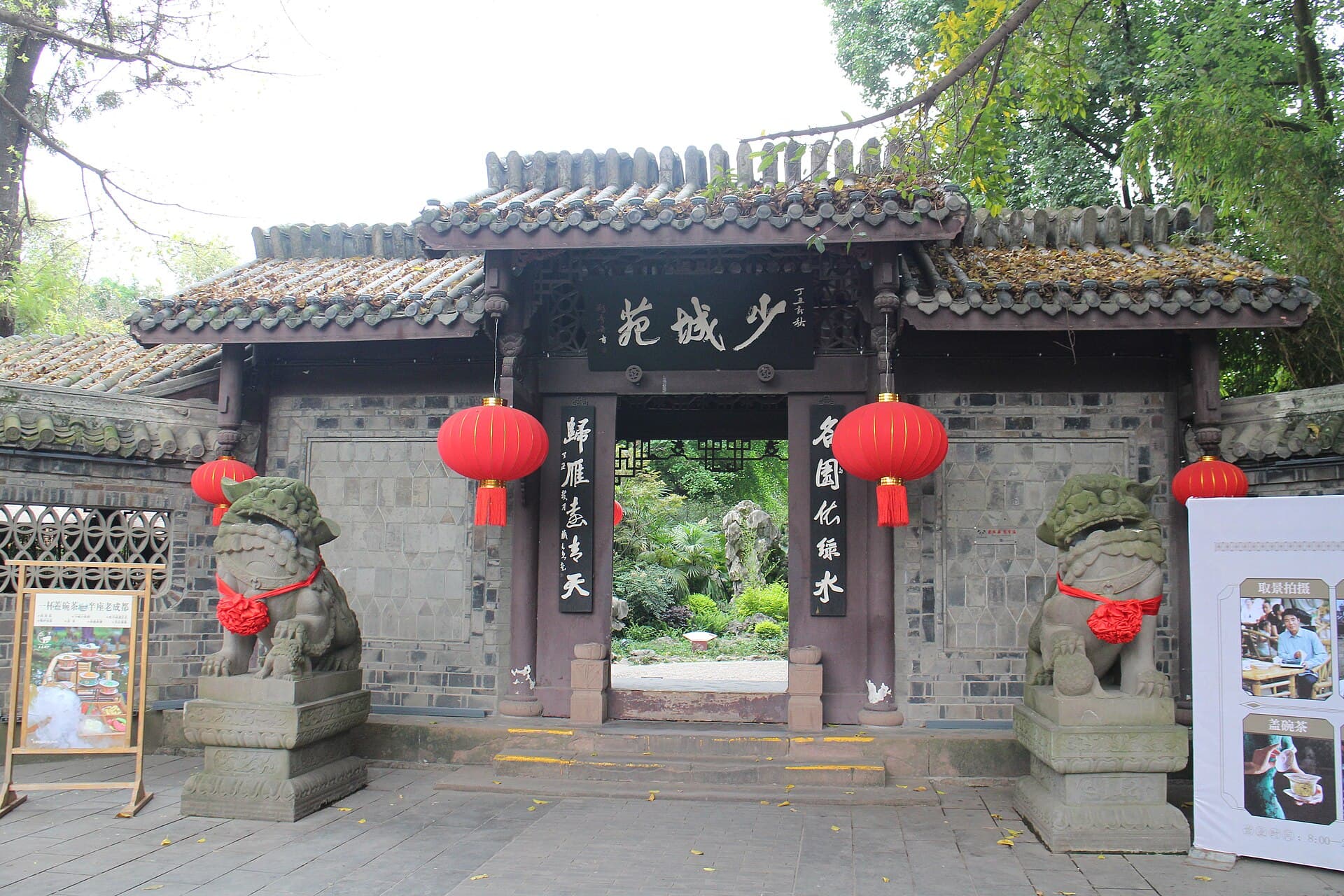 People's ParkChengdu's first public park, opened in 1911 as Shaocheng Park in the quarter the18 minutes walk4.6
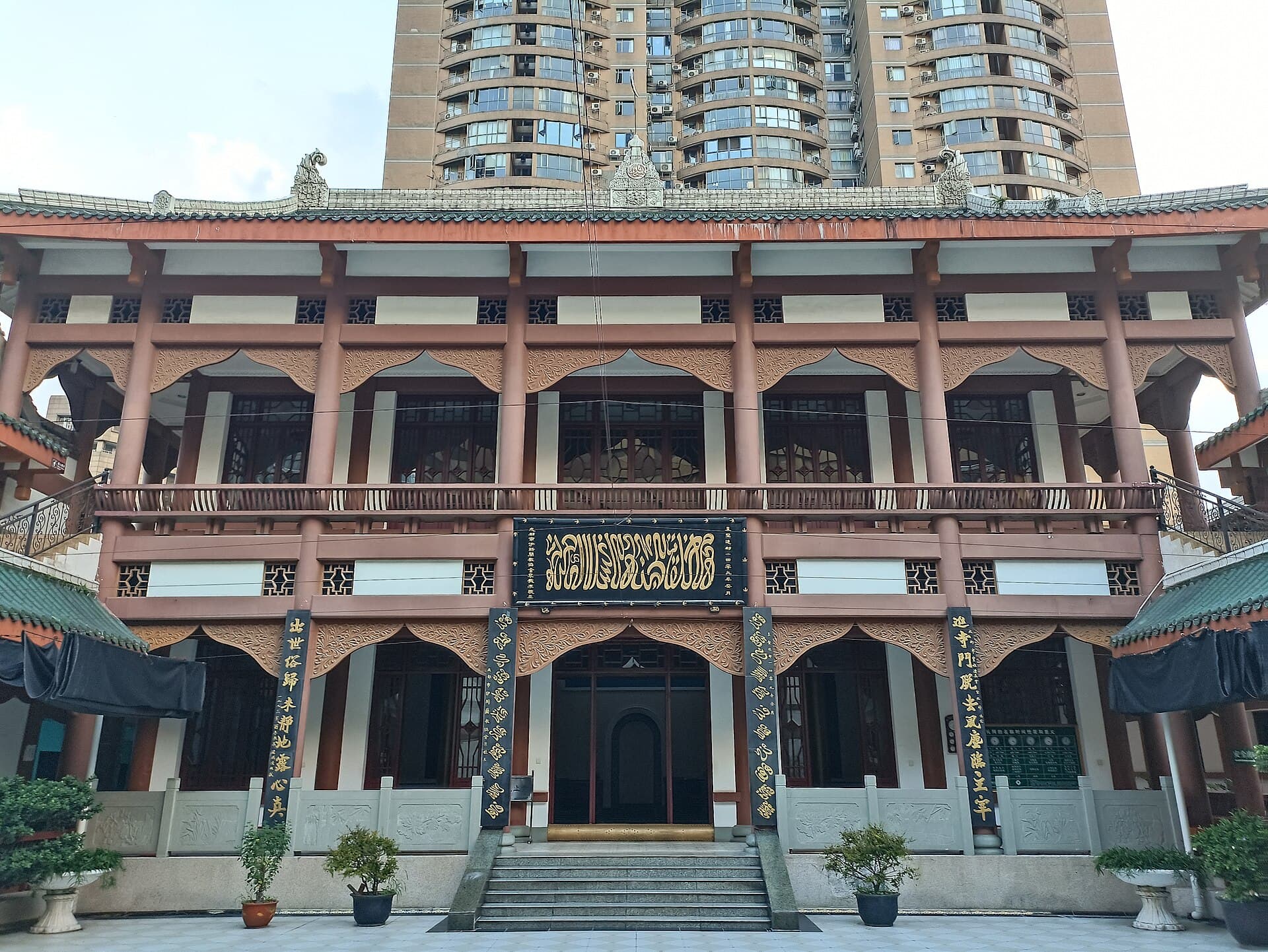 Chengdu Huangcheng MosqueThe largest mosque in Sichuan, in central Chengdu near Tianfu Square; its name m22 minutes walk4.8
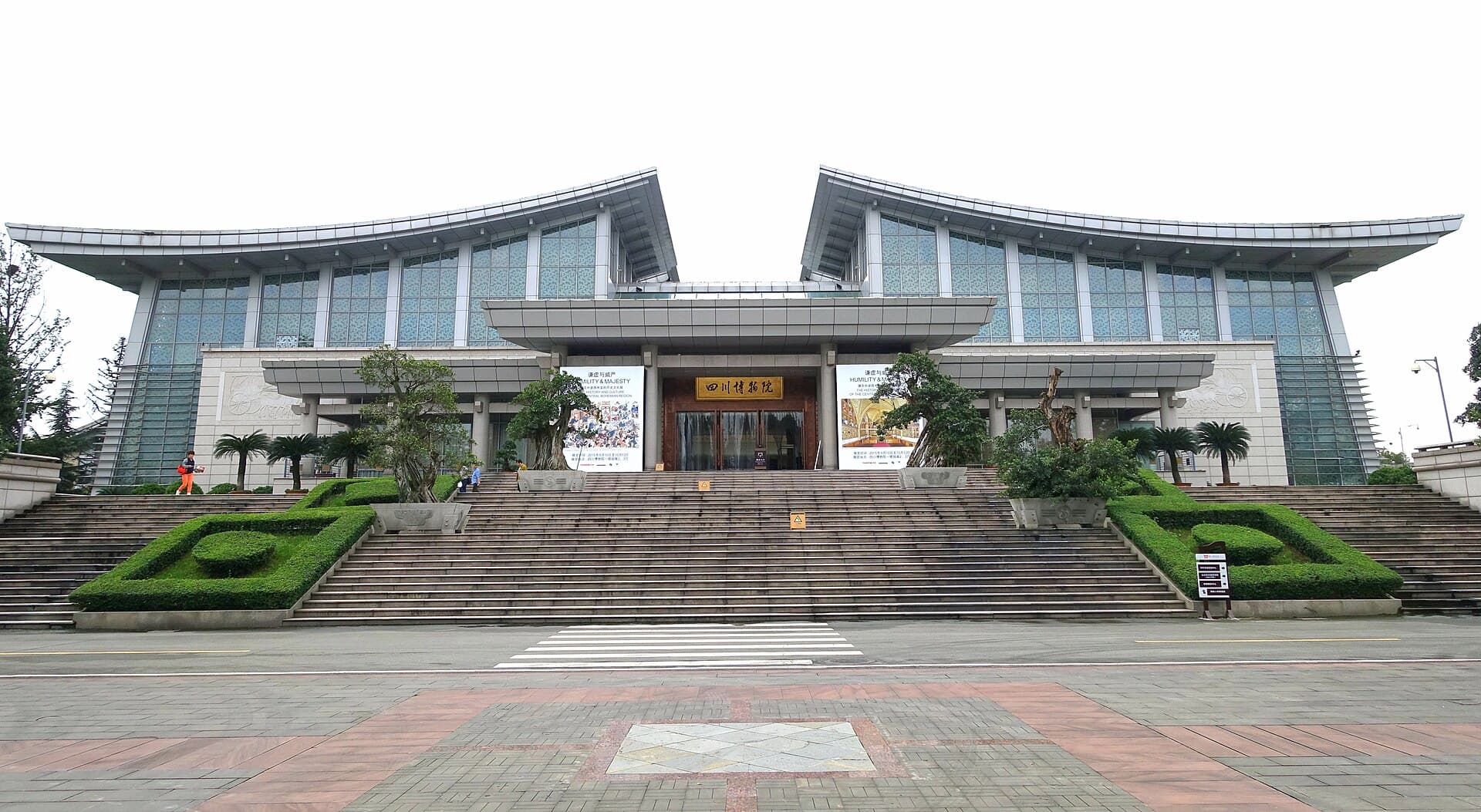 Sichuan MuseumThe provincial museum of Sichuan and one of the largest in southwest China, foun23 minutes walk4.1
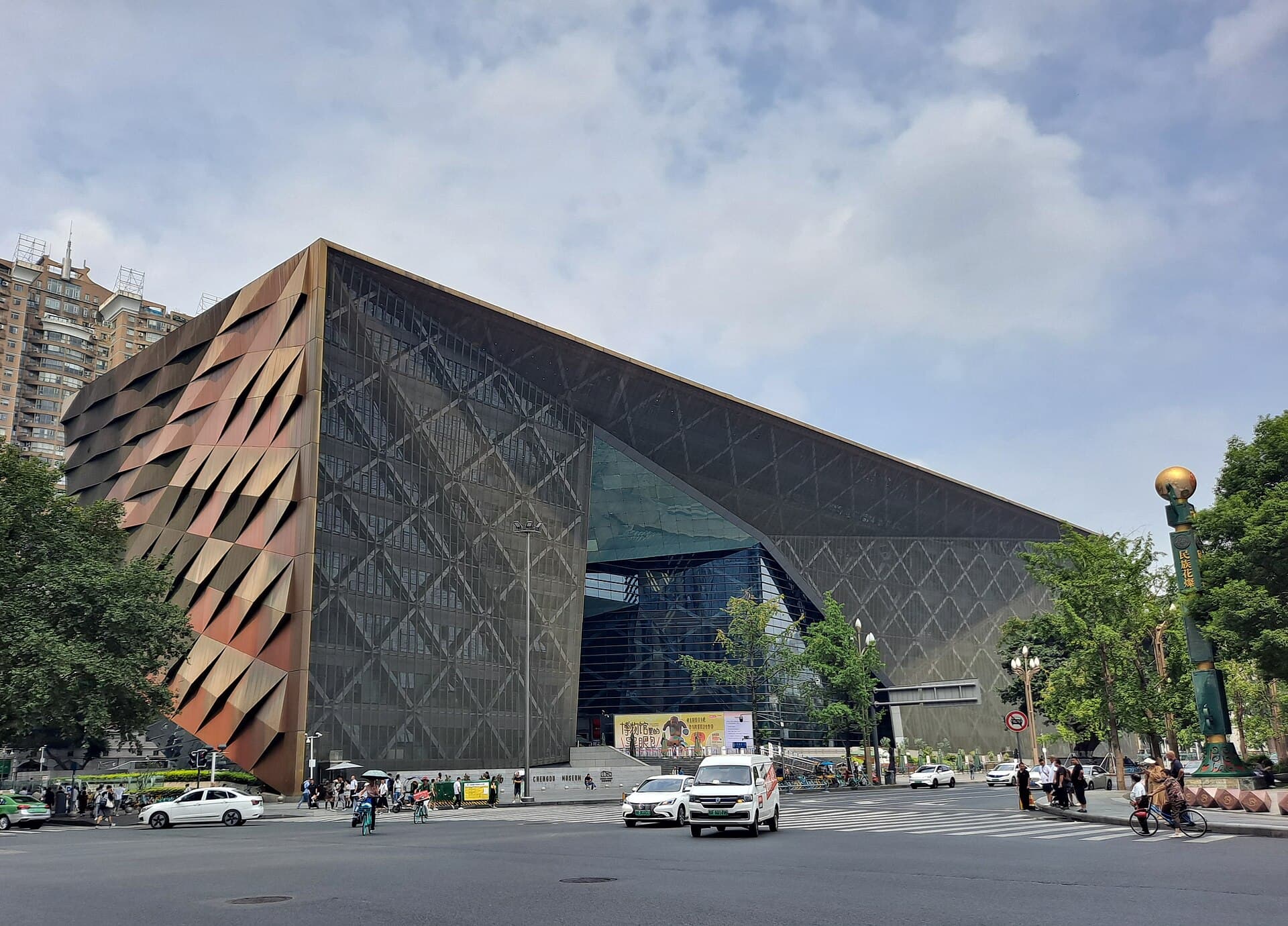 Chengdu MuseumThe city museum in the heart of Chengdu, on the west side of the great Tianfu Sq23 minutes walk4.8
Mostly not: many stalls use pork and some bars serve alcohol, so ask about ingredients.