
Jeongjeon hall
A long, low wooden hall.
A royal Confucian shrine built to commemorate the kings and queens of the Joseon dynasty, and a UNESCO World Heritage Site since 1995. It was built in 1394, when King Taejo, the dynasty's founder, moved his capital to Seoul; it burned in the war of 1592 and was rebuilt in the early seventeenth century. UNESCO describes it as the oldest royal Confucian shrine to have been preserved. The main hall, Jeongjeon, is a long, low wooden building facing a broad stone-paved court. It was extended again and again as kings succeeded one another, which made it one of the longest traditional wooden buildings in Korea. The architecture is deliberately plain and austere, without the colours and ornament of the palaces. The traditional Jongmyo rite is still held here every year with its ancient court music, and is on UNESCO's list of intangible heritage. Today the place is a historic site surrounded by a quiet wood in the middle of the city. On most days you visit on a guided tour at set times, some of them in English. On Saturdays you can walk around freely. The shrine is closed on Tuesdays.
A long, low wooden hall.
A broad court before the hall.
Quiet in the city centre.
157 Jong-ro, Jongno-gu; Jongno 3-ga Station (Lines 1, 3 and 5)
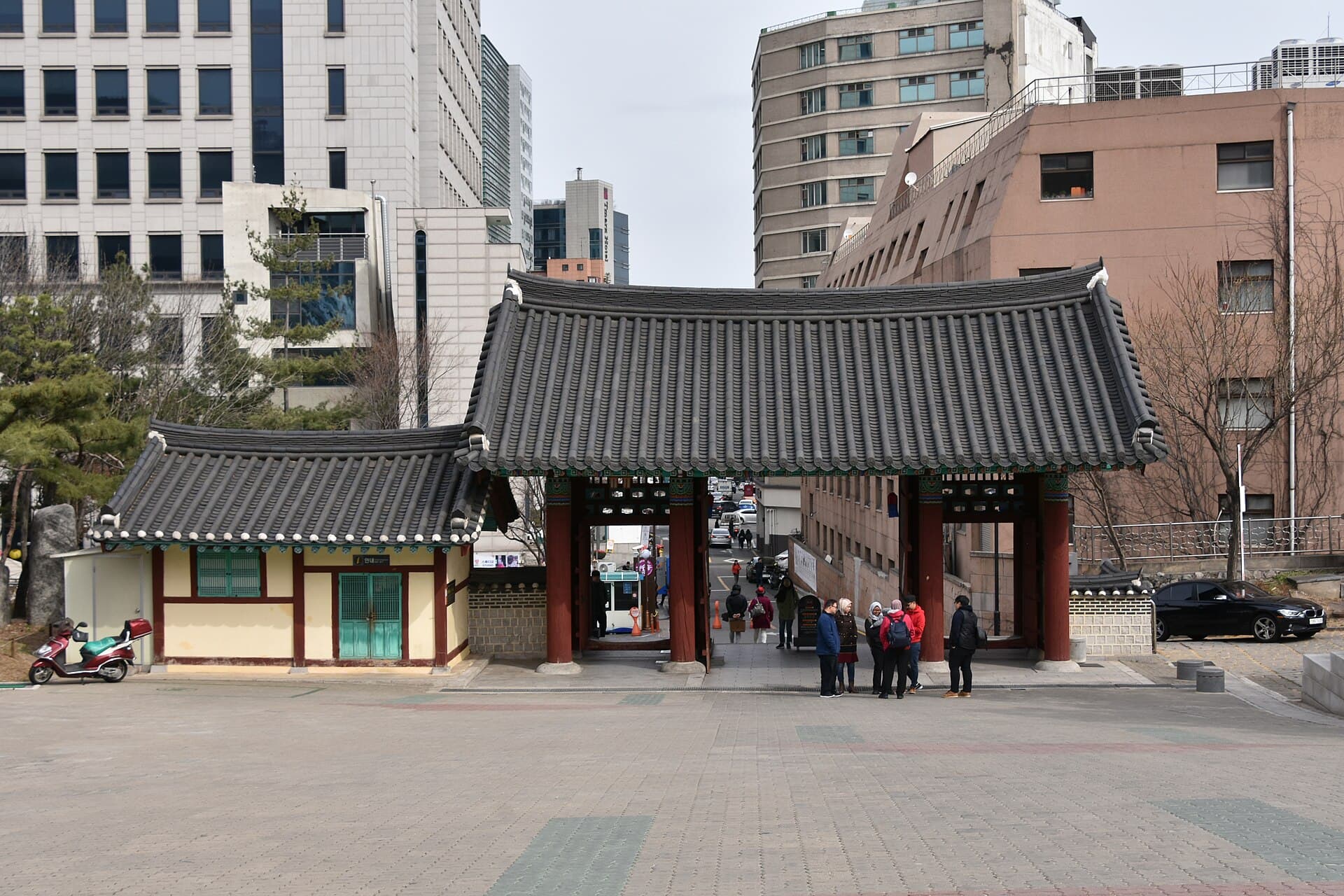 Changgyeonggung PalaceA quiet palace adjoining Changdeokgung on its east side; the two were once known6 minutes walk4.6
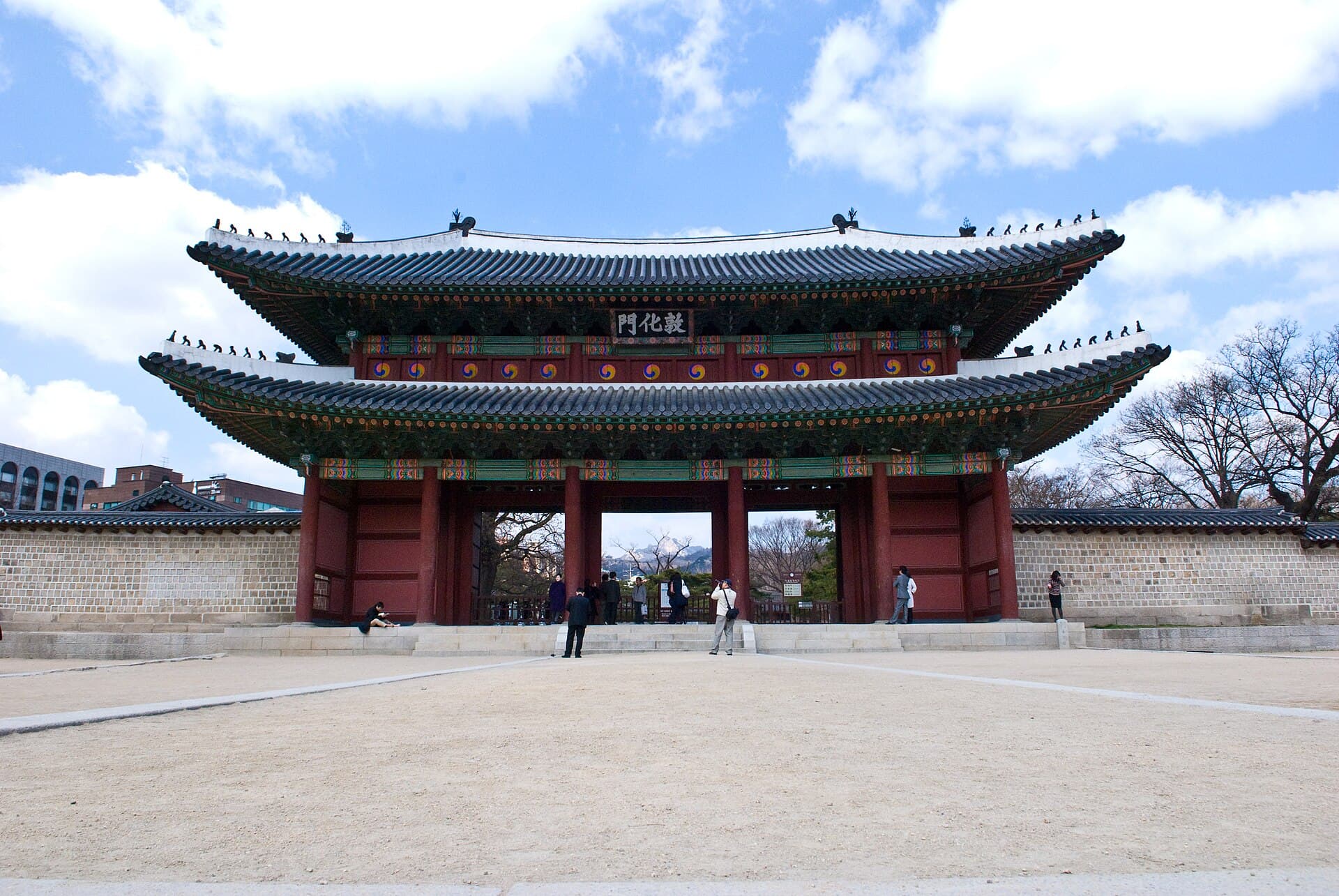 Changdeokgung Palace and Secret GardenThe best preserved of Seoul's royal palaces and a UNESCO World Heritage Site sin7 minutes walk4.5
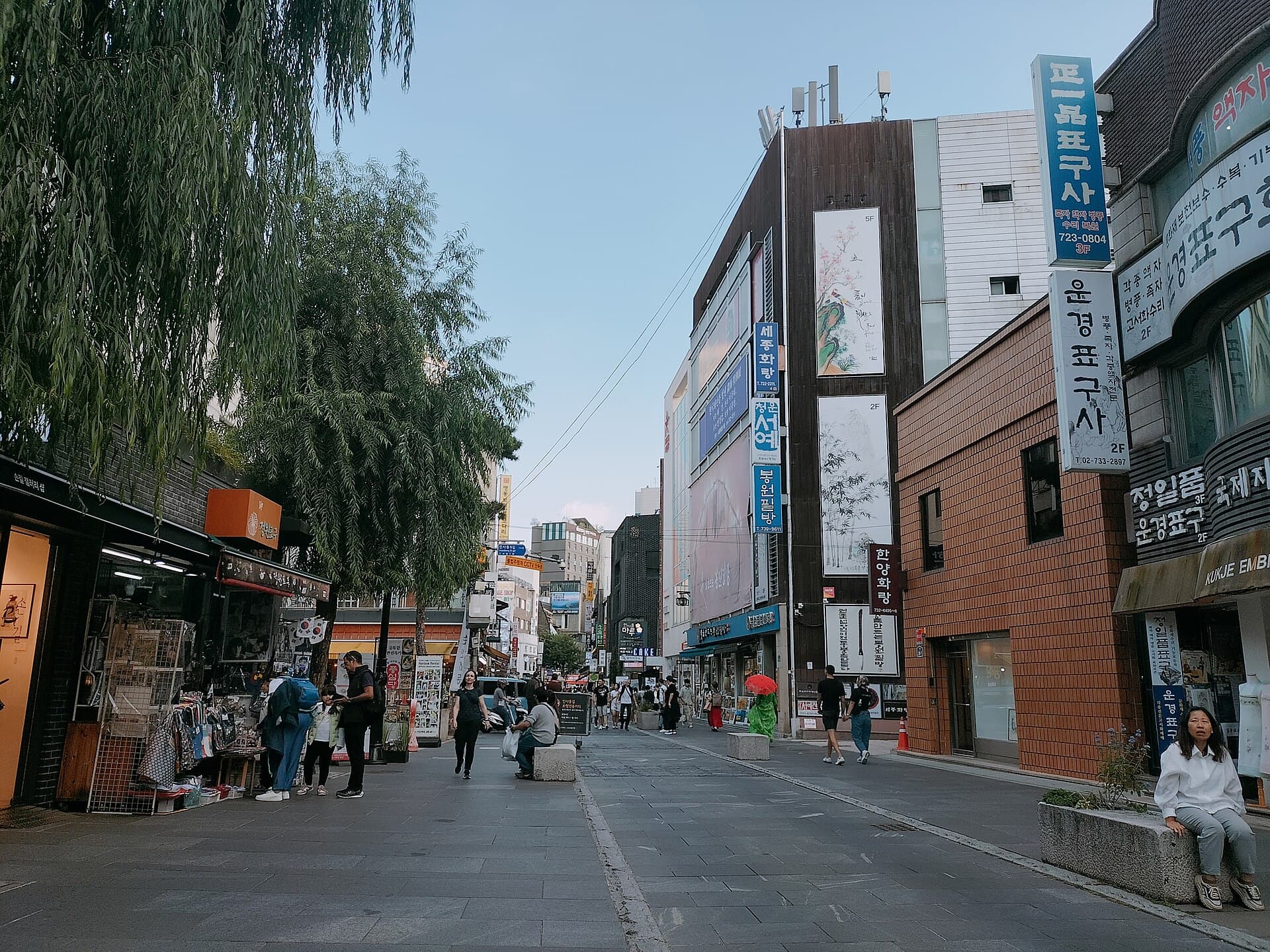 InsadongSeoul's street of traditional arts and crafts, and historically the largest mark9 minutes walk4.4
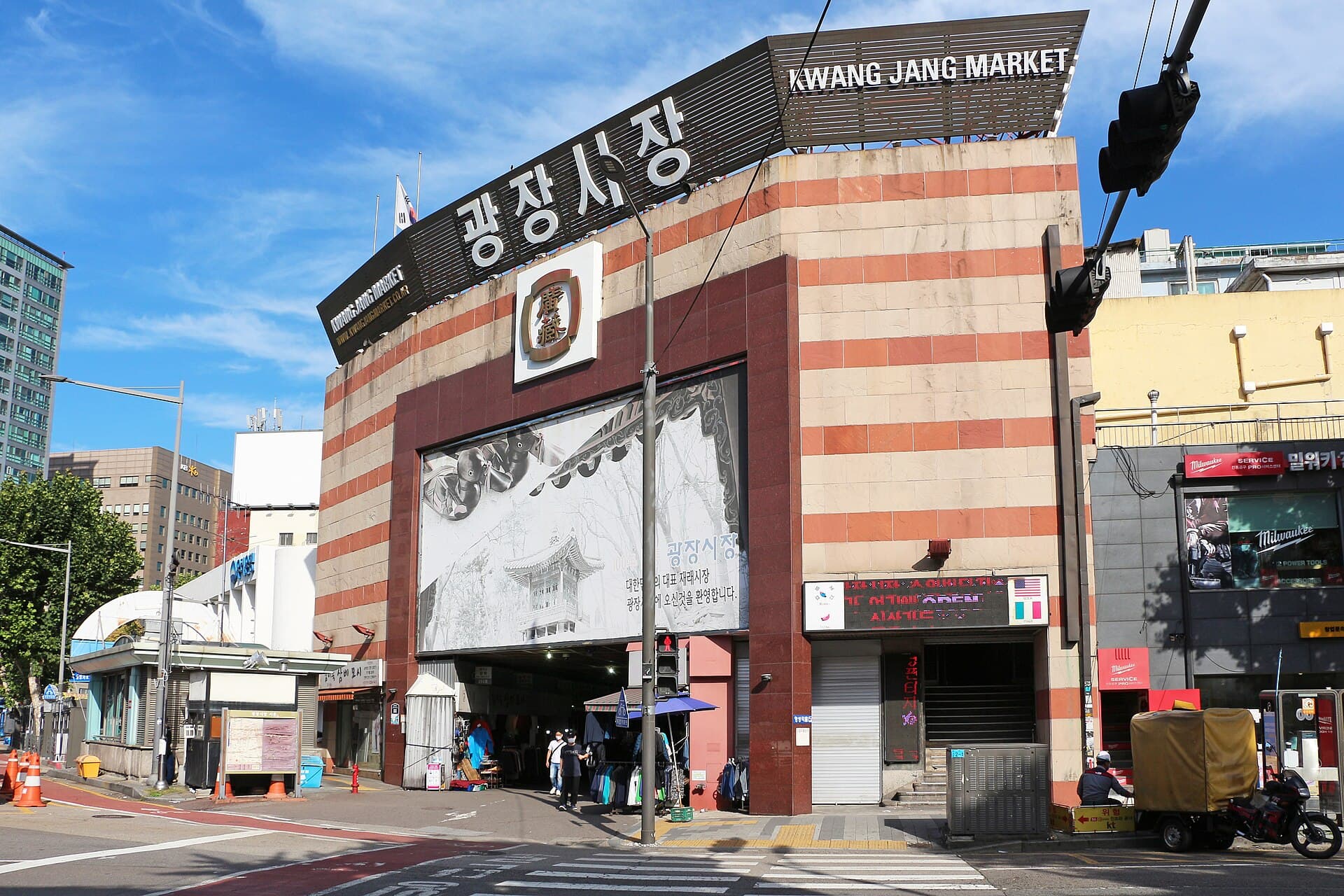 Gwangjang MarketOne of the oldest and largest traditional markets in Korea, set up by Korean mer9 minutes walk4.1
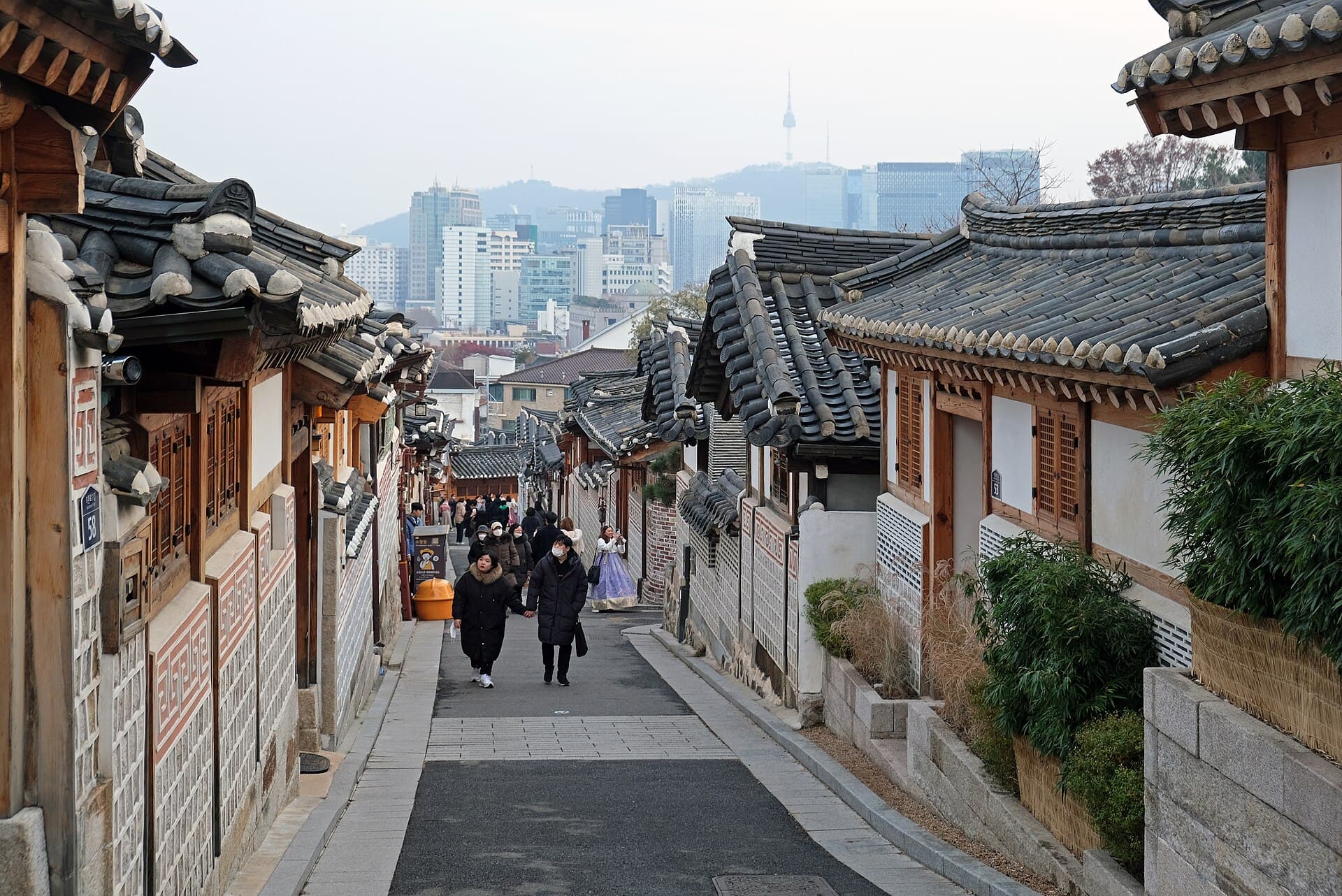 Bukchon Hanok VillageAn old residential quarter between Gyeongbokgung and Changdeokgung palaces, with14 minutes walk4.5
On Saturdays, yes. On other days visits are by guided tour at set times, per visitor guides. The shrine is closed on Tuesdays.