
The twin domes
Stone carved with chevrons.
Mohammad Kassab — CC BY-SA 4.0 · Hatem Moushir — CC BY-SA 4.0 · R Prazeres — CC BY-SA 4.0 · R Prazeres — CC BY-SA 4.0 · R Prazeres — CC BY-SA 4.0
The Khanqah of Faraj ibn Barquq is a great Mamluk complex in Cairo's Northern Cemetery, combining a Sufi lodge, a mosque and two mausoleums, completed by Sultan al-Nasir Faraj in 813 AH (1410–11). It counts among the finest works of Mamluk architecture and is one of the cemetery's landmarks, with twin stone domes and matching minarets. Sultan Barquq wished to lie in the desert near the tombs of saints and scholars rather than in his madrasa on Bayn al-Qasrayn. He set aside 80,000 dinars and was buried here in 1399, before the building existed. His son Faraj carried out the plan in a troubled reign: Timur invaded Syria, Faraj was briefly deposed in 1405, and he was killed in 1411 aged 23. The site was also meant to seed a new district, which never fully grew. The nearly square plan measures 72 by 73 m and, with open land all round, is unusually symmetrical for Cairo. A broad courtyard leads east to the prayer hall, roofed in stone vaults, with a carved stone minbar given by Sultan Qaytbay in 1483. Wooden screens guard the mausoleums on either side, with Barquq and Faraj in the northern one. The two chevron-carved domes are among the largest stone domes of the Mamluk period. It lies about 1.6 km east of Khan el-Khalili in a straight line, near the Qaytbay complex. Come by day by taxi or with a guide, as the cemetery is a lived-in district.
Stone carved with chevrons.
A gift from Sultan Qaytbay, 1483.
A breadth rare among Cairo's buildings.
Northern Cemetery, Cairo
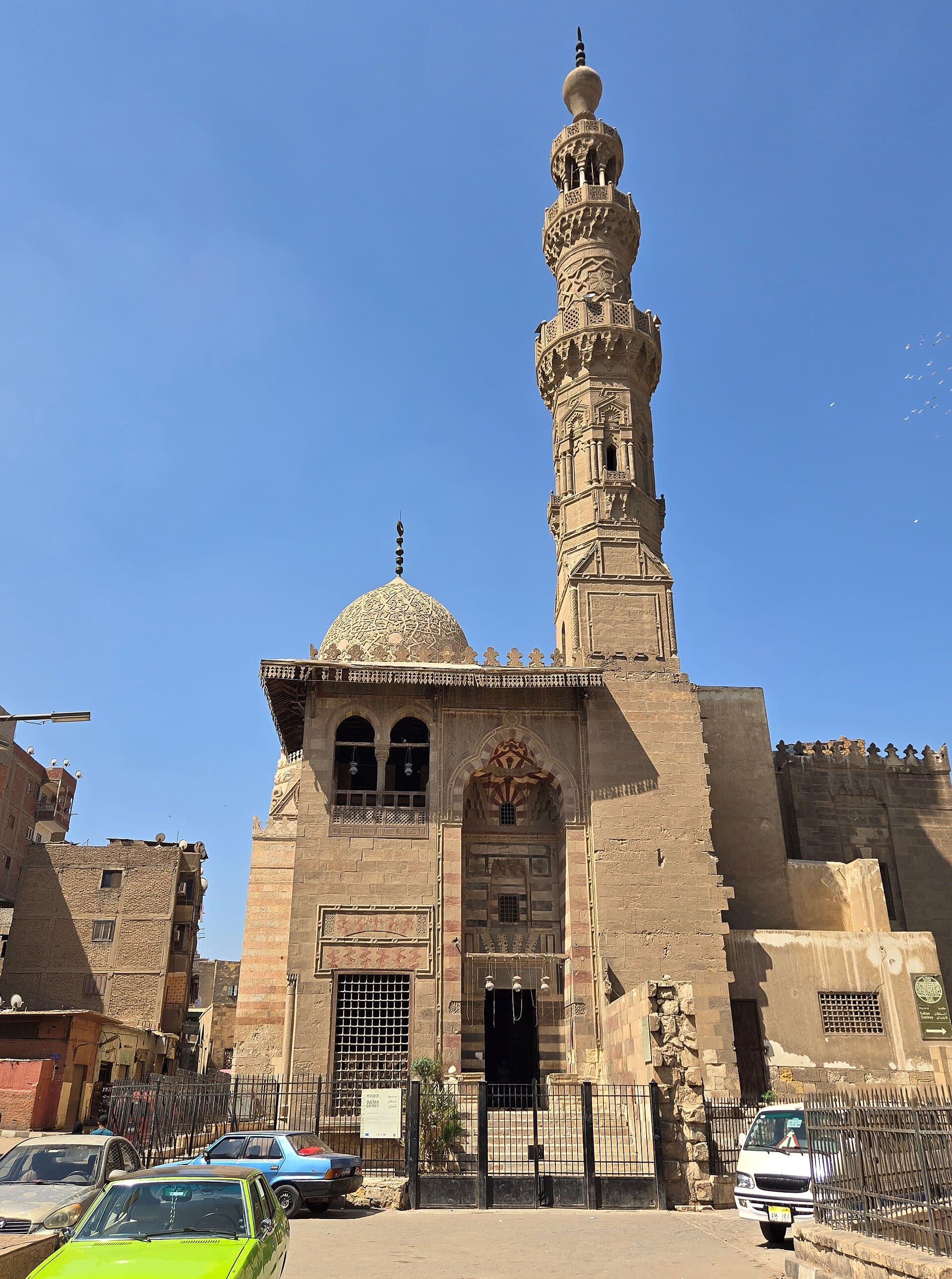 Funerary Complex of Sultan QaytbayA funerary complex built by Sultan al-Ashraf Qaytbay between 1472 and 1474 in th9 minutes walk4.6
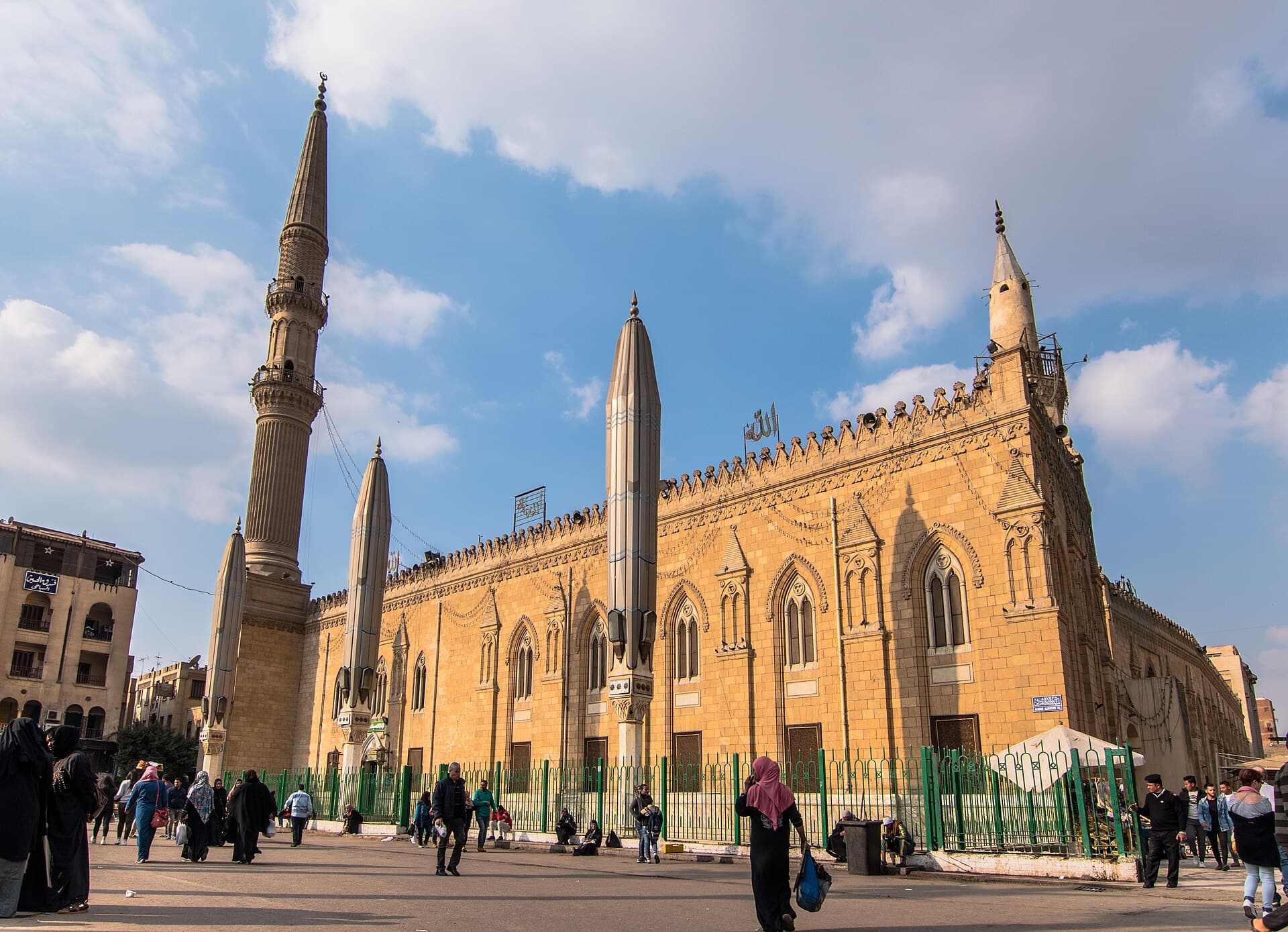 Al-Hussein MosqueOne of the holiest and best-loved mosques in Egypt, on al-Hussein Square at the 19 minutes walk4.9
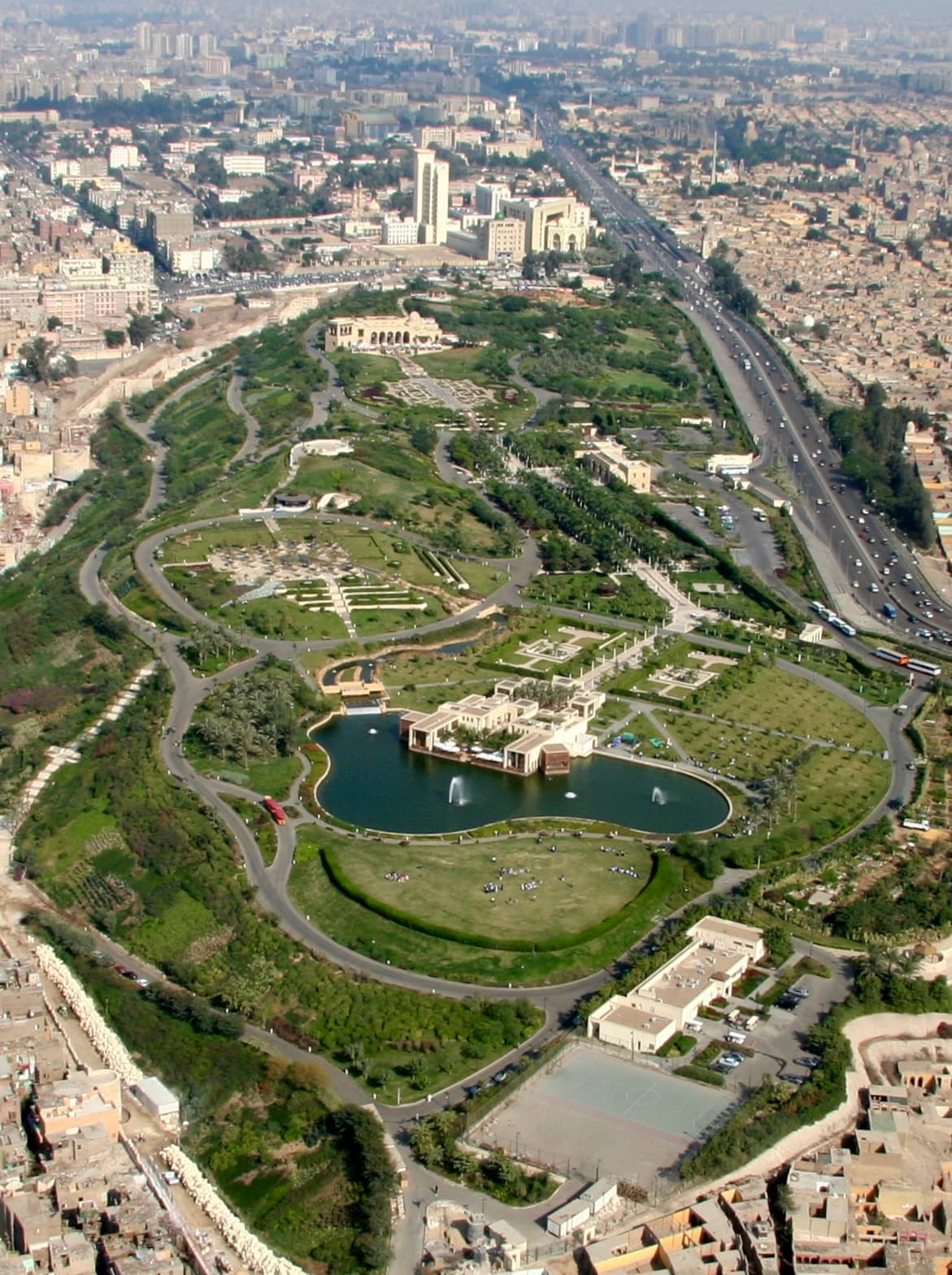 Al-Azhar ParkA park on a hill between Fatimid Cairo and the Citadel, with a stranger history 19 minutes walk4.4
 Mosque of al-HakimThe second largest Fatimid mosque in Cairo, begun by Caliph al-Aziz in 990 AD an20 minutes walk4.6
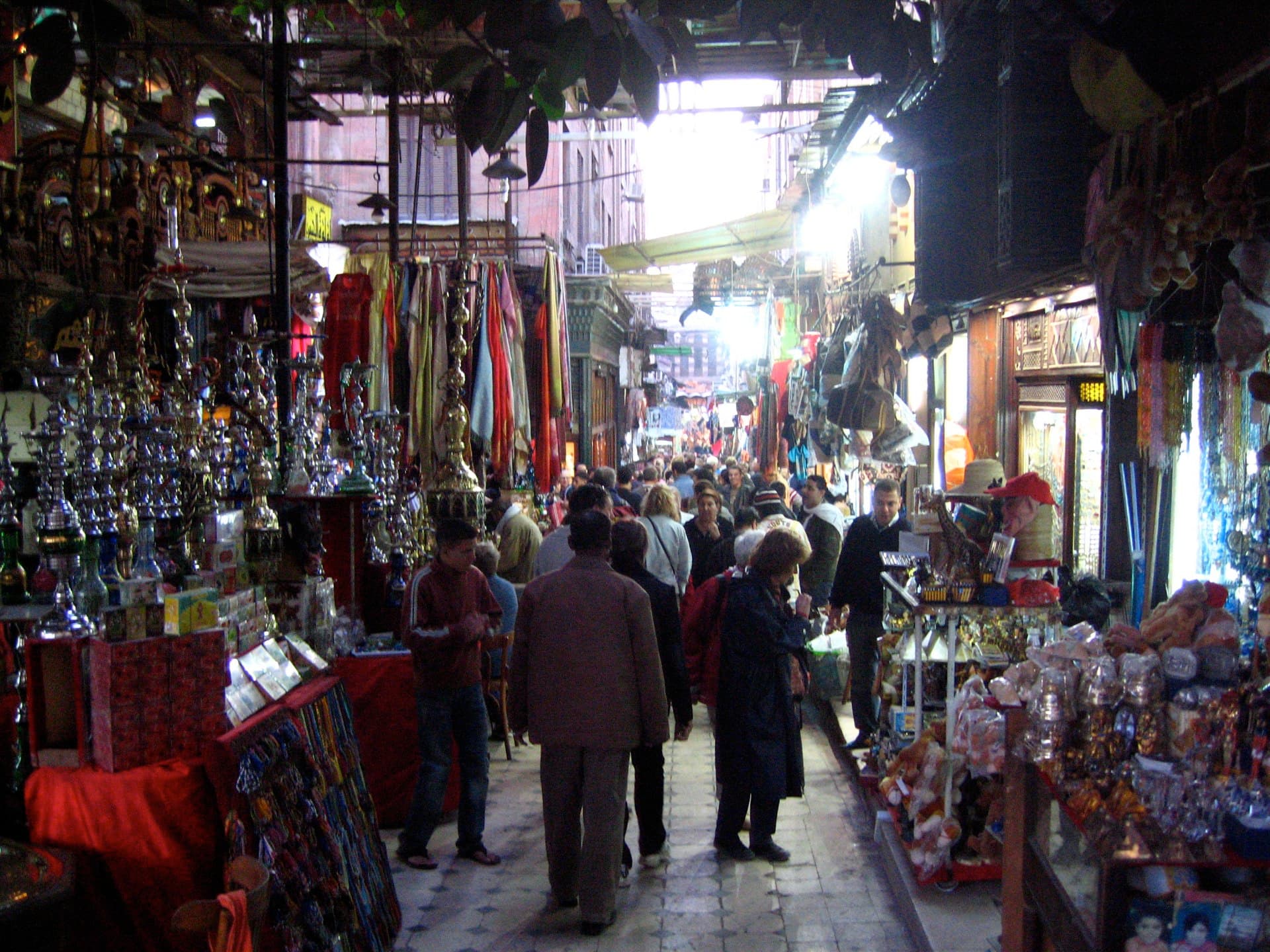 Khan el-KhaliliCairo's great bazaar since the fourteenth century, and still a working market ra20 minutes walk4.3
A lodge where Sufis lived, worshipped and studied. This one has living quarters west of the courtyard and also served as a congregational mosque.
No. Barquq's madrasa stands on al-Muizz Street. This separate complex in the cemetery was built by his son to carry out his wish.