
How to read the signs
Uneven wall thickness and windows out of line — evidence of different ages.
Leitzsche — CC0 · Luftschiffhafen — CC BY-SA 4.0 · Ladabohac — CC0 · Ghirlandajo — CC BY-SA 3.0
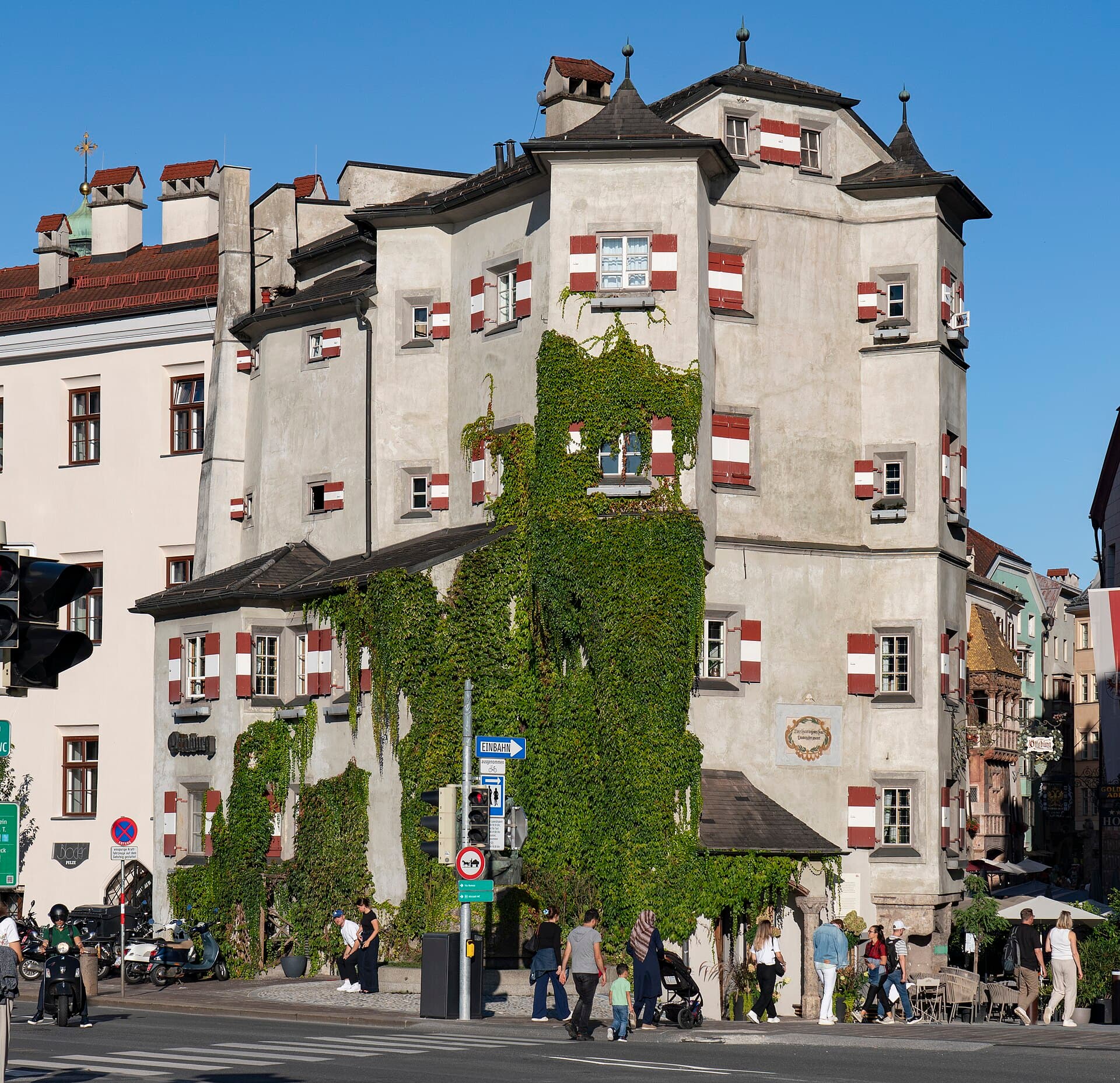
An old-town house incorporating an older tower within its structure, an example of how medieval towns grew: defensive or residential towers were built first, then houses were built around them and swallowed them until they became part of the street front. The pattern is common in old Alpine towns and goes unnoticed by anyone not looking for it. What shows from the street is a variation in wall thickness and height and windows that do not line up with the rest of the front — signs that part of the building is centuries older than the rest. Old Innsbruck was a small walled town where land inside the wall was precious, so building went upward and inward rather than outward. An absorbed tower is a direct result of that pressure. A plain practical point: the building is private and not visitable inside, and the visit means looking at it from the street. Minutes on an old-town walk, and its value lies in teaching you what to look for in the other buildings.
Uneven wall thickness and windows out of line — evidence of different ages.
Land inside the wall was precious, so building went up and inward, not out.
After seeing it you will notice the same pattern in other buildings on the street.
Old town, Innsbruck
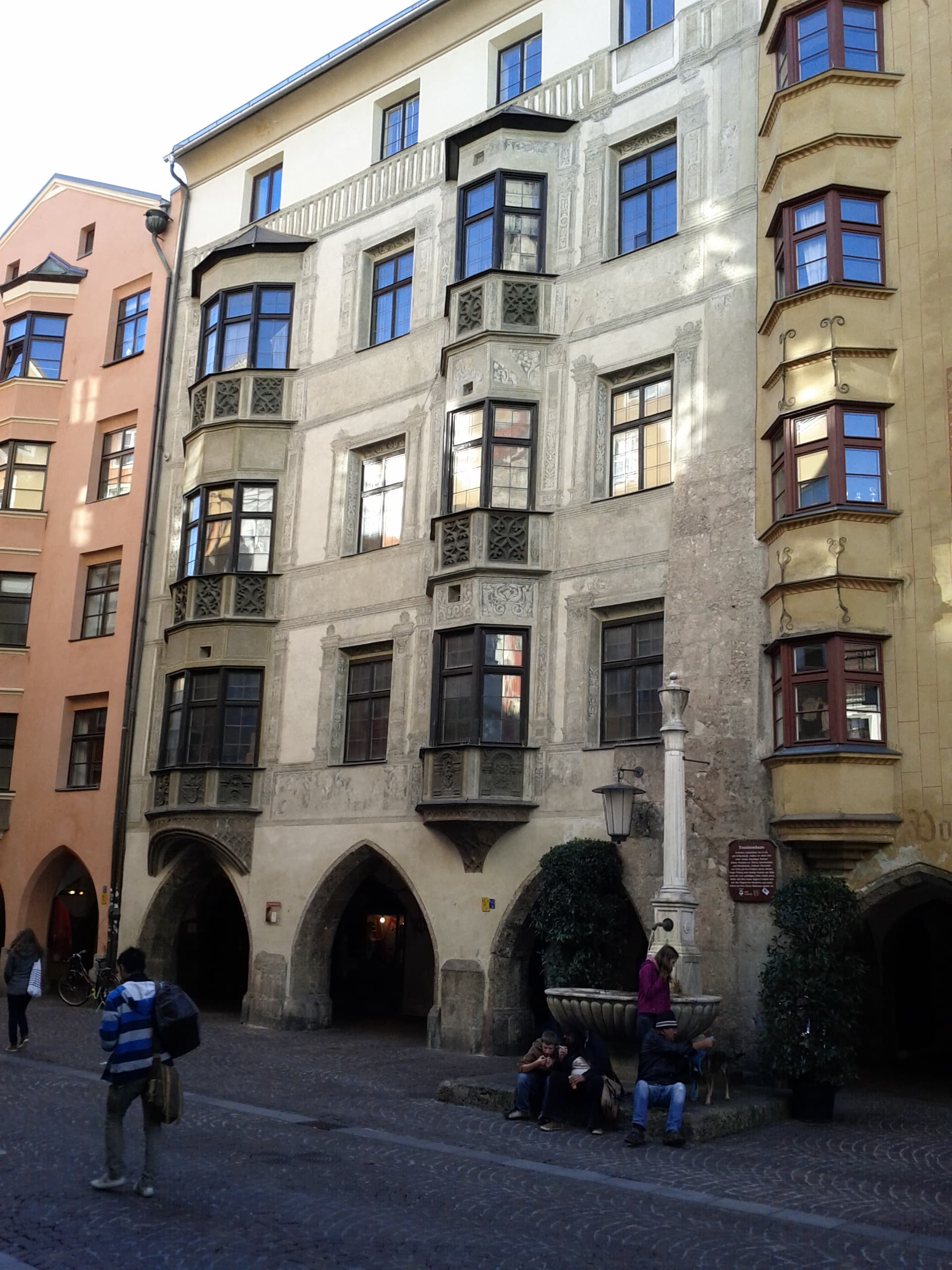 The TrautsonhausA Gothic-era house in the old town carrying the name of the Trautson family, amo1 minute walk4.6
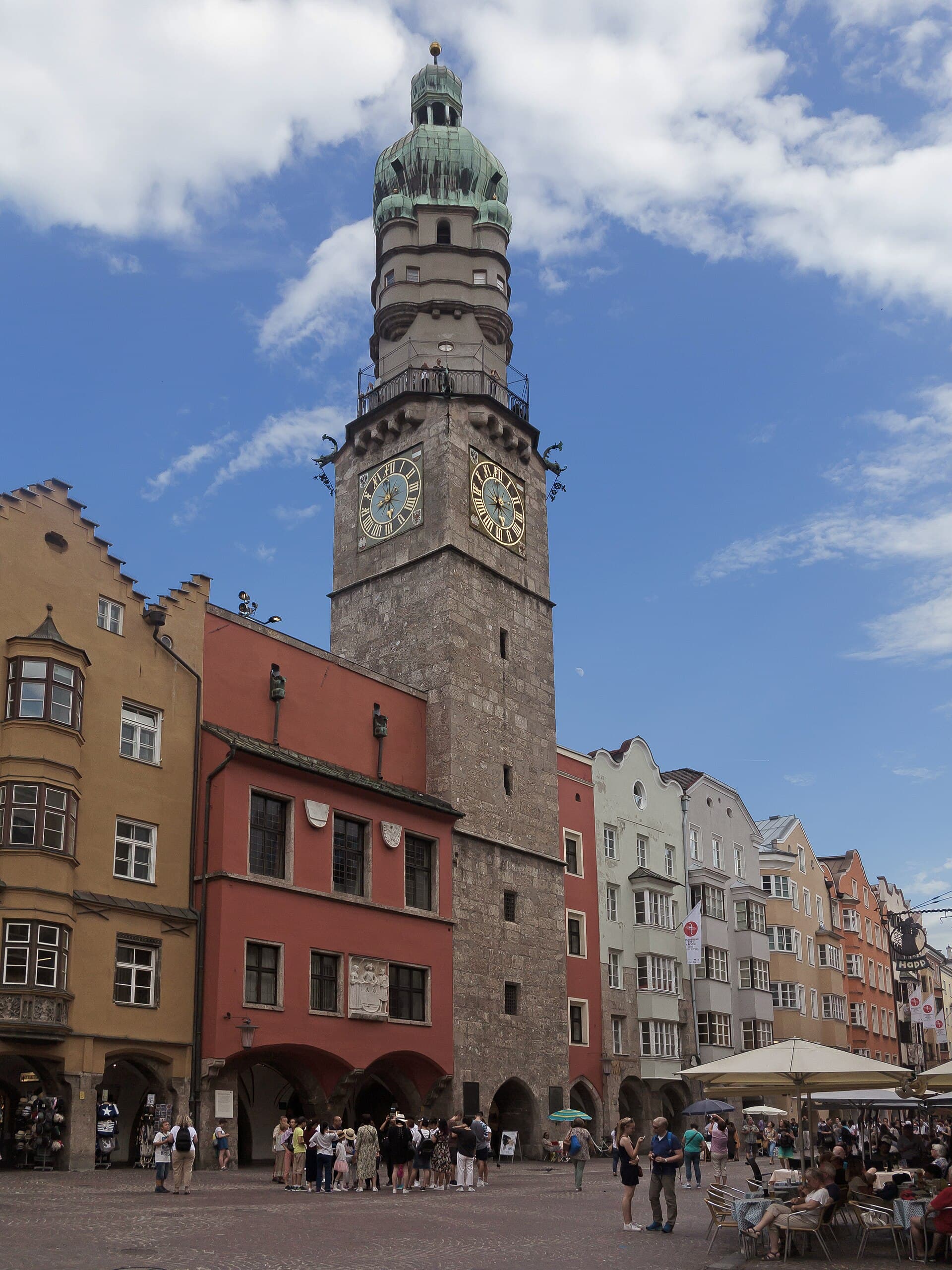 The City TowerThe City Tower is the Gothic lanes' balcony: a fourteenth-century watchmen's tow1 minute walk4.7
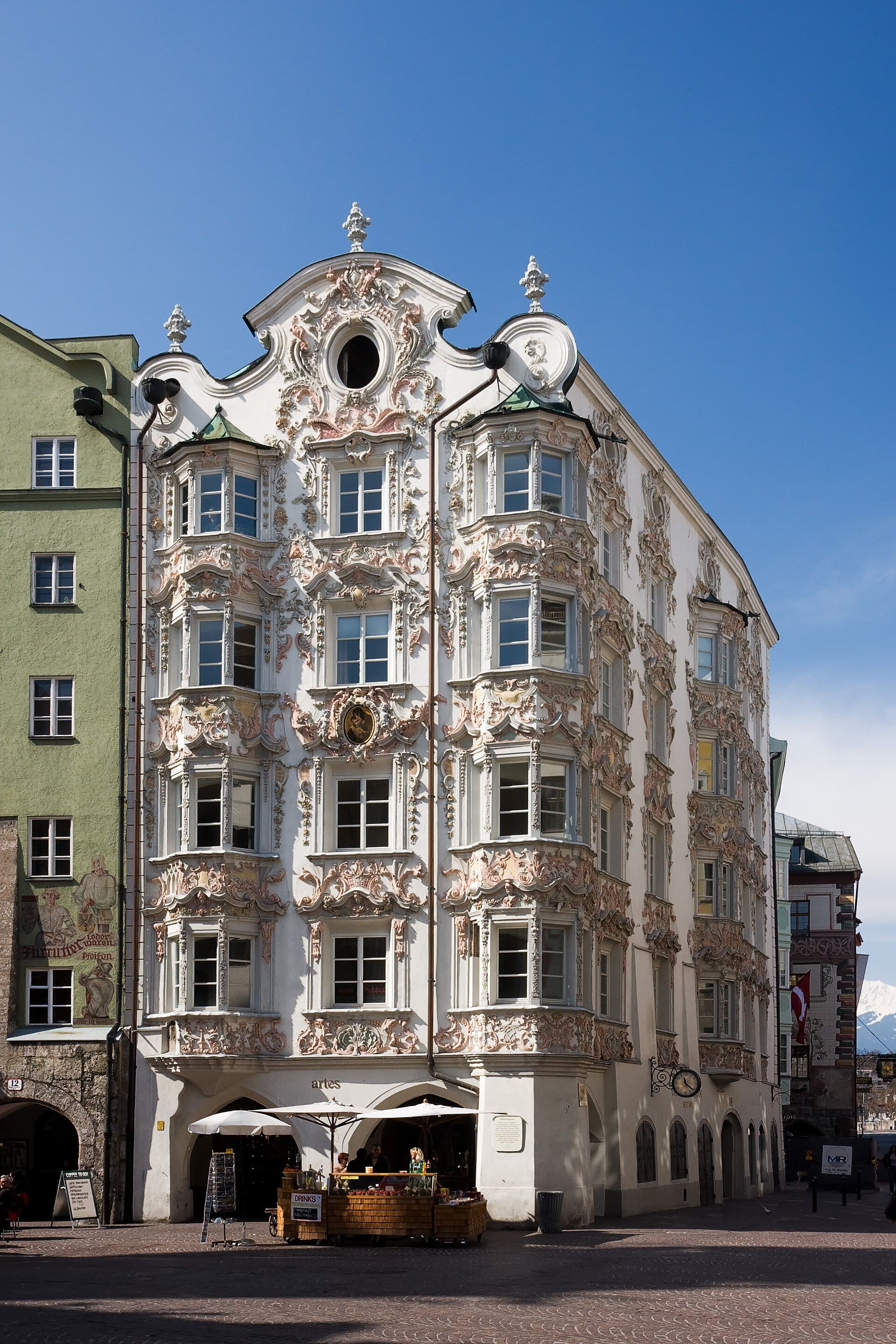 The HelblinghausThe Helblinghaus stands directly opposite the Golden Roof in the heart of the ol2 minutes walk4.7
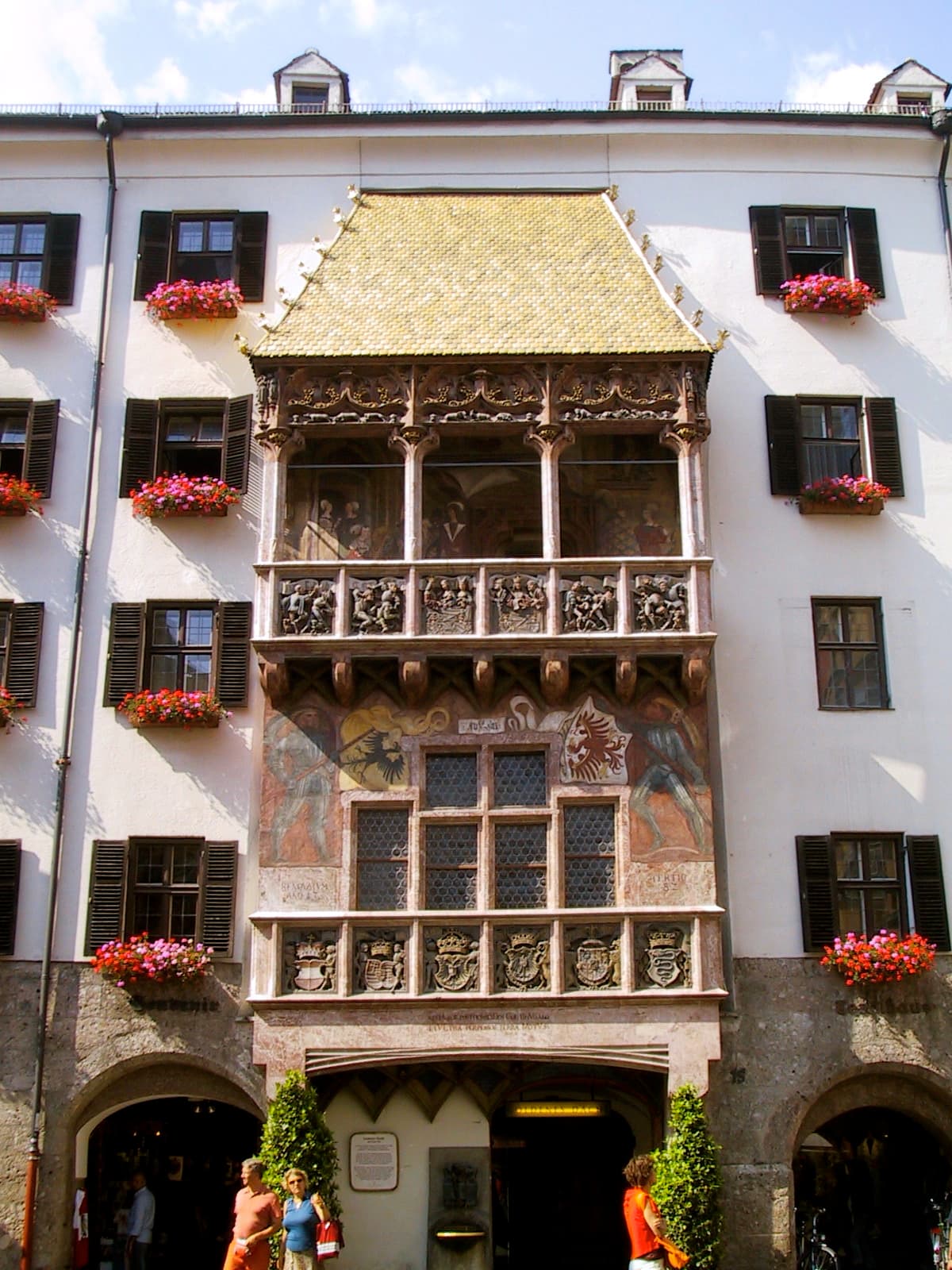 The Golden Roof & Old TownThe Golden Roof is Innsbruck's absolute symbol: a balcony of 2,657 gilded copper2 minutes walk4.5
 OttoburgA medieval residential tower on the bank of the Inn at the edge of Innsbruck's o2 minutes walk4.0
Look for a wall clearly thicker than its neighbours, small irregular windows that do not follow the facade's rows, and a line in the render dividing two masses. Those mark a part built in another era.
Not on its own. Make it part of an old-town walk taking in the Golden Roof, the Helblinghaus, the City Tower and the Burgriesenhaus — then the walk becomes a lesson in reading a town rather than a series of stops.