
The Zakopane style
A national architectural manner Witkiewicz invented from mountain building.
Thomas.xx71 — CC BY-SA 4.0 · Olos88 — CC0 · Cybularny — CC BY-SA 4.0 · MARELBU — CC BY 3.0
Zakopane's main church, built of stone between 1877 and 1896 as the village turned into a destination for the Polish elite. The building is neo-Gothic in stone, which makes it striking in a town whose architecture is mostly timber. But its interior carries what is called the Zakopane style: elements drawn from the arts of the Podhale highlands — wood carving and local geometric ornament — introduced by the artist Stanisław Witkiewicz in a side chapel. That style was a conscious project: in the 1890s Witkiewicz set out to build a Polish national architectural manner derived from the folk architecture of the mountains, at a time when Poland did not exist as a state. The style spread through Zakopane and remains its mark. In the church's old cemetery, Pęksowy Brzyzek, many figures of Polish culture are buried. A working place of worship with normally free entry.
A national architectural manner Witkiewicz invented from mountain building.
Devised when Poland did not exist on the map.
Pęksowy Brzyzek holds many of its figures.
Krupówki street, central Zakopane
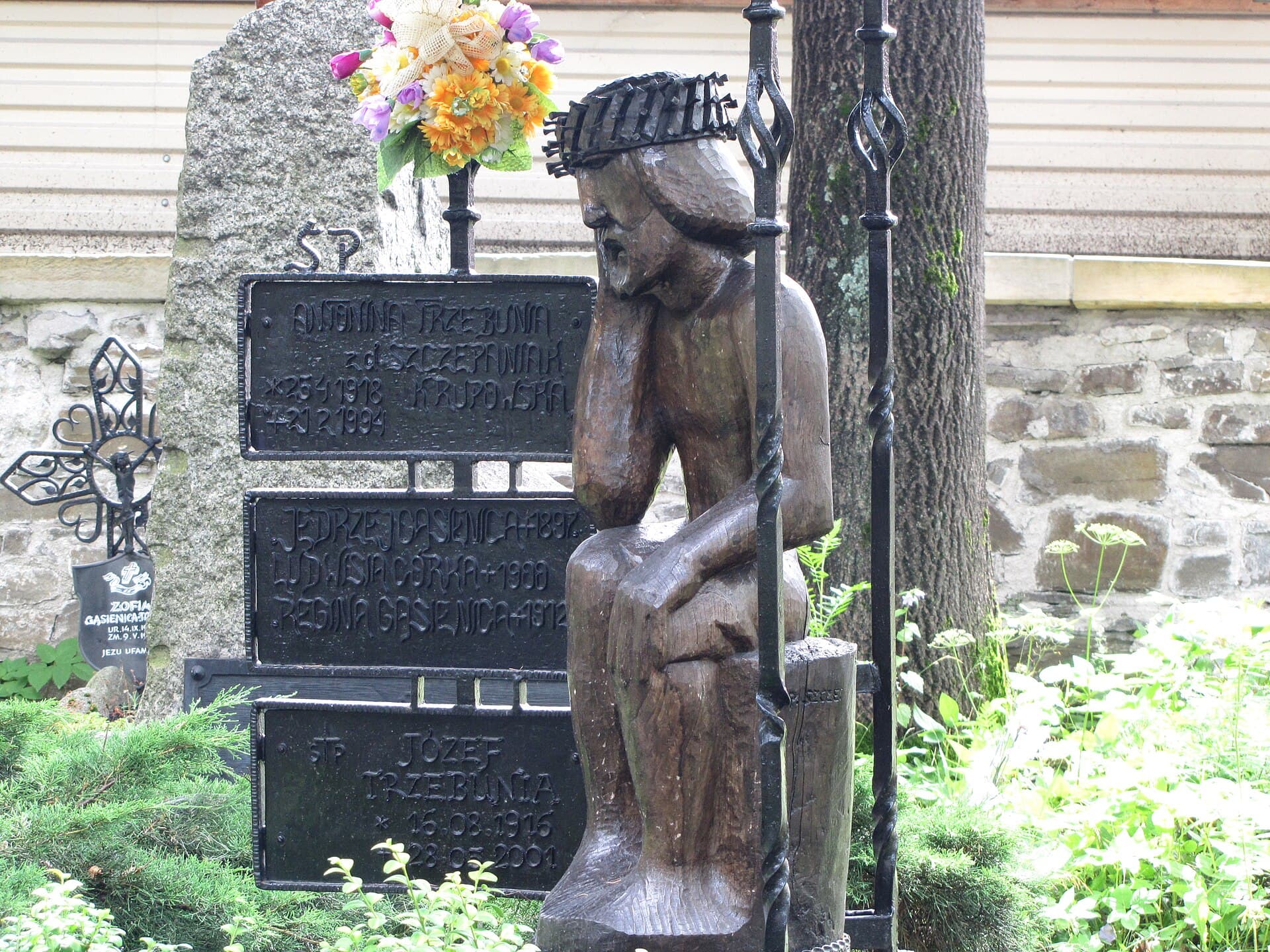 Pęksowy Brzyzek Cemetery of the MeritoriousThe oldest cemetery in Zakopane, established in the mid-nineteenth century, whic3 minutes walk4.1
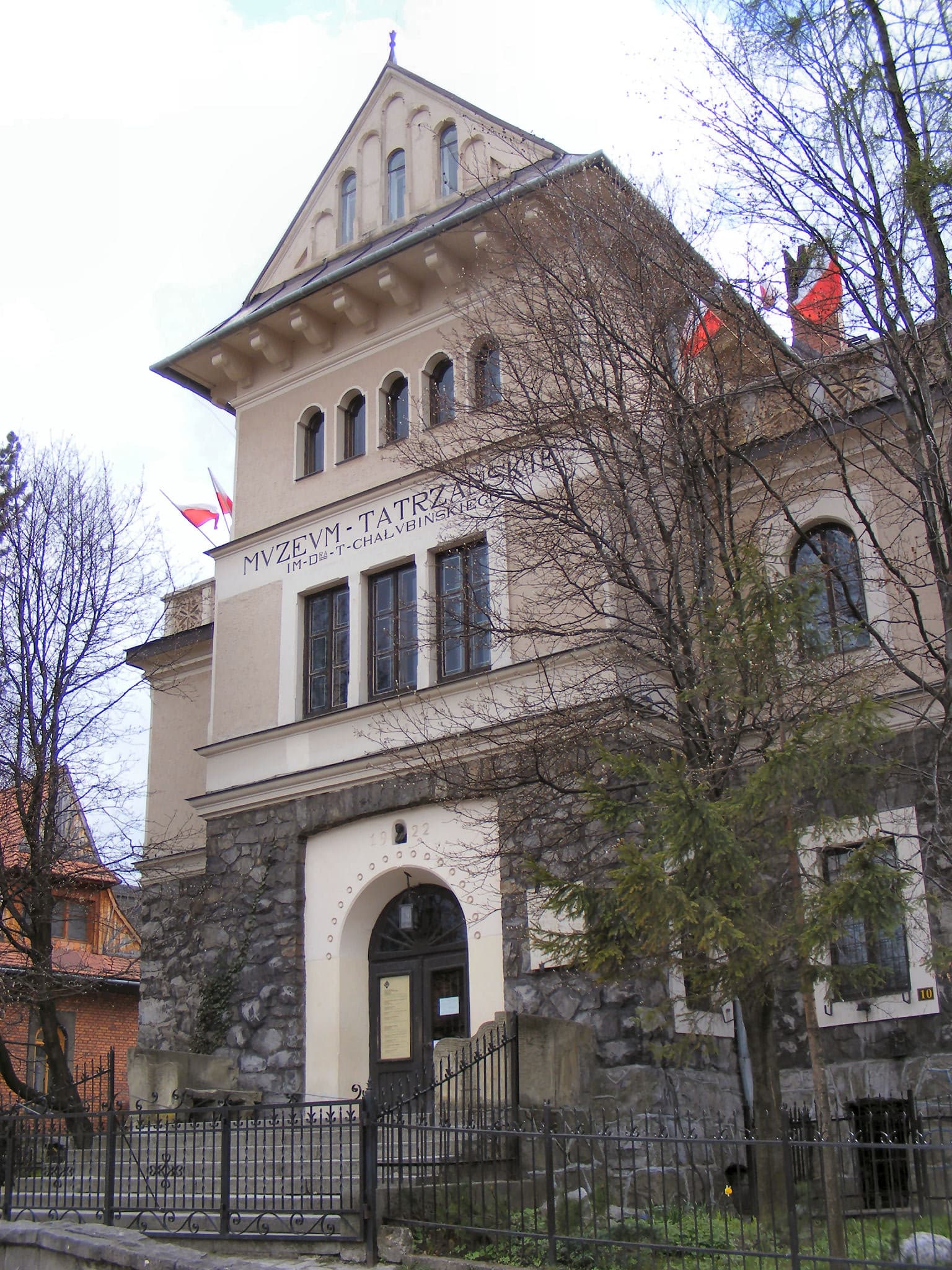 The Tatra MuseumThe Tatra Museum is the mountain's and its people's memory: among Poland's oldes3 minutes walk4.5
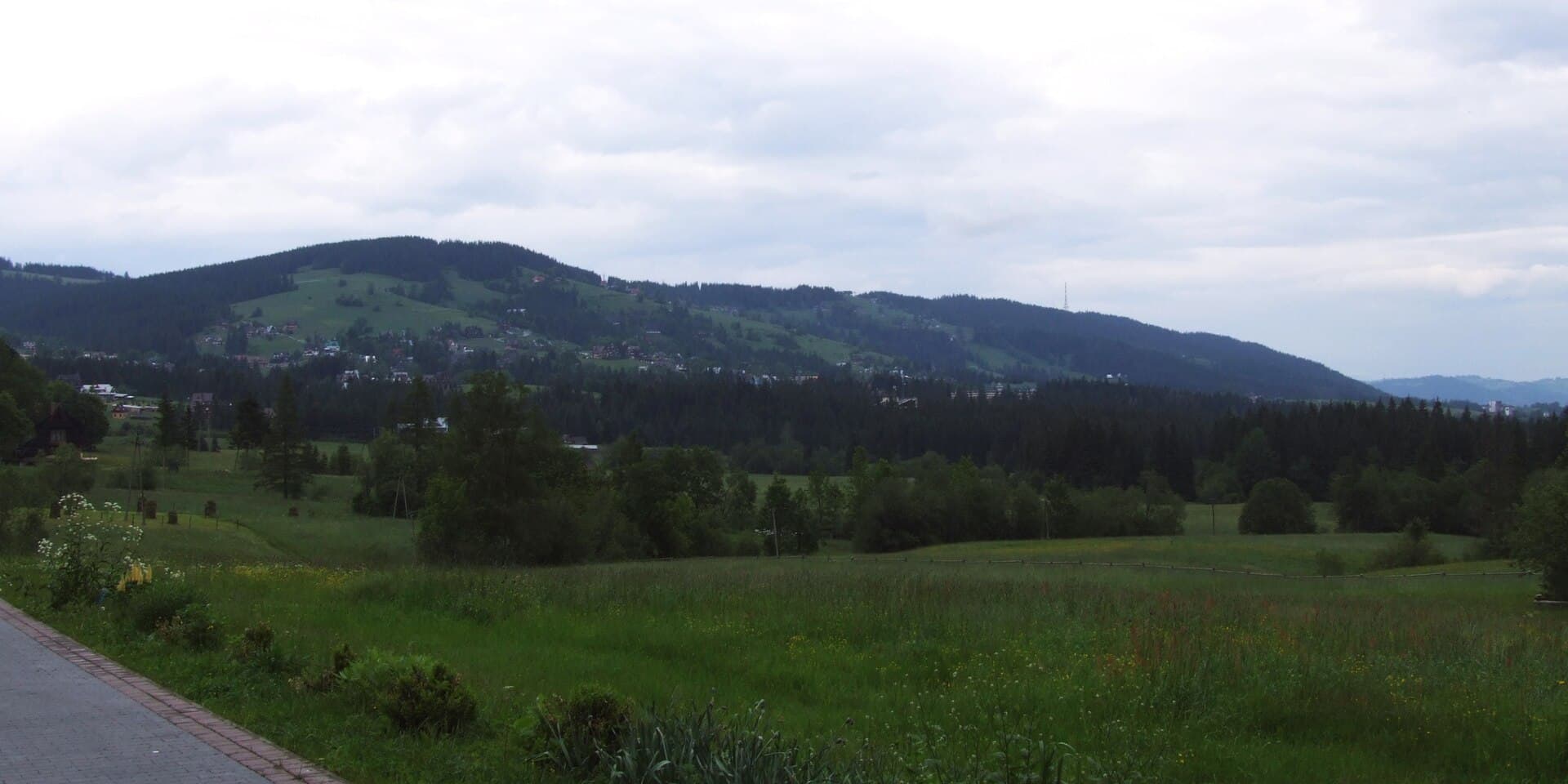 GubałówkaA hill rising to about 1,120 metres north of central Zakopane, reached by a funi5 minutes walk4.9
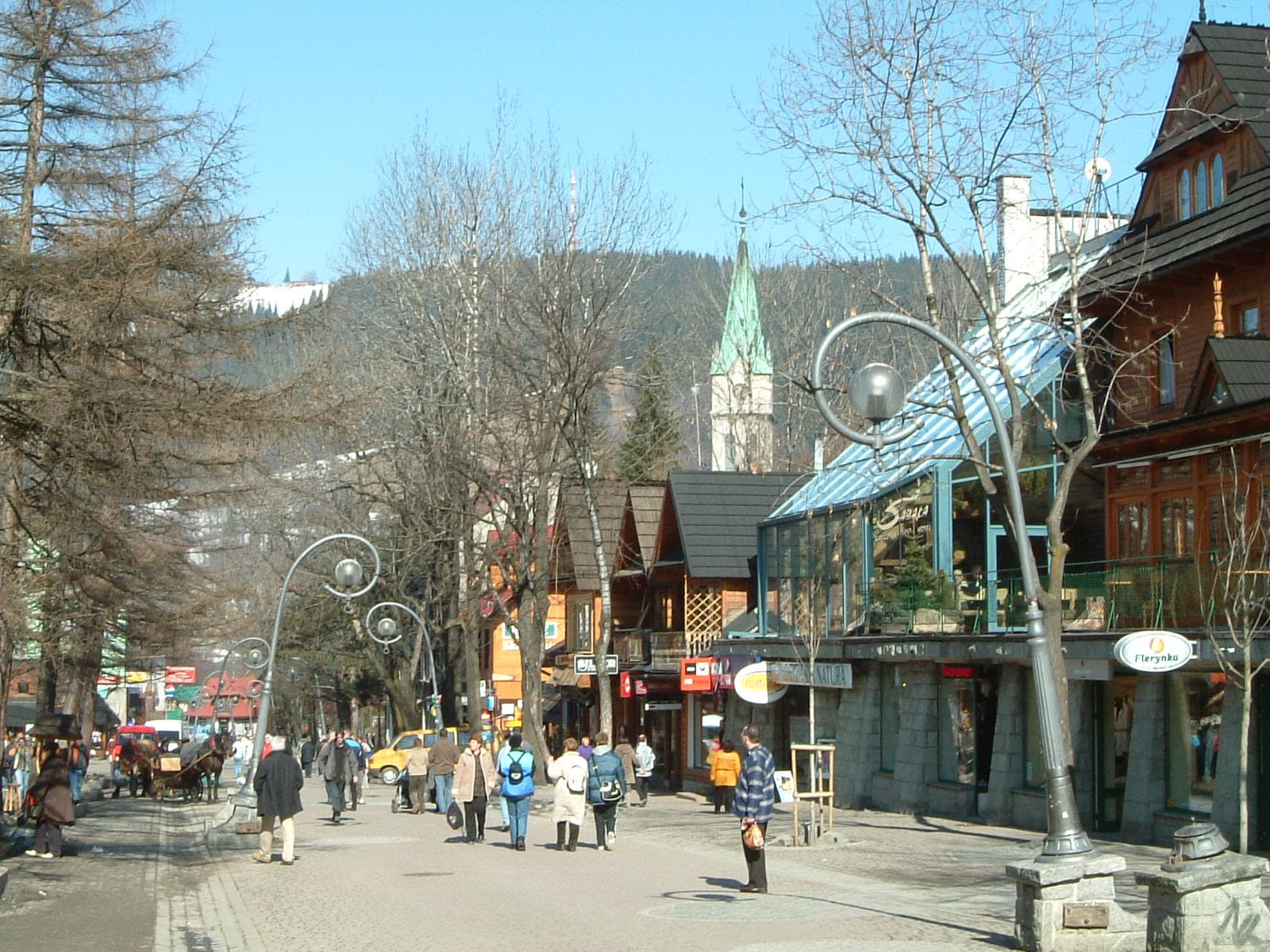 Krupówki StreetKrupówki is Zakopane's heart and artery: a kilometre of descending pedestrian st7 minutes walk4.3
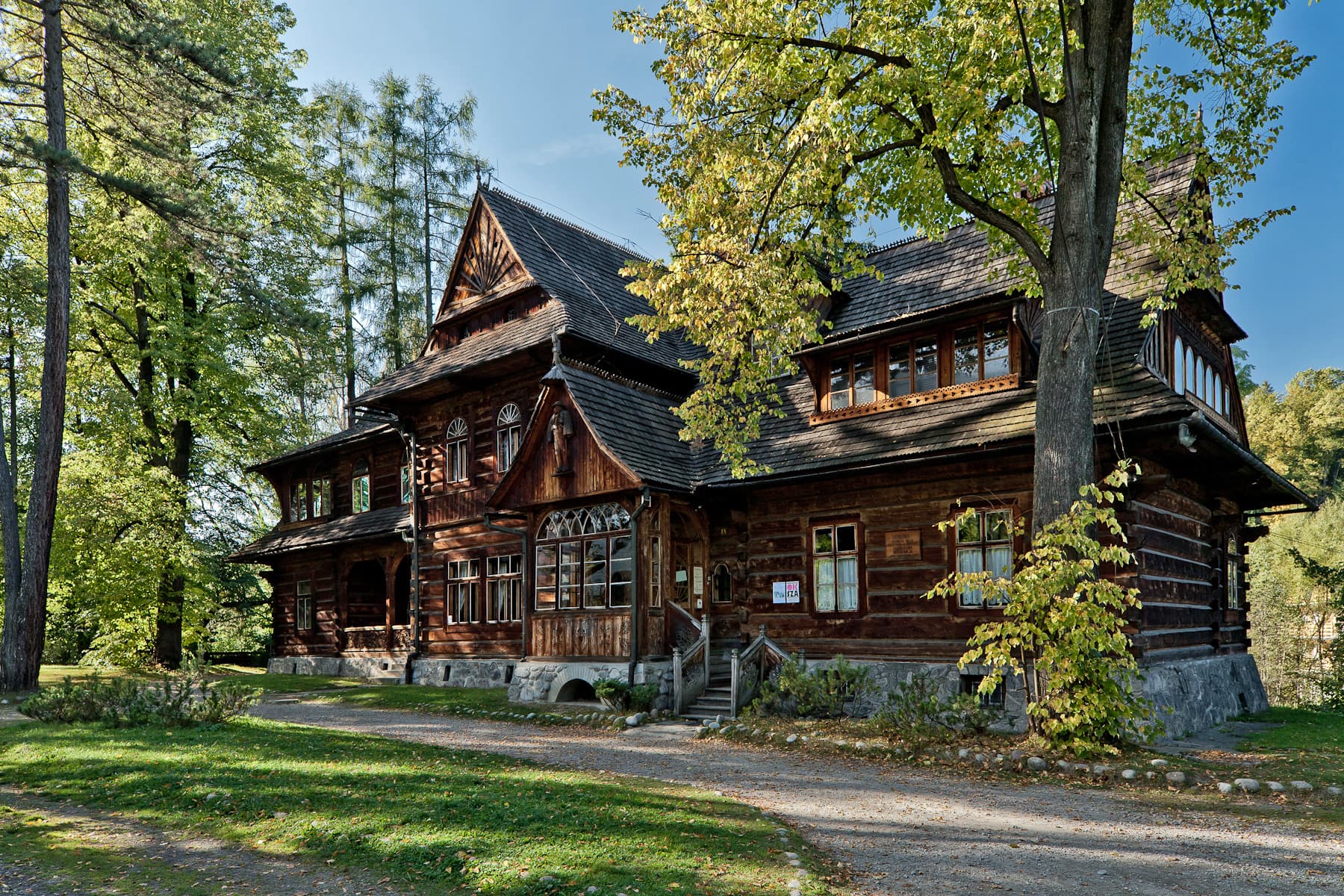 Villa KolibaThe first house built in the Zakopane Style, designed by Stanisław Witkiewicz in7 minutes walk4.7
An architectural and decorative manner developed by Stanisław Witkiewicz in the 1890s, derived from the timber houses of the Podhale highlands: steeply pitched roofs, horizontal logs, carved balconies, and geometric ornament taken from local furniture and dress. The purpose was national: to find an authentically Polish manner against the prevailing German and Austrian styles. His first house, Villa Koliba in Zakopane, is a museum today.
Krupówki street is the main axis with its shops and restaurants — very crowded and thoroughly touristic. The things worth it: the old Pęksowy Brzyzek cemetery with its carved wooden markers; Villa Koliba and the Zakopane style museum; and the Tatra Museum. And from the town all the Tatra routes and the Kasprowy Wierch cable car set out. The town is a base more than a destination.