
Almohad minaret
Symbol of Marrakech.
Unknown — Public domain · Jakub Hałun — CC BY 4.0 · Pedro from Maia (Porto), Portugal — CC BY 2.0 · Michael John Button from Norwich UK, England — CC BY 2.0 · Schorle — CC BY-SA 4.0 · Haimed mohamed — CC BY-SA 4.0 · Holger Uwe Schmitt — CC BY-SA 4.0 · Mike_fleming — CC BY-SA 2.0
Marrakech's largest mosque and its best-known symbol, founded by the Almohad caliph Abd al-Mu'min in 1147 after he took the city, then rebuilt around 1158 in the form that stands today. Its name comes from the kutubiyyin, the booksellers whose shops once surrounded it. Its most famous feature is the square stone minaret, about seventy-seven metres high, probably completed by Caliph Yaqub al-Mansur around 1195. Its facades are decorated with arches and geometric patterns that differ on each side, topped by a lantern and copper orbs. It inspired famous minarets built in the same era, such as the Giralda in Seville and the Hassan Tower in Rabat. The mosque is surrounded by broad gardens of orange trees, roses and palms where people stroll, and beside it lie the exposed ruins of the first mosque. The minaret is lit at night and can be seen from all over the city. The mosque is open to Muslims at prayer times; as at most mosques in Morocco, non-Muslims may not enter, but viewing it from outside and walking in its gardens are free. It is a few minutes' walk from Jemaa el-Fnaa.
Symbol of Marrakech.
Oranges, roses, palms.
Seen across the city.
Near Jemaa el-Fnaa, medina, Marrakech
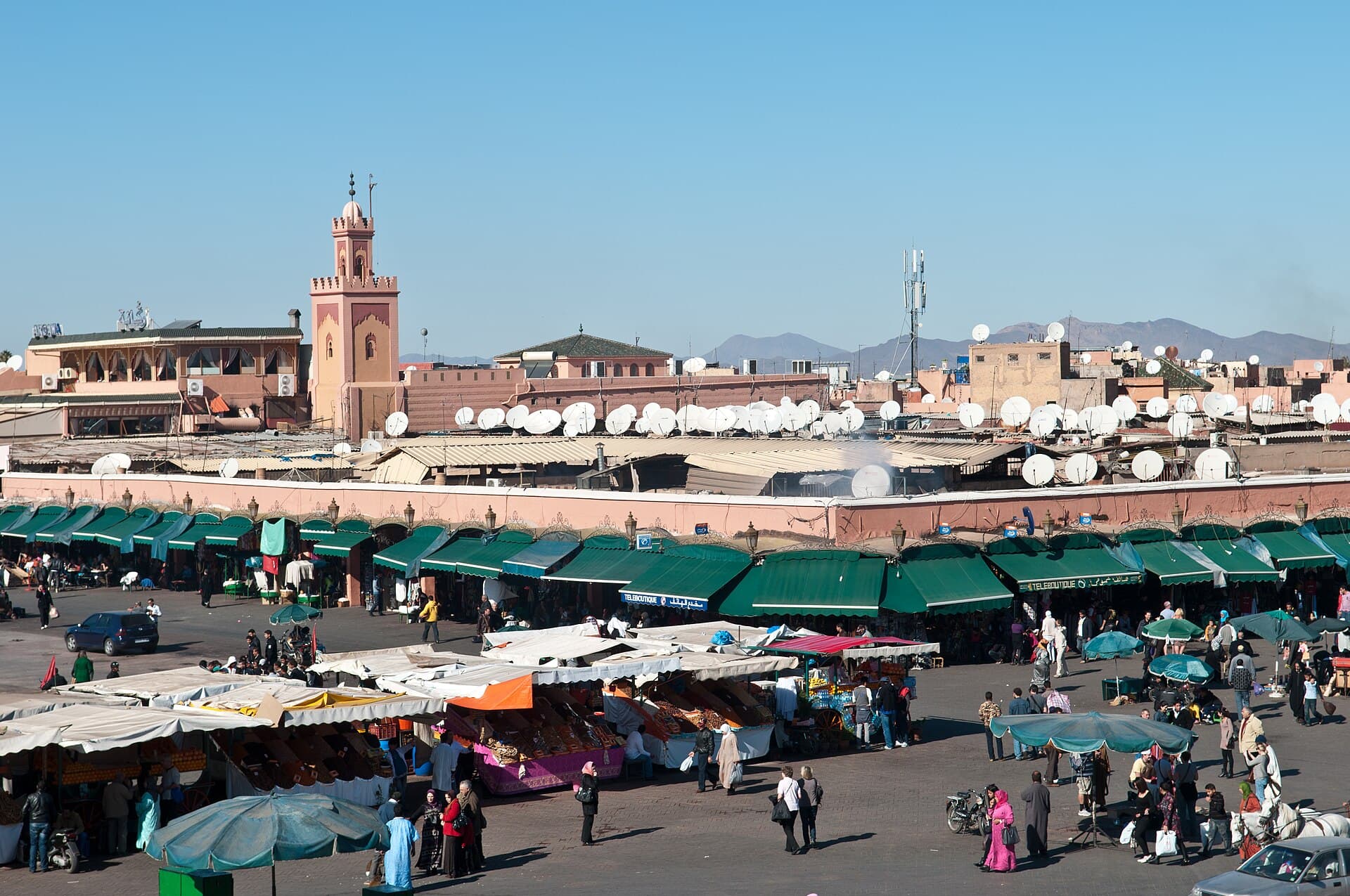 Jemaa el-FnaaThe great square of Marrakech's old city and its beating heart for centuries, wh6 minutes walk
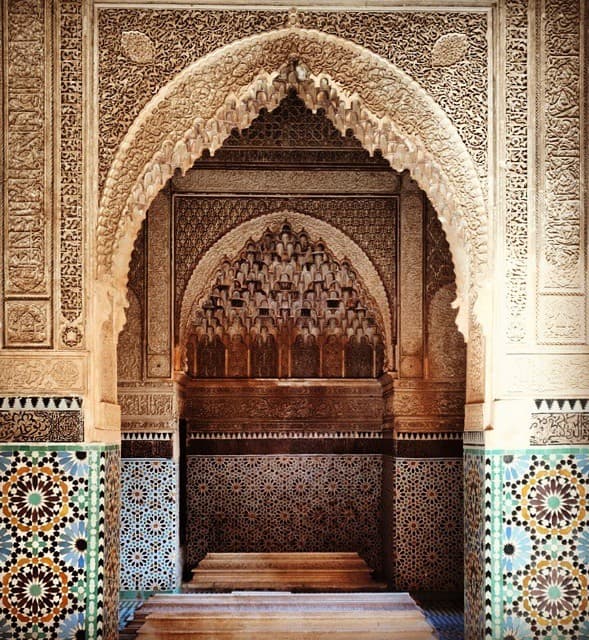 Saadian TombsThe royal necropolis of the Saadian sultans and their families, behind the Kasba11 minutes walk
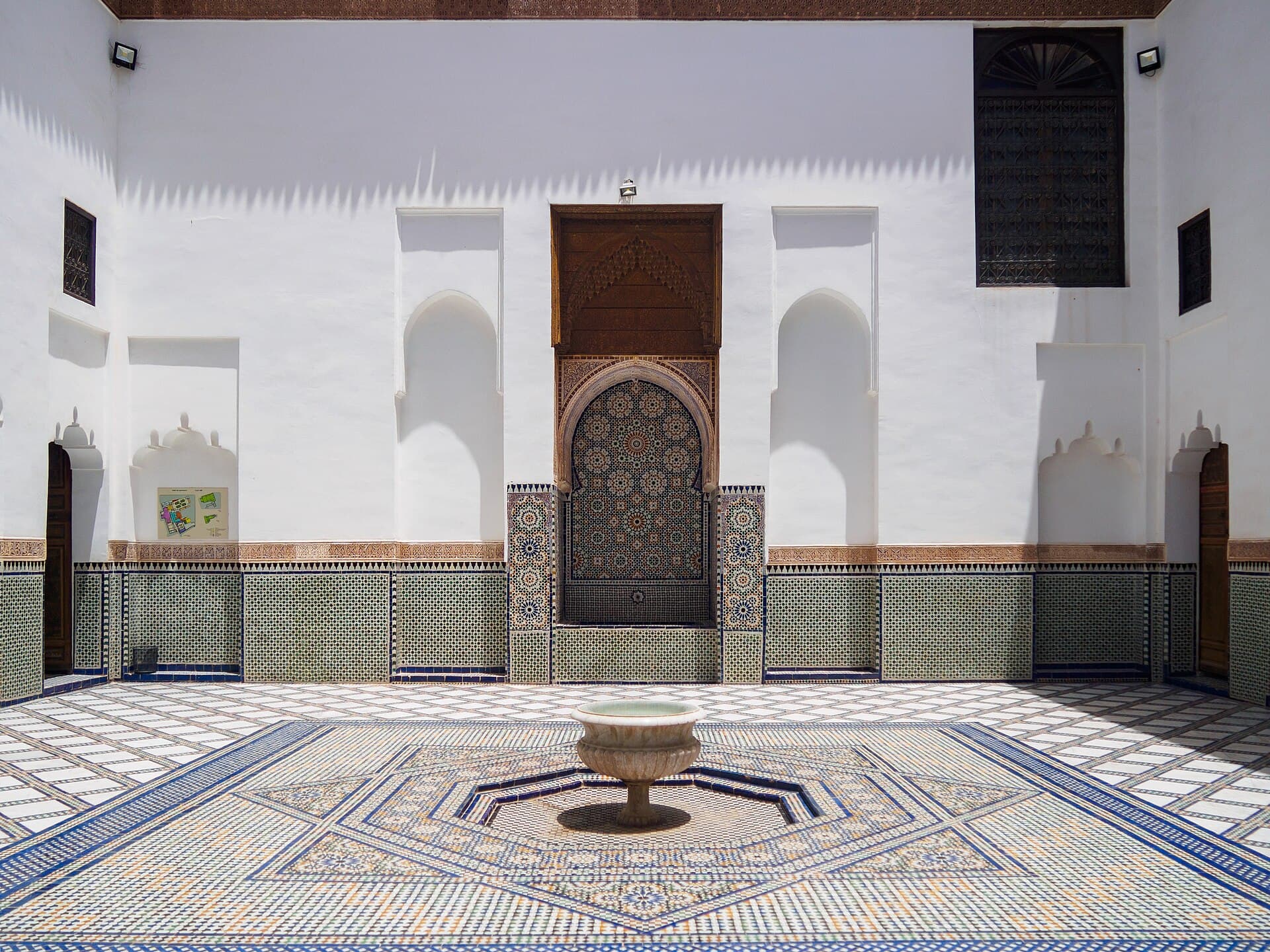 Dar Si Said MuseumA late nineteenth-century palace in the medina, built between 1894 and 1900 by S12 minutes walk
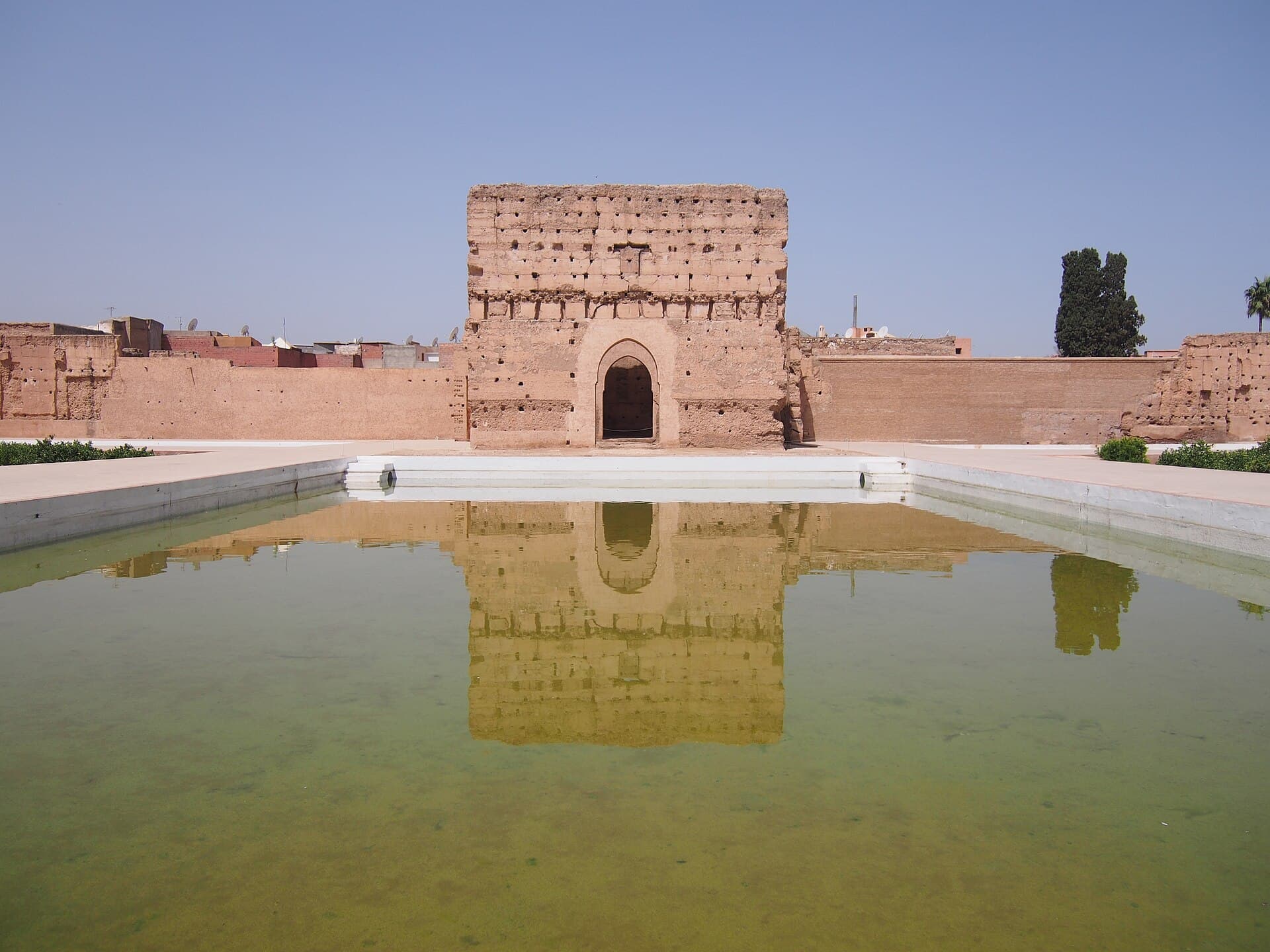 El Badi PalaceThe ruins of a lavish palace commissioned by the Saadian sultan Ahmad al-Mansur 12 minutes walk
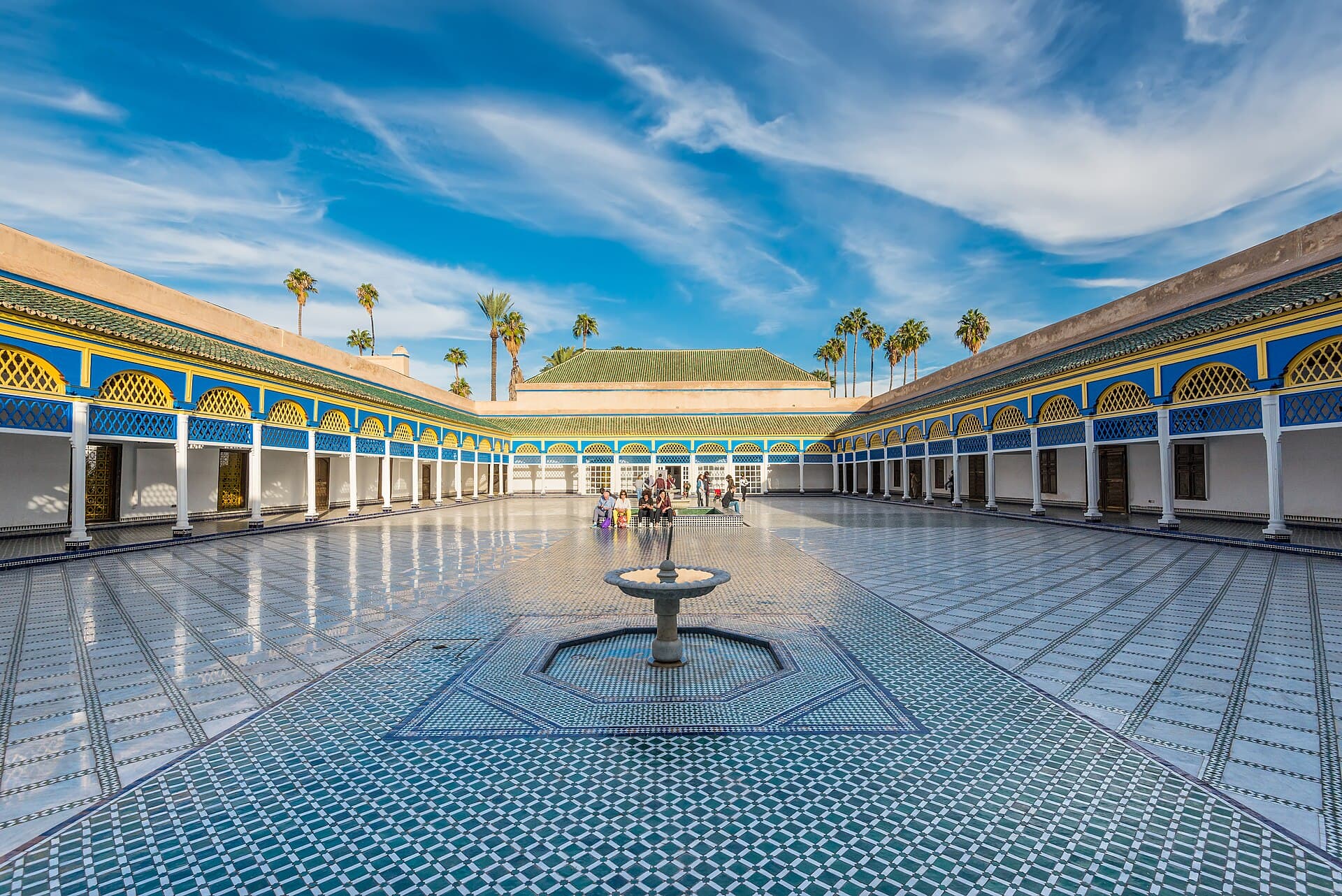 Bahia PalaceA nineteenth-century palace in the medina, begun by the grand vizier Si Musa in 14 minutes walk
Muslims may enter for prayer; non-Muslims are not allowed in and enjoy it from outside and from its gardens.