
Carved arch bands
Radiating lines and interlaced arches.
Safia Shutterbug — CC BY-SA 3.0 · calflier001 — CC BY-SA 2.0 · Lionel Leo — CC BY-SA 3.0 · prilfish from Vienna, Austria — CC BY 2.0 · Robert Prazeres — CC BY-SA 4.0
Bab Agnaou is the carved stone gate that was the main public entrance to the royal Kasbah, the walled palace district in the south of Marrakech's medina. It is attributed to the Almohad caliph Yaqub al-Mansur, who began the Kasbah around 1185; the gate was completed around 1188 or 1190. It lies in the medina, a UNESCO World Heritage site since 1985. Set just inside the city walls near Bab er-Robb, at the Kasbah's north-west corner, the gate was more ceremonial than defensive. Two towers crowned with merlons once flanked it, and its passage turned 90 degrees through a vaulted vestibule, a plan close to Bab er-Rouah in Rabat. The towers and vestibule have gone, and the archway was partly filled with a smaller brick arch, probably under the 18th-century Alaouite sultan Sidi Muhammad ibn Abdallah. The Almohad carving survives. Concentric bands of radiating lines and interlaced arches ring the horseshoe arch, the spandrels carry floral arabesques around carved shells, and a frieze of foliated Kufic script with passages from Surat al-Hijr frames the whole. The sandstone was probably quarried at Gueliz; the regional tourism council calls it blue-grey stone reddened by desert winds. Salts in the mortar and air pollution have worn the upper carving. It stands on a public street, open at all hours; allow 10 to 30 minutes. The Kasbah Mosque, built under the same caliph, rises just east of it. The Saadian Tombs are about 5 minutes' walk through the gate, El Badi Palace about 460 m east as the crow flies, and Jemaa el-Fnaa about 15 minutes' walk north.
Radiating lines and interlaced arches.
Verses from Surat al-Hijr.
Carved shells amid floral arabesques.
Kasbah district, near Bab er-Robb, Marrakech
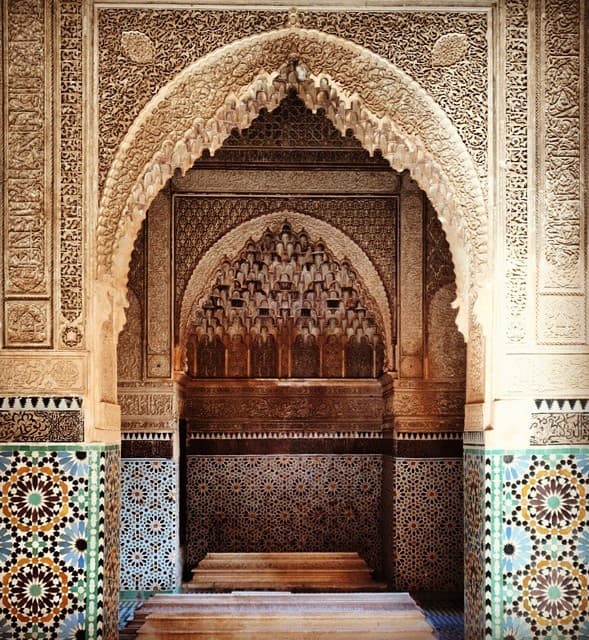 Saadian TombsThe royal necropolis of the Saadian sultans and their families, behind the Kasba2 minutes walk4.0
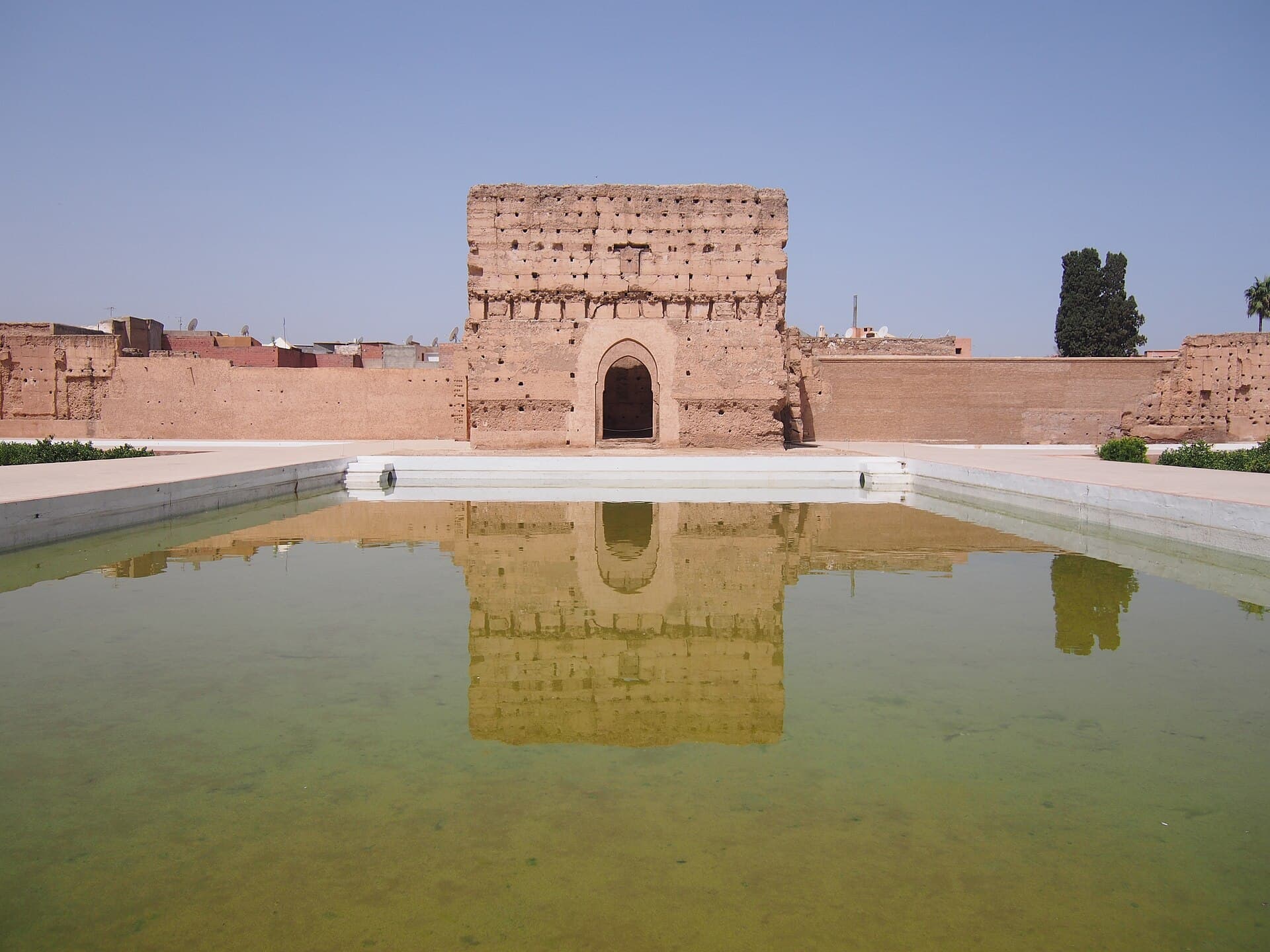 El Badi PalaceThe ruins of a lavish palace commissioned by the Saadian sultan Ahmad al-Mansur 6 minutes walk4.3
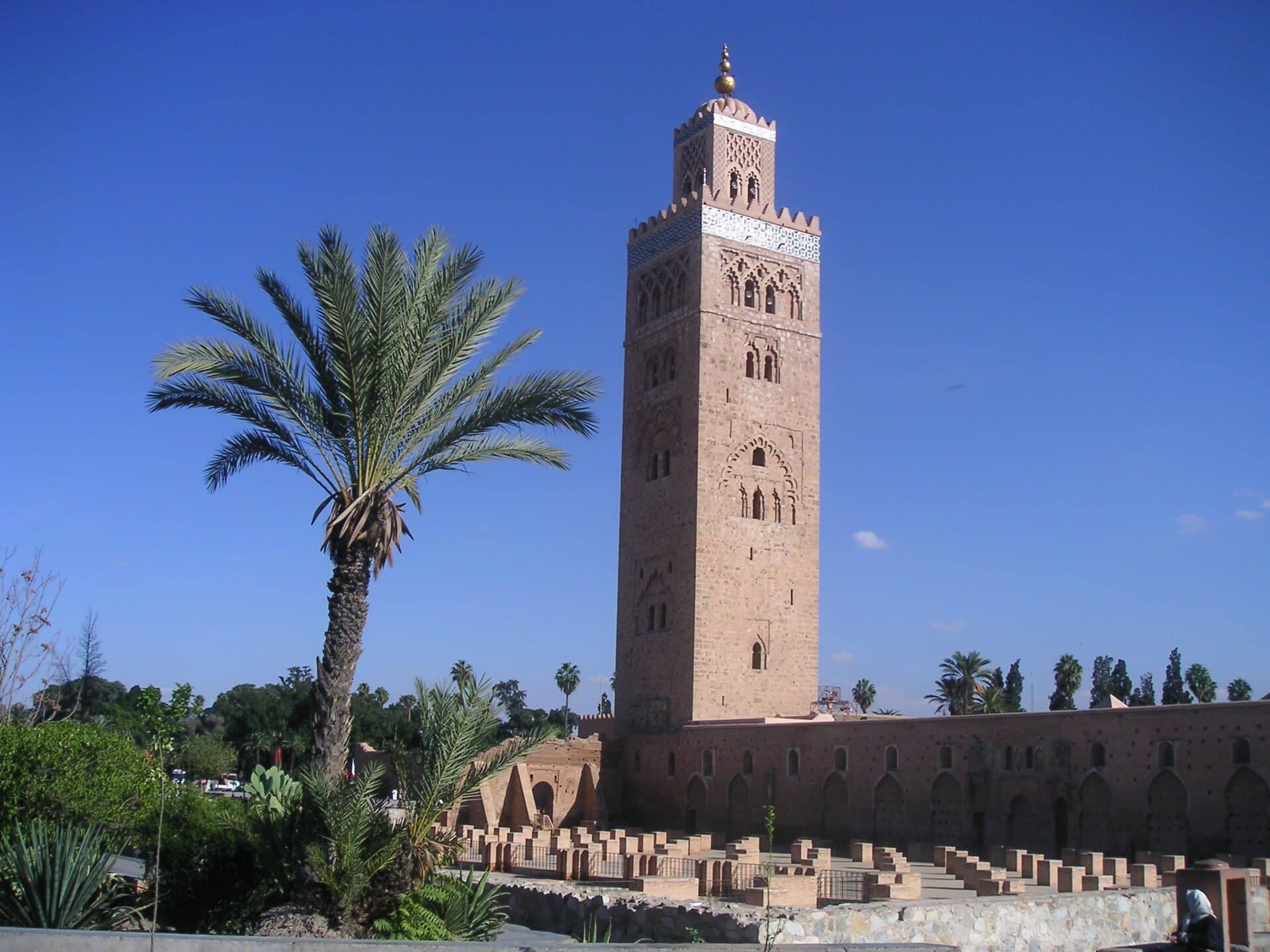 Koutoubia MosqueMarrakech's largest mosque and its best-known symbol, founded by the Almohad cal9 minutes walk4.7
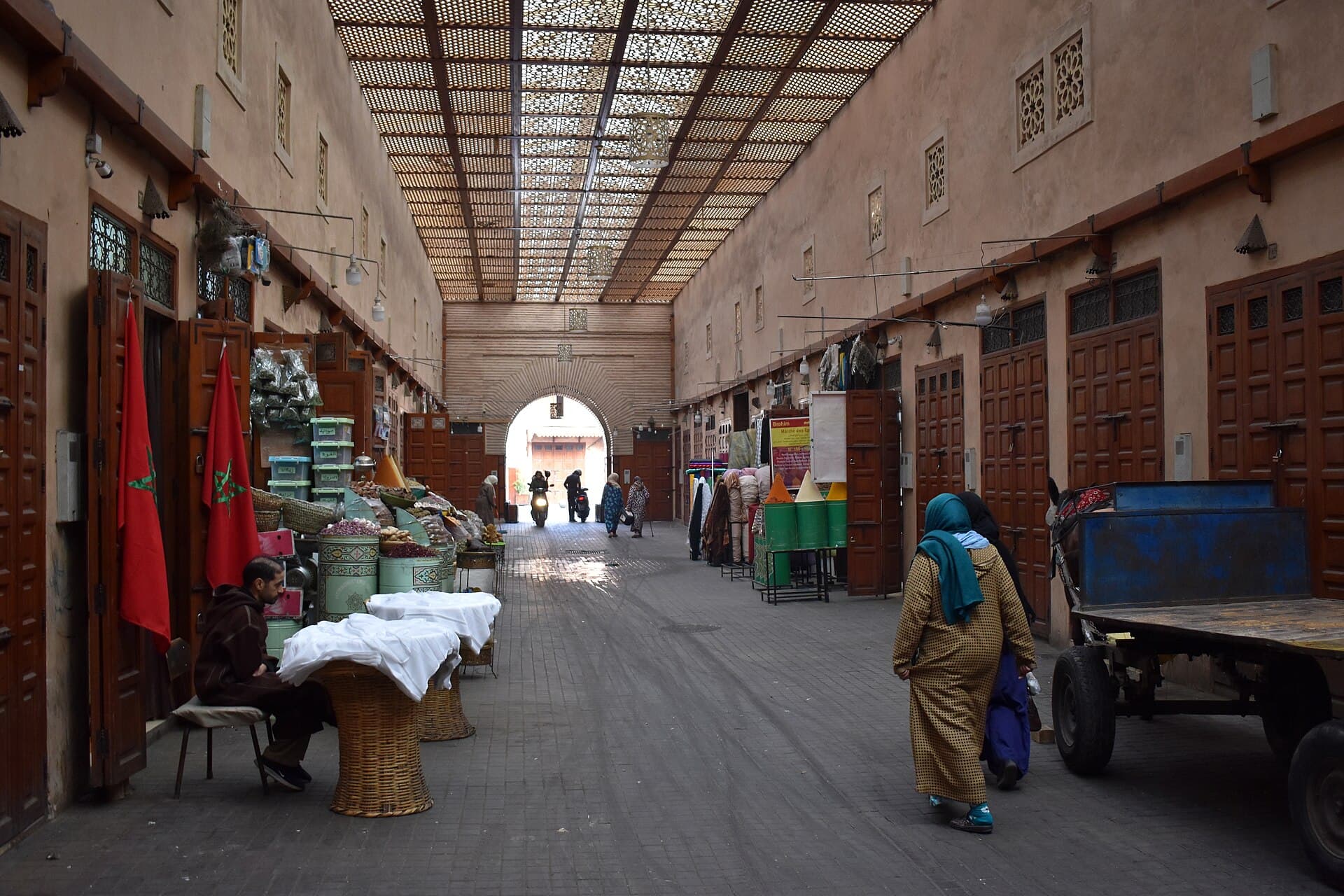 Mellah and Lazama SynagogueThe historic quarter of Marrakech's Moroccan Jews, founded by decree of the Saad10 minutes walk4.6
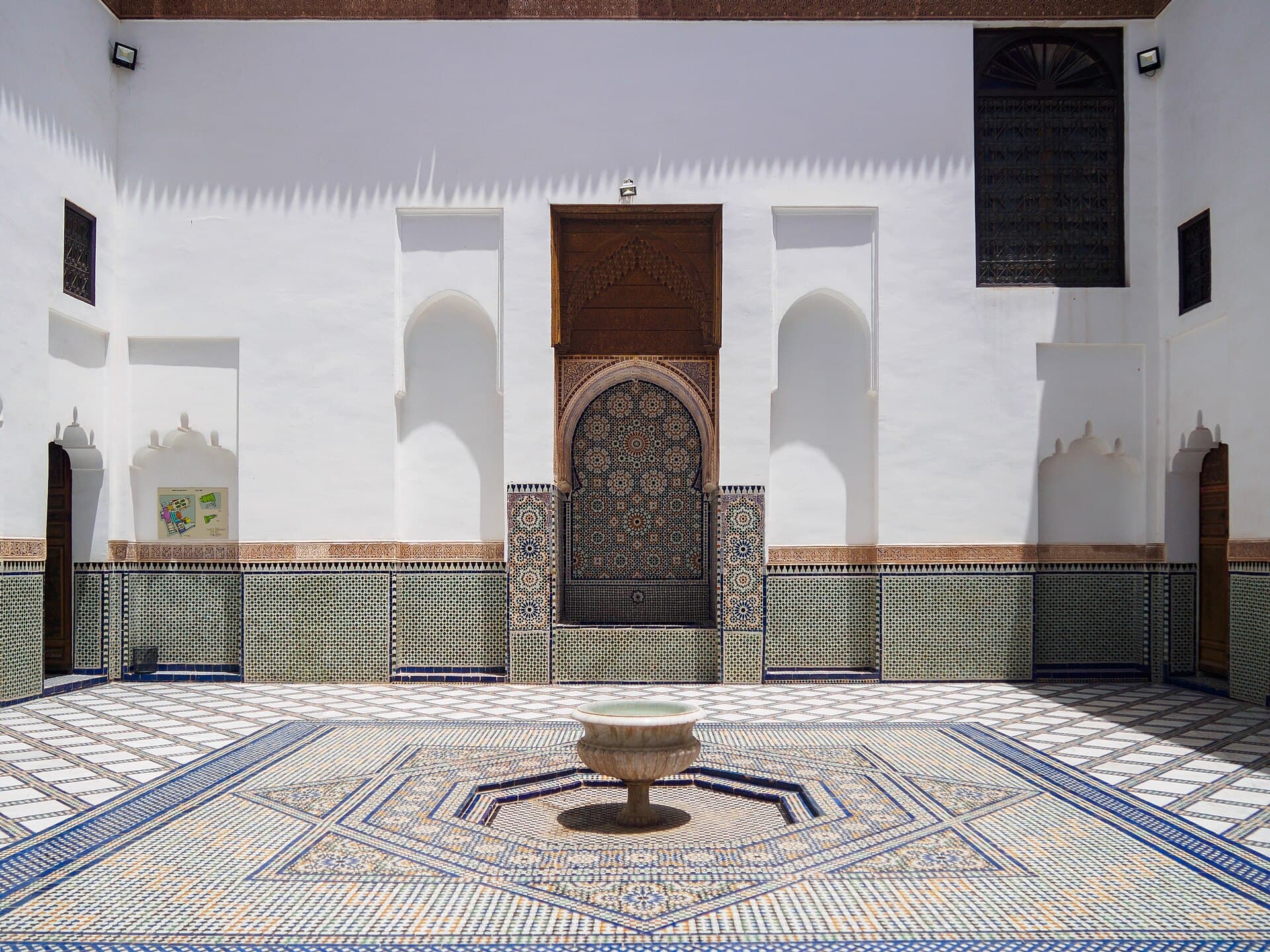 Dar Si Said MuseumA late nineteenth-century palace in the medina, built between 1894 and 1900 by S11 minutes walk4.2
Only Muslims may enter this working mosque; as in most Moroccan mosques, non-Muslims see its walls and minaret from outside. Dress modestly with shoulders and knees covered (women also cover their hair inside), and keep clear of its doors at prayer times, especially Friday midday prayer.
It is thought to be Berber; historical sources give meanings including mute and, later, Black Africans or the Gnawa, and which applies here is unclear. Some guides translate it as a hornless ram, which local lore ties to the gate's lost towers; it was also called Bab al-Qasr (Palace Gate) and Bab al-Kuhl (Kohl Gate).