
Al-Mansur's tomb
Marble and lace-like stucco.
Muhammad Mansour — CC BY 2.0 · User:AlexandrDmitri — CC BY-SA 3.0 · Jan z Ziemią — CC BY-SA 4.0 · Heribert Bechen .. thanks for 2.6 mio. visits from Bergisch Gladbach, Germany — CC BY-SA 2.0 · No machine-readable author provided. Lviatour assumed (based on copyright claims). — CC BY-SA 3.0 · Heribert Bechen .. thanks for 2.6 mio. visits from Bergisch Gladbach, Germany — CC BY-SA 2.0 · Miguel Hermoso Cuesta — CC BY-SA 3.0 · Miguel Hermoso Cuesta — CC BY-SA 3.0
The royal necropolis of the Saadian sultans and their families, behind the Kasbah Mosque in Marrakech's royal kasbah quarter, dating mostly from the reign of Sultan Ahmad al-Mansur between 1578 and 1603. Many art historians see it as the high point of Moroccan architecture in the Saadian era for the richness of its decoration. Its best-known space is the Chamber of the Twelve Columns, where al-Mansur lies, with slender marble columns, a decorated wooden dome and walls covered in lace-like carved stucco and coloured zellij. Beside it are the Chamber of the Mihrab and the dome of Lalla Mas'uda, the sultan's mother. In the surrounding garden are zellij-covered graves of family members, courtiers and servants. The tombs stayed hidden from view for a long time until they were rediscovered in 1917 during the French Protectorate, then restored and opened to visitors. A foreign visitor's ticket costs one hundred dirhams according to the Ministry of Culture's ticketing site, half for children aged seven to thirteen, and it opens daily from nine to five. The site is small and queues form at the Chamber of the Twelve Columns, so come early; it is close to El Badi Palace.
Marble and lace-like stucco.
Zellij-covered tombs.
Long hidden from view.
Behind the Kasbah Mosque, Kasbah district, Marrakech
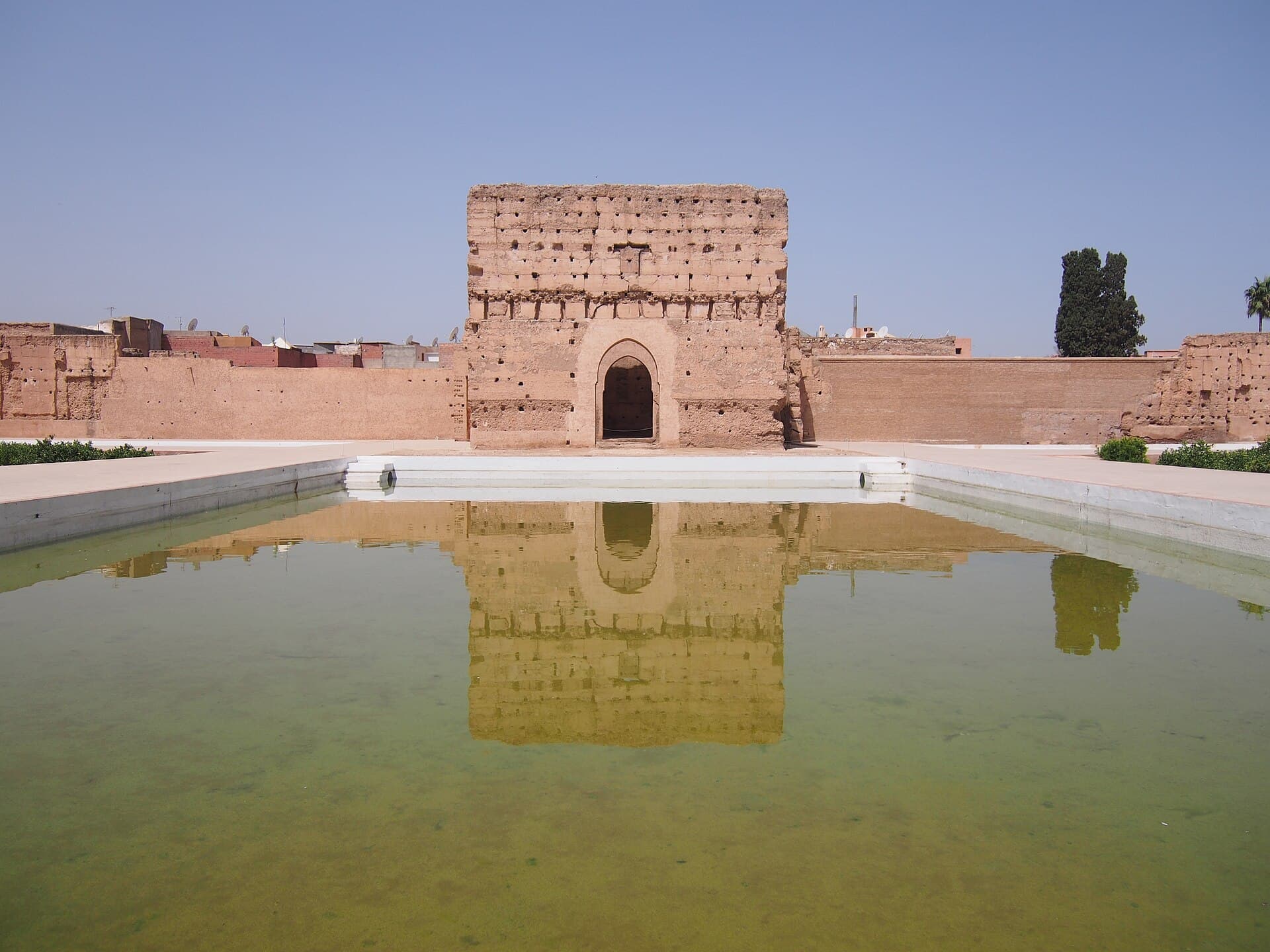 El Badi PalaceThe ruins of a lavish palace commissioned by the Saadian sultan Ahmad al-Mansur 4 minutes walk
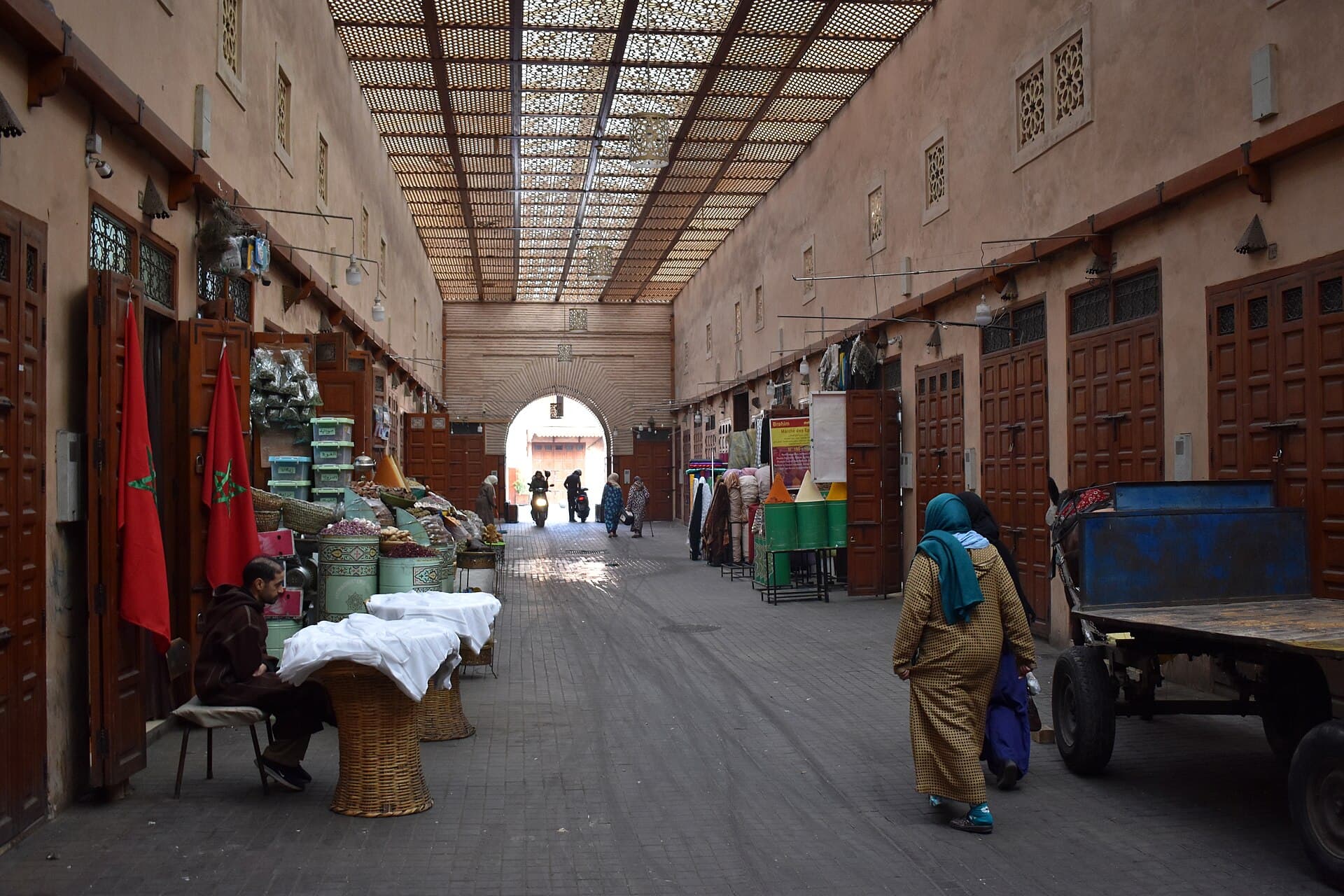 Mellah and Lazama SynagogueThe historic quarter of Marrakech's Moroccan Jews, founded by decree of the Saad8 minutes walk
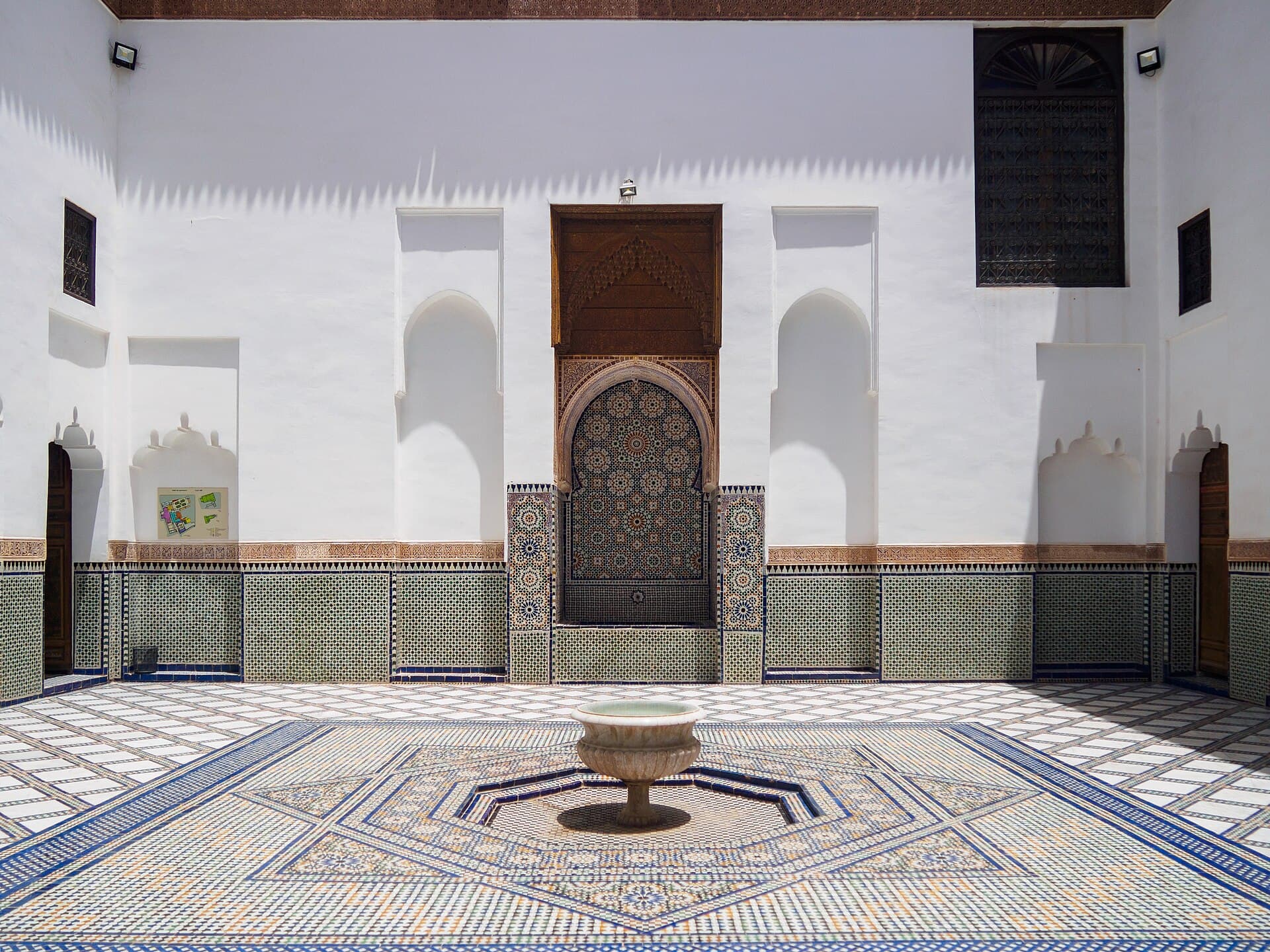 Dar Si Said MuseumA late nineteenth-century palace in the medina, built between 1894 and 1900 by S10 minutes walk
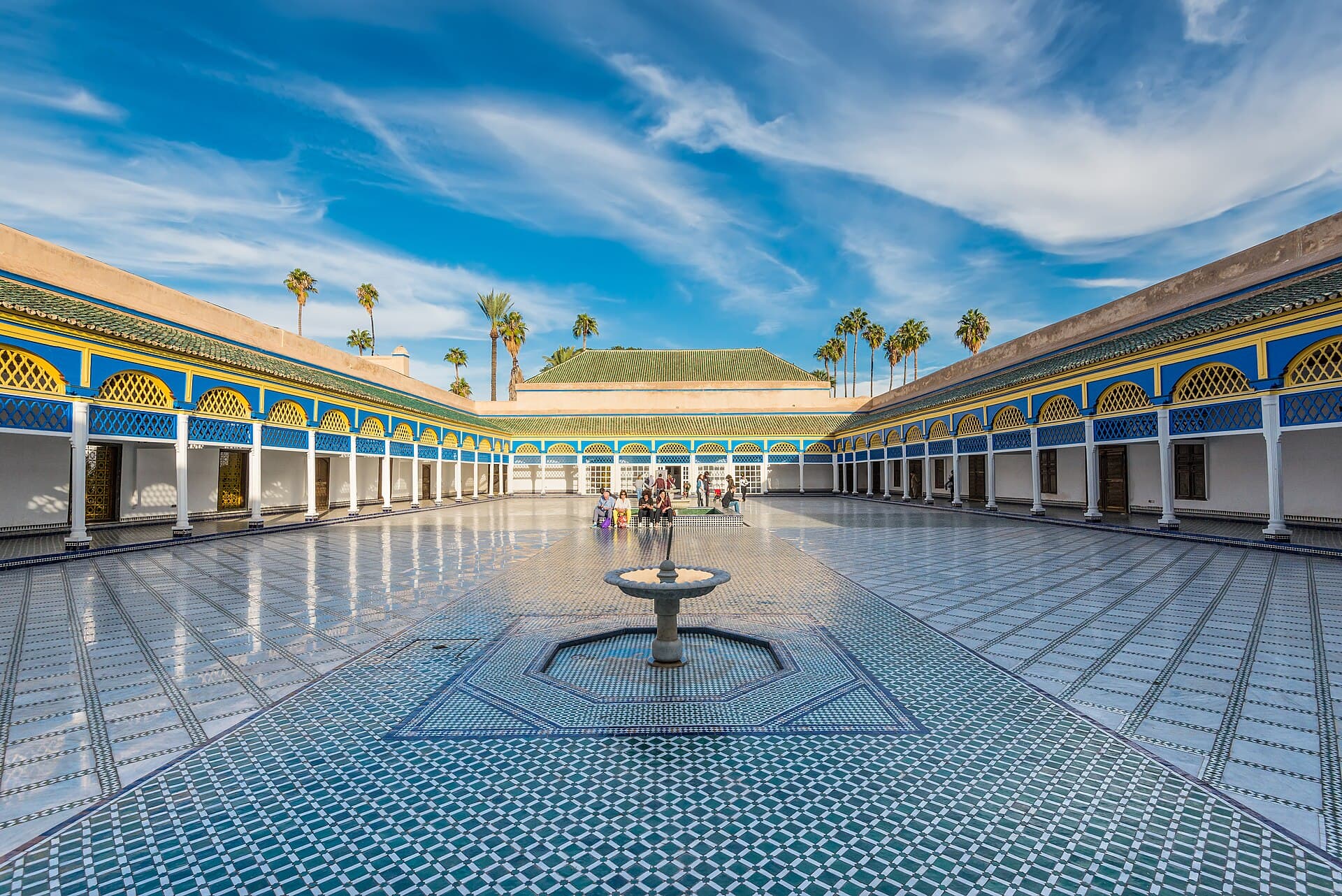 Bahia PalaceA nineteenth-century palace in the medina, begun by the grand vizier Si Musa in 10 minutes walk
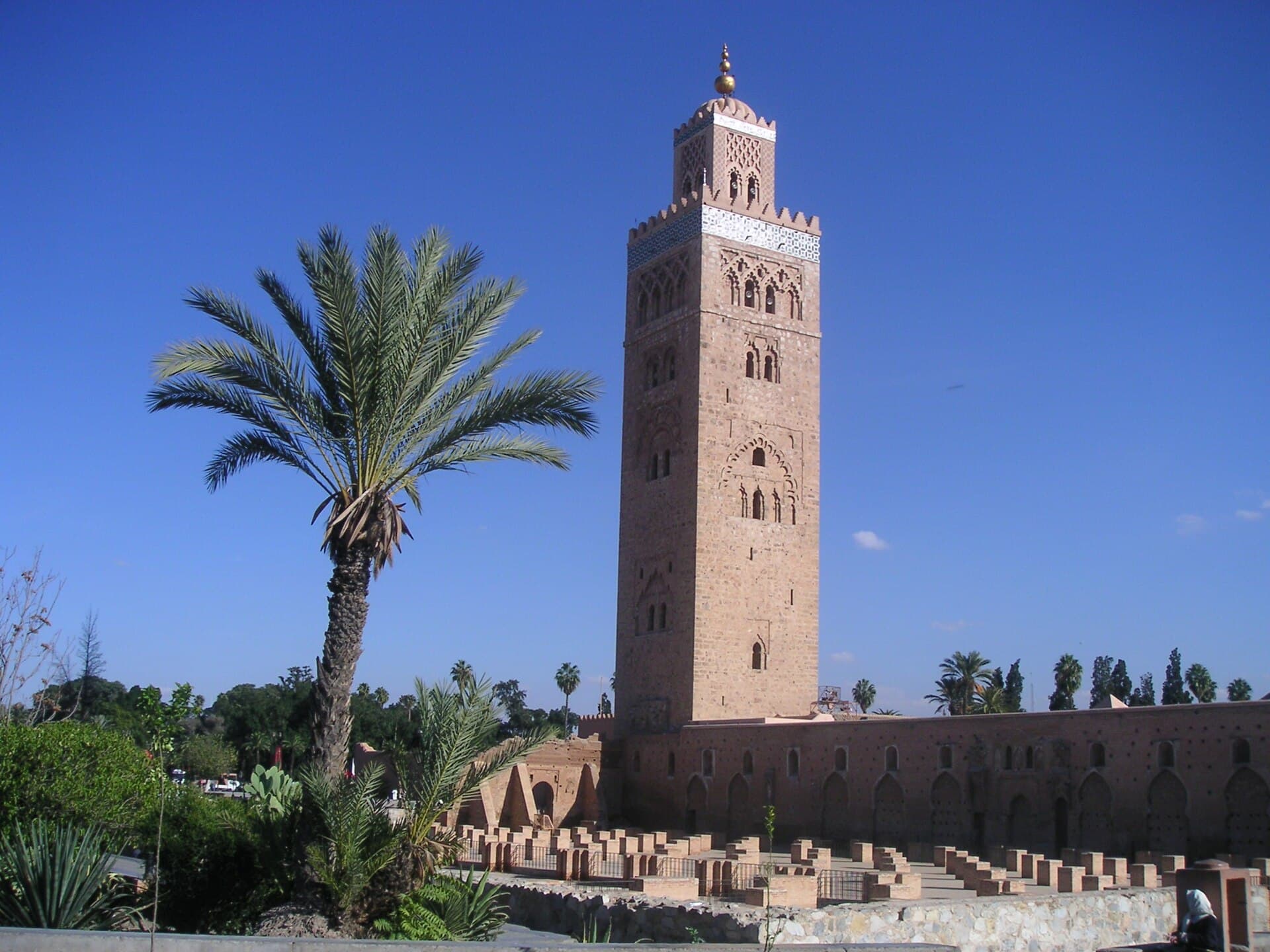 Koutoubia MosqueMarrakech's largest mosque and its best-known symbol, founded by the Almohad cal11 minutes walk
Yes for lovers of Islamic art, as the Chamber of the Twelve Columns is among Morocco's finest interiors, but come at opening to avoid the line.