The white arches
Up to 17.6 metres high.
Donatas Dabravolskas — CC BY-SA 4.0 · Felipe Restrepo Acosta — CC BY-SA 4.0 · Marco Roberto Petri — CC BY-SA 4.0
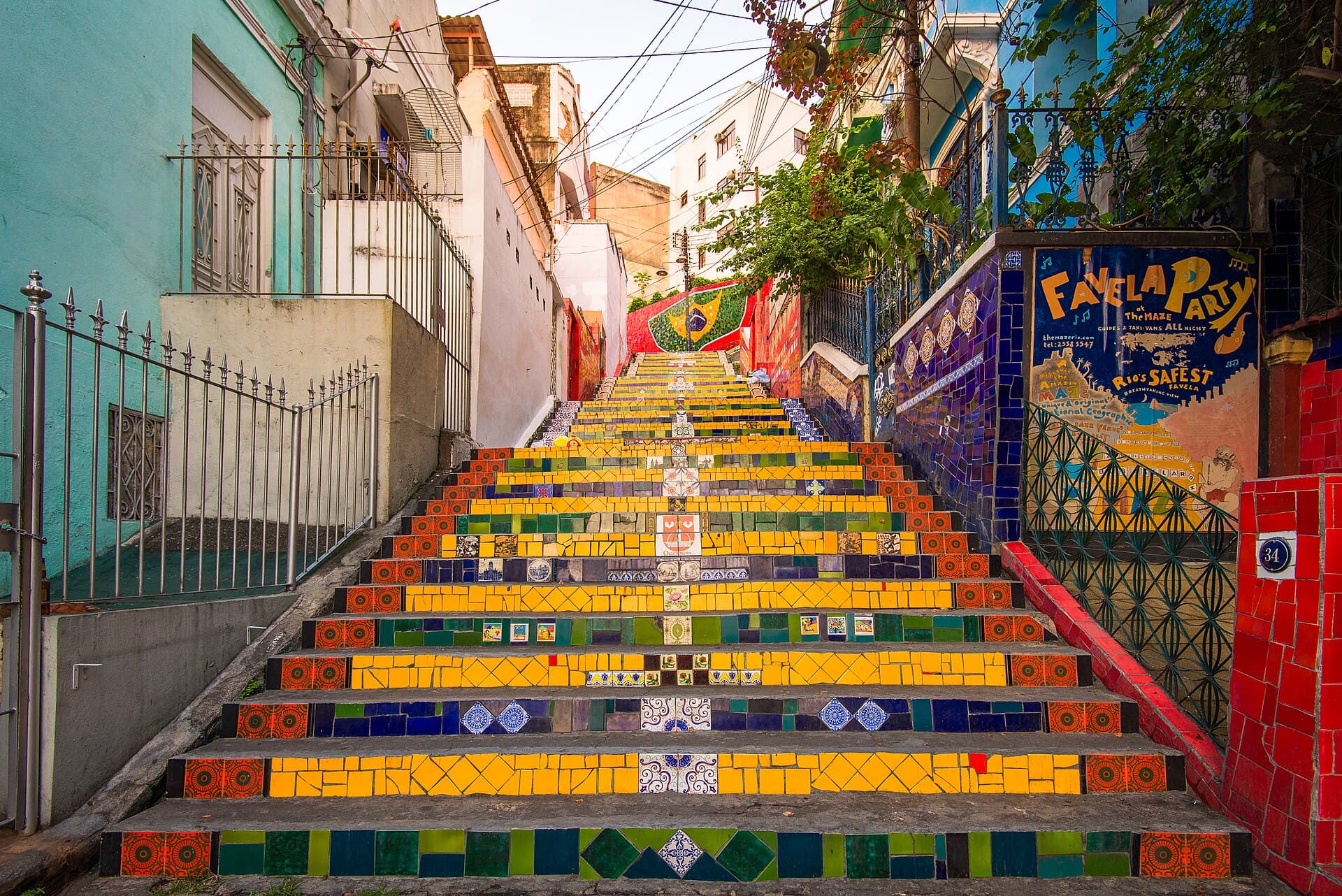
The Lapa Arches are the best-known surviving part of the Carioca Aqueduct, built in the 18th century to bring fresh water from the Carioca River to the city's people. The present aqueduct opened in 1750, designed by the Portuguese military engineer José Fernandes Pinto Alpoim on the model of Lisbon's aqueducts, after an earlier one had fallen apart. The visible stretch runs 270 metres between the Santa Teresa and Santo Antônio hills on two tiers of white stone arches, 42 in all, up to 17.6 metres high. Since the late 19th century the aqueduct has served as the bridge for the yellow Santa Teresa tram up to the hillside neighbourhood, and the tram still crosses it today. Around the arches is Lapa, Rio's best-known nightlife district, with samba at night, and the Selarón Steps are a few minutes away. The arches look fine by day and lit up in the evening, but watch your belongings in the night crowds.
Up to 17.6 metres high.
Crossing on top.
Samba at night.
Lapa, central Rio de Janeiro
Yes. The yellow Santa Teresa tram crosses the arches on its way up to Santa Teresa, with its own ticket from its downtown station.