
Graves in the sky
Sarcophagi hung beneath Gothic canopies — pride refusing earth.
Didier Descouens — CC BY-SA 4.0 · Maurizio Moro5153 — CC BY-SA 4.0 · MartinucciG92 — CC BY-SA 4.0 · MartinucciG92 — CC BY-SA 4.0
In a small fenced court behind Piazza dei Signori rise the Scaliger Tombs: the graves of Verona's lords lifted into the air beneath Gothic marble canopies ascending in pinnacles and statues — a funerary chorus without parallel in Europe, the della Scala refusing burial beneath the soil and hanging their sarcophagi above their city at a height fitting their title. Grandest is Cansignorio's spire crowned by its gilded-effect knight; nearest the heart, Cangrande I's over the church door itself: the greatest lord recumbent with his equestrian double above, wearing the famous smile — the original smiling rider kept in Castelvecchio. The iron fence is itself a masterpiece: fourteenth-century mesh repeating the family's ladder emblem without end. The court reads fully from the street — a ten-minute pause closing the two-squares walk with the medieval age's strangest image of glory.
Sarcophagi hung beneath Gothic canopies — pride refusing earth.
The smiling lord on horseback above his family church.
Via Arche Scaligere, 37121 Verona
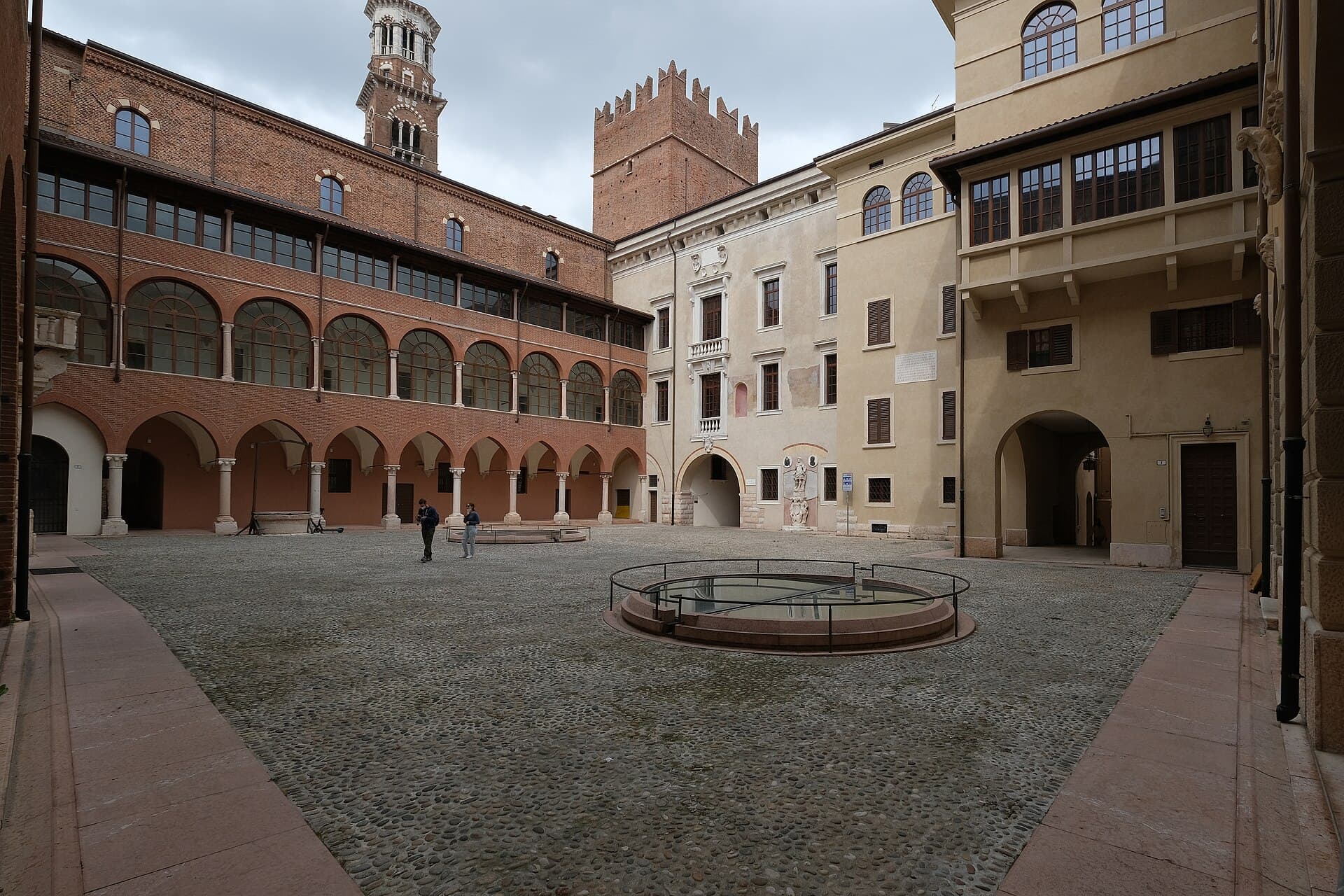 Palazzo del CapitanioA palace on Piazza dei Signori in the heart of Verona, the seat of the Venetian 1 minute walk4.7
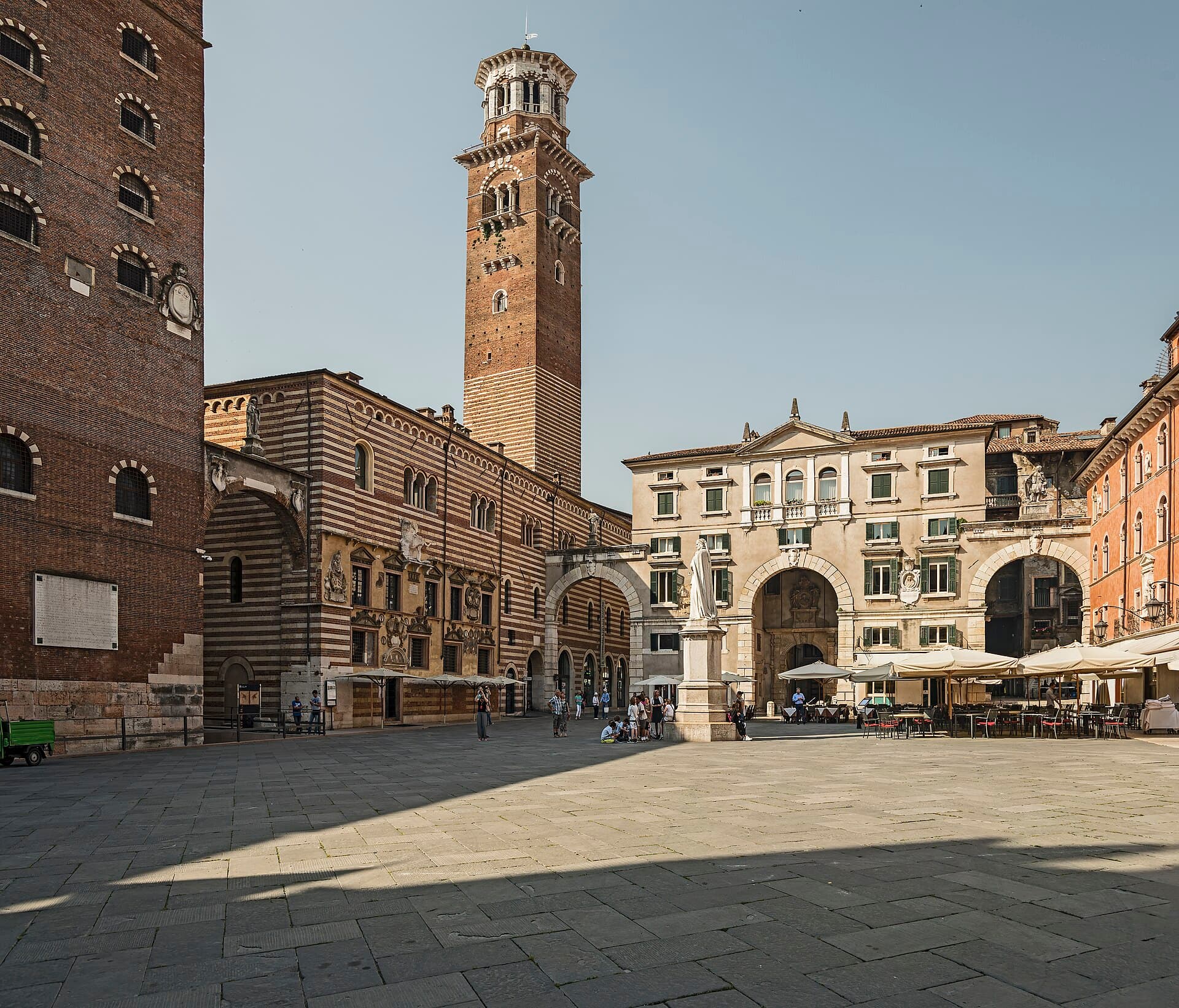 Piazza dei SignoriOne step under the whale-rib arch moves you from the Erbe market's clamour into 1 minute walk4.6
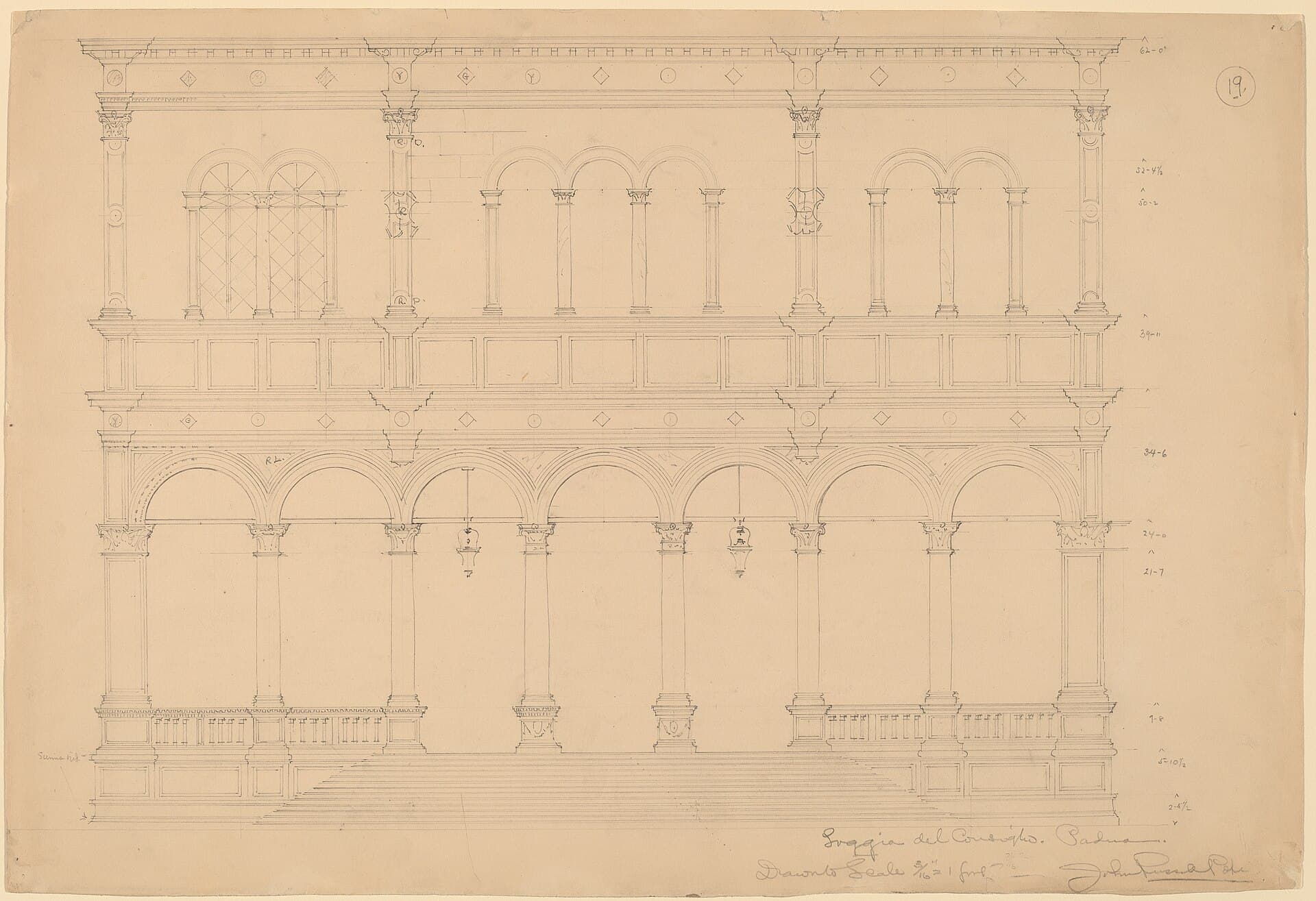 Loggia del ConsiglioFive ancient Romans have stood along the roofline since 1493, looking down on th1 minute walk4.7
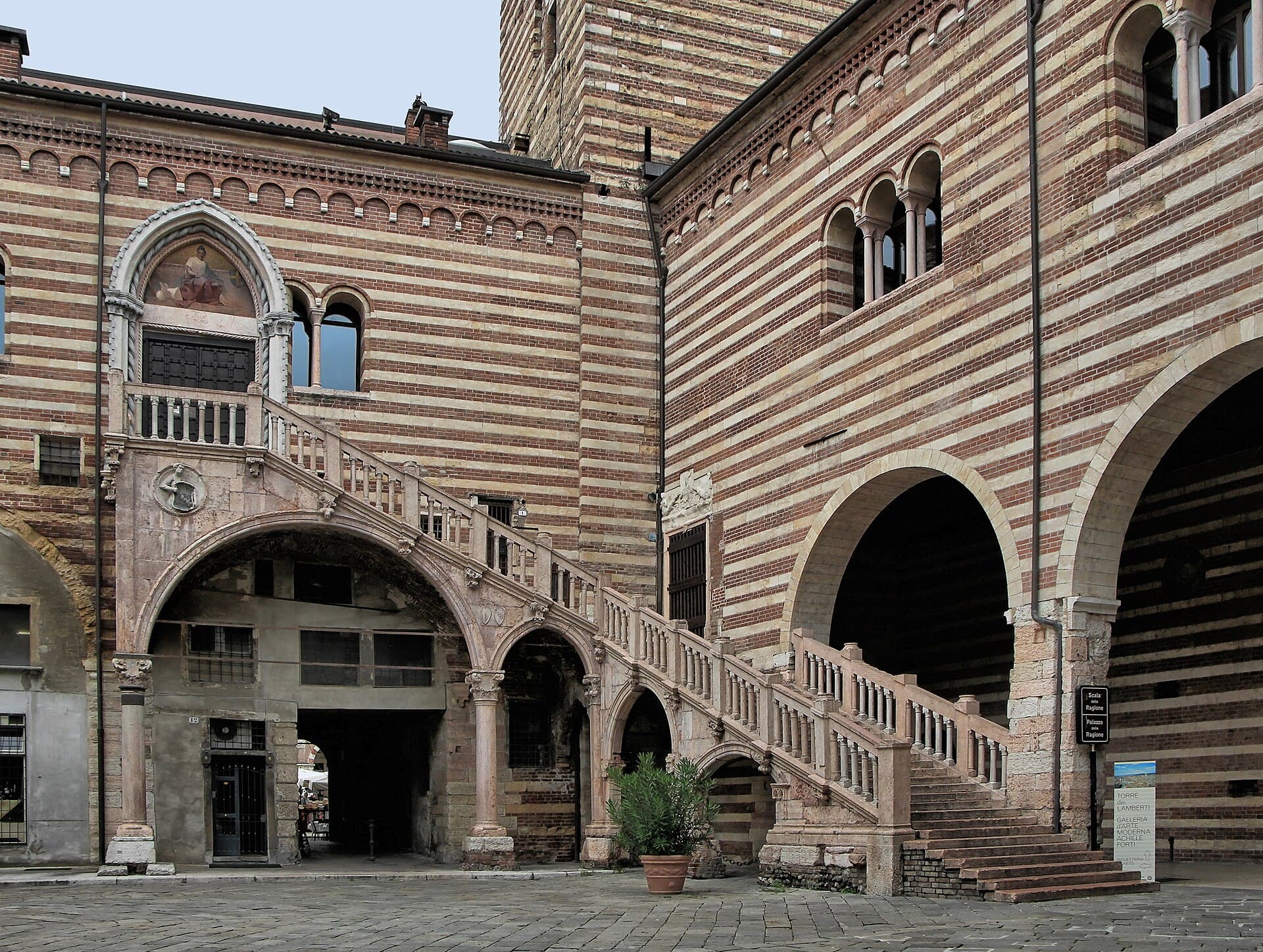 Scala della RagioneAn external stone staircase in the Mercato Vecchio courtyard in central Verona, 1 minute walk4.6
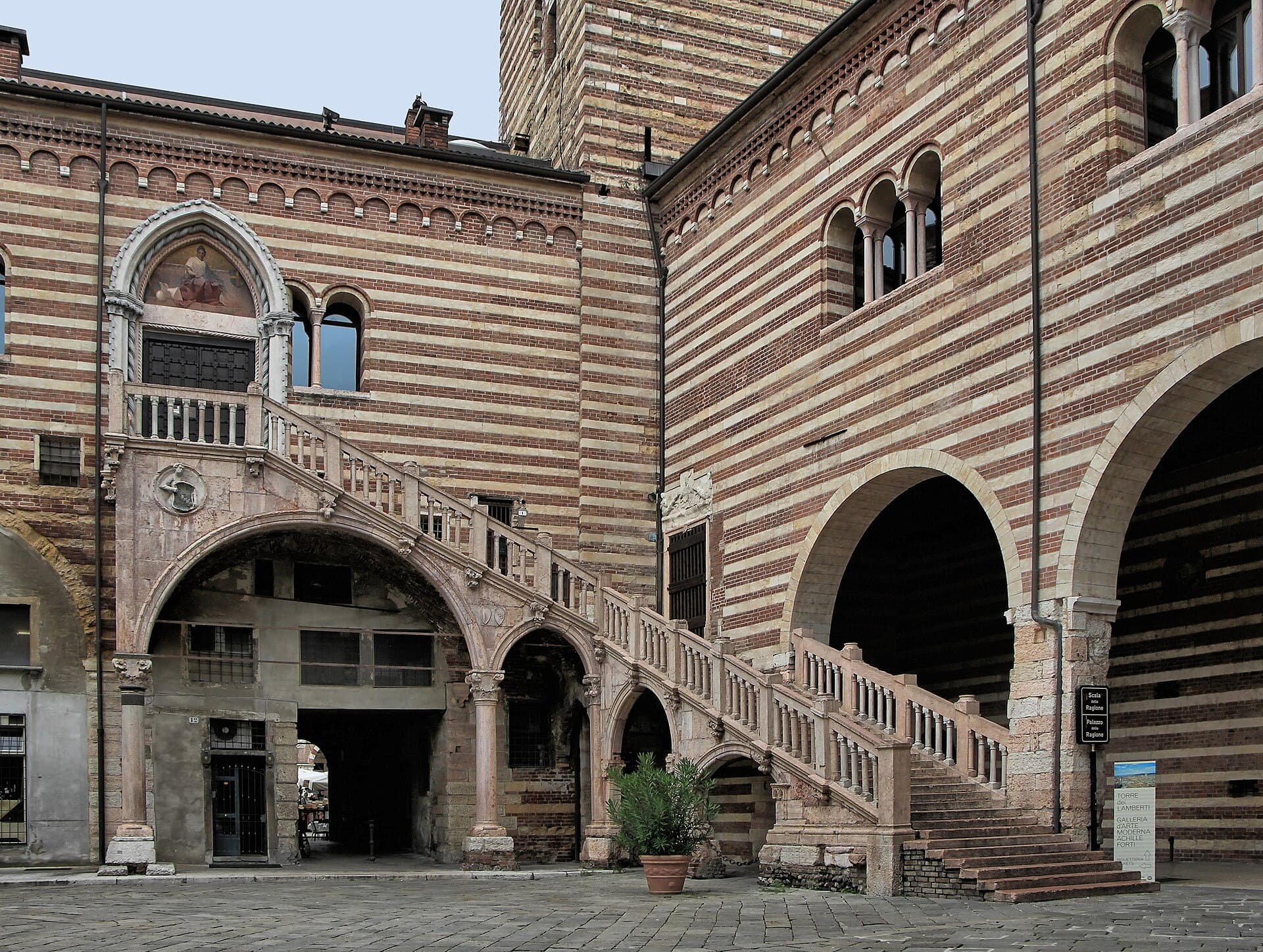 Palazzo della RagioneA complex of twelfth-century buildings between Piazza delle Erbe and Piazza dei 1 minute walk4.4
Because they were built to be seen, not entered: the court is a few metres and the canopies rise above eye level anyway — the fence has been the intended viewpoint since the fourteenth century. Summer entry, when offered, adds only closeness to the carvings.
In Castelvecchio these decades for its safety — a faithful copy rides the tomb. That enigmatic smile on a funerary knight has puzzled scholars a century: likeliest a "triumphant serenity", as willed by a lord who wished to be remembered laughing.