
The Venetian lion
The winged lion carved on the square's fronts — the mark of four centuries of rule.
This Photo was taken by Andrea Bertozzi. Feel free to use my photos, but please mention me as the author and send me a message. — CC BY-SA 4.0 · This Photo was taken by Andrea Bertozzi. Feel free to use my photos, but please mention me as the author and send me a message. — CC BY-SA 4.0 · This Photo was taken by Andrea Bertozzi. Feel free to use my photos, but please mention me as the author and send me a message. — CC BY-SA 4.0 · This Photo was taken by Andrea Bertozzi. Feel free to use my photos, but please mention me as the author and send me a message. — CC BY-SA 4.0
A palace on Piazza dei Signori in the heart of Verona, the seat of the Venetian military governor when the city was under Venetian rule. Verona passed to the Republic of Venice in 1405 and stayed under it for some four centuries, and this square is where that period is read: adjoining administrative buildings each with a function in the system of government, and the winged lion of Venice carved on the fronts. The palace itself is fourteenth century, reshaped under Venice, and its tower stands beside the neighbouring Torre dei Lamberti. Roman remains were found beneath the building during twentieth-century works — another of the same square's layers. The building is in administrative use and is not generally visited inside, though parts may open for exhibitions. What you do is look at it from the square, and that takes minutes. Piazza dei Signori itself is the visit: an enclosed space of buildings from different eras with a statue of Dante at its centre, and quieter than the neighbouring Piazza delle Erbe with its market stalls.
The winged lion carved on the square's fronts — the mark of four centuries of rule.
At the square's centre; Dante spent his first years of exile in Verona.
Found during twentieth-century works — another of the square's layers.
Piazza dei Signori, central Verona
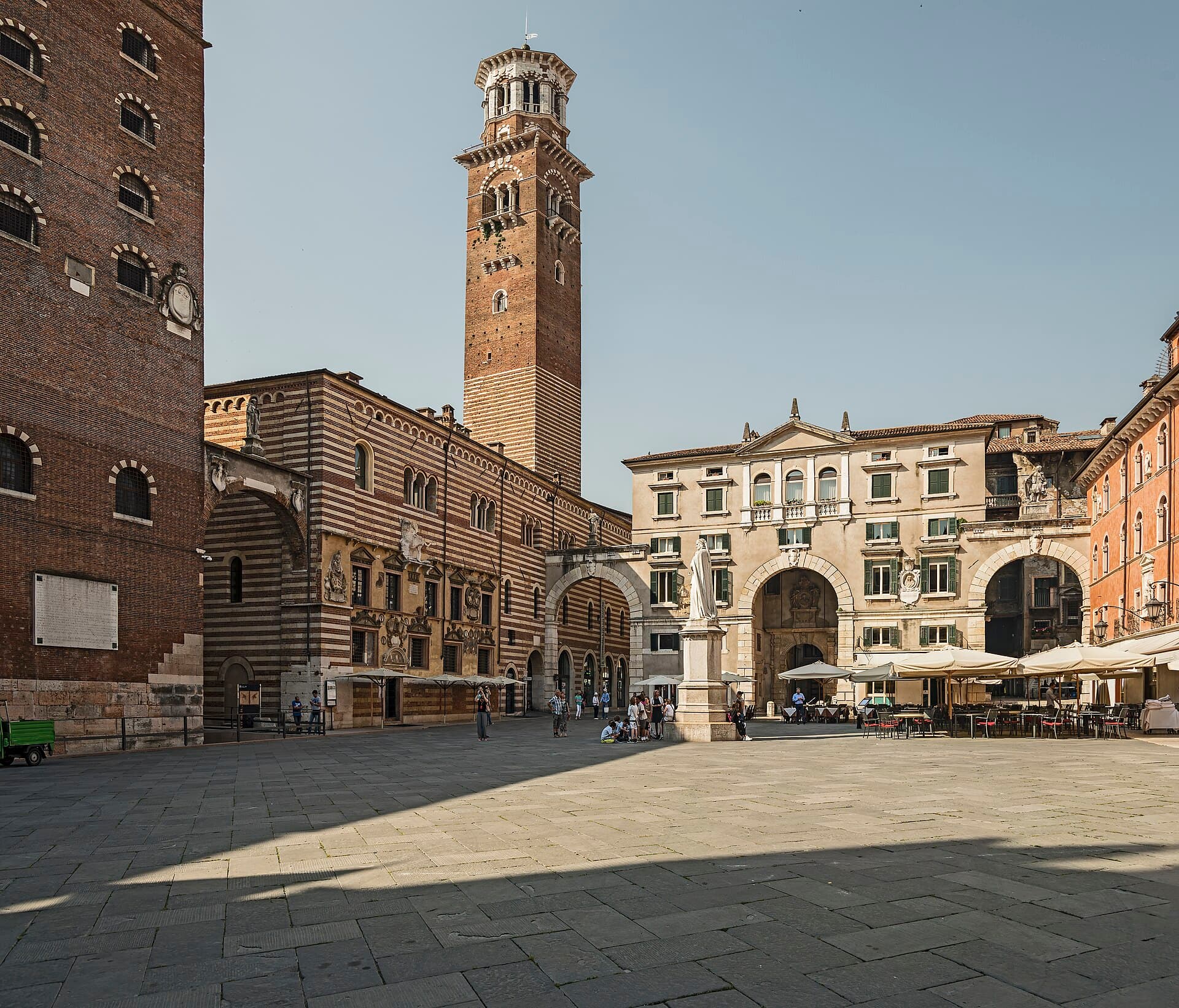 Piazza dei SignoriOne step under the whale-rib arch moves you from the Erbe market's clamour into 1 minute walk4.6
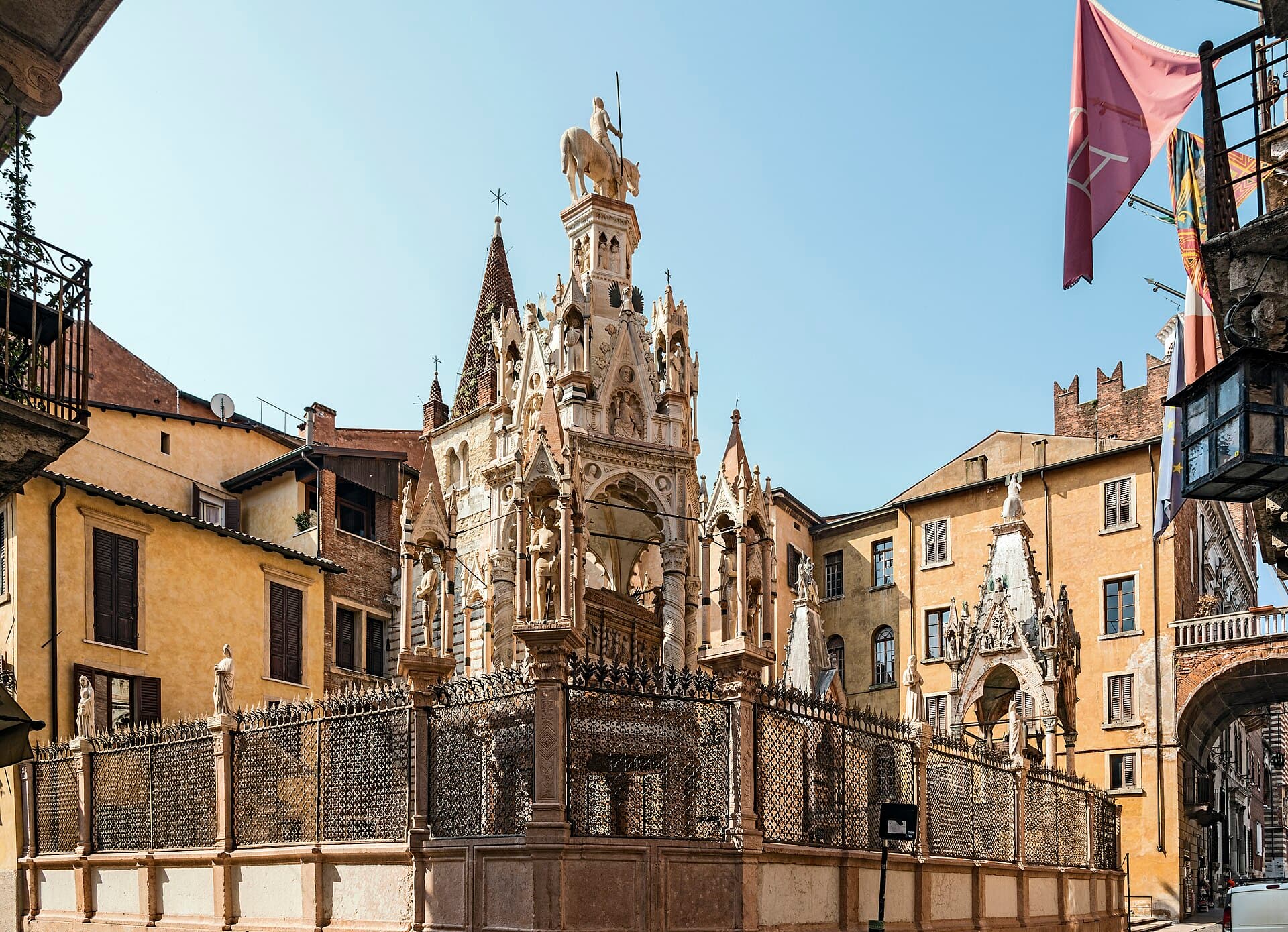 The Scaliger TombsIn a small fenced court behind Piazza dei Signori rise the Scaliger Tombs: the g1 minute walk4.6
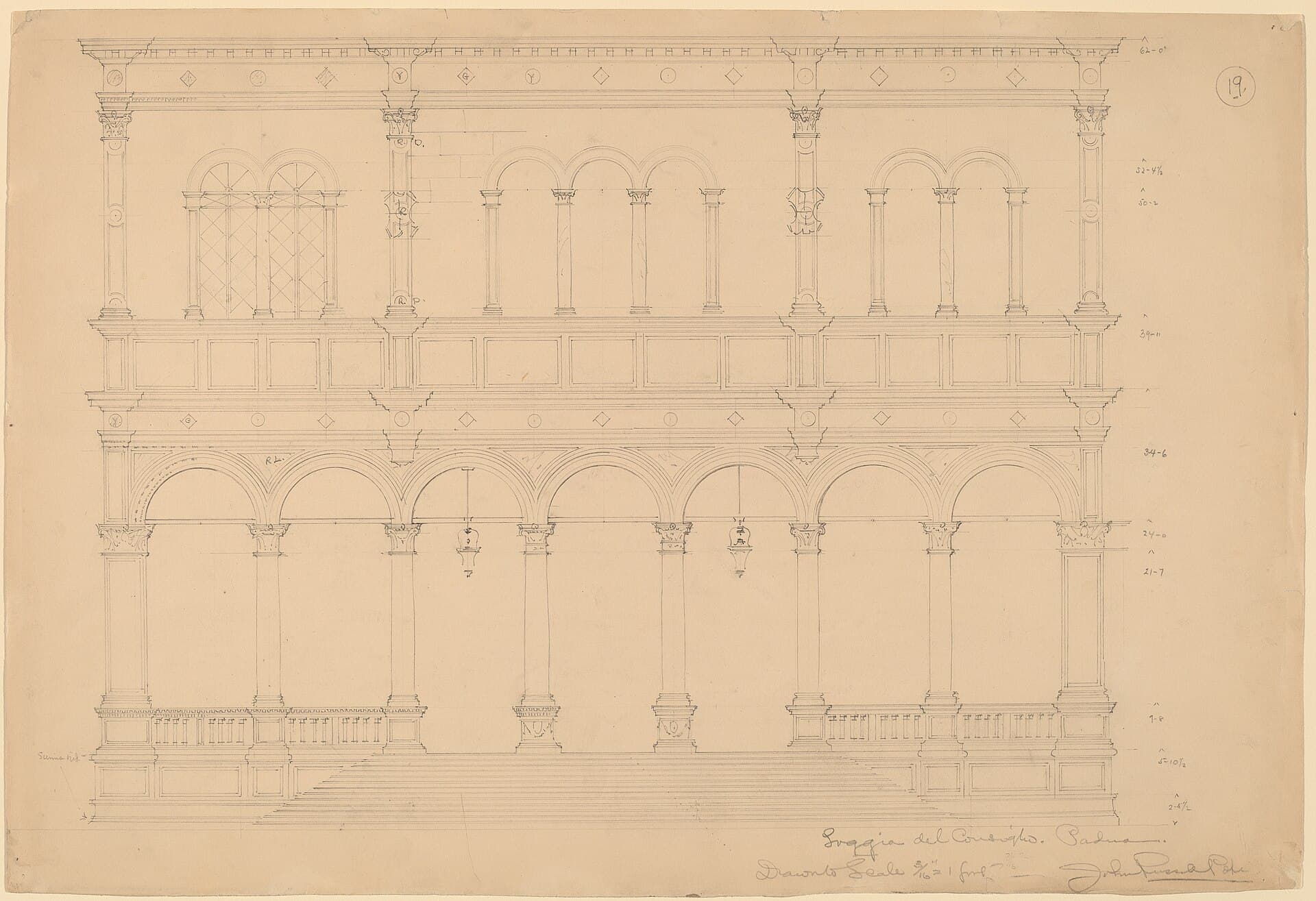 Loggia del ConsiglioFive ancient Romans have stood along the roofline since 1493, looking down on th1 minute walk4.7
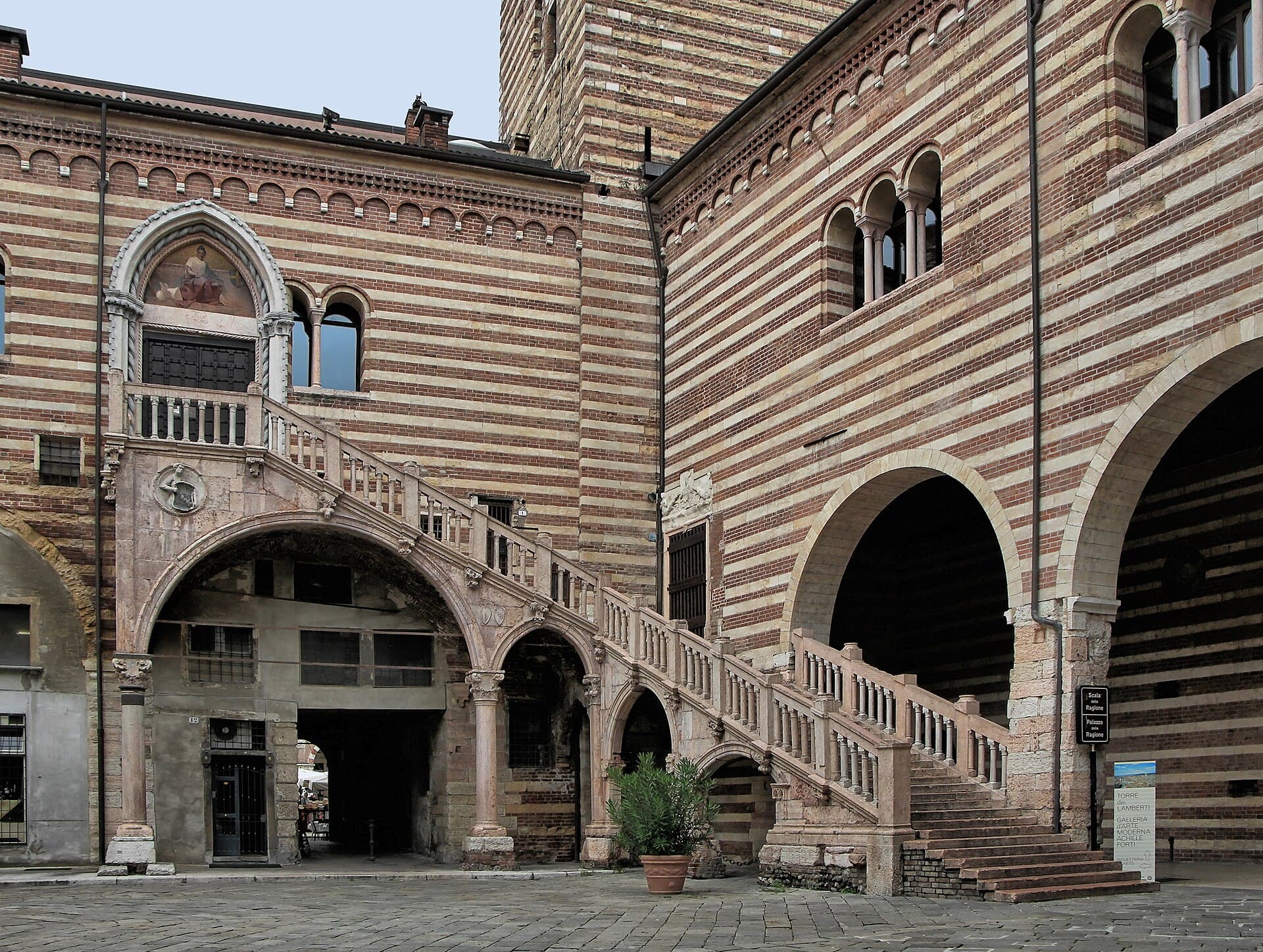 Scala della RagioneAn external stone staircase in the Mercato Vecchio courtyard in central Verona, 1 minute walk4.6
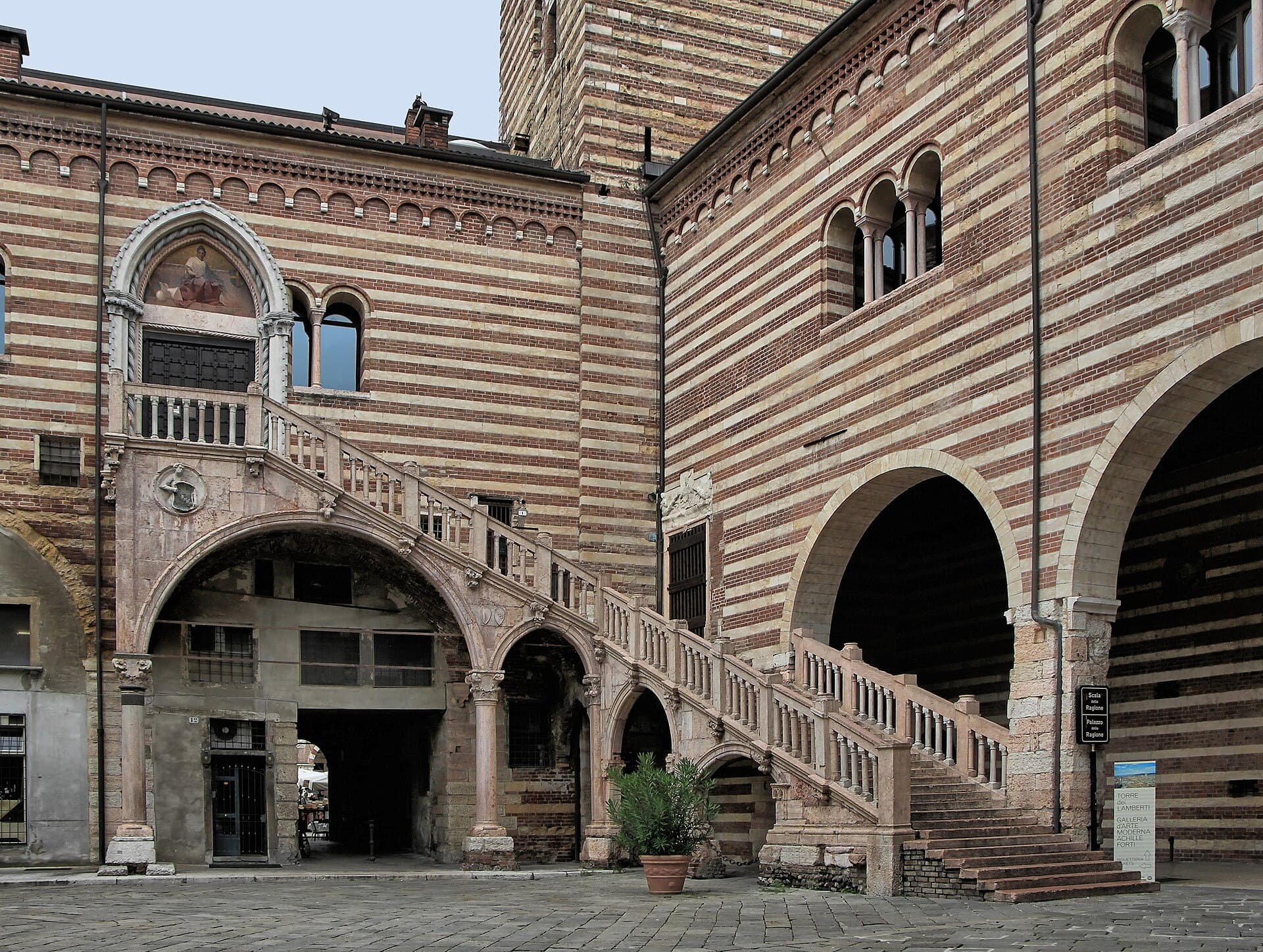 Palazzo della RagioneA complex of twelfth-century buildings between Piazza delle Erbe and Piazza dei 1 minute walk4.4
Because Dante was exiled from Florence in 1302 and spent years in Verona under the protection of the ruling Scaliger family, writing part of the Divine Comedy there. Verona was the first stop of a long exile that ended with his death in Ravenna, never having returned to his own city.
The Palazzo della Ragione with its Gothic stair and the Torre dei Lamberti, the Loggia del Consiglio — a Renaissance building of arches and statues — and the Scaliger tombs directly behind the square, a group of finely carved raised sepulchres worth looking at.