
The south façade
Carved brick.
Martijn.Munneke from Netherlands — CC BY 2.0 · Petar Milošević — CC BY-SA 4.0 · Davide Mauro — CC BY-SA 4.0 · Jean-Pierre Dalbéra from Paris, France — CC BY 2.0 · Faqscl — CC BY-SA 3.0 · St. Christofor — CC BY-SA 4.0 · Yunuskhuja Tuygunkhujaev — CC BY-SA 4.0 · BeshevI — CC BY-SA 4.0
One of the oldest surviving mosques in Central Asia and one of the few buildings in Bukhara to survive the Mongol invasion. It now lies more than 4.5 m below street level, reached down a flight of steps, because the ground rose around it over the centuries. The mosque stands on the site of an ancient market called «Mah», the moon, with a temple nearby, and was probably built in the 9th-10th century over the remains of a Zoroastrian temple. Its name has changed several times: first «Mah», then from the 16th century «Magoki Attari», the «pit of the perfumers», after the perfume and spice sellers around it. Its finest feature is the 12th-century south façade, with intricate carved brick, stucco and a few touches of turquoise tile; an iwan and eastern portal were added in the 15th century. It is part of the Historic Centre of Bukhara, a World Heritage Site since 1993. Today it houses a carpet museum; tickets are about 20,000 som, with about 10,000 extra for photography, per visitor guides. It is about 100 m from Lyabi-Hauz.
Carved brick.
Into the 12th century.
Inside.
Between Lyabi-Hauz and the Toqi Sarrafon dome, old Bukhara
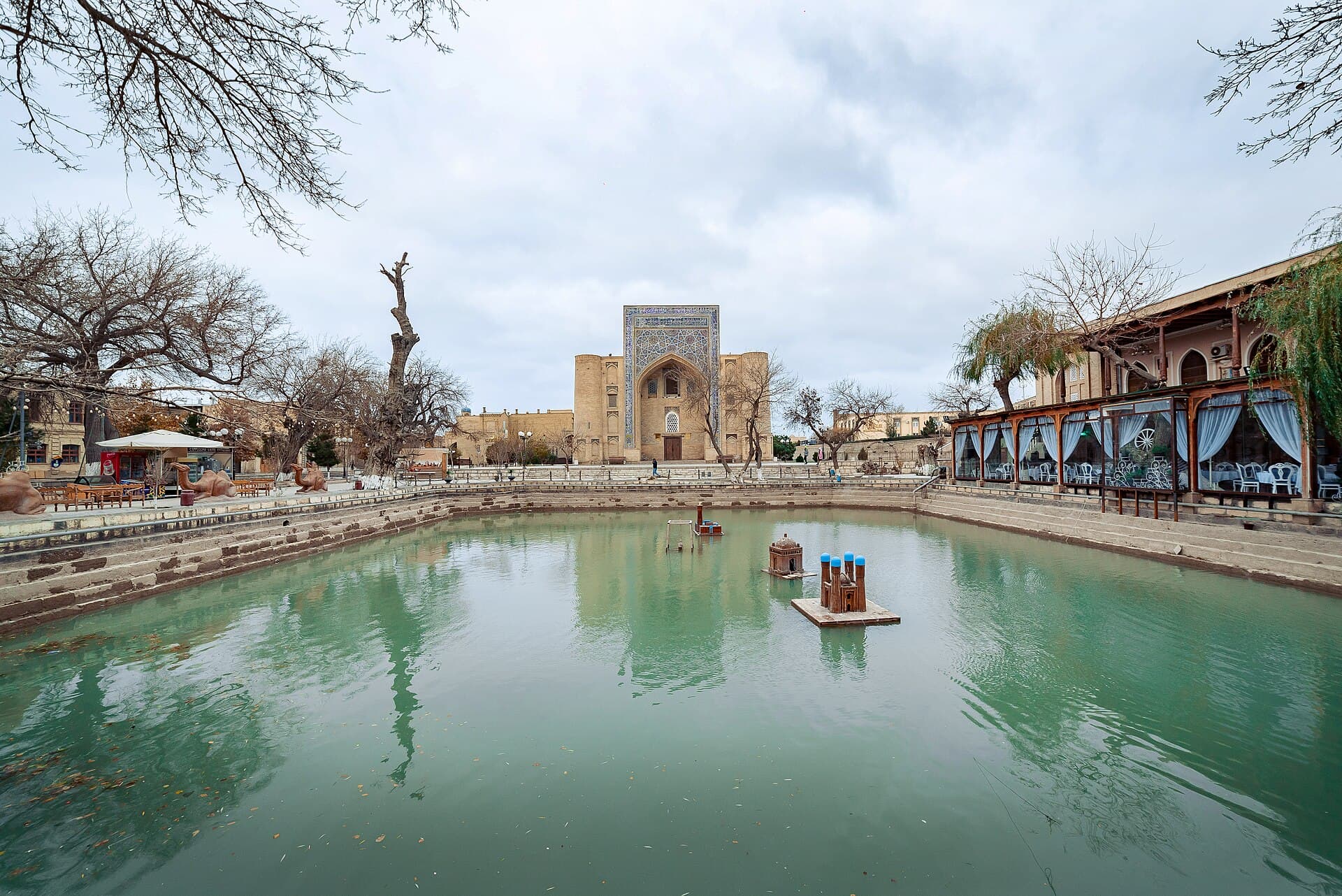 Lyabi-Hauz squareThe square around one of Bukhara's few surviving pools, whose name means «by the3 minutes walk4.5
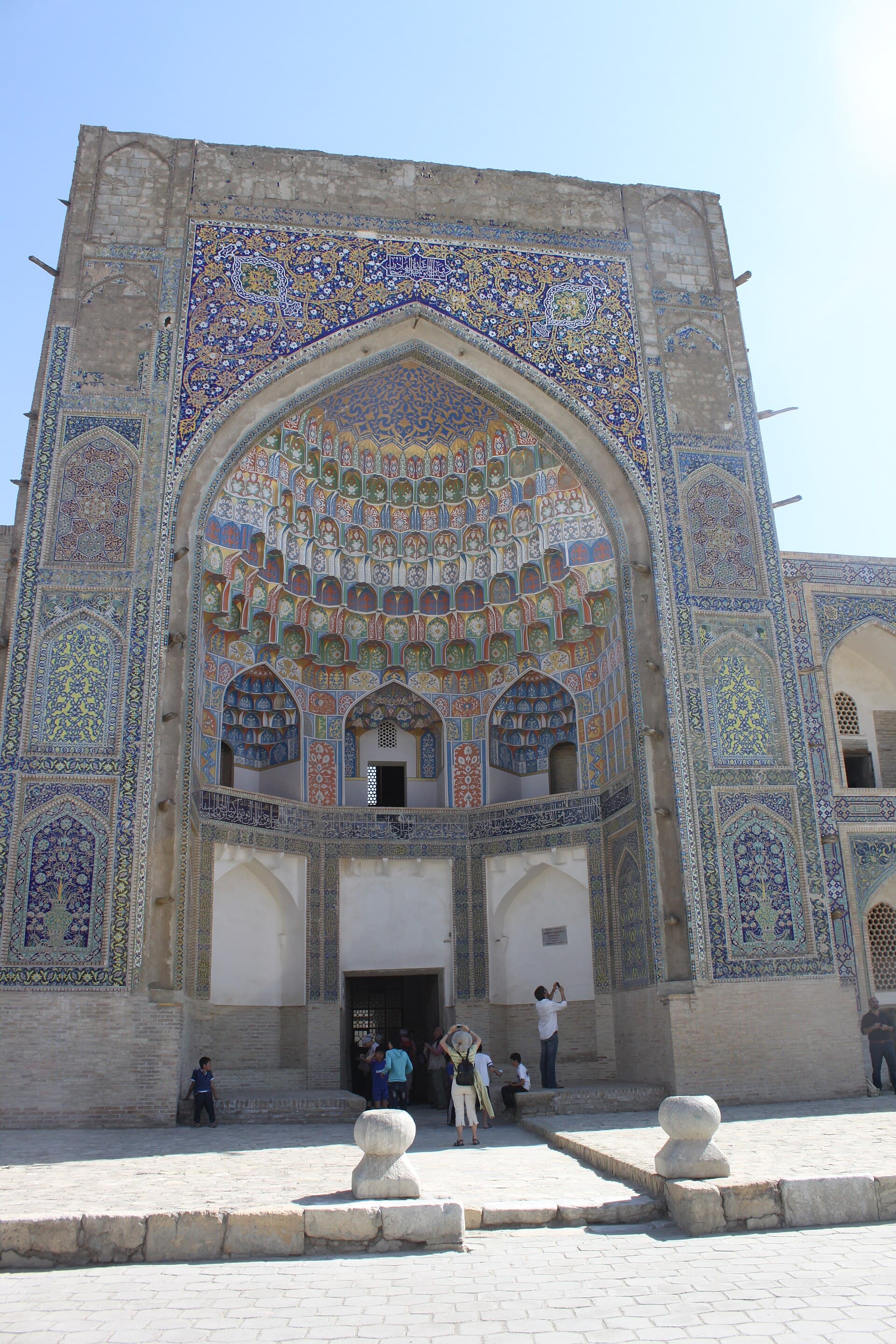 Abdulaziz Khan MadrasaA madrasa built by Abdulaziz Khan (1614-1683) in 1652-1654, facing the Ulugbek M4 minutes walk4.5
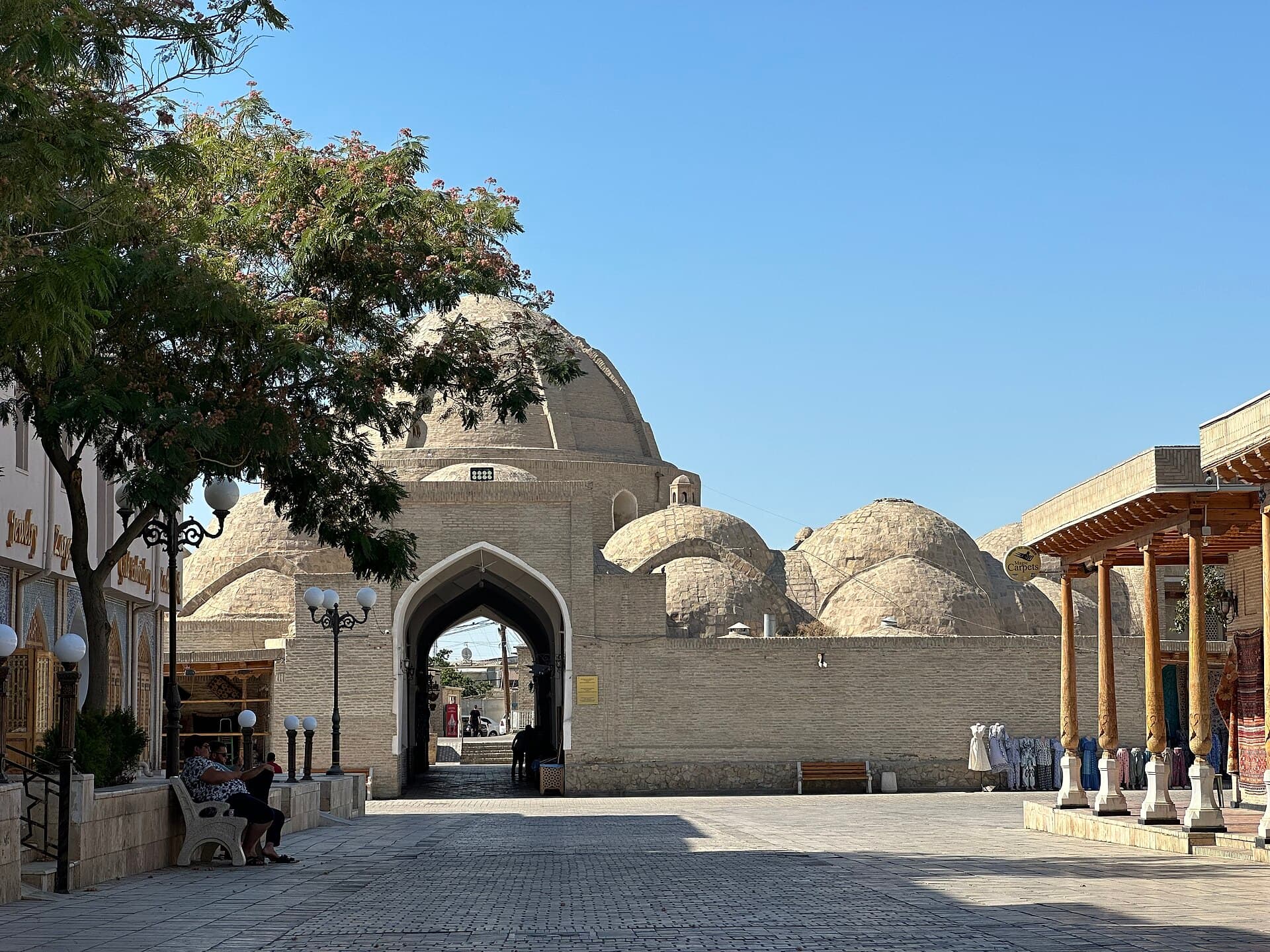 Bukhara Trading DomesDomed covered markets at the crossroads of old Bukhara's streets, known locally 5 minutes walk4.7
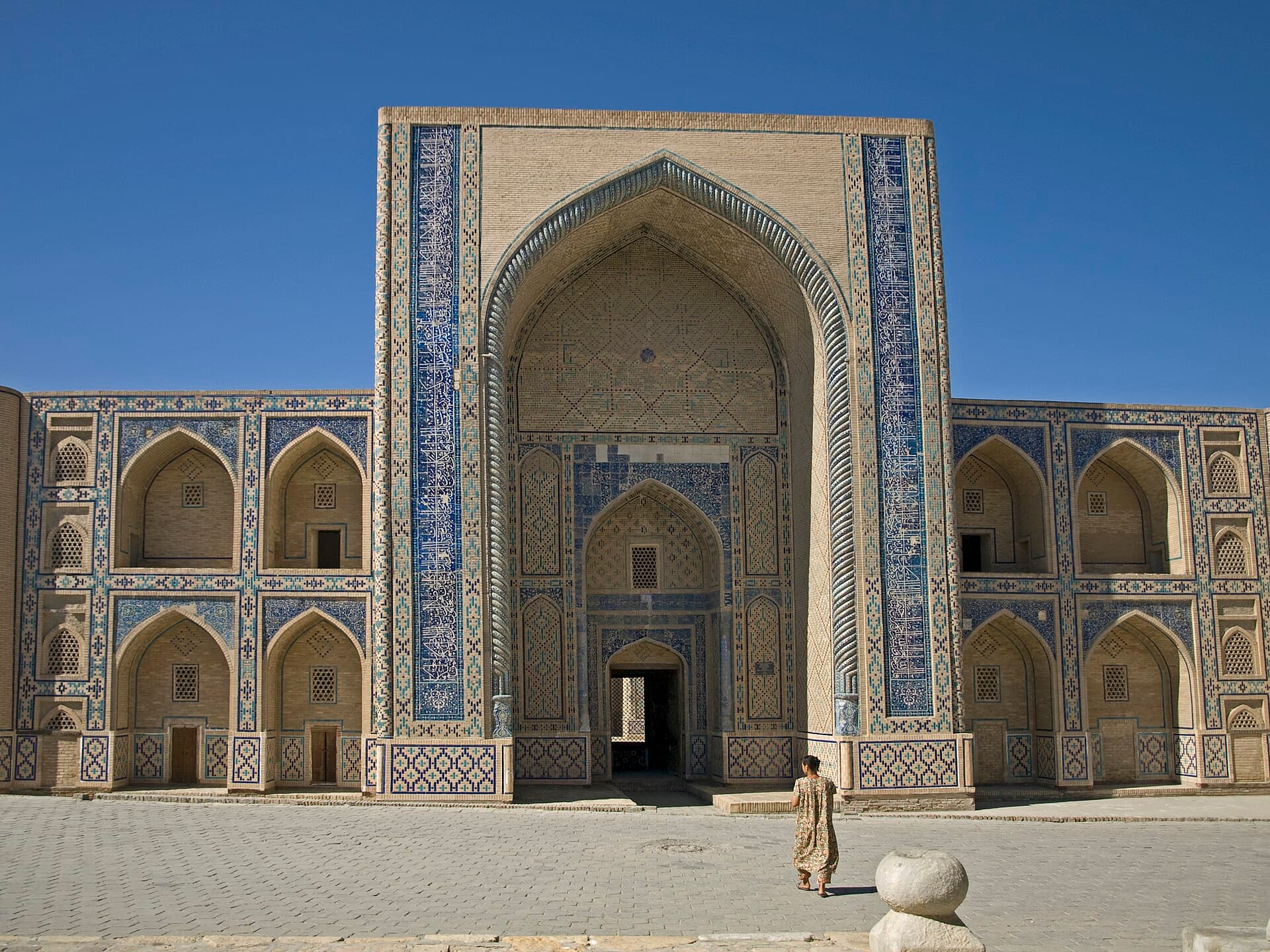 Ulugbek Madrasa, BukharaThe oldest surviving madrasa in Central Asia, built by Timur's grandson Ulugh Be5 minutes walk4.5
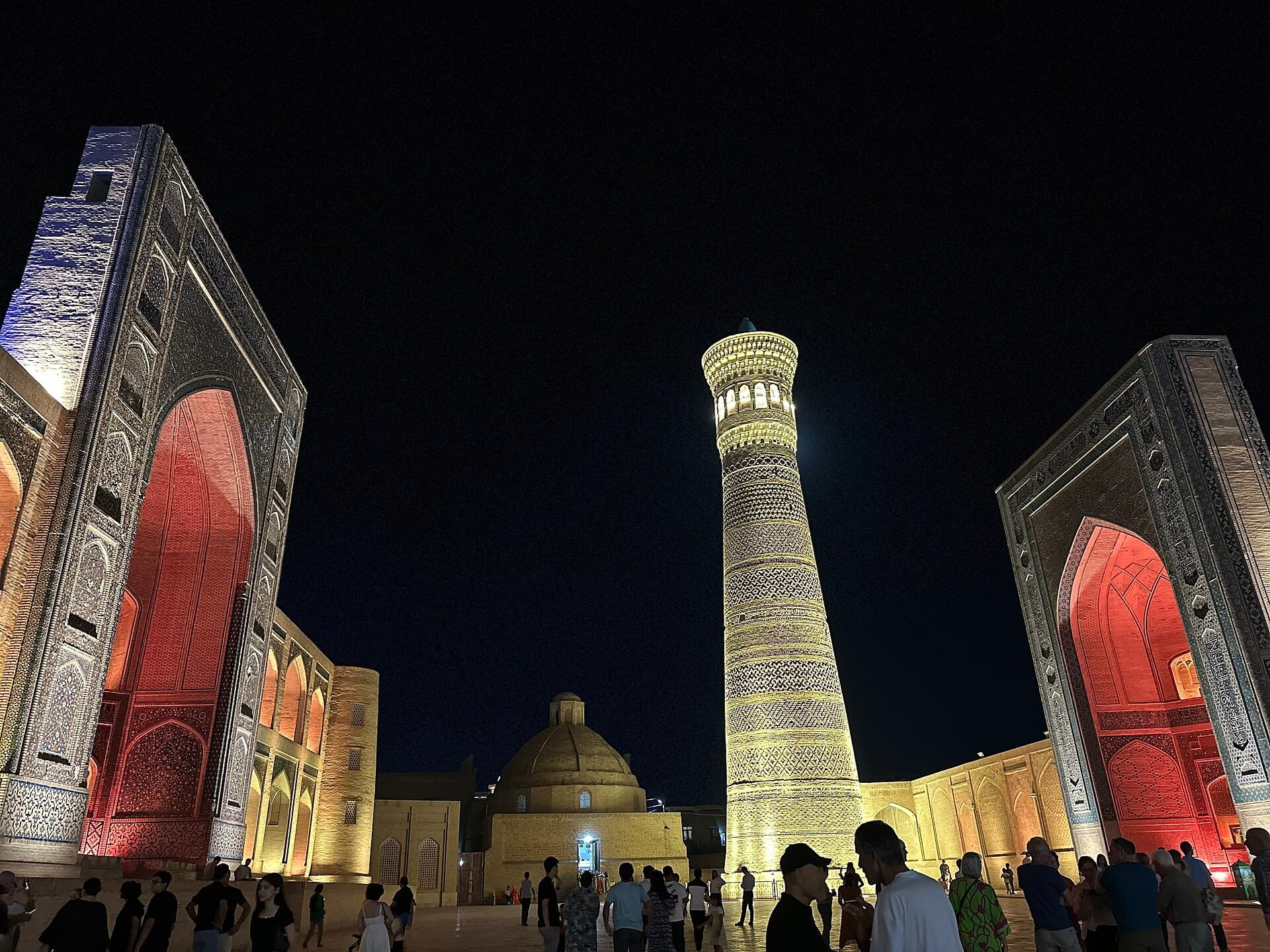 Po-i-Kalyan and the Kalyan MinaretBukhara's best-known religious complex, whose name means «at the foot of the gre5 minutes walk4.9
The ground rose around it over the centuries, leaving it more than 4.5 m down, hence its name, «pit of the perfumers».