
The pool
Under mulberries.
Arina Pan — CC BY-SA 4.0 · Dave Proffer — CC BY 2.0 · Myu471 — CC BY-SA 4.0 · Mario J. Schwaiger — CC BY-SA 4.0 · Spartak22 — CC BY-SA 4.0 · Allan Grey — CC BY-SA 2.0 · Faqscl — CC BY-SA 3.0
The square around one of Bukhara's few surviving pools, whose name means «by the pool». Such pools were the city's main water supply until the Soviet period, but they spread disease and most were filled in during the 1920s and 1930s. This one survived because it is the centrepiece of a magnificent 16th-17th-century ensemble that has hardly changed since. It is framed on three sides by the Kukeldash Madrasa (1568-1569), the city's largest, to the north, and by a khanaqah (1620) and madrasa (1622) built by Nadir Divan-Beghi to the west and east. Old mulberry trees shade the pool, and cafés and restaurants line it under the trees, making it where locals and visitors meet in the evening, with the madrasas' lights reflected in the water. The Nadir Divan-Beghi Madrasa's portal shows two mythical simurgh birds carrying white deer. Walking the square is free; some madrasas open for a small fee or hold craft shops. It is close to the old trading domes and at its best in the evening.
Under mulberries.
Bukhara's largest madrasa.
Cafés by the water.
Centre of old Bukhara
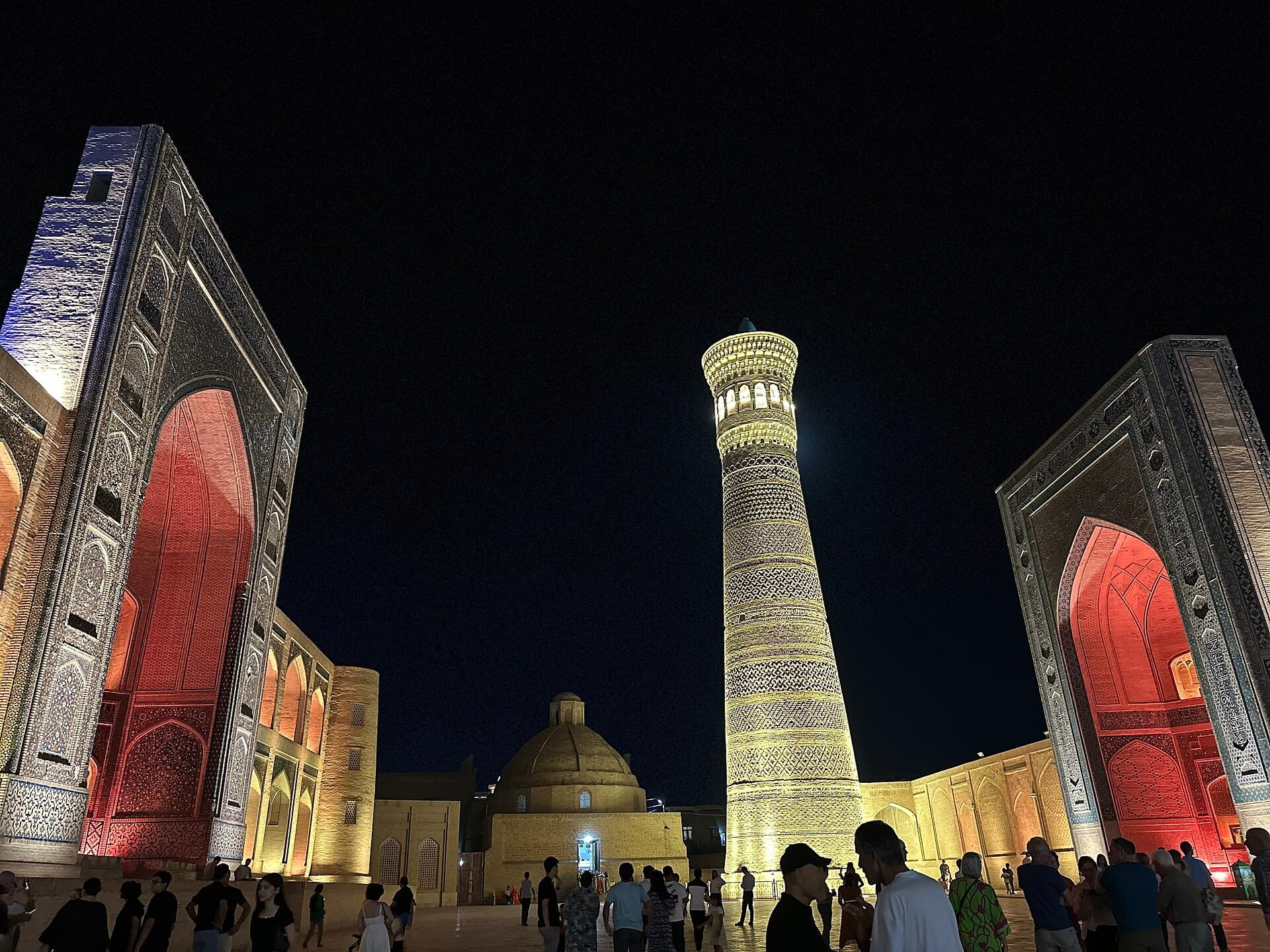 Po-i-Kalyan and the Kalyan MinaretBukhara's best-known religious complex, whose name means «at the foot of the gre7 minutes walk4.9
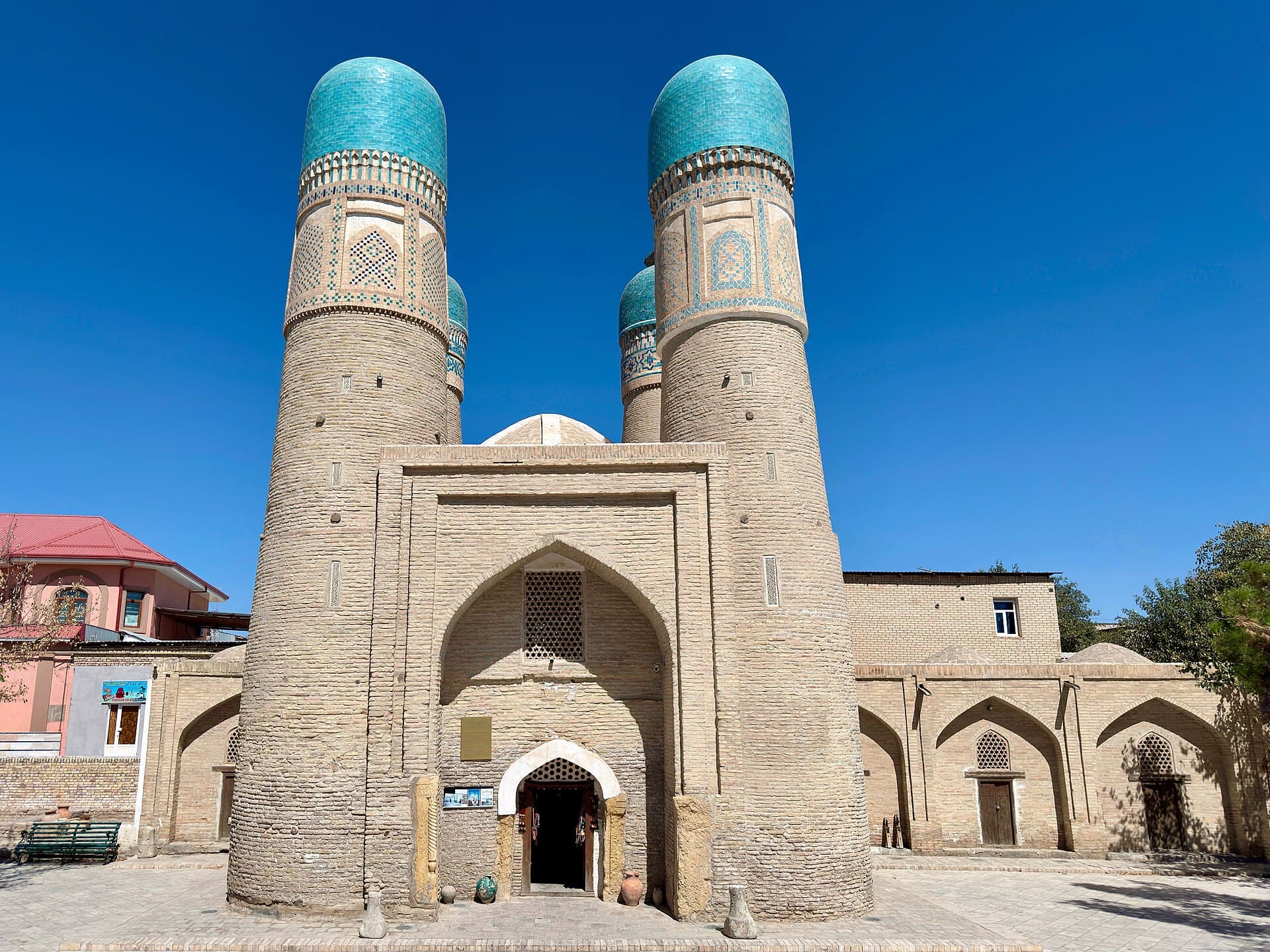 Chor MinorA small, unique building in Bukhara whose Persian name means «four minarets», af8 minutes walk4.5
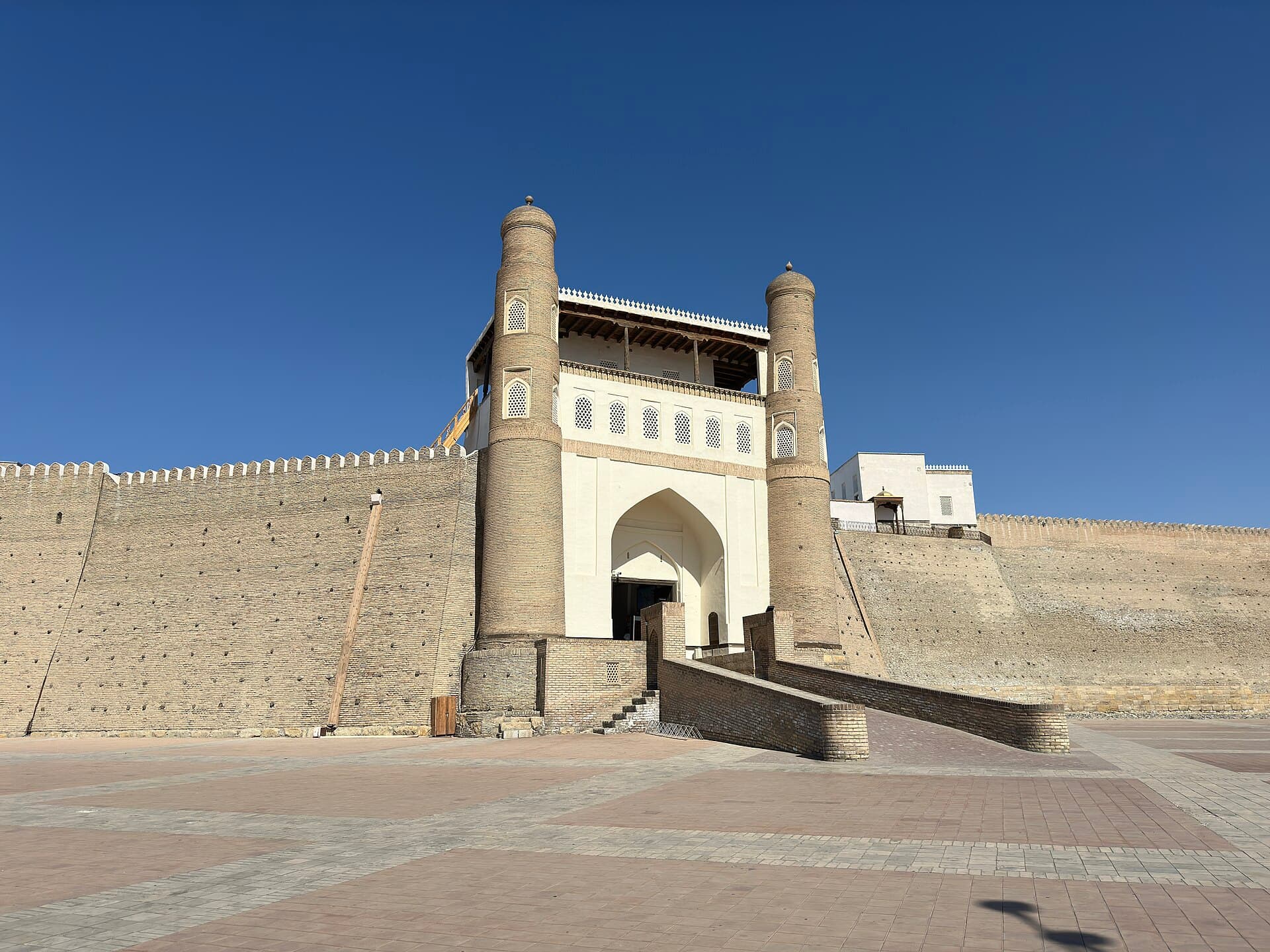 Ark of BukharaA massive fortress in Bukhara, first built around the 5th century AD; its presen14 minutes walk4.5
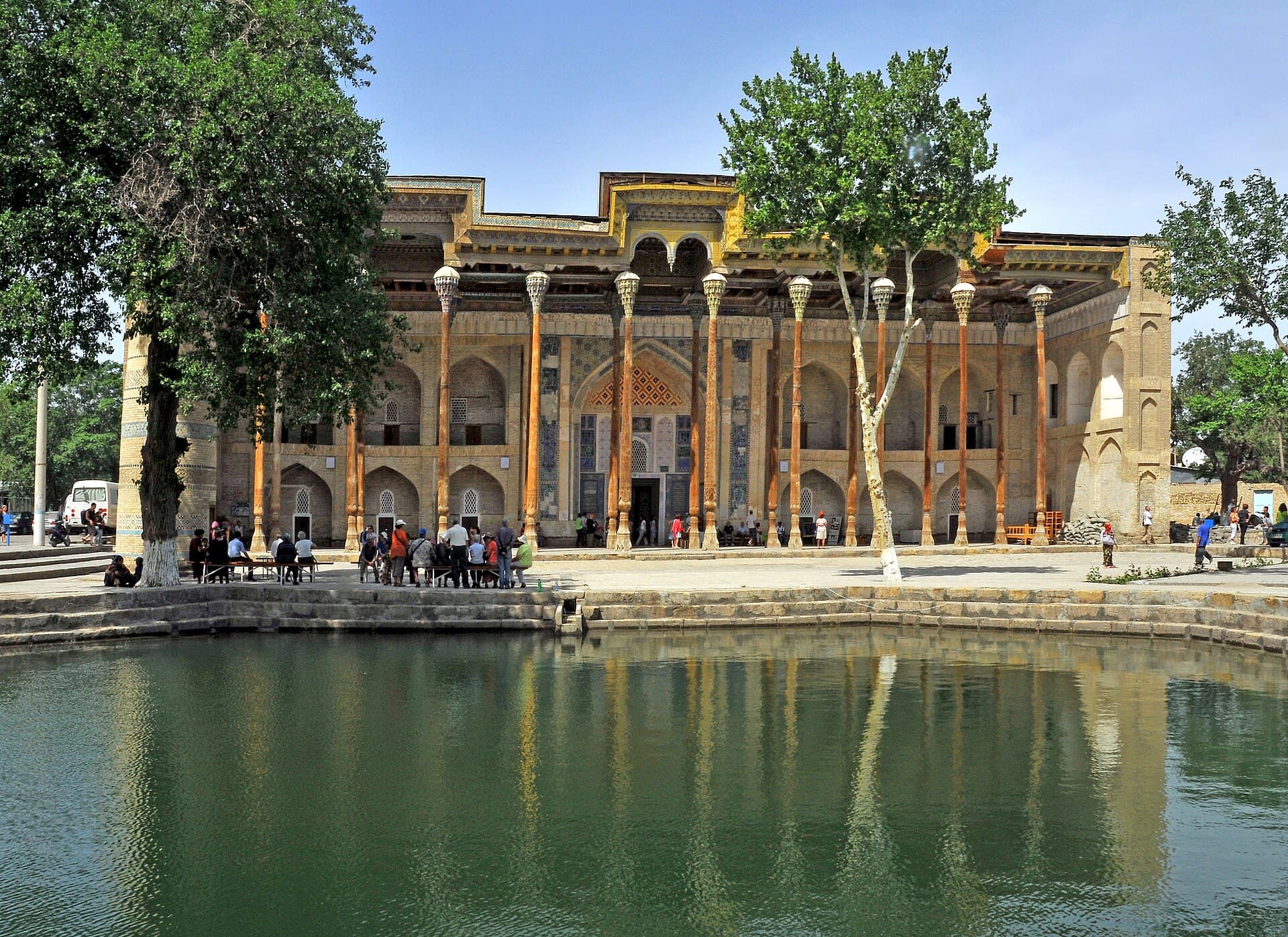 Bolo Hauz MosqueA historic mosque in Bukhara, built in 1712 opposite the Ark fortress on the squ16 minutes walk4.7
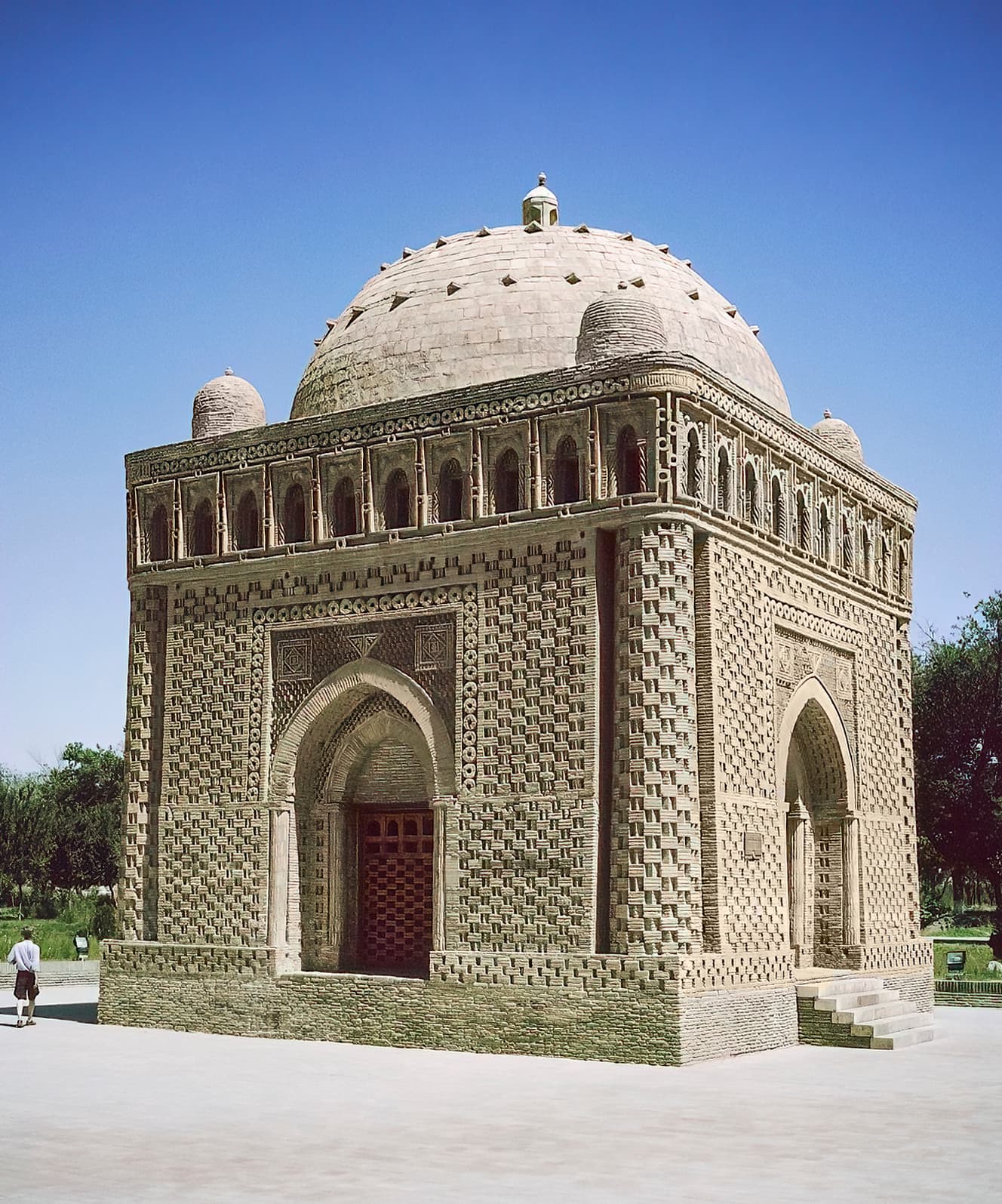 Samanid Mausoleum (Ismail Samani)A 10th-century mausoleum in northwest Bukhara, resting place of the powerful Sam22 minutes walk4.6
A square around a historic pool in central Bukhara, framed by the Kukeldash Madrasa and Nadir Divan-Beghi's khanaqah and madrasa, the city's evening meeting place.