
The portal mosaic
Birds bearing deer toward a human-faced sun.
Arina Pan — CC BY-SA 4.0 · Humoyun Mehridinov — CC BY-SA 4.0 · Jean Housen — CC BY-SA 4.0 · Ymblanter — CC BY-SA 4.0 · Nikolai Bulykin — CC BY-SA 4.0
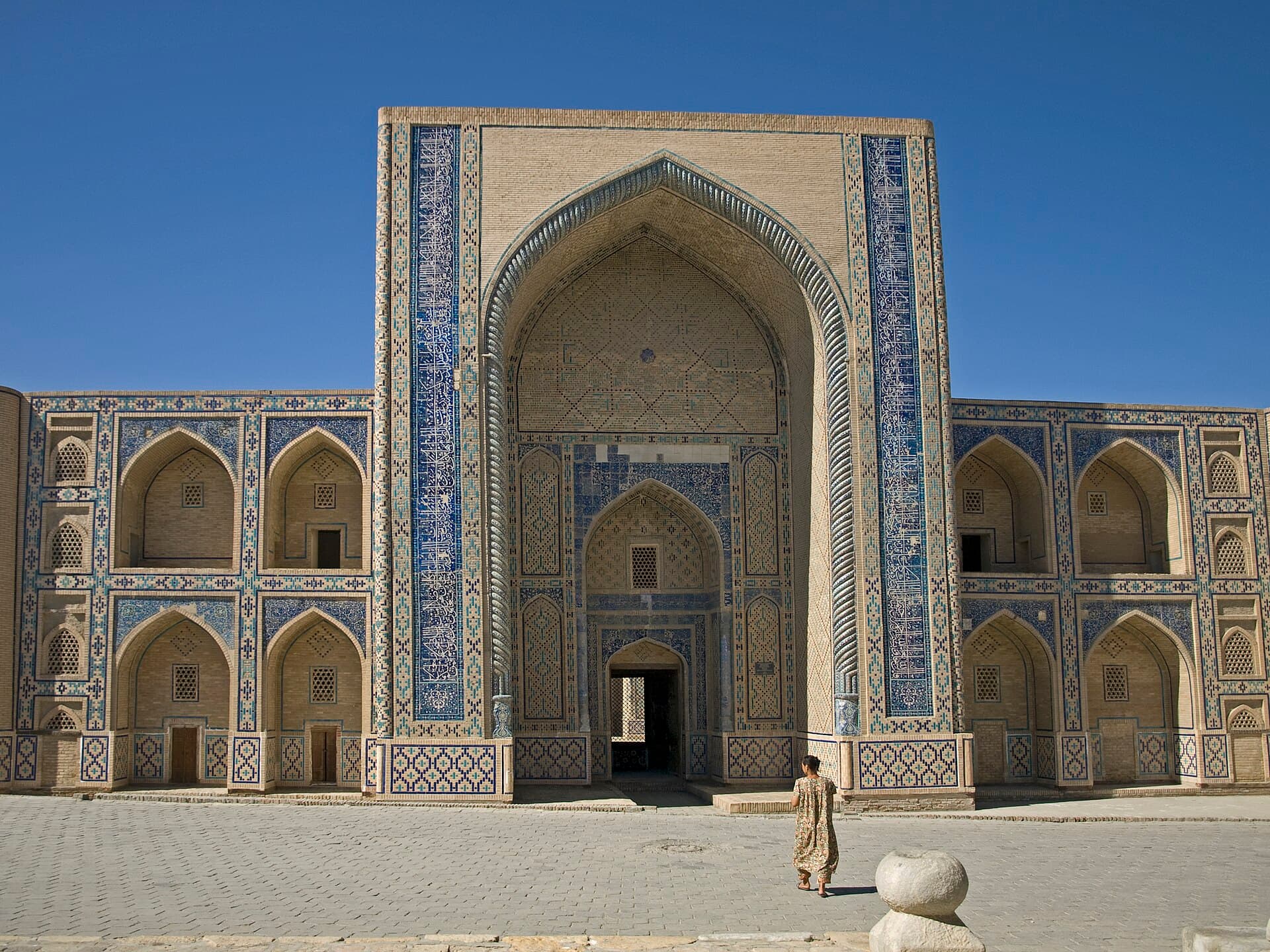
A madrasa on the east side of Lyabi-Hauz in old Bukhara, built in 1622–1623 by Nadir Divan-Begi, uncle and vizier of Imam Quli Khan (r. 1611–1642). It is famed for its portal mosaic, in which two mythical birds carry white deer toward a sun with a human face. It is part of the Historic Centre of Bukhara, a World Heritage Site since 1993. It was planned as a caravanserai for the merchants of the busy square, but tradition says the khan called it a madrasa at the opening, so a portal, loggias, corner towers and an upper storey of cells were added; it still lacks a lecture hall and mosque. It faces Nadir's earlier khanaqah across the pool, a pairing called a kosh. Like Samarkand's Sherdor Madrasa, begun in 1619, it shows living creatures, which Islamic religious buildings traditionally avoid. The birds, usually identified as the simurgh of Persian legend, grip the deer amid floral patterns, and Arabic inscriptions frame the portal; the present mosaic is largely a 20th-century restoration, guides note. Cells with carved doors ring the courtyard, now shops selling textiles, ceramics and carpets, beside a restaurant. Most evenings in season bring an hour-long folklore show of regional dances, live music and costume parades. The statue of Khoja Nasreddin stands between the madrasa and the pool; the Kukeldash Madrasa is next door, the Magoki Attari Mosque and the nearest trading dome about 250 m west, and Po-i-Kalyan about 650 m north-west. The portal faces west, so come in the late afternoon; allow 20 minutes, more with the show.
Birds bearing deer toward a human-faced sun.
Textiles, ceramics and carpets in the old cells.
Dance and live music on evenings in season.
East side of Lyabi-Hauz, old Bukhara
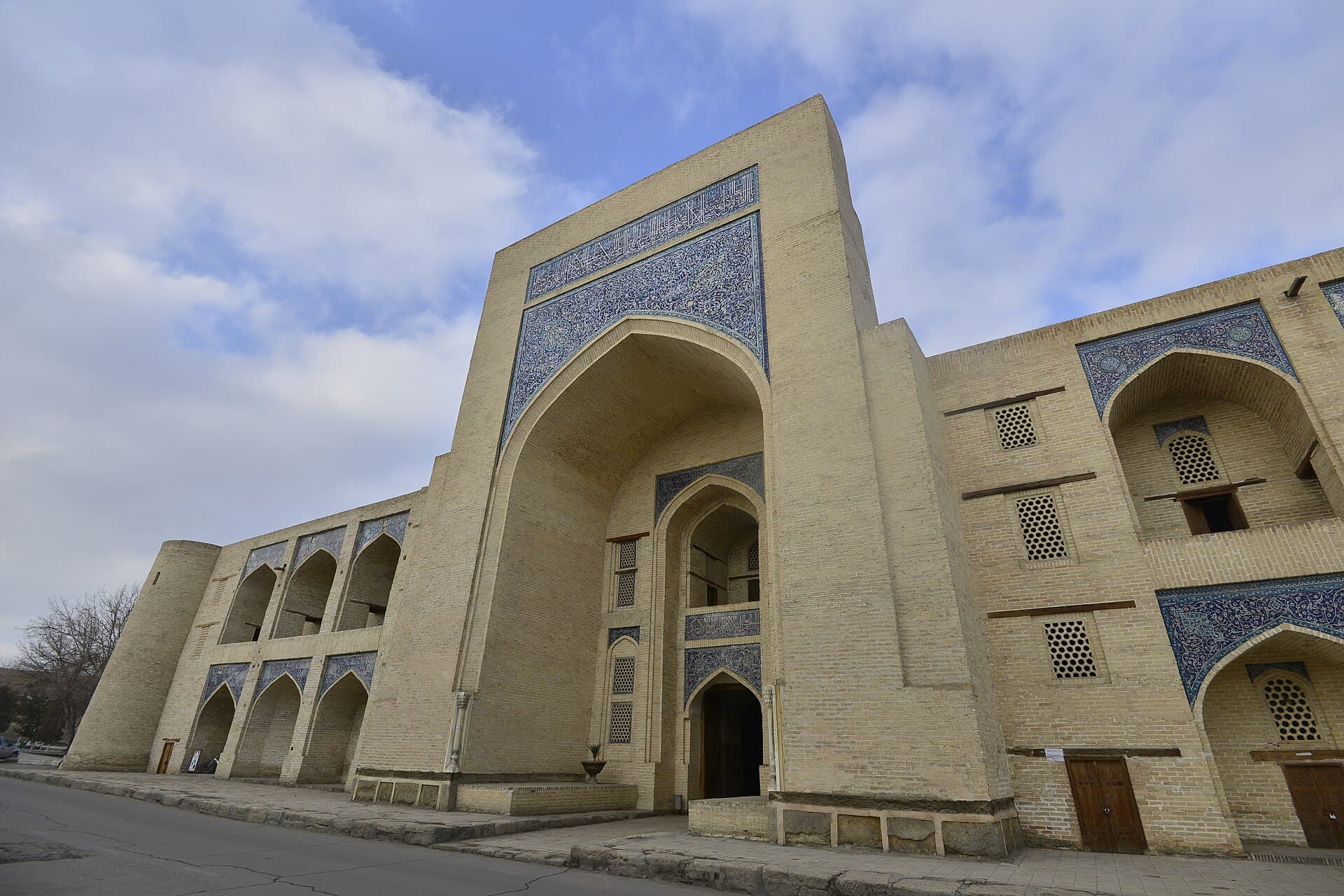 Kukeldash Madrasa (Bukhara)Bukhara's largest madrasa, often called the largest in Central Asia, fills the n1 minute walk
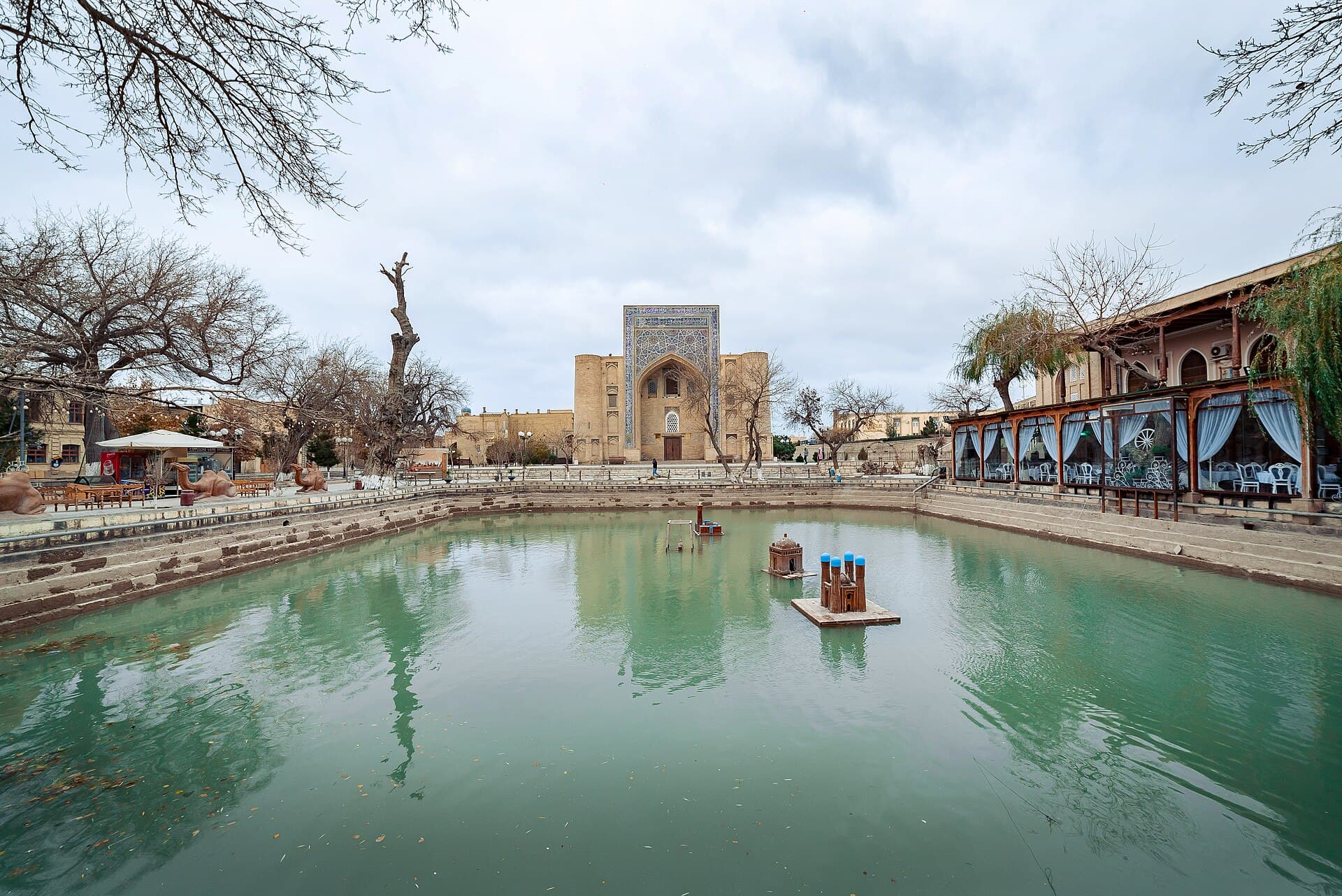 Lyabi-Hauz squareThe square around one of Bukhara's few surviving pools, whose name means «by the1 minute walk4.5
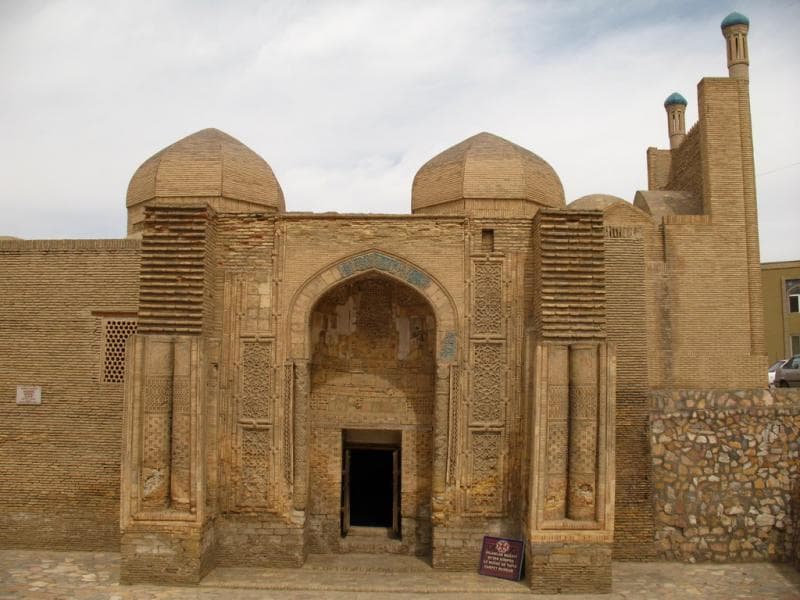 Magoki Attari MosqueOne of the oldest surviving mosques in Central Asia and one of the few buildings3 minutes walk4.1
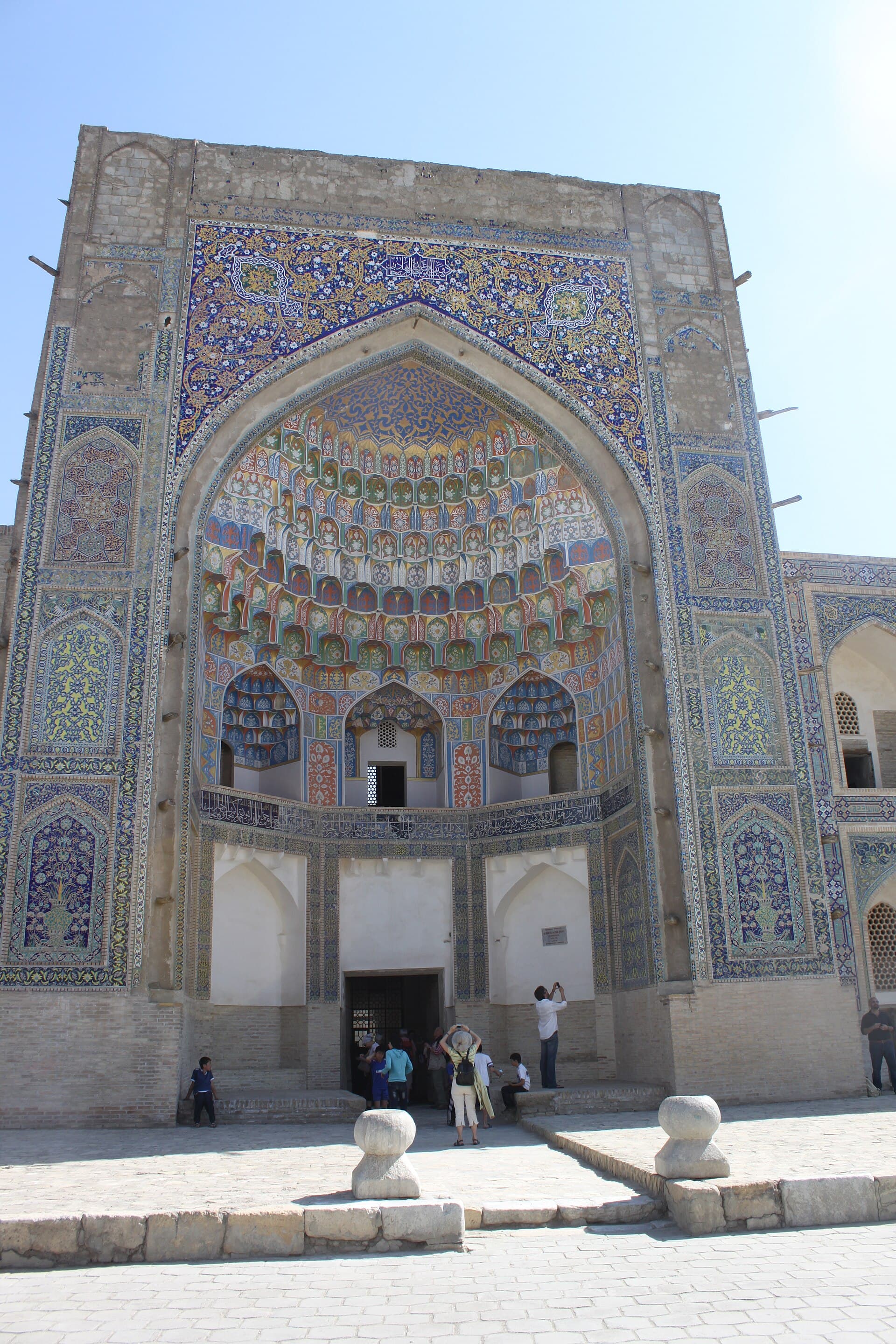 Abdulaziz Khan MadrasaA madrasa built by Abdulaziz Khan (1614-1683) in 1652-1654, facing the Ulugbek M6 minutes walk4.5
 Ulugbek Madrasa, BukharaThe oldest surviving madrasa in Central Asia, built by Timur's grandson Ulugh Be7 minutes walk4.5
Ask at the madrasa: visitors in 2025 booked the same day by stopping by in the morning, or through their guide, who paid a deposit. Book ahead above all for the dinner sitting, as the dishes are ordered in advance.
Yes. Two endowment deeds survive, from 1642 and 1810, and records describe a teacher of Islamic jurisprudence and its principles paid 500 tanga a year plus grain.