
The carved gate
Wooden leaves joined without nails.
Mario J. Schwaiger — CC BY-SA 4.0 · File:Kukeldash Madrasa Bukhara.jpg: Ymblanter derivative work: Stegop — CC BY-SA 4.0 · Faqscl — CC BY-SA 3.0 · Faqscl — CC BY-SA 3.0 · Umid1108 — CC BY-SA 4.0
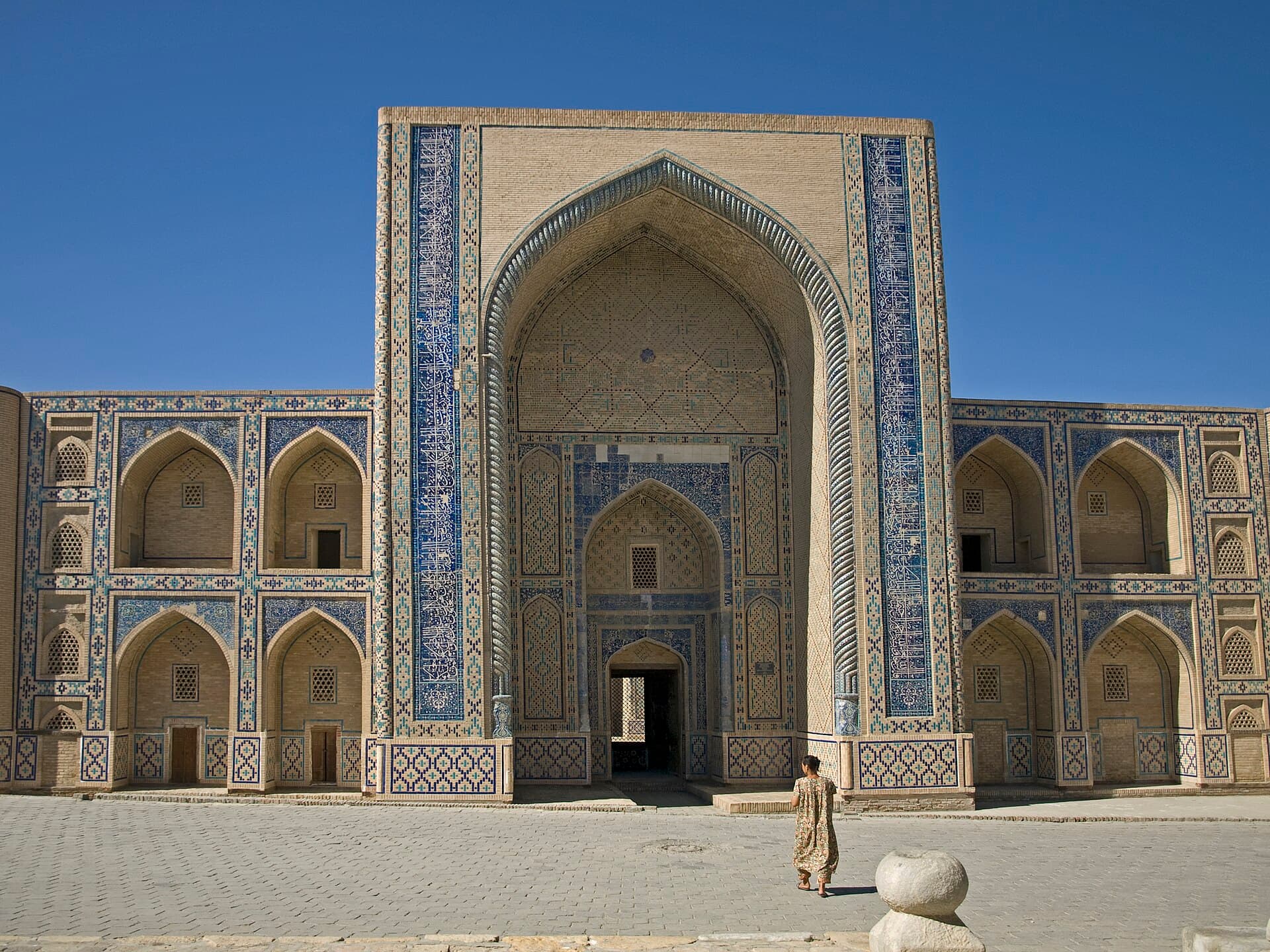
Bukhara's largest madrasa, often called the largest in Central Asia, fills the north side of Lyabi-Hauz. Qulbaba Kukeldash, vizier to the Shaybanid ruler Abdullah Khan II, built it in 1568–1569, so it is the ensemble's oldest building. Its two storeys hold 160 student cells, and it belongs to the Historic Centre of Bukhara, a World Heritage Site since 1993. Kukeldash means milk brother: Qulbaba and the khan were nursed by the same woman. Qulbaba endowed it with shops, two caravanserais, a bathhouse and whole villages; the 1593–94 deed survives. Unusually, its side walls open in arched upper-floor loggias instead of standing blank. Teaching ended in the 1920s, and the Bukhara Museum opened here in 1927. Small green onyx columns flank the portal's base; its carved wooden gate is joined without nails or glue. Behind it, a vestibule of five domed bays passes the former mosque and lecture hall, under white ribbed plaster vaults. Only two iwans face each other across the courtyard; the northern one keeps blue, green and white tile panels of Abdullah Khan's day. Craft and souvenir shops fill many cells, and a small literature museum honours the writers Sadriddin Ayni and Jalol Ikromi. It stands just north of the pool, steps from the Nadir Divan-Begi Madrasa on the east, and suits a daytime walk around Lyabi-Hauz. As the crow flies, the Magoki Attari Mosque is about 230 m west, and Po-i-Kalyan and Chor Minor are each about 570 m away. Restorers were repairing cracked northern walls in early 2026, and visitors reported it closed at times.
Wooden leaves joined without nails.
Ribbed plaster in the old halls.
Arched balconies on the outer walls.
North side of Lyabi-Hauz, old Bukhara
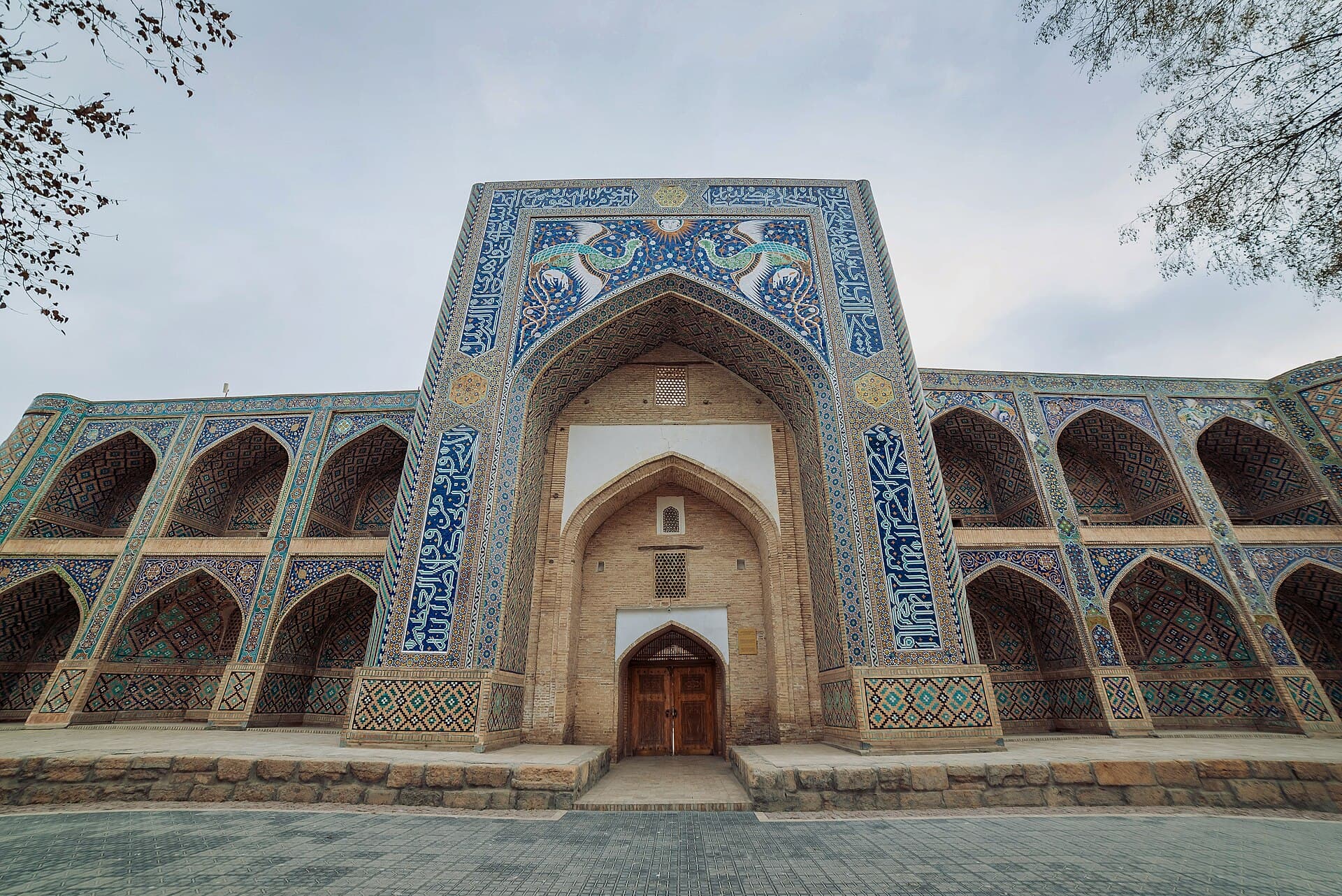 Nadir Divan-Begi Madrasa (Bukhara)A madrasa on the east side of Lyabi-Hauz in old Bukhara, built in 1622–1623 by N1 minute walk
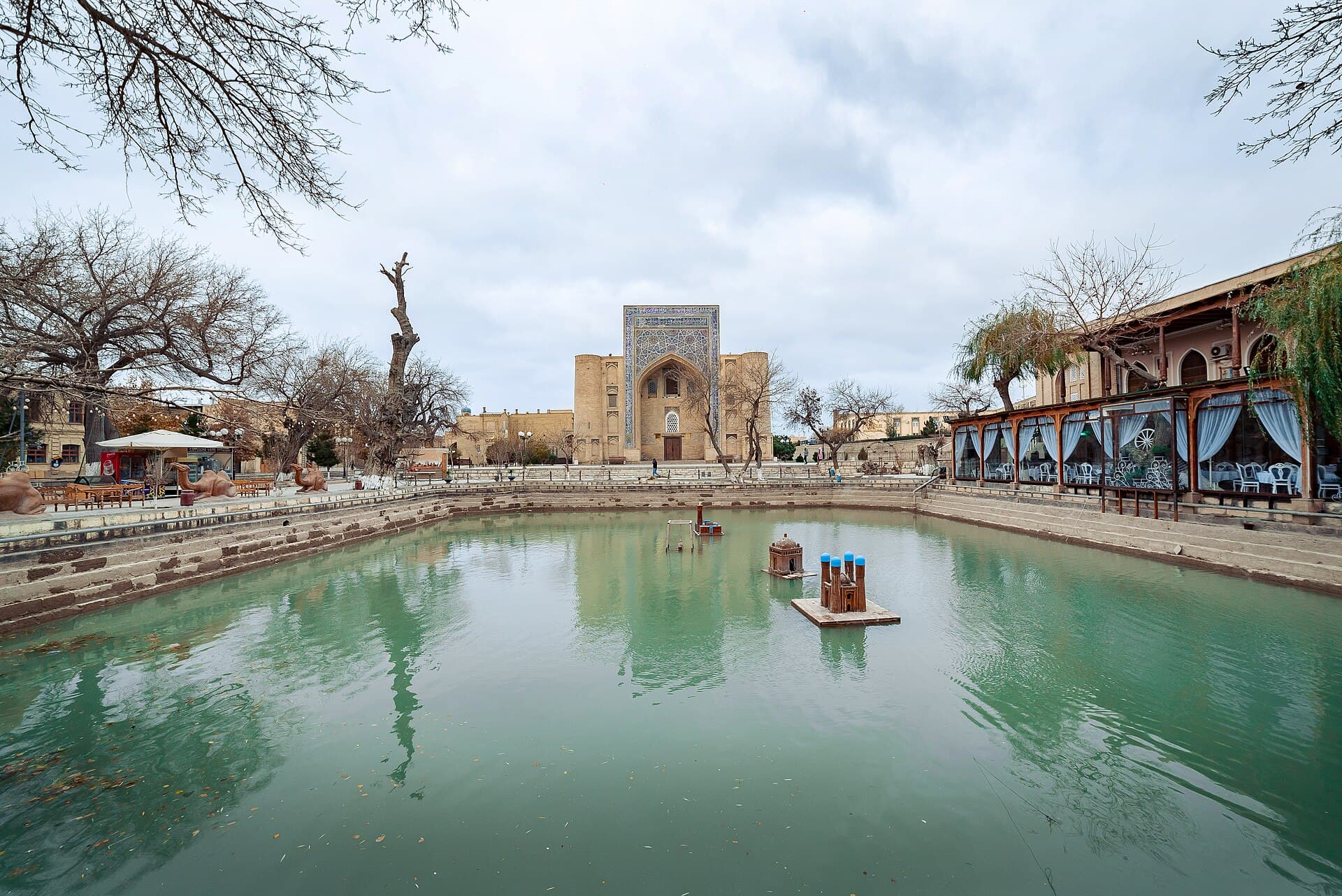 Lyabi-Hauz squareThe square around one of Bukhara's few surviving pools, whose name means «by the1 minute walk4.5
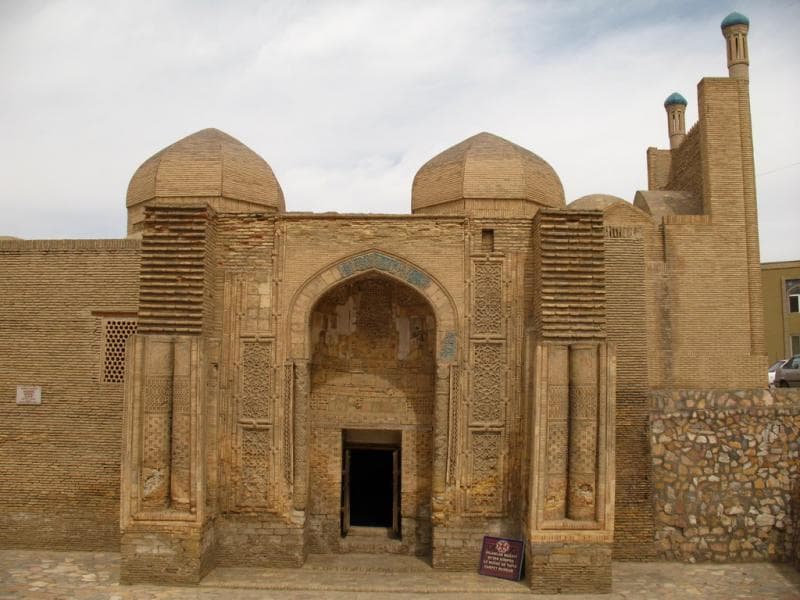 Magoki Attari MosqueOne of the oldest surviving mosques in Central Asia and one of the few buildings3 minutes walk4.1
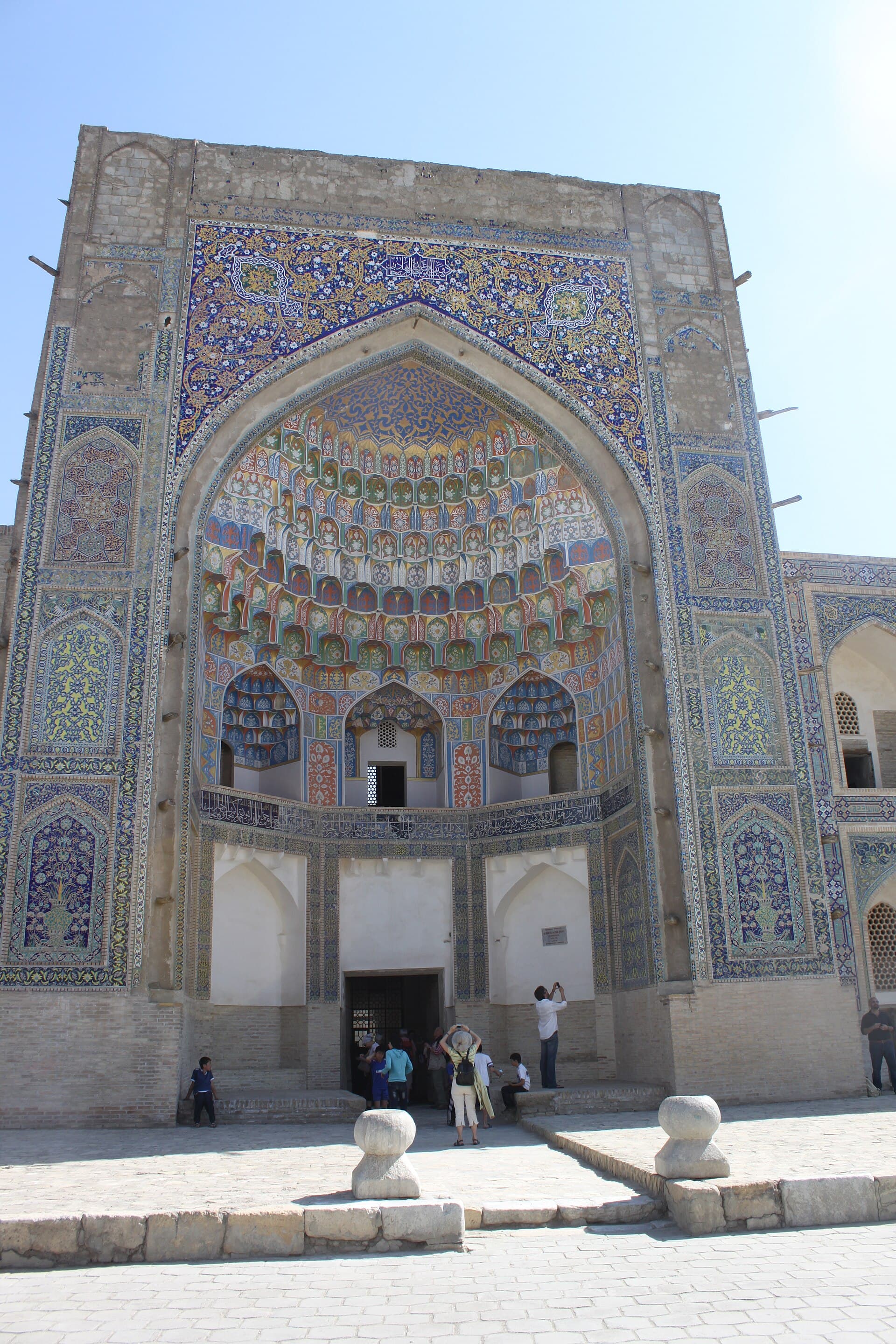 Abdulaziz Khan MadrasaA madrasa built by Abdulaziz Khan (1614-1683) in 1652-1654, facing the Ulugbek M5 minutes walk4.5
 Ulugbek Madrasa, BukharaThe oldest surviving madrasa in Central Asia, built by Timur's grandson Ulugh Be6 minutes walk4.5
Its outer ground-floor rooms served as shops because the city's main covered trading street once ran along the façade, and craft workshops carry on the tradition inside today.
A Bukharan tale says Qulbaba watched a tiny insect leave the nose of the sleeping Abdullah in a melon field, slip into a crack in the ground and come back, while Abdullah dreamed of a jar of gold. When Abdullah became khan, Qulbaba asked him for that field, dug up the treasure and spent it on the madrasa.