
The angel musicians
Fourteen carved angels hold up the nave roof, each playing a different fifteenth-century instrument.
Fourteen carved wooden angels hold up the nave roof, and every one of them is playing a different fifteenth-century instrument: harp, pipe, shawm, drum. Look up as you walk in and you will see nothing else for a while. Manchester Cathedral began life as a collegiate church in 1421 and only became a cathedral in 1847, when the new industrial city was given its own diocese. It is usually said to have the widest nave of any cathedral in England, and the claim is believable on sight, because the side aisles and chantry chapels open the building outwards rather than carving it up. The second treasure requires bending down. Beneath the choir stalls are thirty misericords carved in the early 1500s, a menagerie of satirical scenes, beasts and backgammon players that ranks among the finest sets in Europe. The stained glass, by contrast, is all modern: the Blitz of December 1940 blew out the medieval windows and flattened the old Lady Chapel, and the IRA bomb of 1996 shook the building again. What you get is an odd and rather beautiful hybrid, a fifteenth-century Gothic shell ringed by bold glass from the 1960s onwards, most memorably the blazing red Fire Window of 1966 in the Regimental Chapel, itself remade after the 1996 bomb. Entry is free with a suggested £5 donation taken by contactless card at the door, and there is nothing to book. Visitor hours are Monday to Saturday 09:30 to 16:00 and Sunday 12:00 to 16:00 only, with occasional closures or access limited to the east end during events. Volunteers run free tours Monday to Saturday when available, and the hour is well spent because half of what is here needs pointing out. The floor is level and pushchair-friendly, but there are no visitor toilets inside; the nearest public ones are in Marks and Spencer or the Arndale shopping centre, about five minutes' walk away. Keep expectations in proportion. This is a modest cathedral next to York or Canterbury, and thirty minutes covers it unless you join a tour. Its strength is location rather than scale: it stands between the National Football Museum, Exchange Square and Victoria station, five minutes' walk from each, so it slots into any city-centre wander without needing time set aside. On a dark, wet winter afternoon, when the Manchester rain refuses to stop, it makes a warm and well-lit refuge for twenty minutes before you head back to the shops.
Fourteen carved angels hold up the nave roof, each playing a different fifteenth-century instrument.
Thirty satirical wood carvings from the early 1500s beneath the choir stalls, among the finest sets in Europe.
Blazing red modern glass of 1966 that replaced the medieval windows destroyed in the 1940 Blitz.
Victoria Street, Manchester M3 1SX
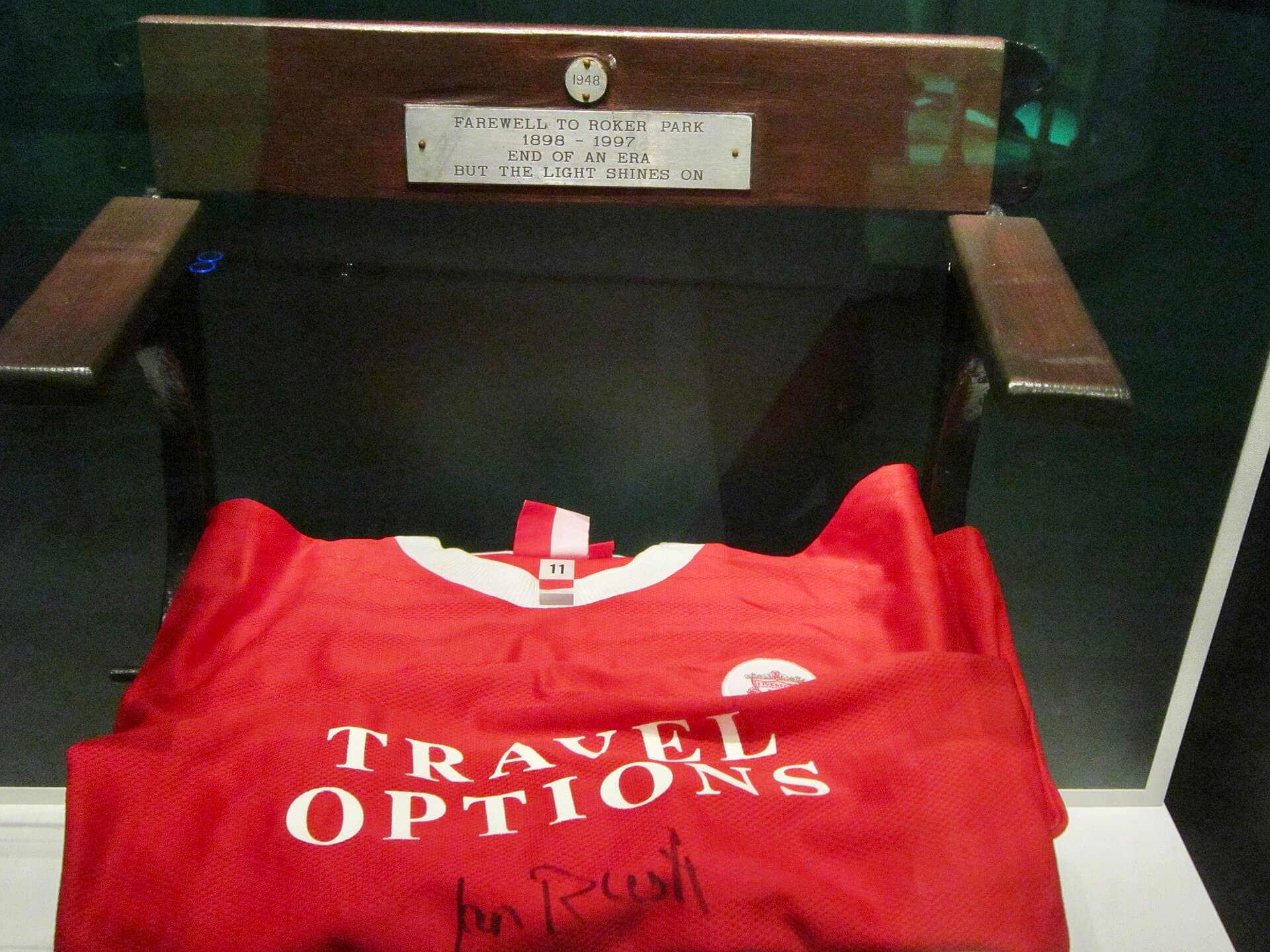 National Football MuseumInside the sloping glass wedge next to Manchester Cathedral sits the piece of pa2 minutes walk4.4
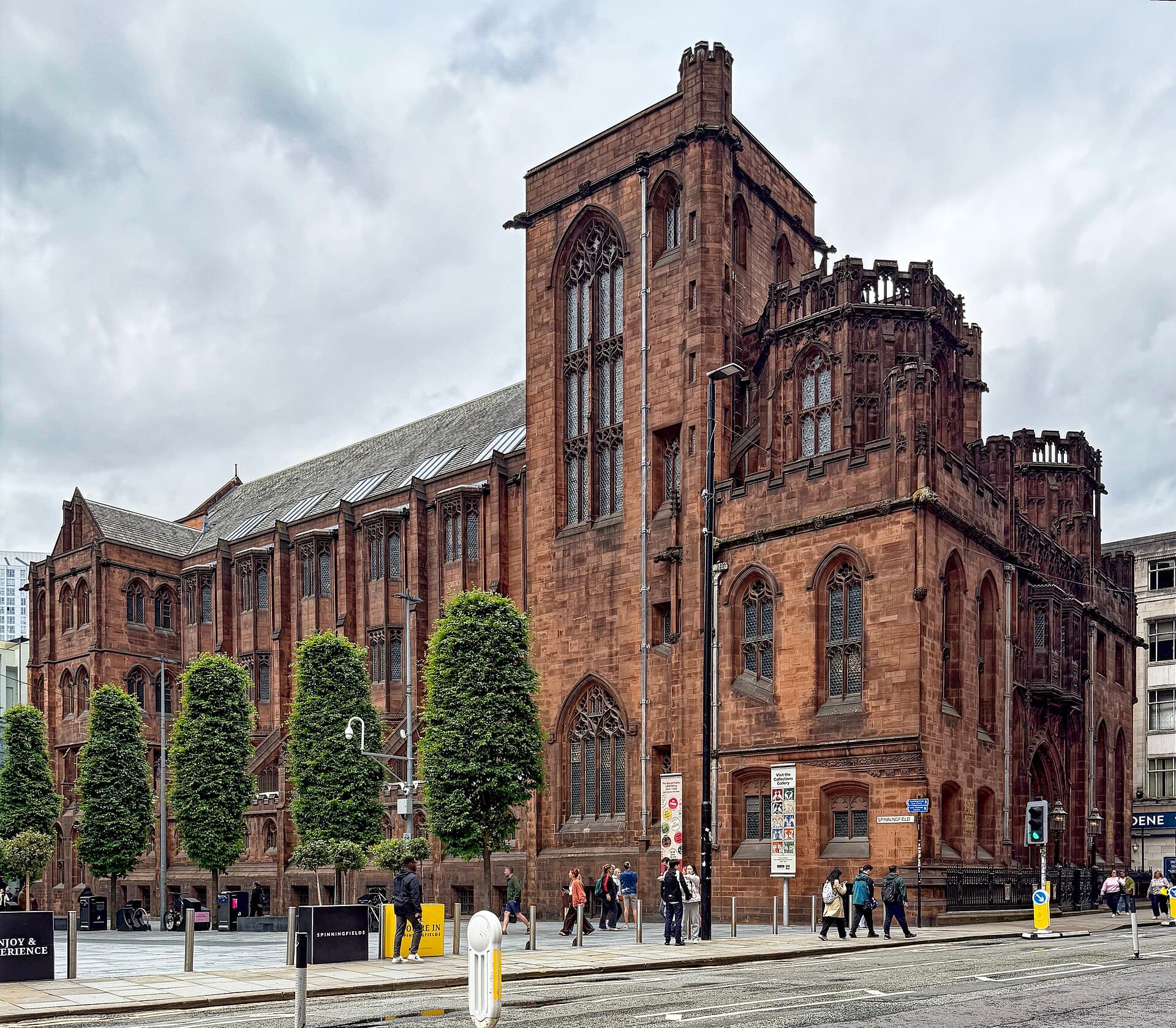 John Rylands LibraryHalfway along Deansgate, between the shops and restaurants, stands what looks li8 minutes walk4.9
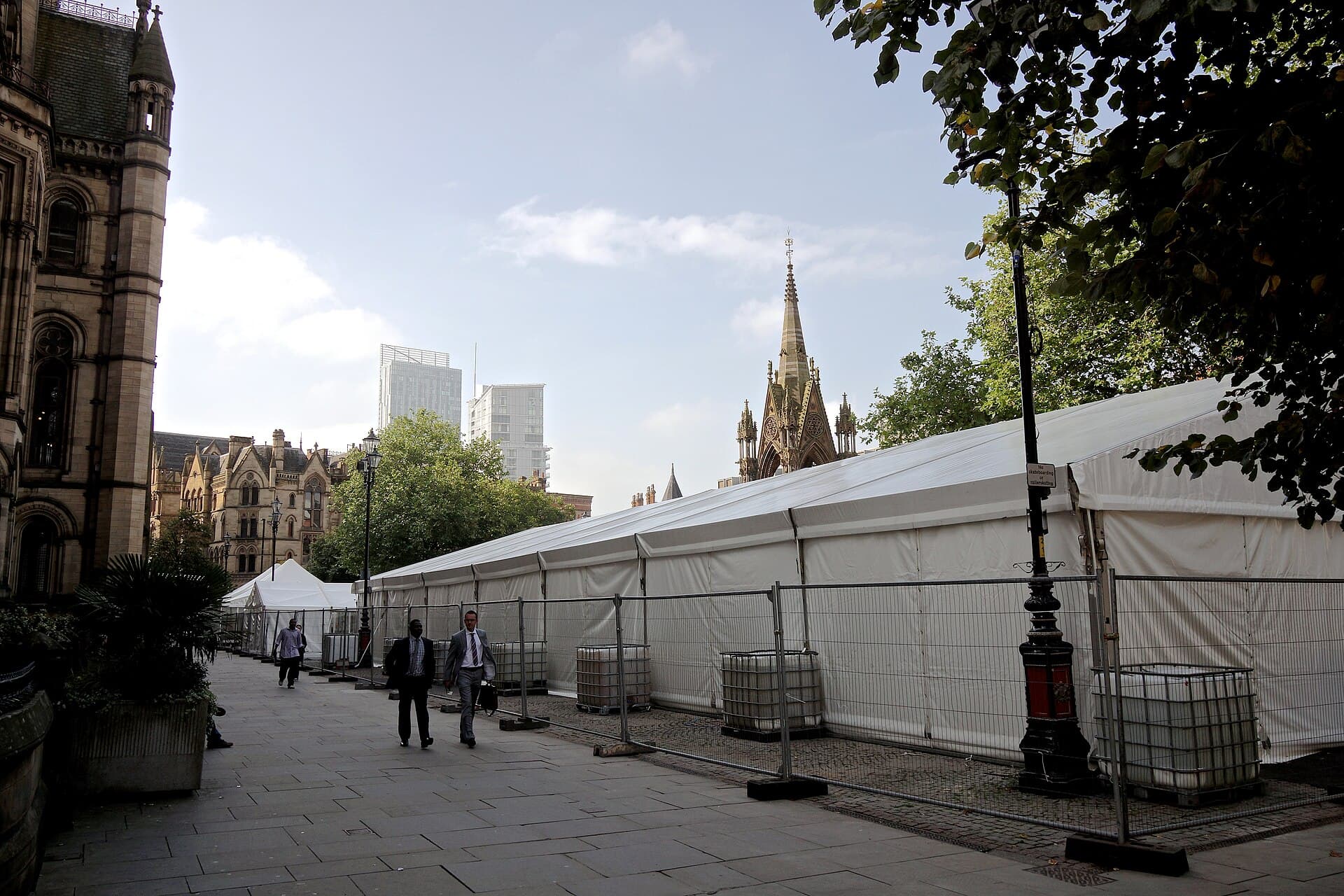 Albert SquareManchester got its Albert Memorial up years before London did. The Gothic canopy8 minutes walk4.3
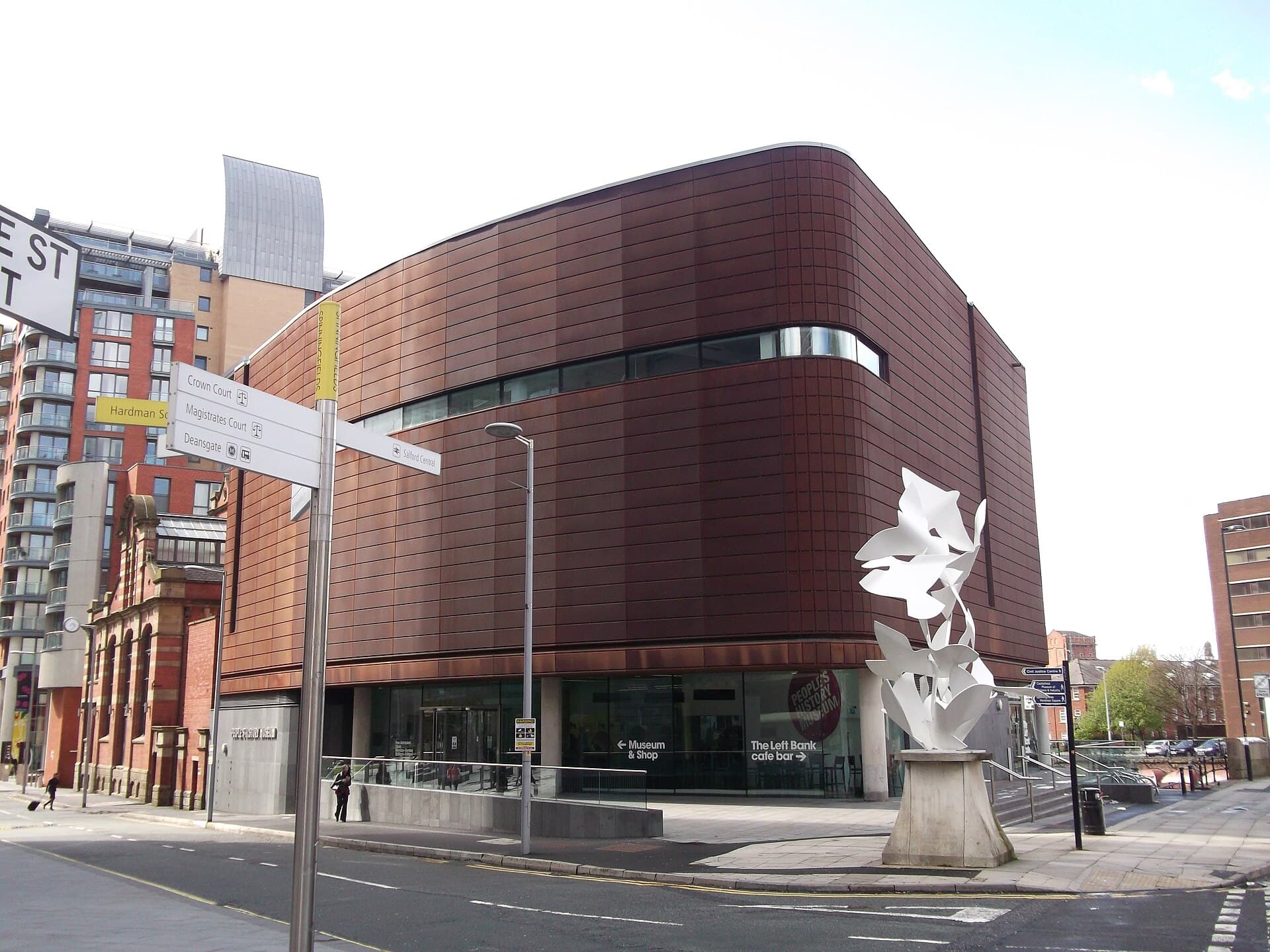 People's History MuseumThe largest collection of trade-union banners on earth, more than four hundred o9 minutes walk4.6
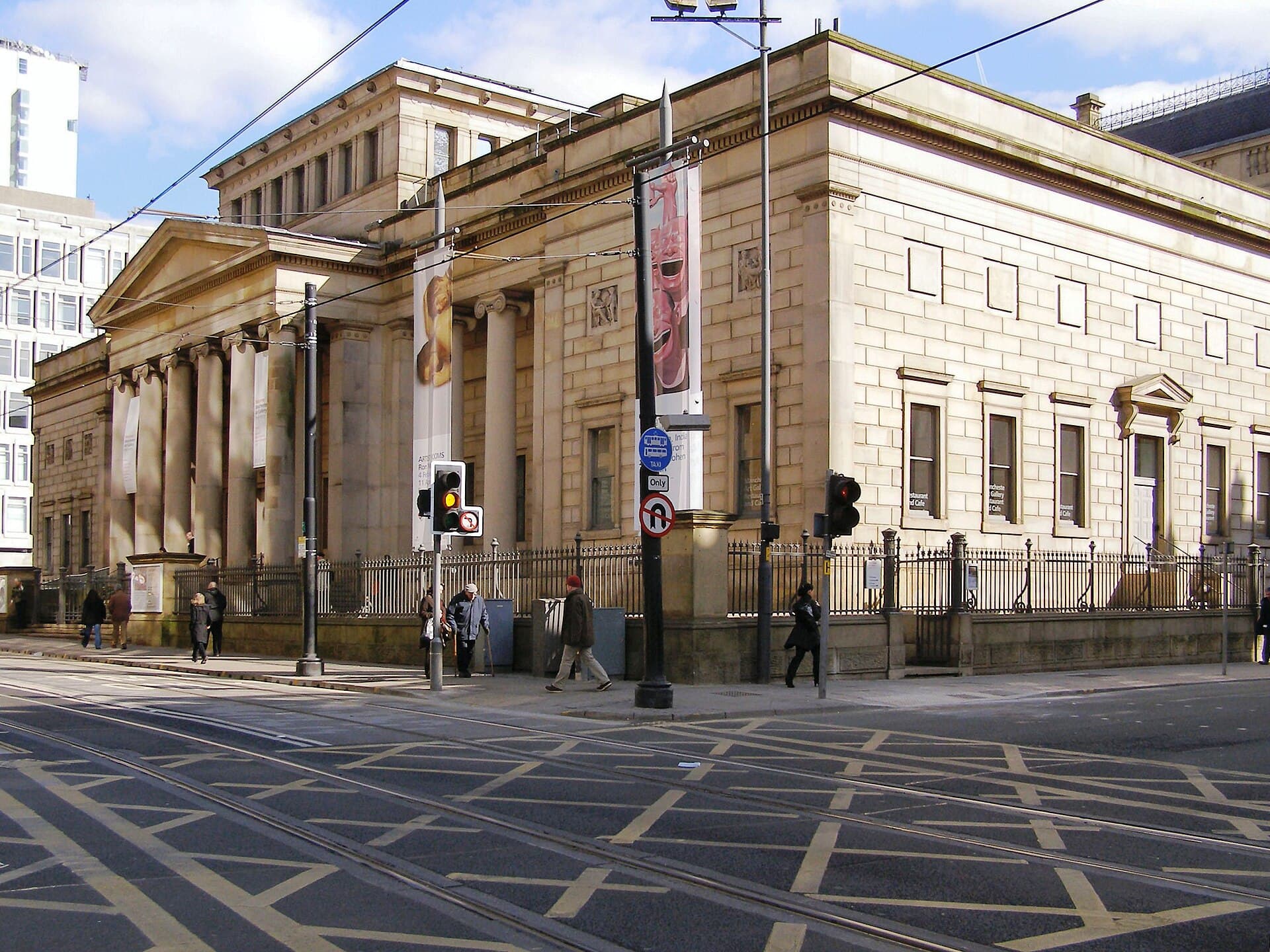 Manchester Art GalleryIn January 2018 this gallery took John William Waterhouse's 'Hylas and the Nymph10 minutes walk4.7
Do not make a trip of it, but do step in on the way past: it is free, level and pushchair-friendly, and twenty minutes counting the angels and hunting the carved beasts under the seats keeps small children busy. The Football Museum remains the main family stop; the cathedral is a short pause before or after.
Much smaller and less overwhelming: York needs half a day and a ticket, Liverpool's Anglican cathedral is vast and free. Manchester offers fine detail rather than scale, and its advantage is that it costs neither money nor extra time.