
The carved timber
Galleries and posts in the village tradition.
Chainwit. — CC BY-SA 4.0 · Rsandu — CC BY-SA 4.0 · Rsandu — CC BY-SA 4.0 · Rsandu — CC BY-SA 4.0
A strange and cheerful house in northern Bucharest: built in 1905 by the physician Nicolae Minovici in the shape of a Romanian peasant house — but at villa scale, with a tower, and executed with architectural precision. The idea was a statement. At a time when the Bucharest elite built exclusively in the French manner, Minovici chose carved timber, open galleries and the high roof of a village house, and filled it with what he had gathered from the countryside: rugs, costume, icons painted on glass, pottery and wooden implements. Minovici himself was an unusual figure — a forensic doctor, founder of Romania's first ambulance service, and one of three brothers who each left the city a museum. He gave the house and his collection to the state in 1937, in his own lifetime. **Small and a little way out of the centre**, but among the most personal houses in Bucharest, and the tower can be climbed.
Galleries and posts in the village tradition.
A distinctive Transylvanian tradition in the collection.
Strada Dr. Nicolae Minovici 1, Bucharest
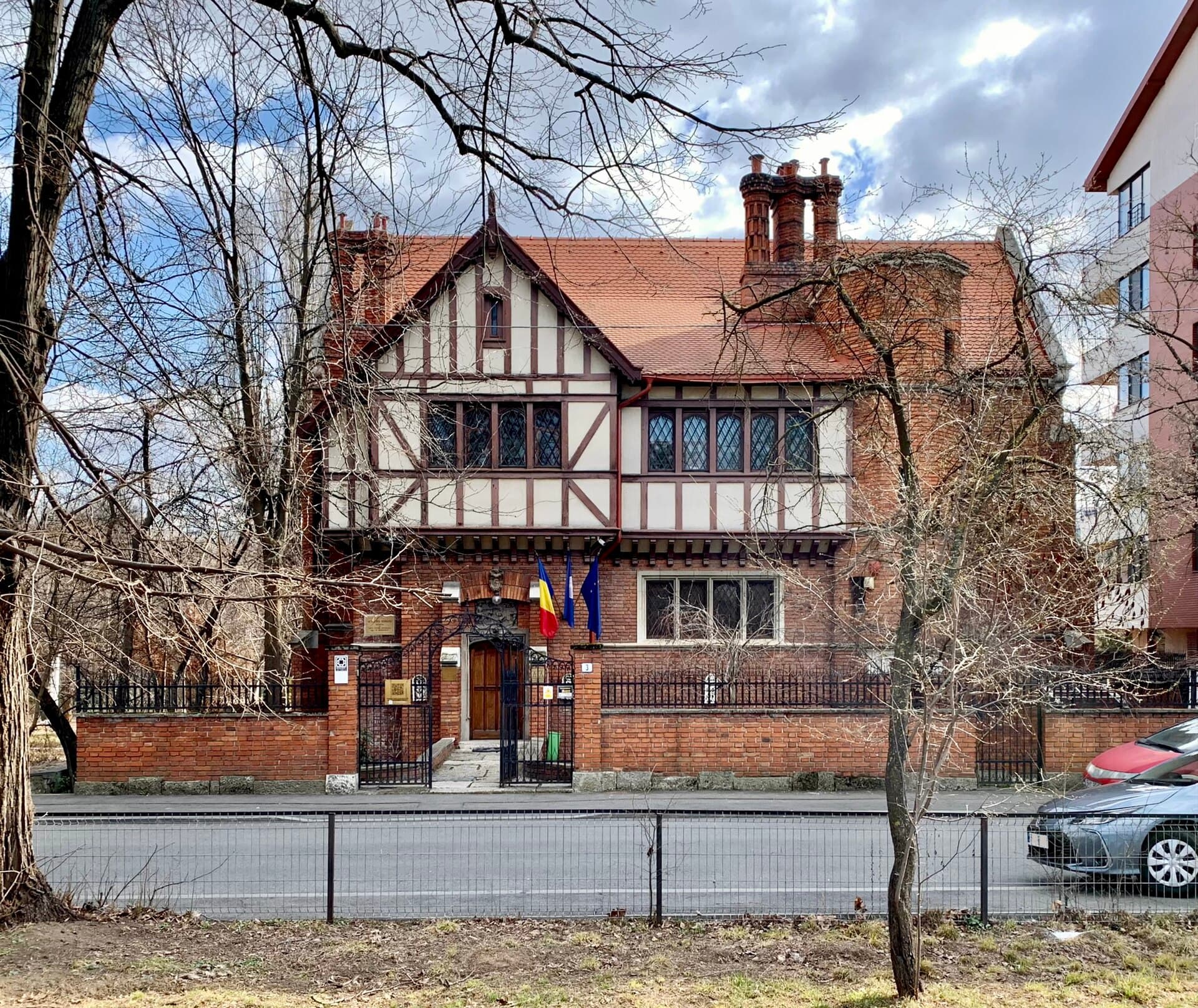 The Minovici Museum of Old Western ArtA museum in a villa in northern Bucharest showing the engineer Dumitru Minovici'1 minute walk4.8
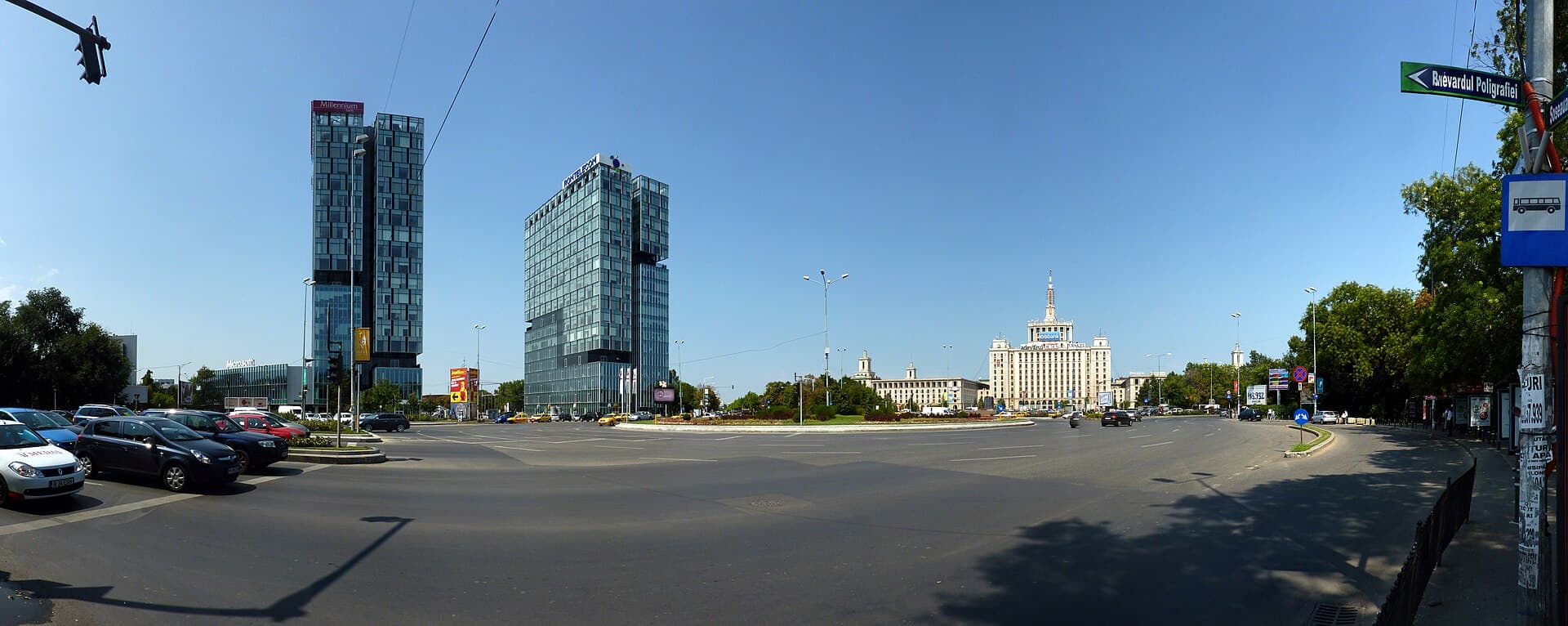 Casa Presei LibereA vast grey-fronted building with a central tower at the northern end of Kiselef6 minutes walk4.2
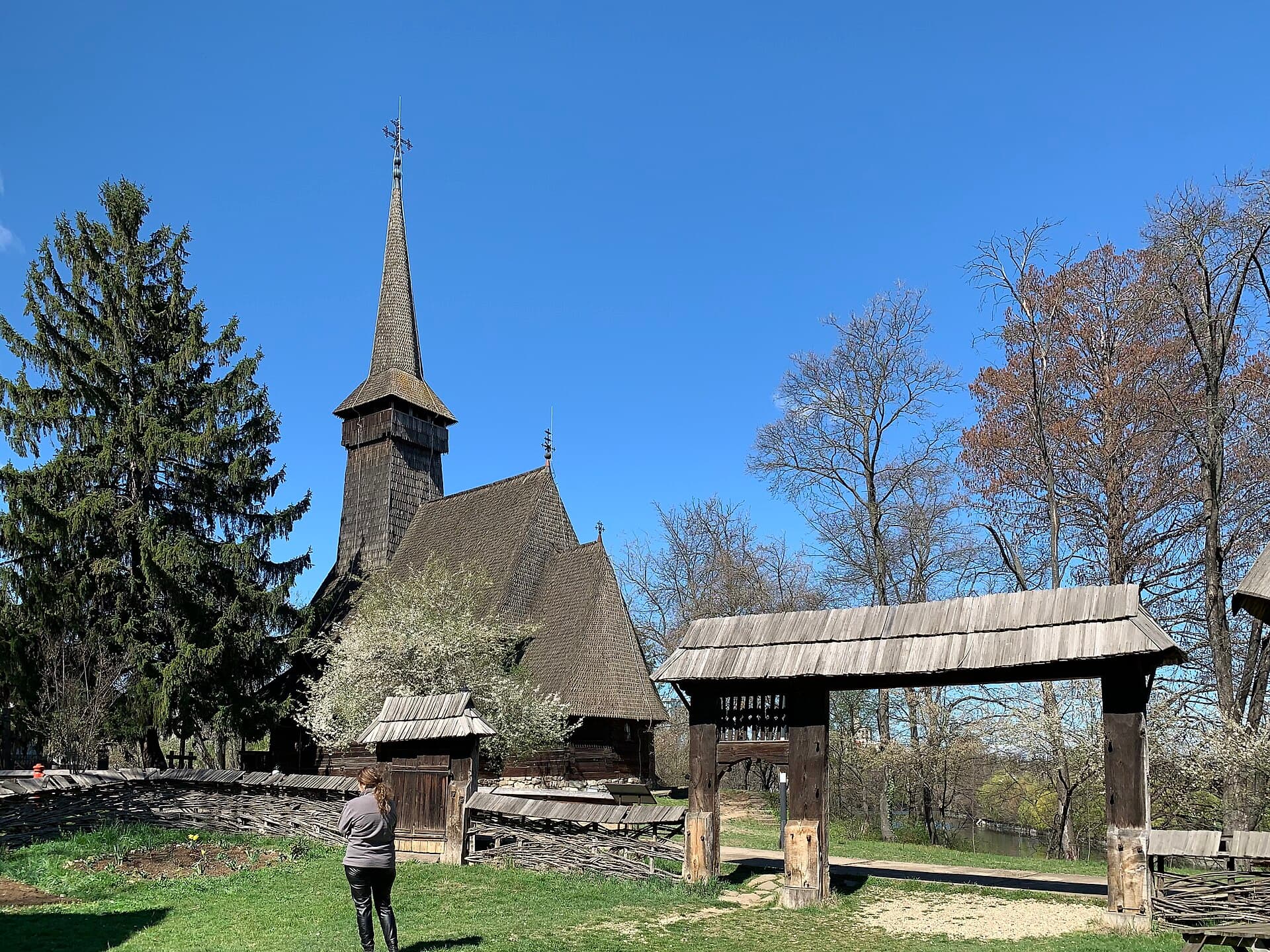 National Village MuseumA whole Romanian village on the shore of Lake Herăstrău: the Dimitrie Gusti muse15 minutes walk4.7
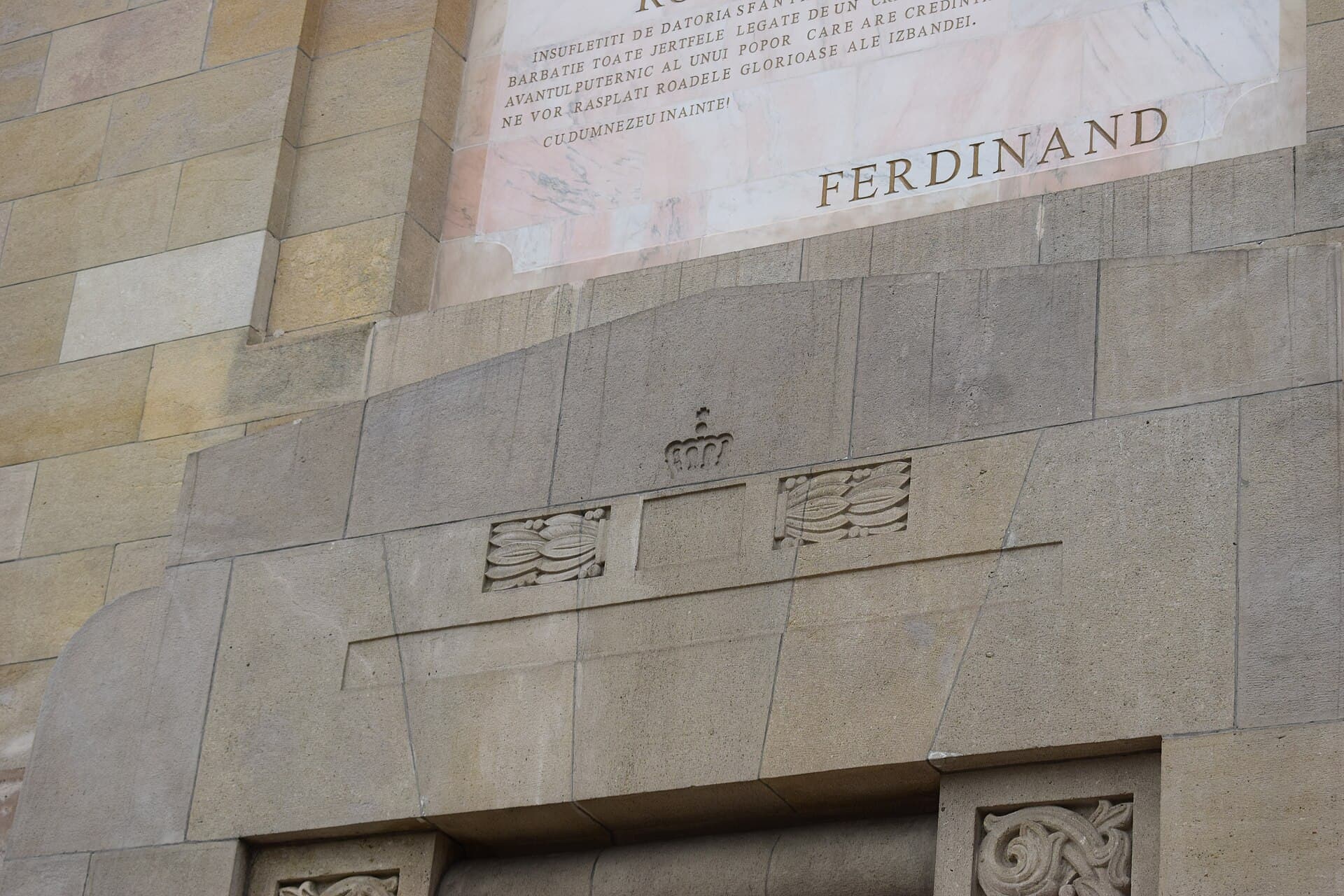 Arch of Triumph"Little Paris" with an arch of its own: the Arcul de Triumf stands mid-way along24 minutes walk4.6
A folk tradition that flourished in Transylvania from the eighteenth century: the image is painted on the back of the glass in reverse — details first, background last — so that seen from the front it is glossy and strongly coloured. They were painted by peasants rather than trained church painters, so the forms are simplified and the colours frank, closer to folk art than to the formal Byzantine icon. They hung in houses rather than churches. You see them here and in the Museum of the Romanian Peasant, and the best-known centres of production were villages around Sibiu and Brașov.