
Two iron bridges together
The old Maria Pia and the modern São João that replaced it in one frame.
Sergei Gussev — CC BY 2.0 · Sergei Gussev — CC BY 2.0 · Sergei Gussev — CC BY 2.0 · Sergei Gussev — CC BY 2.0
A viewing terrace in the Fontainhas district east of central Porto, looking over the Douro valley and the iron Dona Maria Pia bridge designed by Gustave Eiffel's office in 1877. What sets it apart from Porto's other viewpoints is the angle: from here you see the river from the east where its banks narrow between steep slopes, and two iron bridges side by side — the old Maria Pia, now out of service, and the modern São João that replaced it. The view is industrial and natural at once, and quite unlike the touristic Ribeira scene. The district itself is residential and working class and not touristic at all, which is part of its value: you walk the Porto people live in rather than the one that gets photographed. The route here descends sharply, so mind the climb on the way back. The place is free and always open, and far quieter than Jardim do Morro or the Serra do Pilar monastery at sunset. Anyone wanting the view without the crowd comes here.
The old Maria Pia and the modern São João that replaced it in one frame.
A residential working-class district — you walk the city people live in.
Far quieter than Jardim do Morro or Serra do Pilar at sunset.
Fontainhas district, east of central Porto
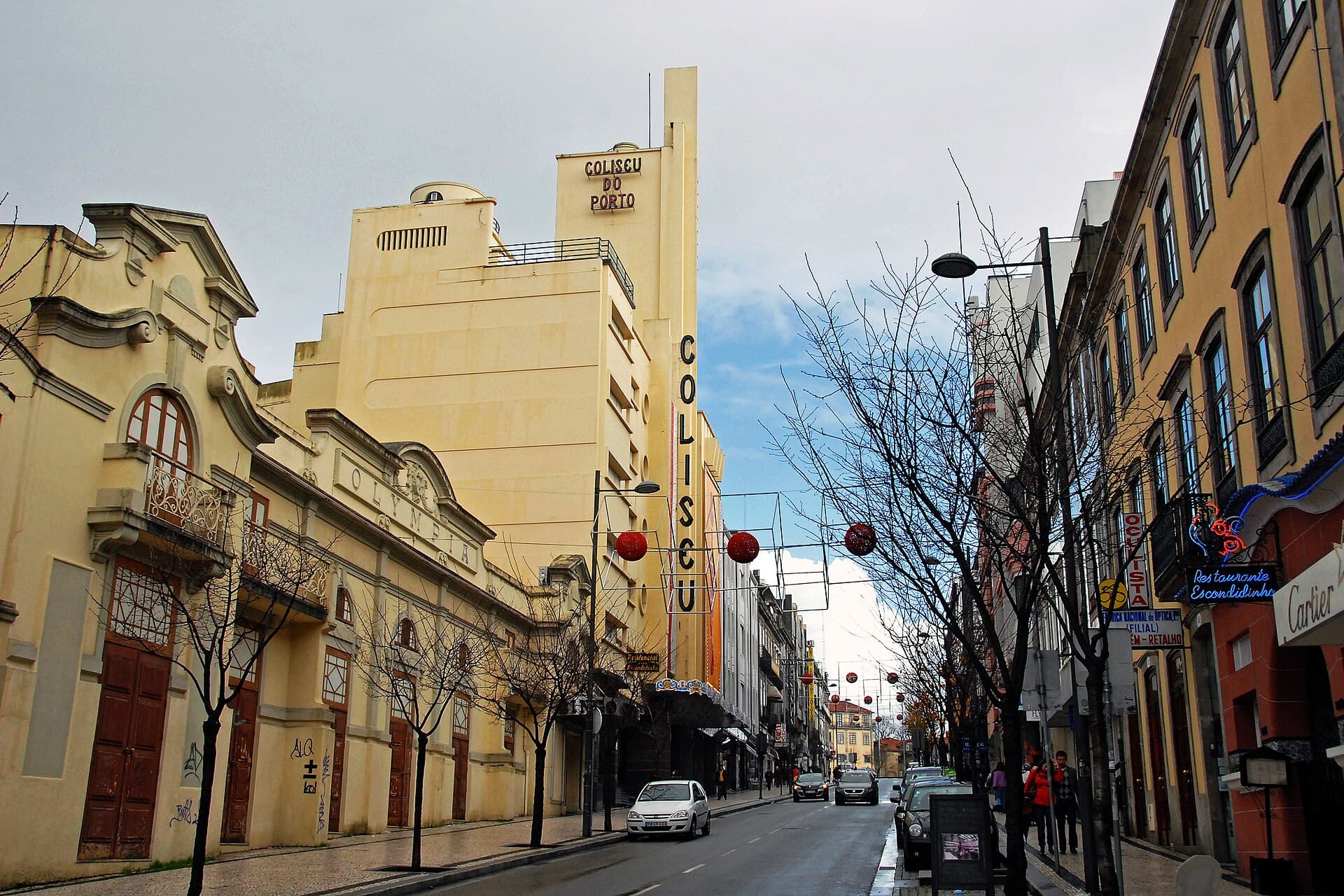 Coliseu do PortoA performance hall from 1941 in central Porto, among the city's most important e8 minutes walk4.4
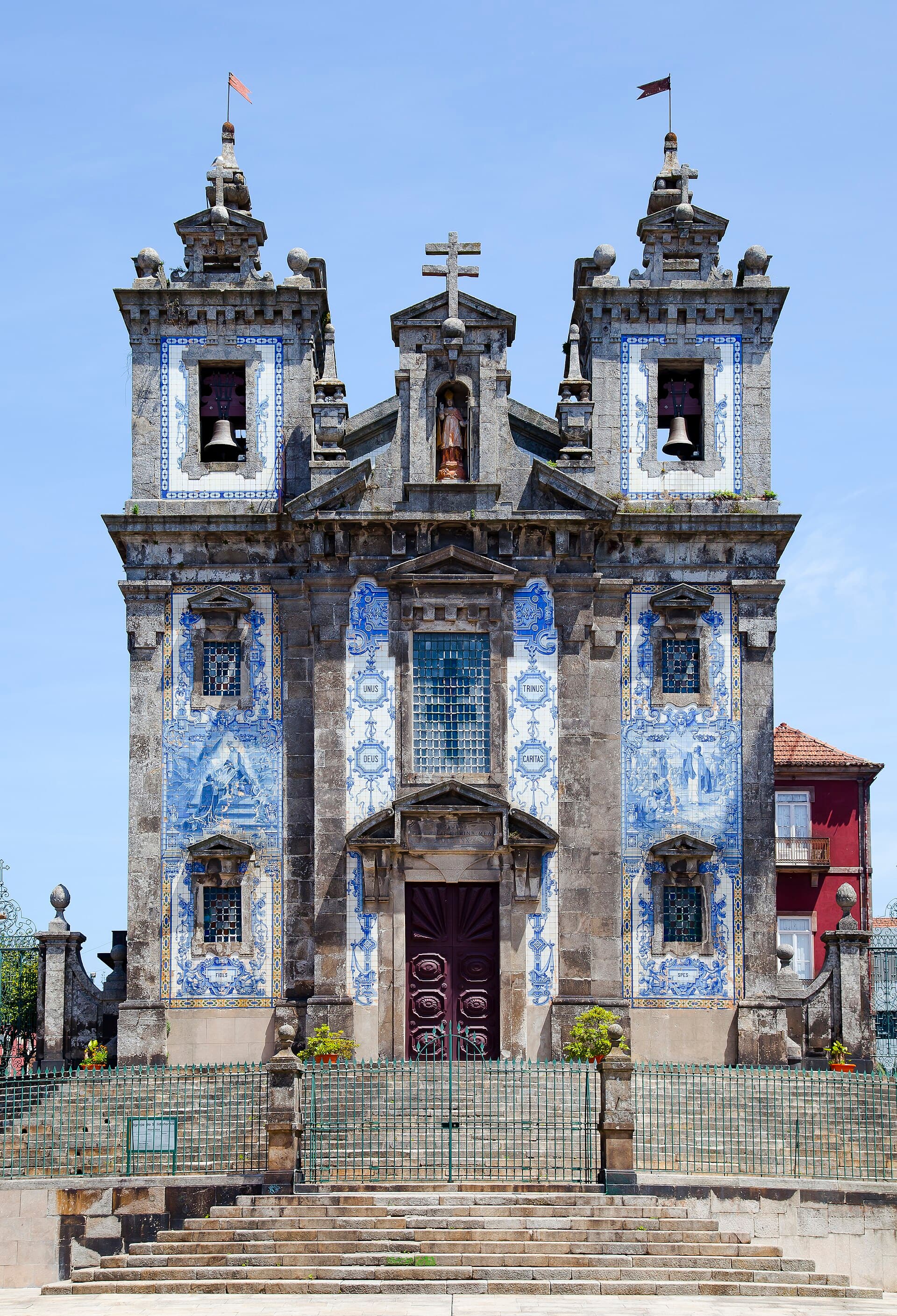 Church of Santo IldefonsoAn eighteenth-century church at the top of Rua de Santa Catarina, best known for8 minutes walk4.4
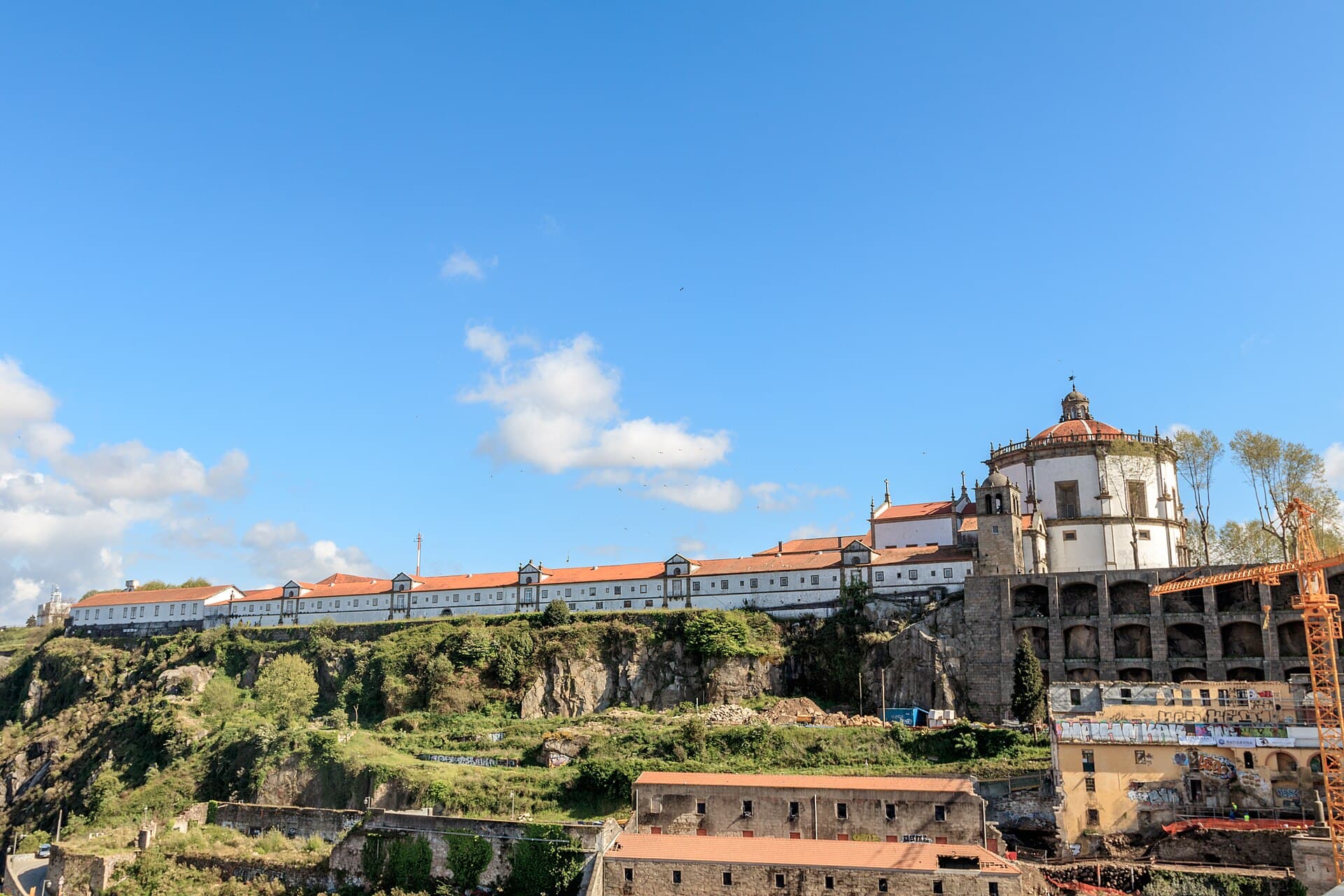 The Gaia Bank & Serra do PilarGaia is Porto's other half, the one that made its name: along its southern bank 9 minutes walk4.9
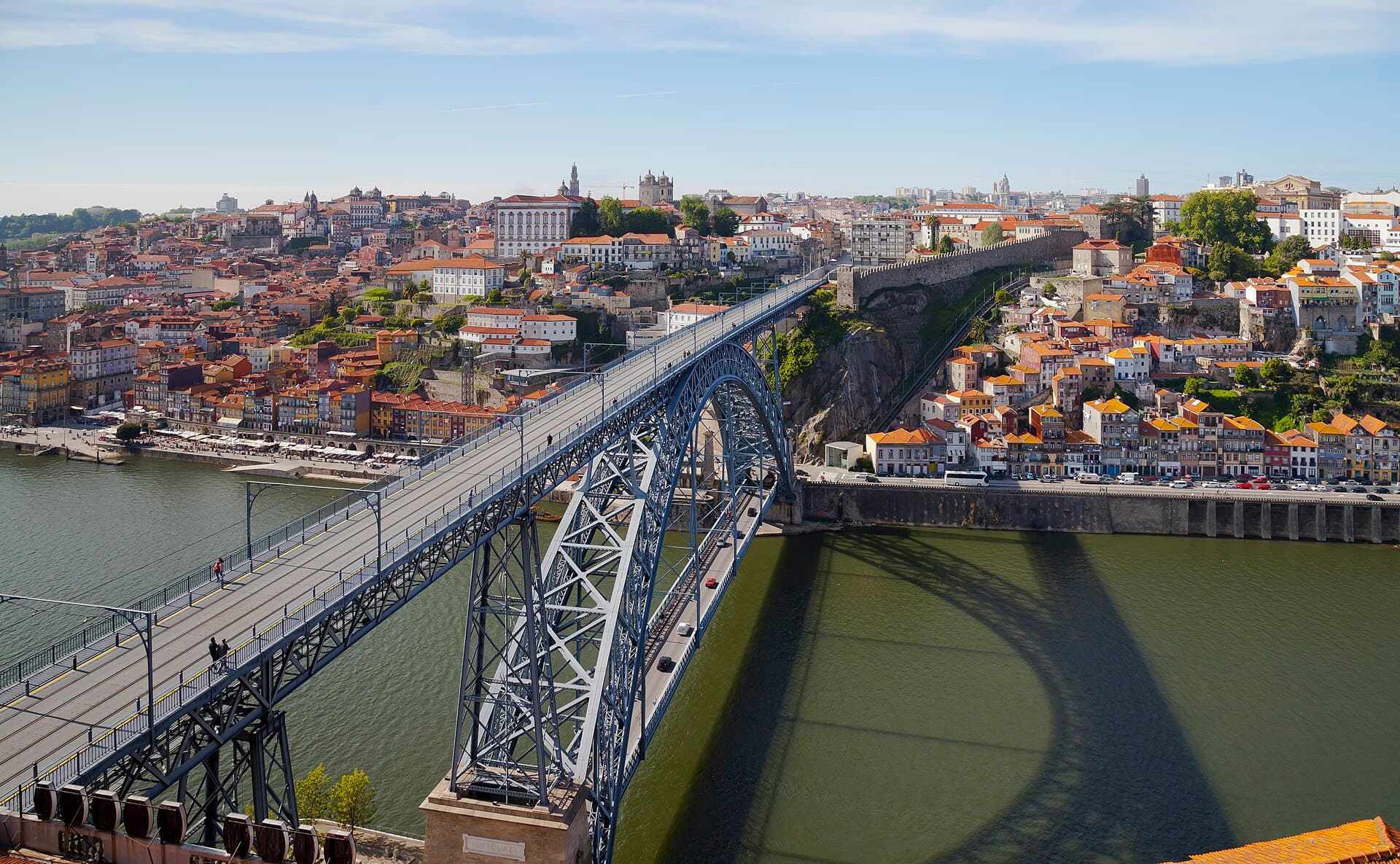 The Dom Luís I BridgeThe Luís I is Porto's famous iron arch: 172 metres, the world's longest metal ar10 minutes walk4.9
 São Bento StationSão Bento is the world's most beautiful rail hall by standing nomination: a 191611 minutes walk4.8
Jardim do Morro gives the famous view: the Ribeira, the Dom Luís bridge and central Porto. Fontainhas gives a quite different angle from the east: the narrow valley and the two iron bridges, with almost no crowd. If you have seen the first, the second adds something new rather than repeating it.
Fontainhas is an ordinary residential district, and walking it by day is no different from any other Porto neighbourhood. As in any city, watch your belongings and avoid empty lanes at night. Remember people live here, so respect the quiet of the streets.