
Four gates named for metals
Golden, Silver, Iron and Brass — one for each side.
Frombowen — CC BY-SA 4.0 · Falk2 — CC BY-SA 4.0 · Berthold Werner — CC BY-SA 4.0 · Falk2 — CC BY-SA 4.0
The southern gate of Diocletian's Palace in Split, and the smallest and plainest of its four — because it was never a ceremonial entrance. The four gates were named for metals: the Golden to the north, the Silver to the east, the Iron to the west and the Brass to the south. The first three open onto land; this one alone opened directly onto the sea. That explains its function: in the fourth century the water reached the southern wall, so this was the service entrance — goods and supplies were carried through it from boats into the palace cellars. Neither the emperor nor official visitors passed this way. Today it opens onto the preserved substructures beneath the palace, among the best-surviving late Roman architecture anywhere — they survived because they were used as a rubbish dump for centuries, then cleared in the twentieth century and found intact. Passing through the gate is free; the cellars are ticketed.
Golden, Silver, Iron and Brass — one for each side.
Used for rubbish for centuries, then cleared and found intact.
The water reached the southern wall in the fourth century.
The southern wall of Diocletian's Palace, Split
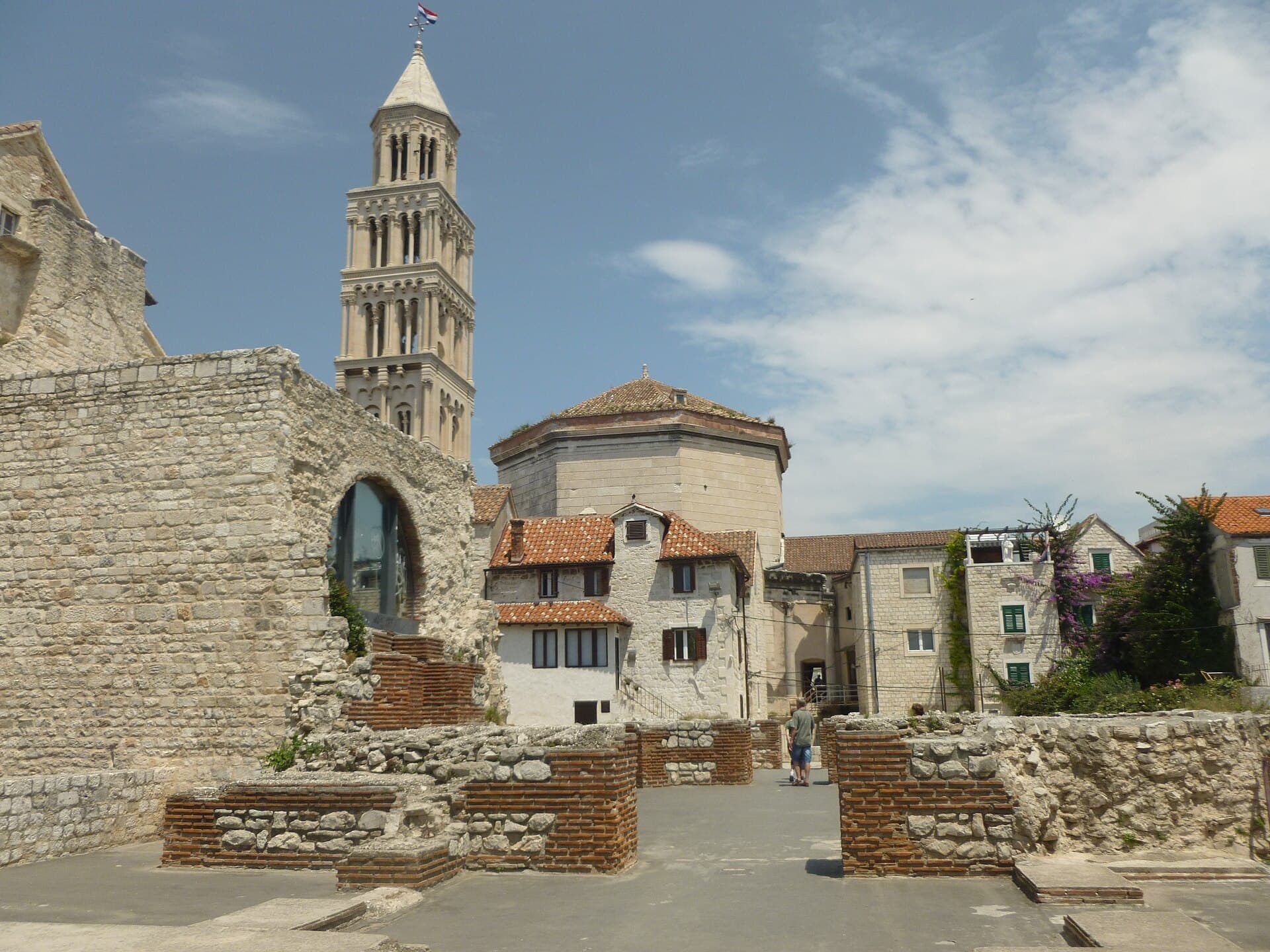 The Imperial TricliniumA hall in the substructures of Diocletian's Palace known as the triclinium — the1 minute walk4.5
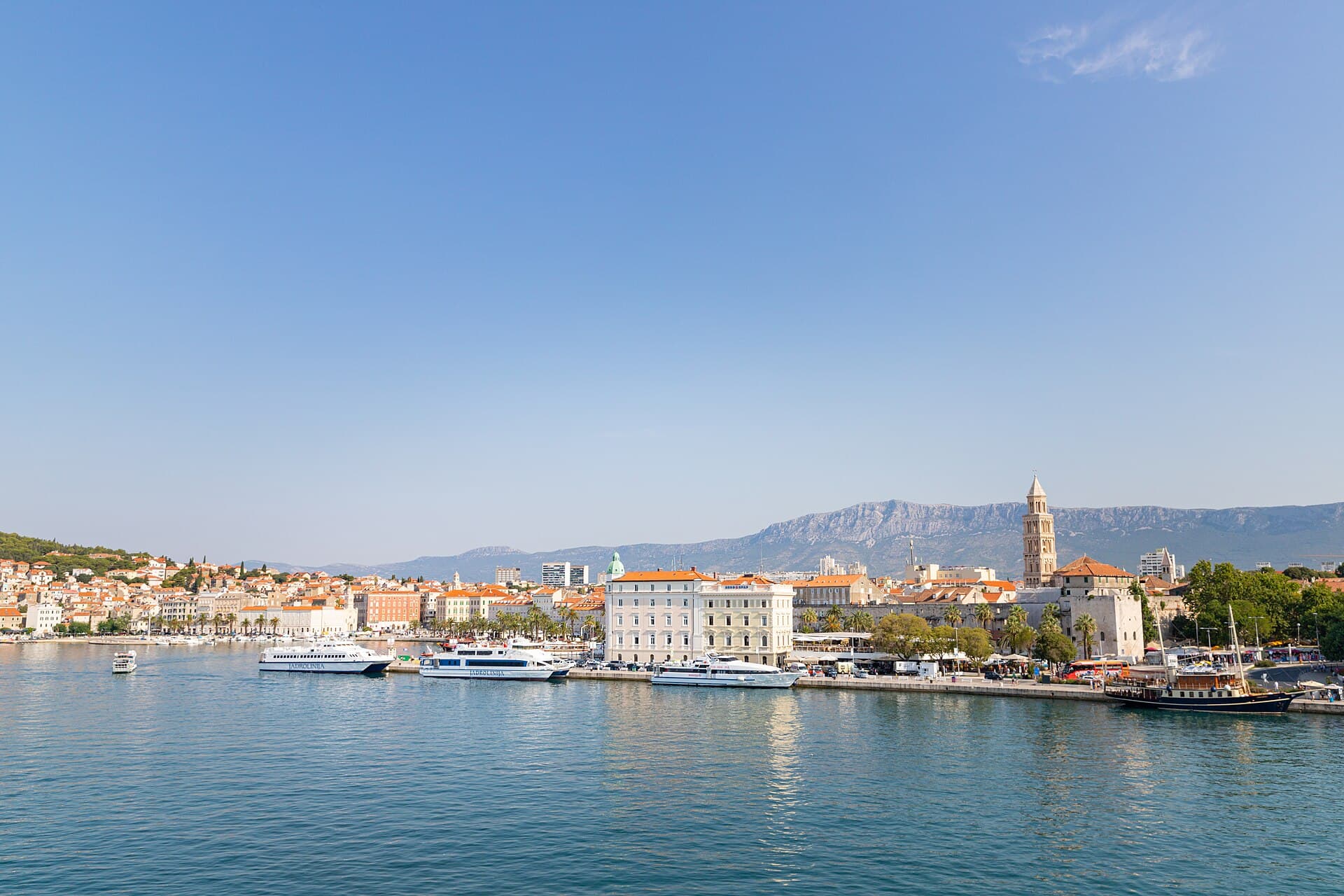 The Riva & Old Town SquaresThe Riva is Split's living room: the marble palm promenade along the palace's wh1 minute walk4.6
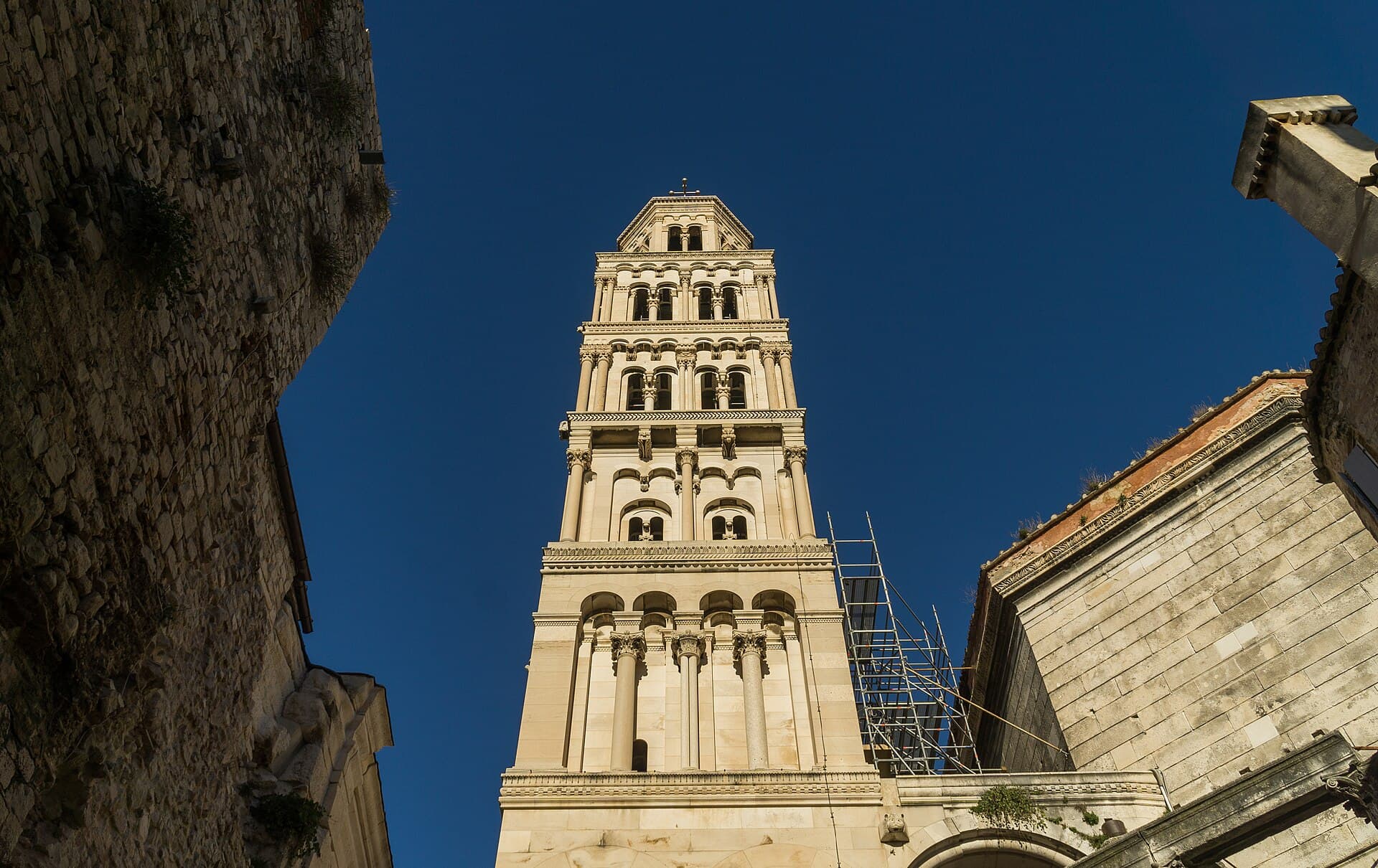 St. Domnius Cathedral & Jupiter's TempleSt. Domnius is history's quiet revenge: the mausoleum of Diocletian — the Christ1 minute walk4.7
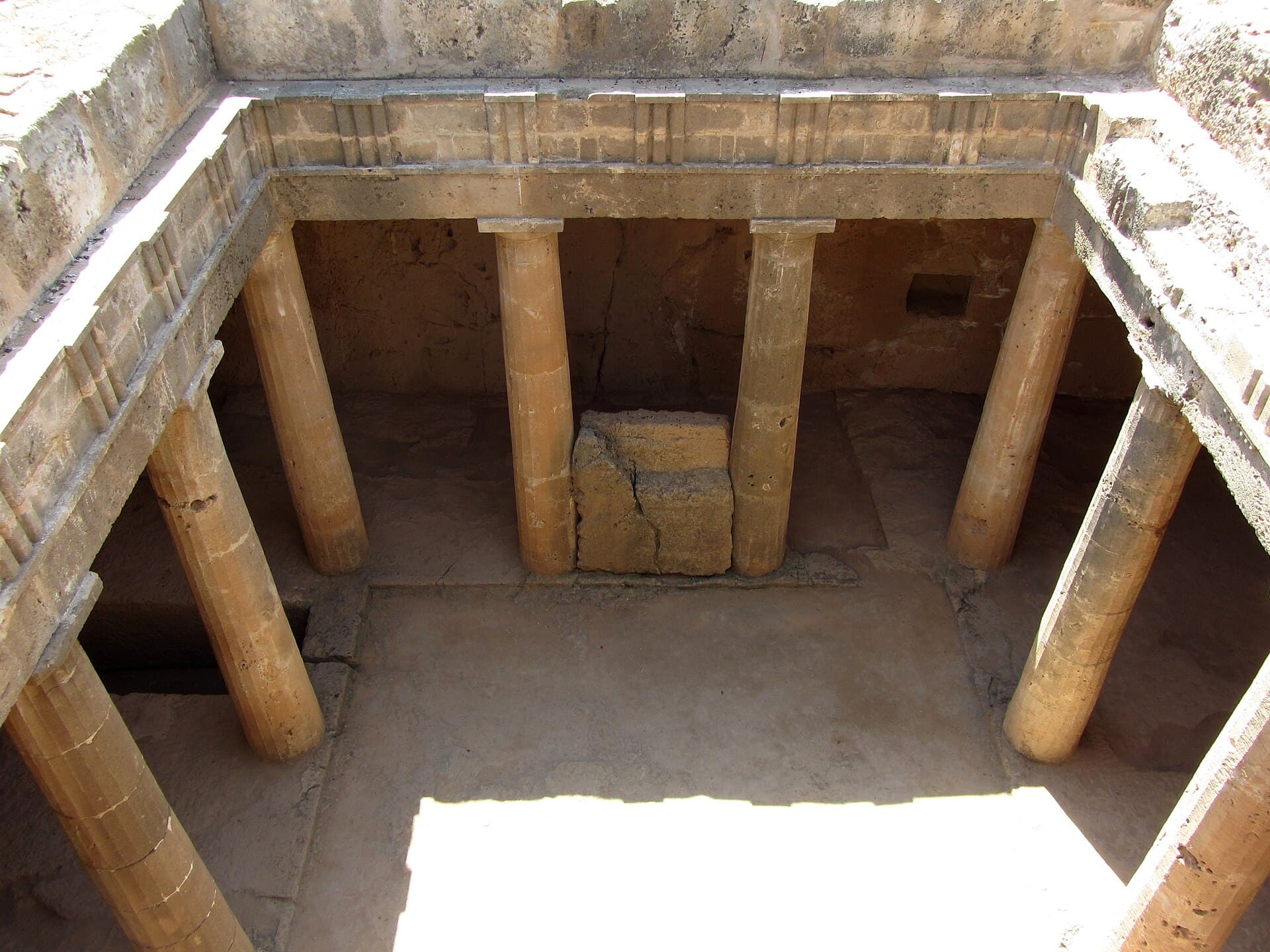 The PeristyleThe Peristyle is the central court of Diocletian's Palace: a rectangular space e1 minute walk4.3
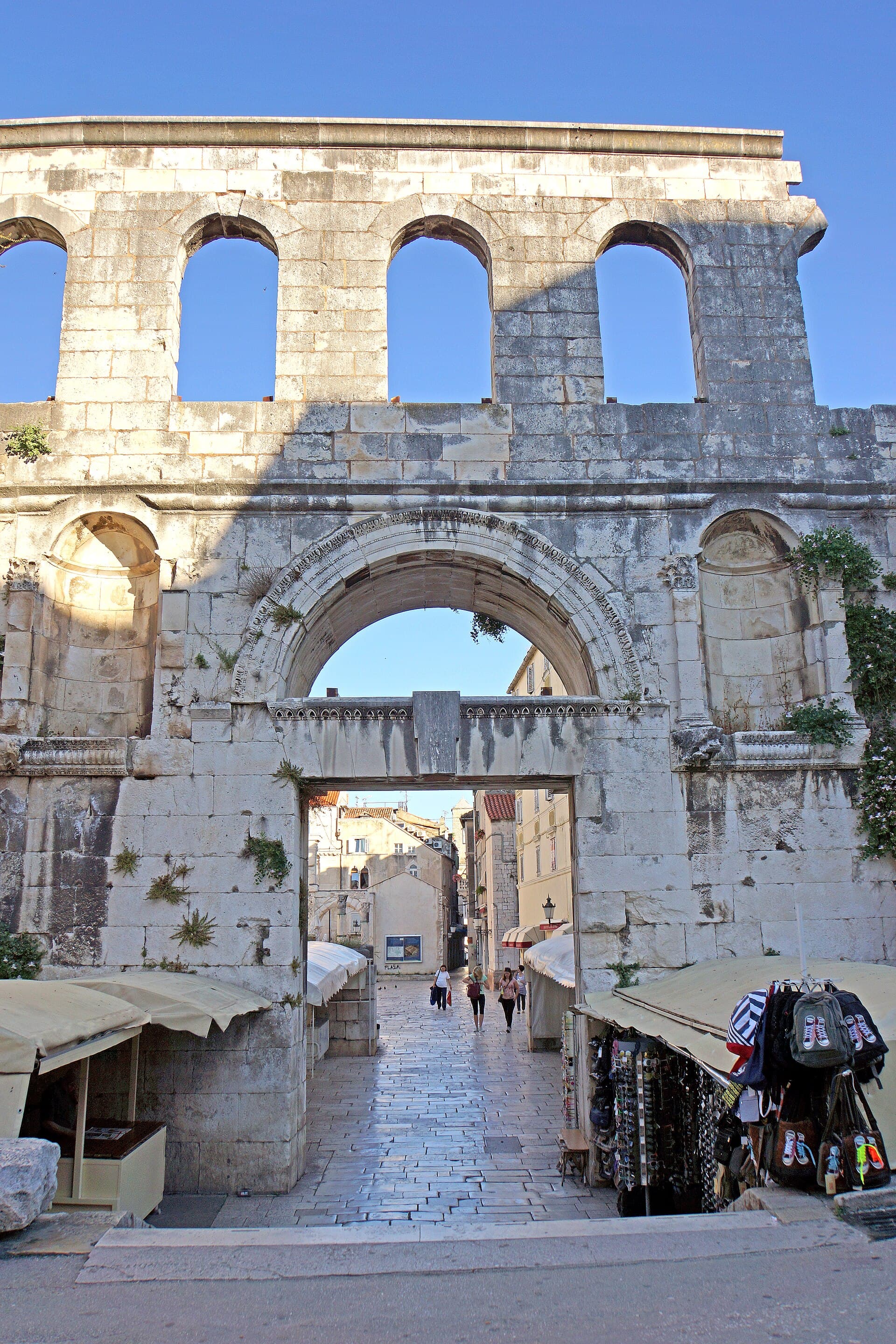 The Silver Gate and Eastern WallThe eastern gate of Diocletian's Palace and the wall it stands in, at the end ov1 minute walk4.6
A palace built by the Roman emperor Diocletian around AD 300 as his retirement home — he was almost the only emperor to abdicate voluntarily. It covers some thirty thousand square metres. What makes it unique is that it never became a ruin: after Rome fell, local people took refuge inside its walls and built their houses between its columns, so the palace became a town. Thousands live inside it today among shops and restaurants — you walk through inhabited Roman streets.
The Golden Gate to the north is the largest and most decorated, with Meštrović's huge statue of Gregory of Nin in front of it — visitors rub its toe for luck until it shines. The Silver to the east opens onto the market. The Brass to the south is nearest the waterfront and the cellars. Enter by the Golden and leave by the Brass to cross the whole palace.