
Which layer gets shown?
Removing what was built over the gate was a modern decision, still debated.
Dennis G. Jarvis — CC BY-SA 2.0 · Dennis G. Jarvis — CC BY-SA 2.0 · Falk2 — CC BY-SA 4.0 · Fred Romero from Paris, France — CC BY 2.0
The eastern gate of Diocletian's Palace and the wall it stands in, at the end overlooking Split's open market. This gate's story explains something about how the palace lived: it was walled up in the Middle Ages and houses and a church were built over and around it, and it disappeared from view for centuries. It was uncovered only after the Second World War, when the buildings attached to the eastern wall were demolished in extensive restoration and the gate reappeared. That means what you see today is a modern decision: choosing to reveal the Roman layer by removing what was later built over it. That decision is permanently debated at sites like this — which layer gets shown when all of them are history. Immediately outside the gate is Split's open market, a working daily market for fruit and vegetables used by residents. Passing through is free and the wall is part of the city, and walking along it is the best place to grasp the palace's scale.
Removing what was built over the gate was a modern decision, still debated.
Fruit and vegetables used by residents — best in the morning.
The best place to grasp the palace's actual scale.
The eastern wall of Diocletian's Palace, Split
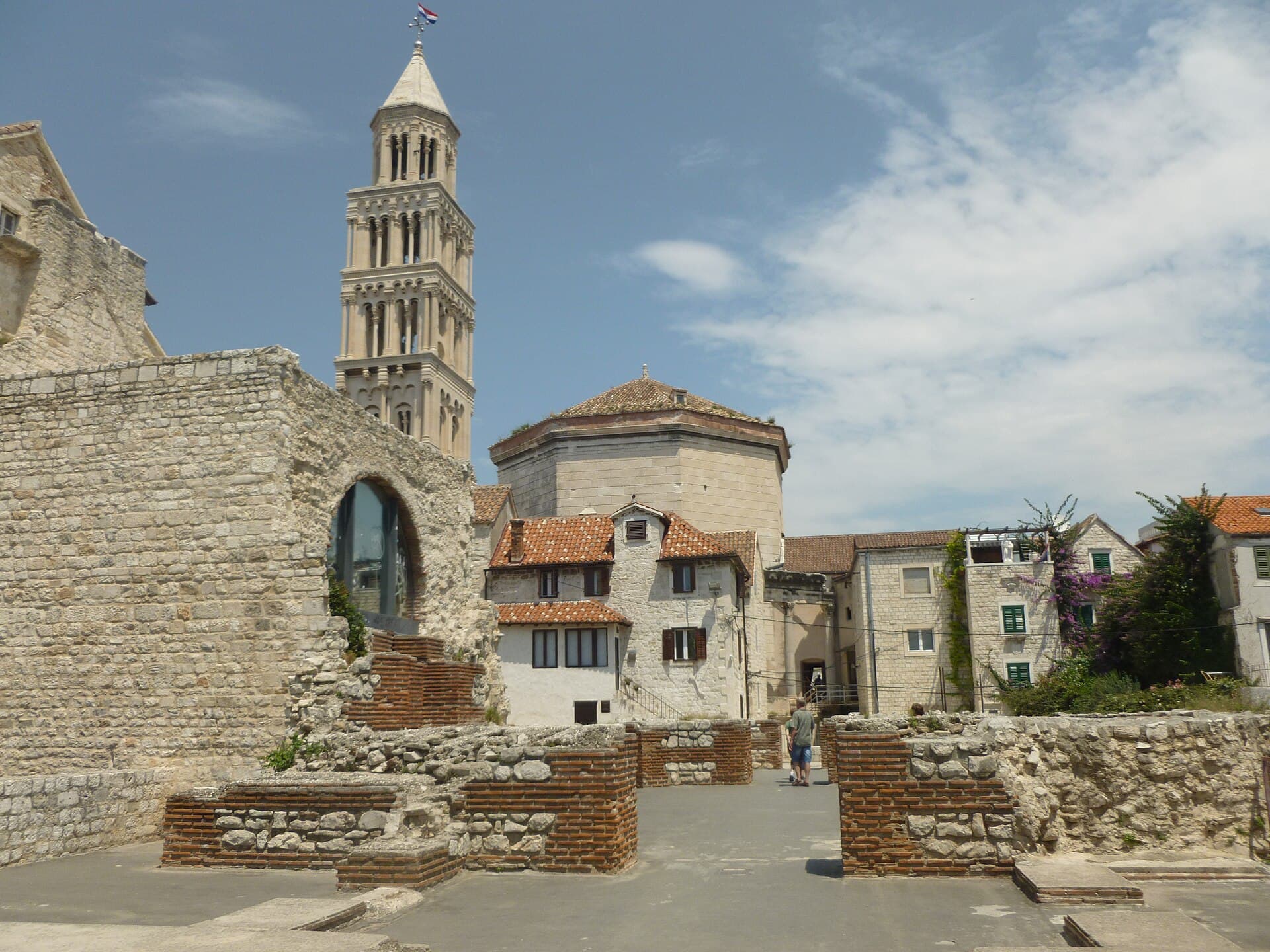 The Imperial TricliniumA hall in the substructures of Diocletian's Palace known as the triclinium — the1 minute walk4.5
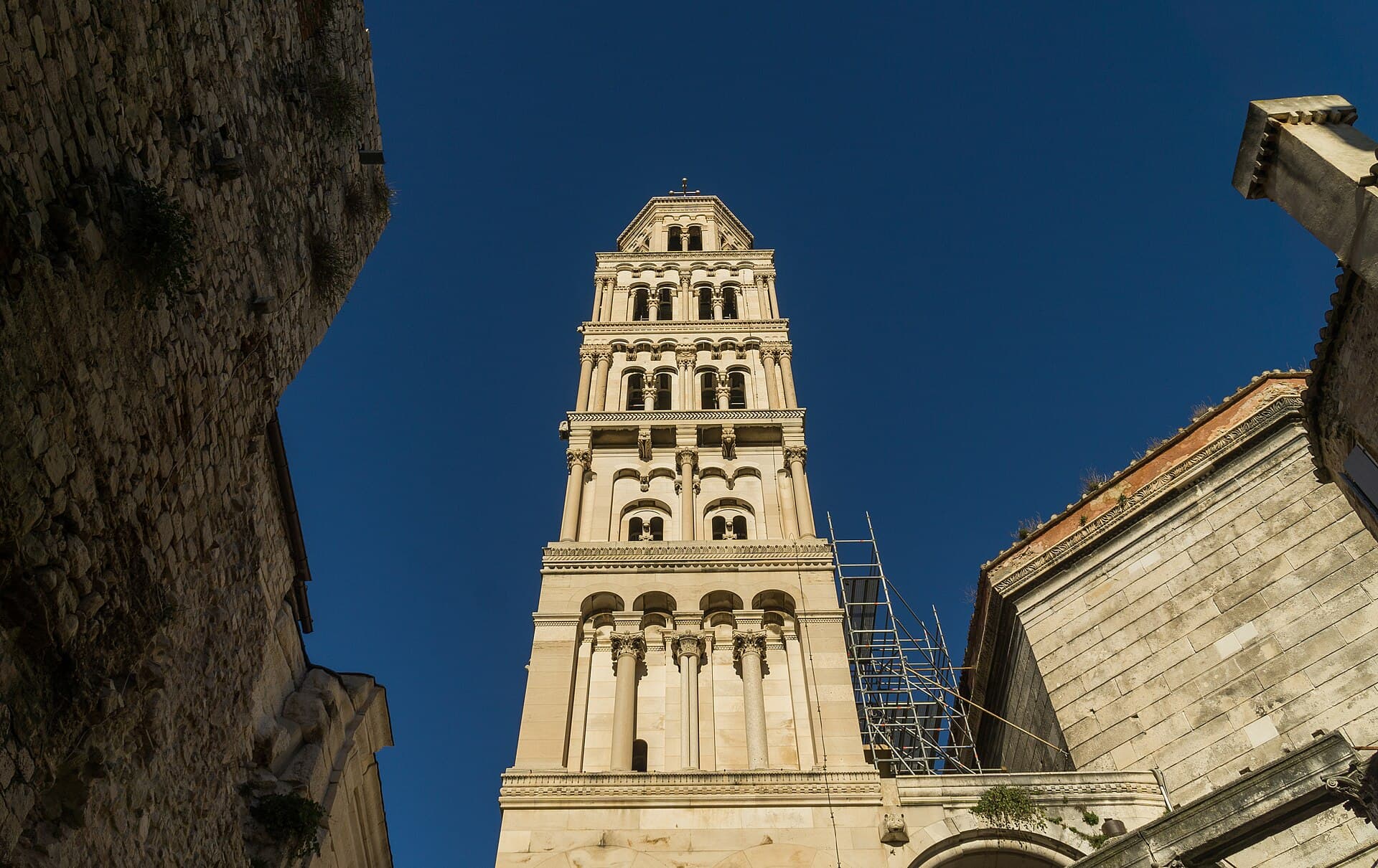 St. Domnius Cathedral & Jupiter's TempleSt. Domnius is history's quiet revenge: the mausoleum of Diocletian — the Christ1 minute walk4.7
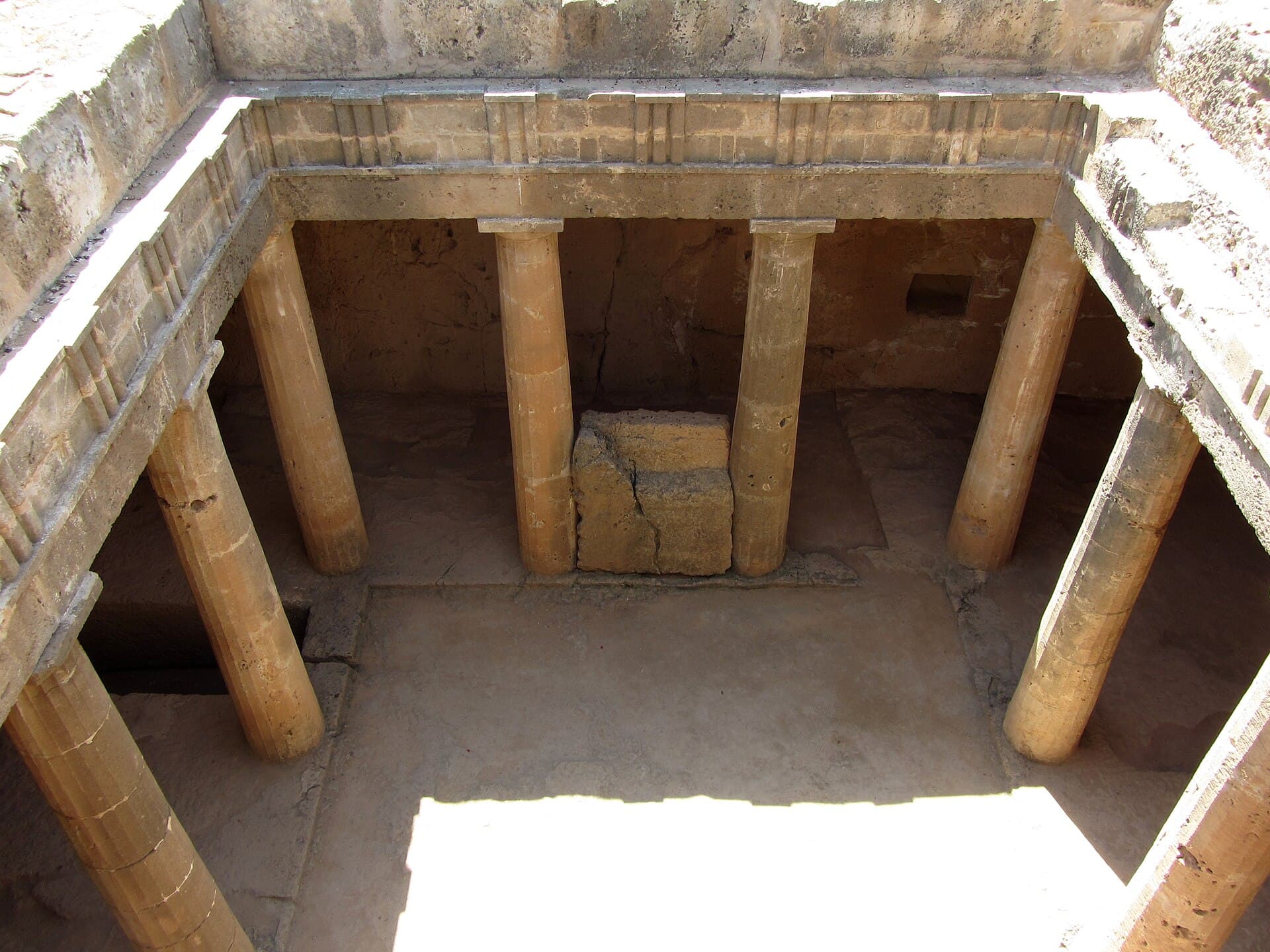 The PeristyleThe Peristyle is the central court of Diocletian's Palace: a rectangular space e1 minute walk4.3
 Marulić PalaceA historic house in old Split associated with the Marulić family, which produced1 minute walk4.4
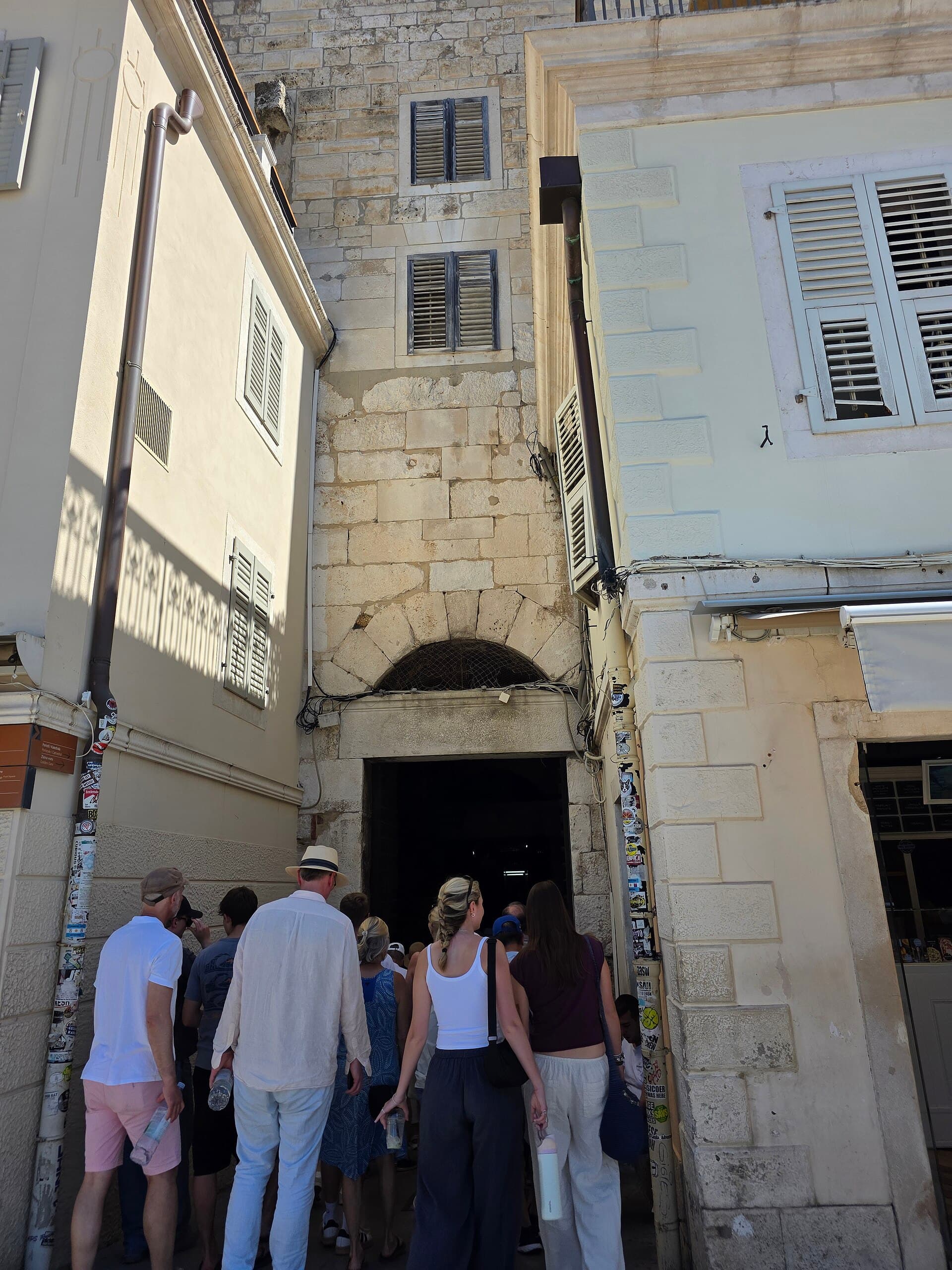 The Brass GateThe southern gate of Diocletian's Palace in Split, and the smallest and plainest1 minute walk4.4
Because what was built over the palace across fifteen centuries is history too: medieval houses, churches and shops built using Roman stone. When these are demolished to reveal the Roman layer, one narrative is chosen over others. Modern conservation practice tends towards leaving all the layers visible rather than cleaning a site back to one period — but mid-twentieth-century restorations did not work on that principle.
Early morning to around midday, as it is a genuine farmers' market rather than a tourist one. Most stalls are dismantled in the afternoon. It sells seasonal Dalmatian produce, olive oil, dried figs and lavender from the island of Hvar — things genuinely worth buying rather than only looking at.