
The granite columns
Egyptian-sourced Corinthian columns around the court.
TimeTravelRome — CC BY 2.0 · TimeTravelRome — CC BY 2.0 · TimeTravelRome — CC BY 2.0 · Ante Perkovic — CC BY-SA 3.0
The Peristyle is the central court of Diocletian's Palace: a rectangular space enclosed by Corinthian columns of granite, and the place where the emperor appeared to his subjects — standing at the southern end while those in the court below prostrated themselves. The columns are not local: they were brought from Egypt, as was the black sphinx that has sat at the edge of the square for some three and a half thousand years — carved under Thutmose III, then moved here at the start of the fourth century AD to ornament a Roman emperor's palace. It is now among the oldest visible objects in Croatia. What distinguishes the Peristyle is that it never became a ruin: people still live in the palace and walk through it daily, and have done without interruption for seventeen centuries. You sit on its steps in the evening among the cafes with the cathedral tower above you — the tower over what was Diocletian's own mausoleum, the emperor who persecuted Christians and whose tomb became their church.
Egyptian-sourced Corinthian columns around the court.
Among the oldest visible objects in Croatia.
Diocletian's Palace, 21000 Split
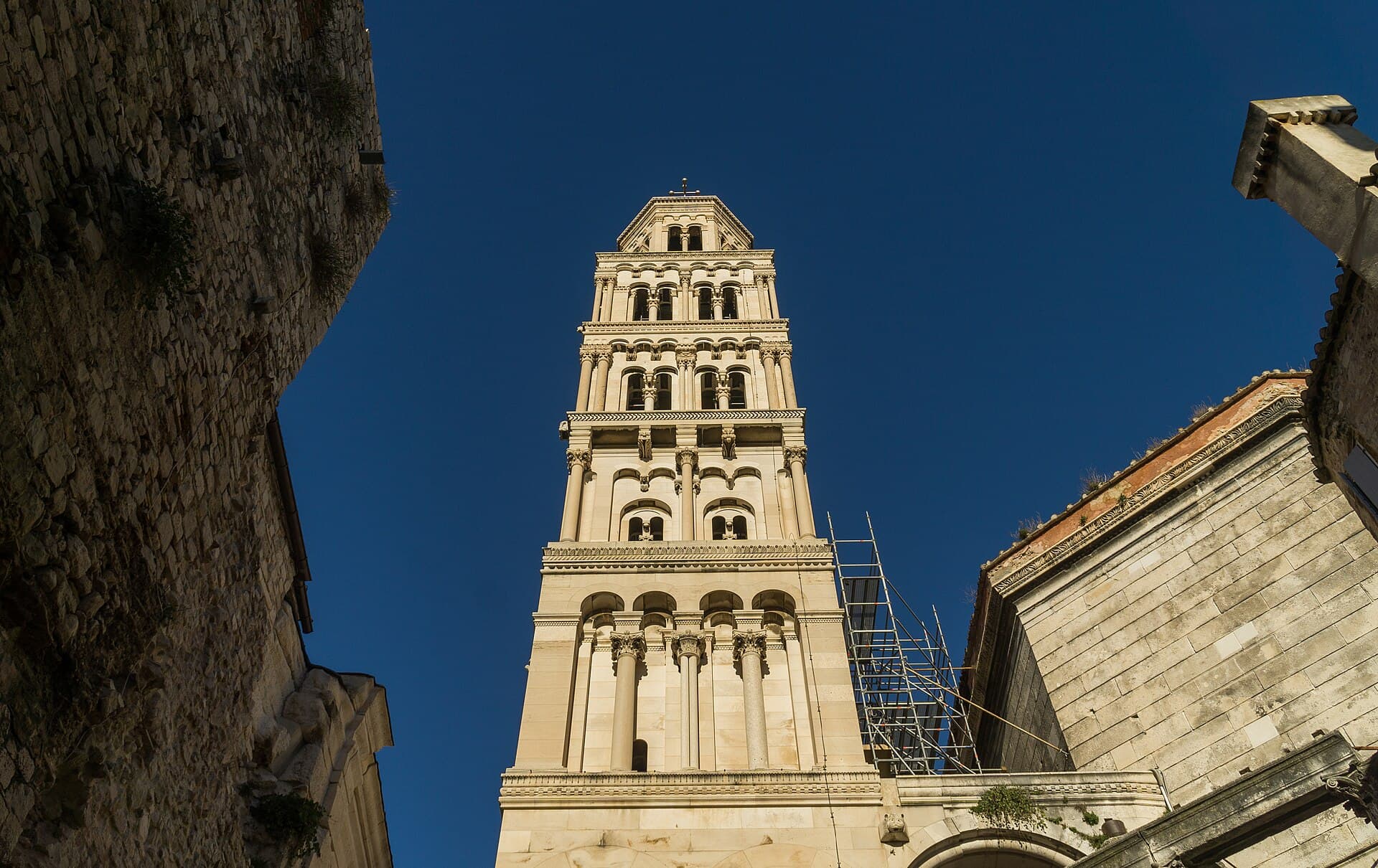 St. Domnius Cathedral & Jupiter's TempleSt. Domnius is history's quiet revenge: the mausoleum of Diocletian — the Christ1 minute walk4.7
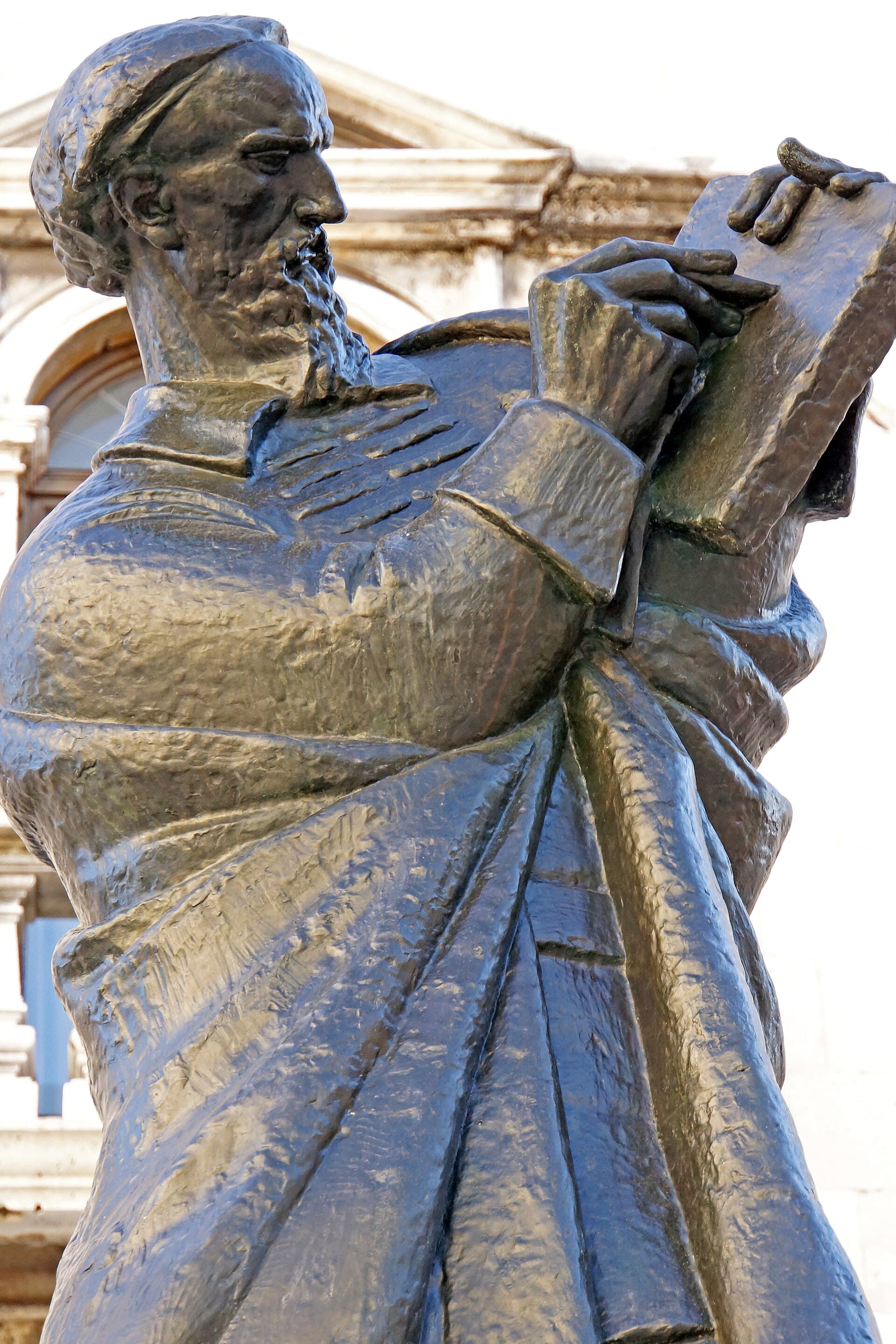 Marulić PalaceA historic house in old Split associated with the Marulić family, which produced1 minute walk4.4
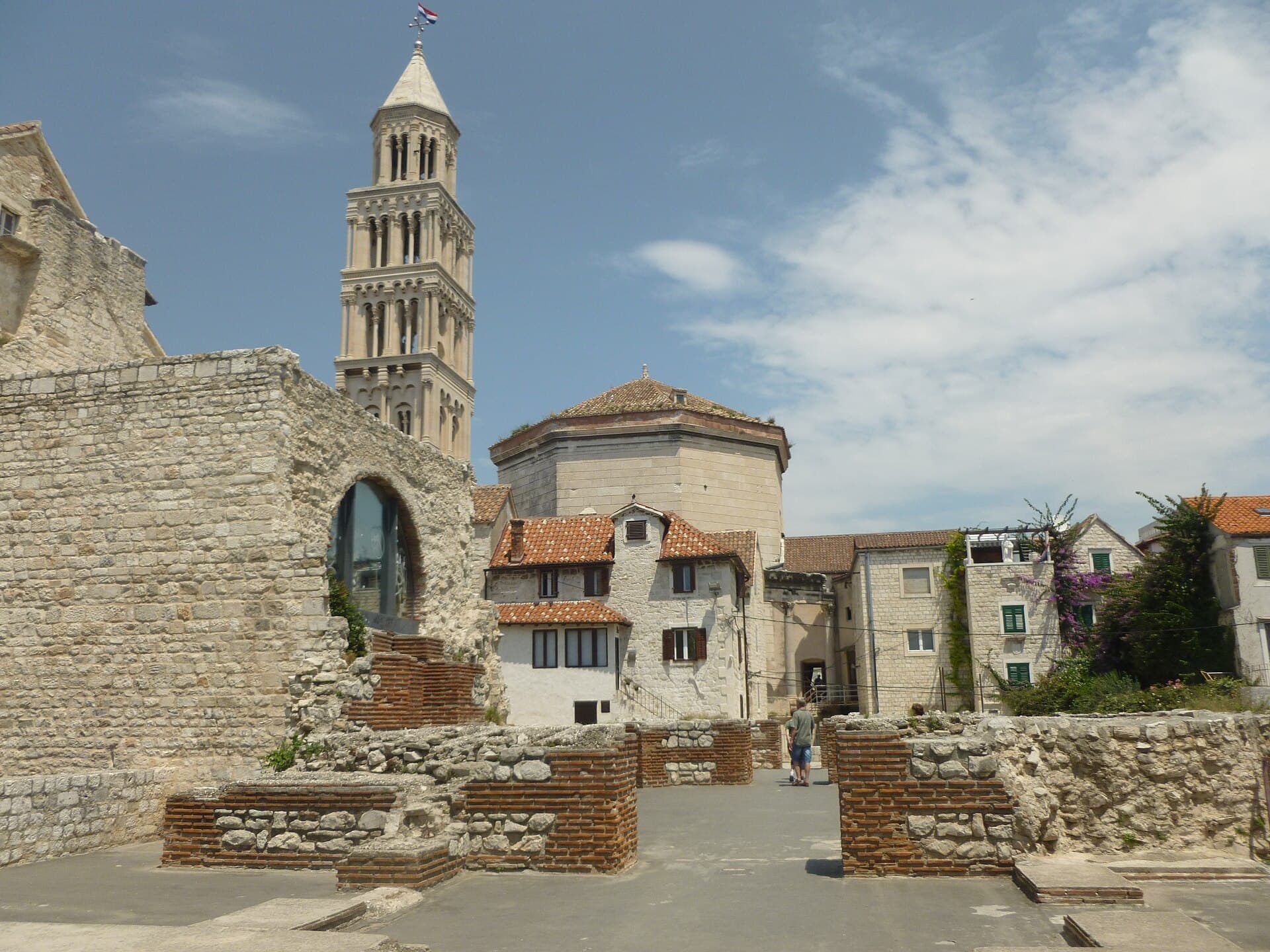 The Imperial TricliniumA hall in the substructures of Diocletian's Palace known as the triclinium — the1 minute walk4.5
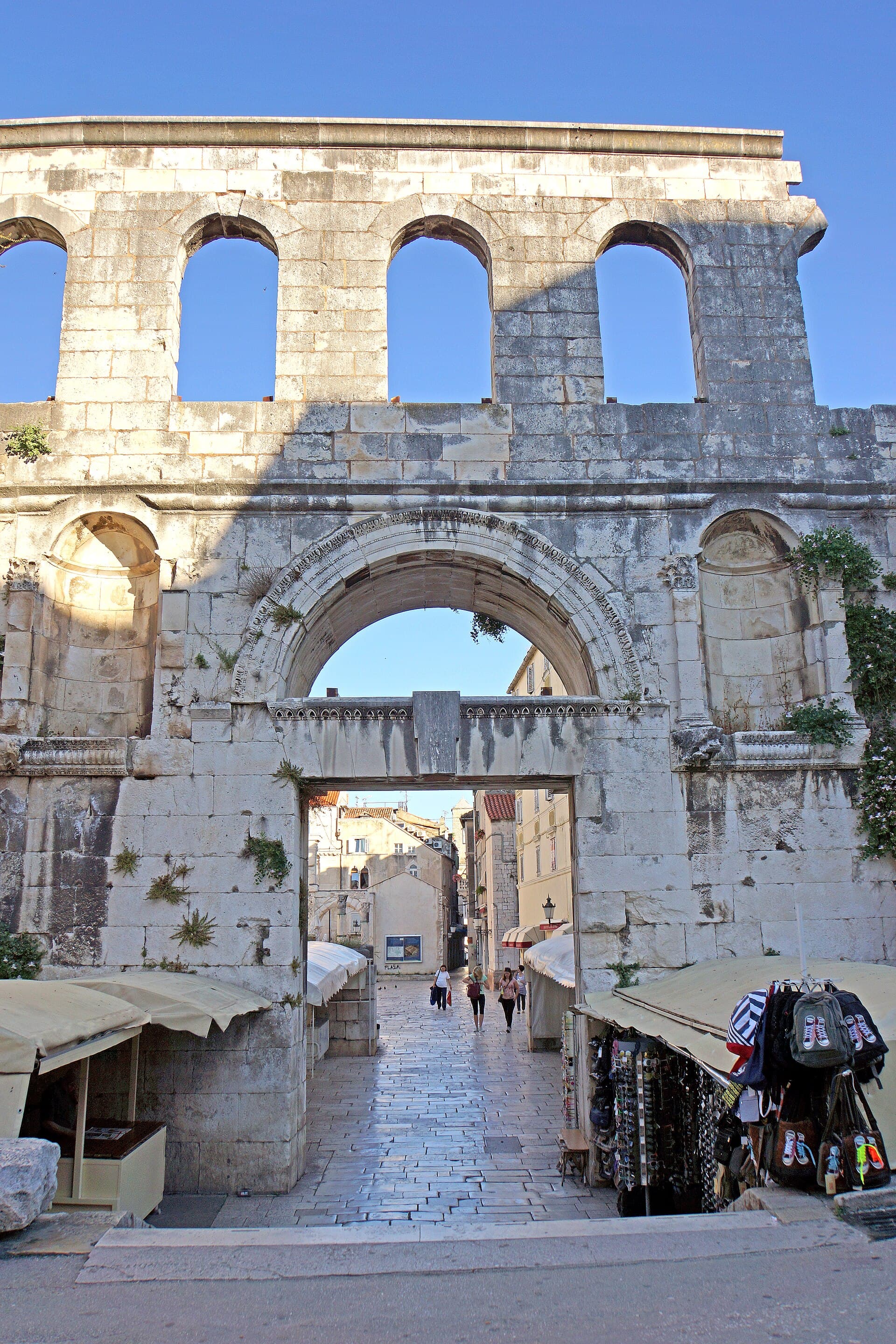 The Silver Gate and Eastern WallThe eastern gate of Diocletian's Palace and the wall it stands in, at the end ov1 minute walk4.6
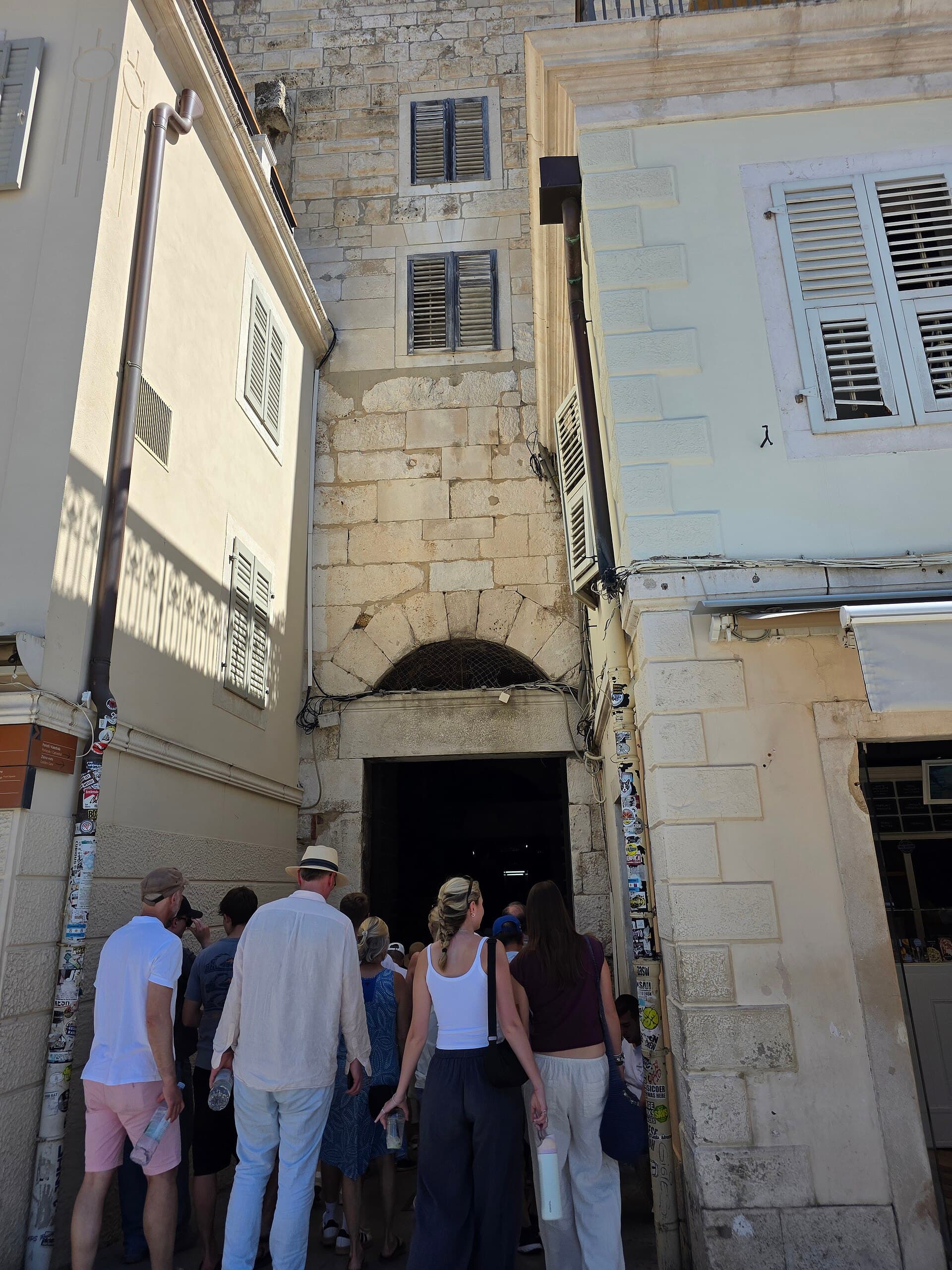 The Brass GateThe southern gate of Diocletian's Palace in Split, and the smallest and plainest1 minute walk4.4
Diocletian launched the last and most violent persecution of Christians in the empire's history at the start of the fourth century. Two and a half centuries later, when Christianity had become the state religion, the people of Split converted his mausoleum into a cathedral, removed his sarcophagus, and dedicated it to one of the martyrs he had killed. The irony was entirely deliberate, and the result is that Split's cathedral is among the oldest buildings in the world still used as a church.