
Eating reclined
A mark of class rather than comfort — a person who eats sitting up works.
MumblerJamie — CC BY-SA 2.0 · SRP1998 — CC BY-SA 4.0 · SRP1998 — CC BY-SA 4.0 · Suikotei — CC BY 4.0
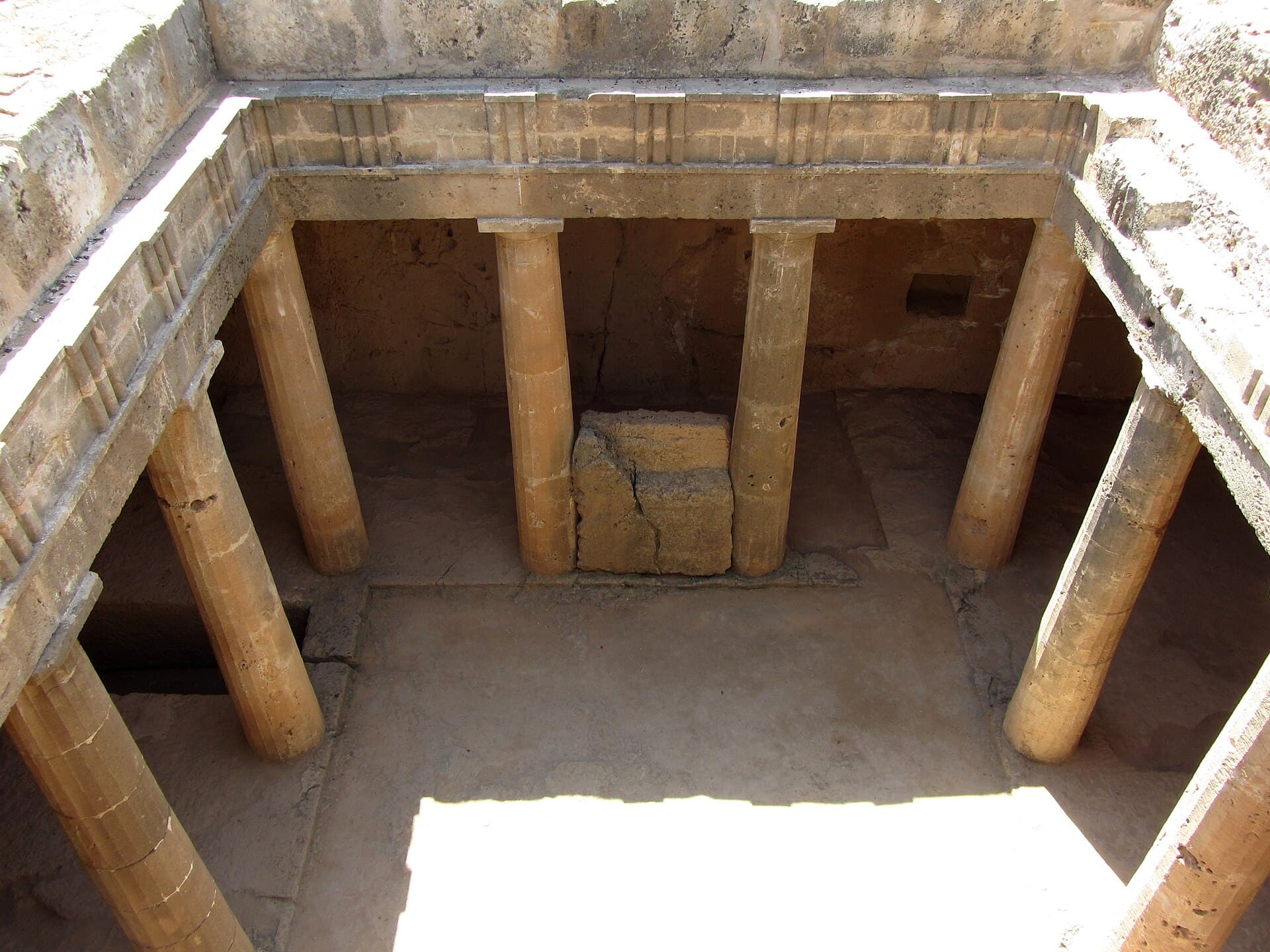
A hall in the substructures of Diocletian's Palace known as the triclinium — the Roman name for a formal dining room. In a Roman house the triclinium was a room where guests reclined on three couches arranged around three sides of a table, the fourth left open for serving. Eating while reclining was a mark of class rather than simply comfort: a person who eats sitting up is working; one who reclines does not need to. What makes this hall important is that it is in the cellars rather than the upper floors. The palace substructures repeat the plan of the residential floors above them exactly, because they were built as the foundation carrying them — so the hall you see underground is precisely the shape of the imperial dining room that has vanished above. That makes the substructures the most important source for knowing what the palace was: the upper floors changed, were lived in and built over, but the foundation stayed as it was. Within the substructures' ticket and hours.
A mark of class rather than comfort — a person who eats sitting up works.
The upper floors changed; the foundation kept their shape.
Triclinium means literally three couches — around three sides of the table.
The substructures of Diocletian's Palace, Split
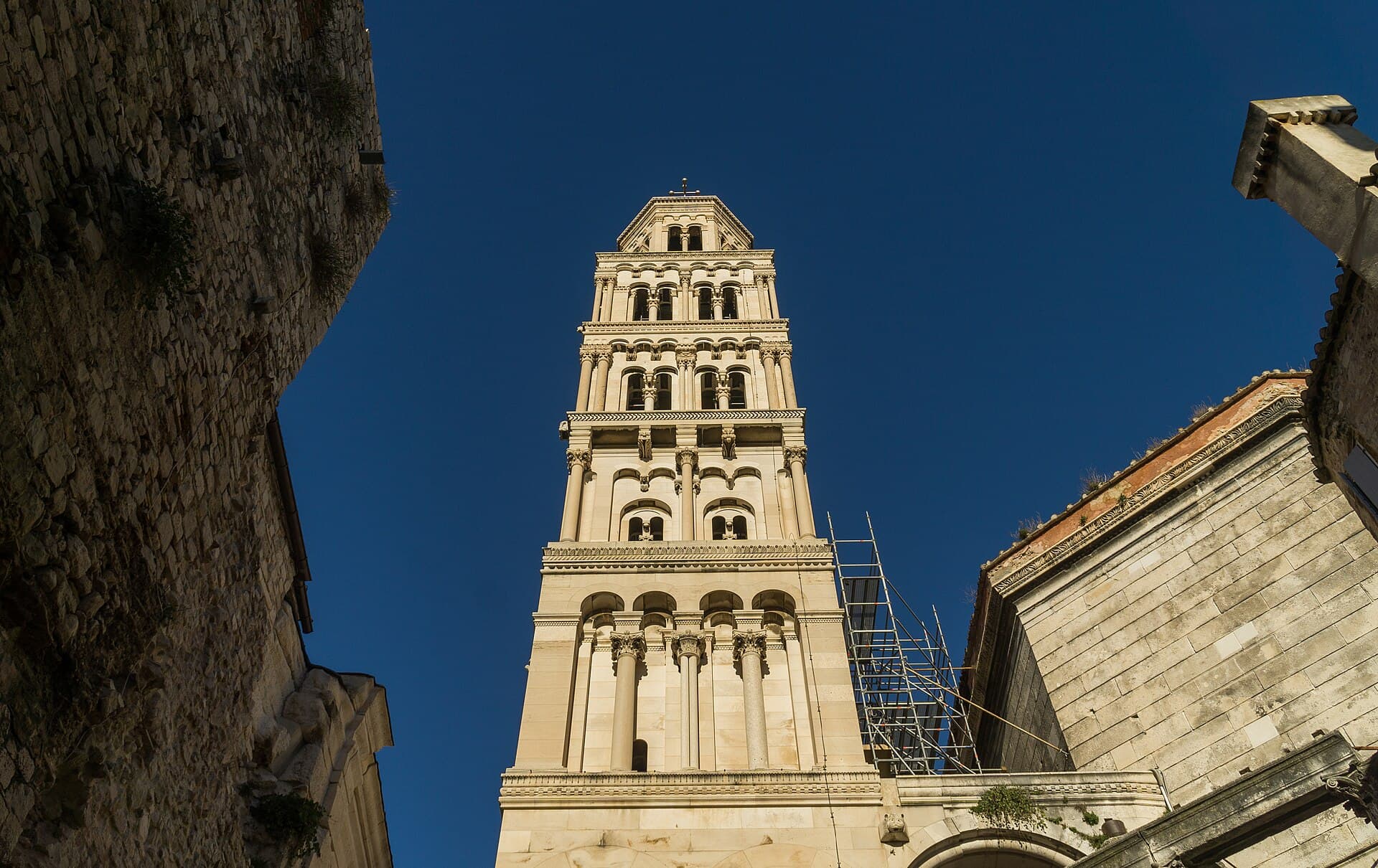 St. Domnius Cathedral & Jupiter's TempleSt. Domnius is history's quiet revenge: the mausoleum of Diocletian — the Christ1 minute walk4.7
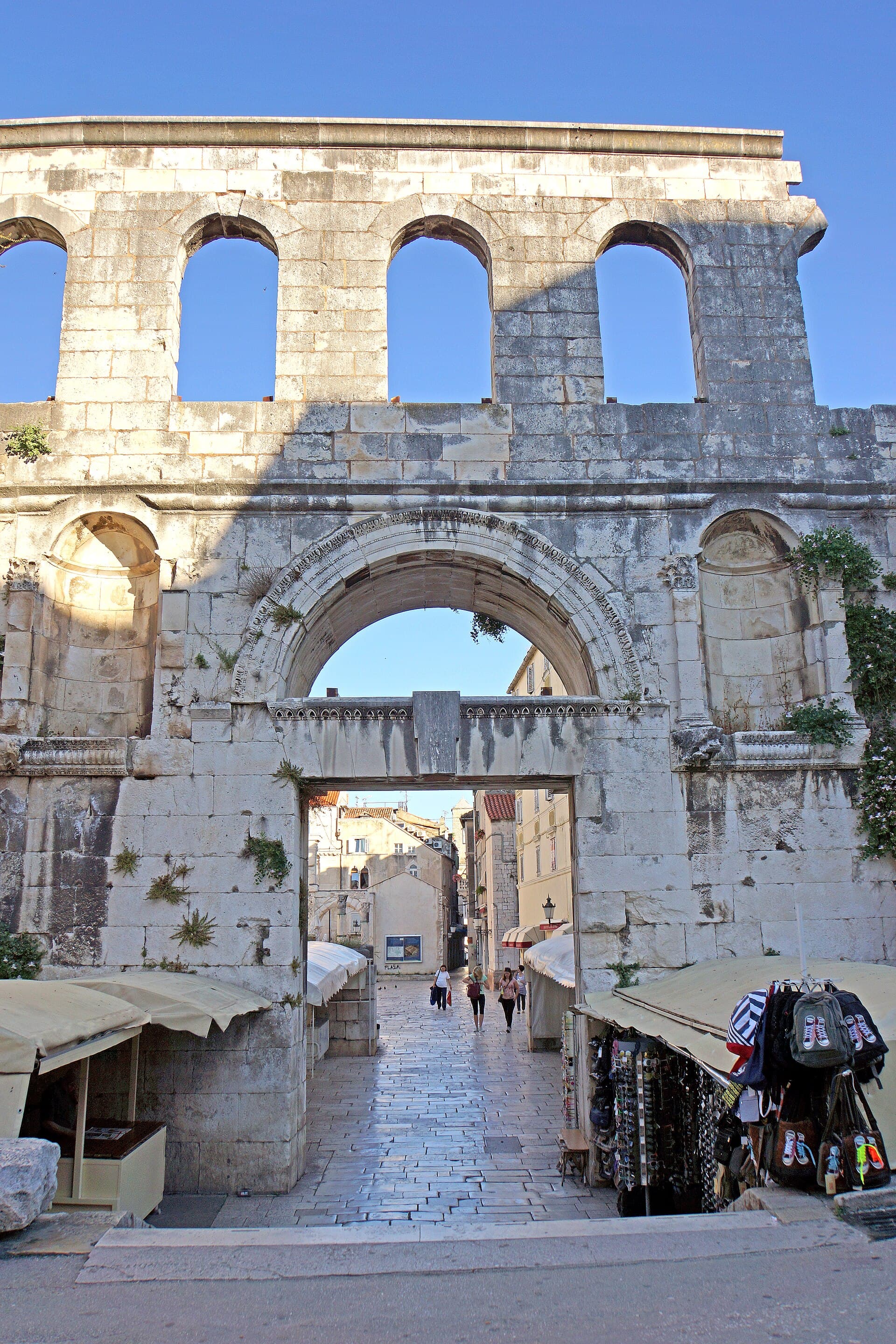 The Silver Gate and Eastern WallThe eastern gate of Diocletian's Palace and the wall it stands in, at the end ov1 minute walk4.6
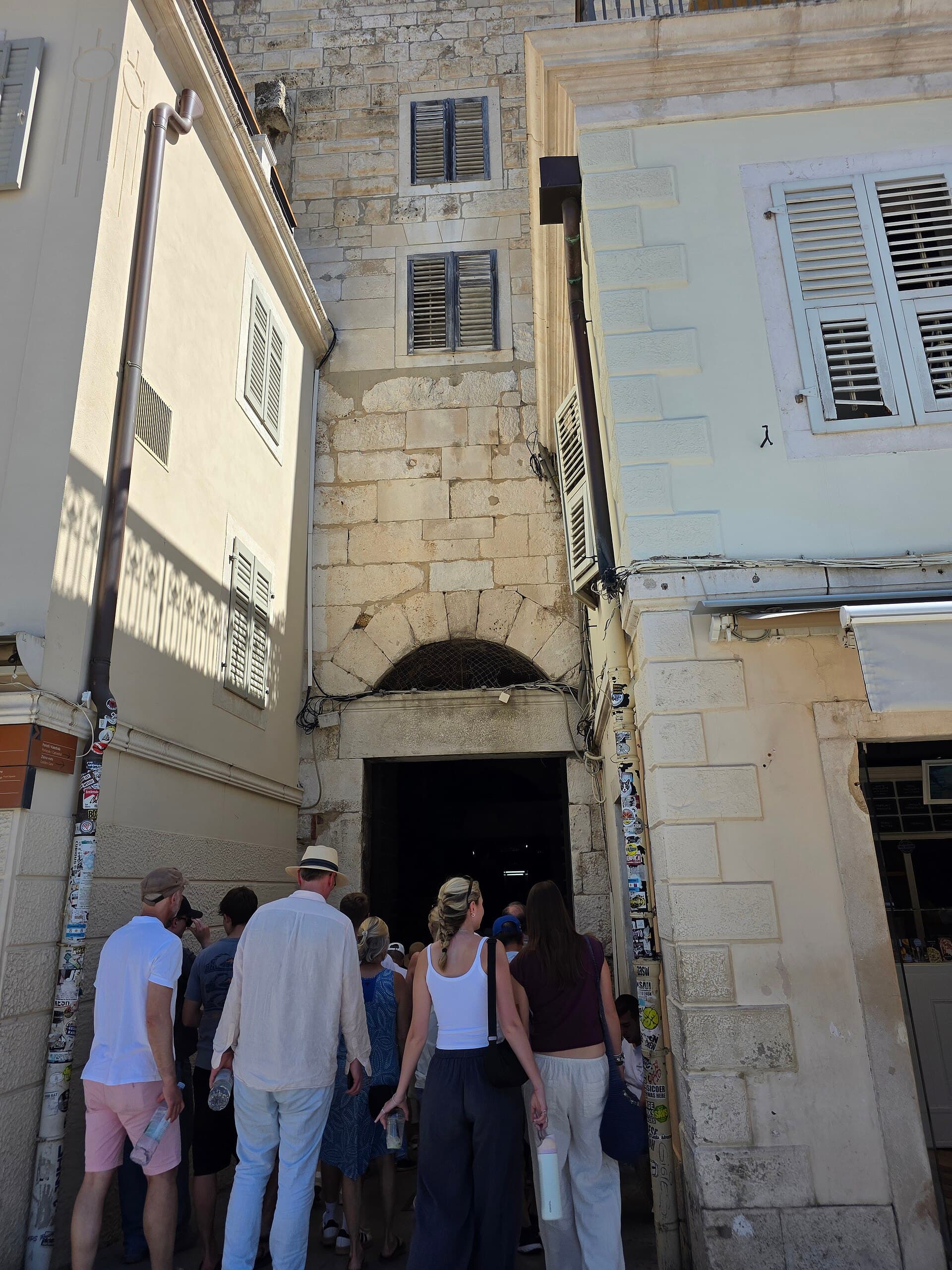 The Brass GateThe southern gate of Diocletian's Palace in Split, and the smallest and plainest1 minute walk4.4
 The PeristyleThe Peristyle is the central court of Diocletian's Palace: a rectangular space e1 minute walk4.3
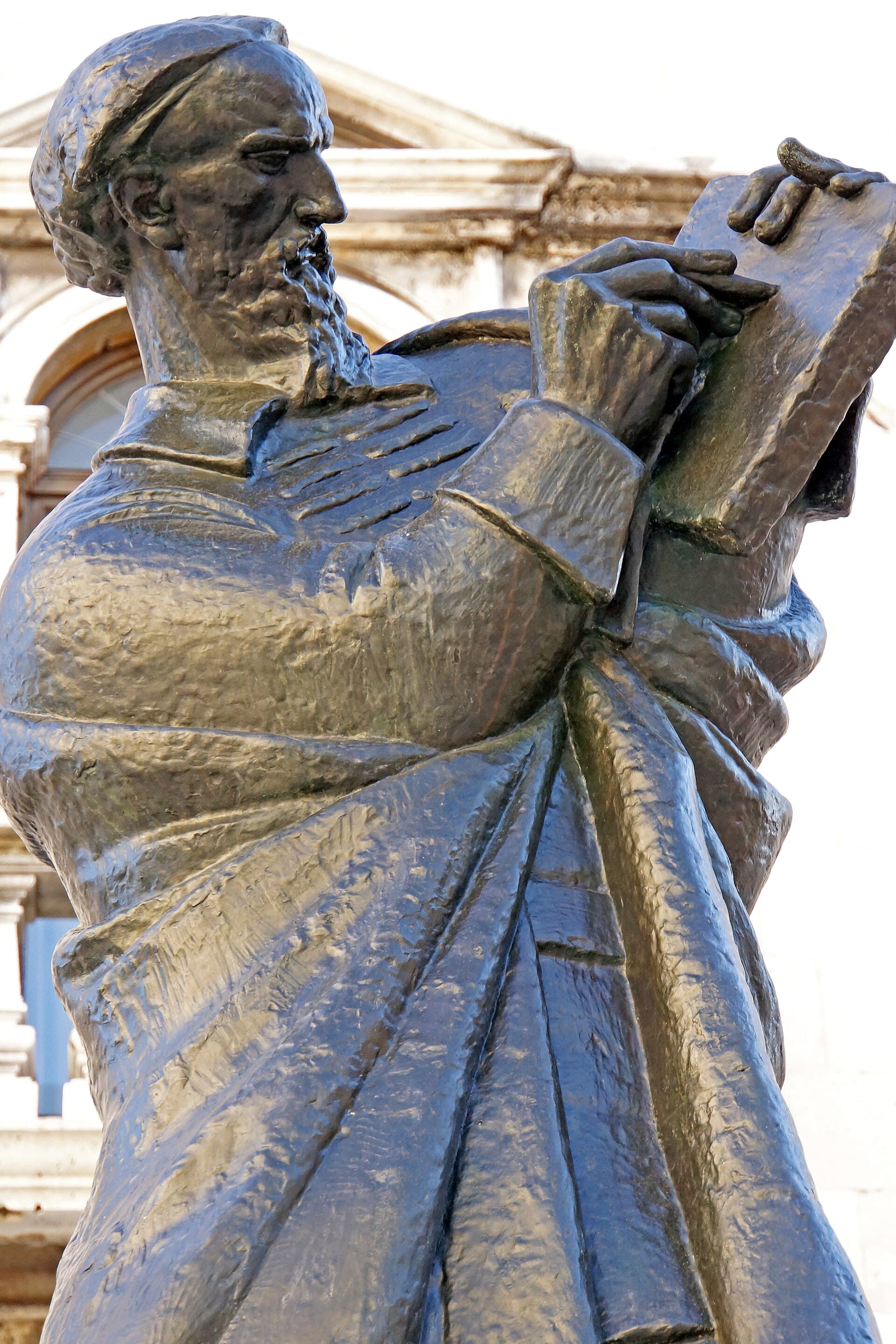 Marulić PalaceA historic house in old Split associated with the Marulić family, which produced1 minute walk4.4
An extensive network of vaulted halls and passages beneath the residential wing, preserved intact because they were filled with rubbish for centuries, which protected them. They were cleared in the twentieth century. Part of it today is a free commercial passage selling souvenirs, and part is enclosed halls on a ticket, also used for exhibitions. Scenes from well-known television series were filmed there, which draws many visitors.
A Roman emperor who ruled from AD 284 to 305, born in Dalmatia to a modest family and risen through the army. He reorganised the empire by dividing it into four zones of rule to halt its collapse, a reform that changed the shape of the Roman state. He is also known for the most violent persecution of Christians in the empire's history. He abdicated voluntarily in 305 and withdrew to this palace — and when asked to return to power he refused, saying that if they could see the cabbages he had grown with his own hands they would not ask.