
The forest
Shaded paths under huge trees running down to the sea.
Marc Ryckaert (MJJR) — CC BY 3.0 · Marc Ryckaert (MJJR) — CC BY 3.0 · Aktron — CC BY-SA 4.0 · Aktron — CC BY-SA 4.0
**A British villa inside a forest, on top of a buried Greek city** — and that layering is what makes the place. The villa was built between **1828 and 1831** for the British High Commissioner **Frederick Adam**, and later became a summer residence of the Greek royal family. **Prince Philip, Duke of Edinburgh**, was born here in **1921** — later the husband of Queen Elizabeth II; he left the island as an infant when his family was exiled. It is today a **museum** of finds from the site, displayed in the villa's own rooms. But what matters more is what lies under and around it: this was **Palaiopolis**, the ancient Greek city that is the origin of Corfu. In the grounds are the **remains of the Temple of Artemis** and the **Kardaki** temple looking out to sea, with foundations and old roads among the trees. ✅ And the park itself is **a full forest**: shaded paths under huge trees dropping to two small swimming coves — and it is **the coolest place in Corfu** in August.
Shaded paths under huge trees running down to the sea.
Remains of an ancient temple on an edge above the water.
Small, rocky, quiet bays at the bottom of the park.
Kanoni, 49100 Corfu, Greece
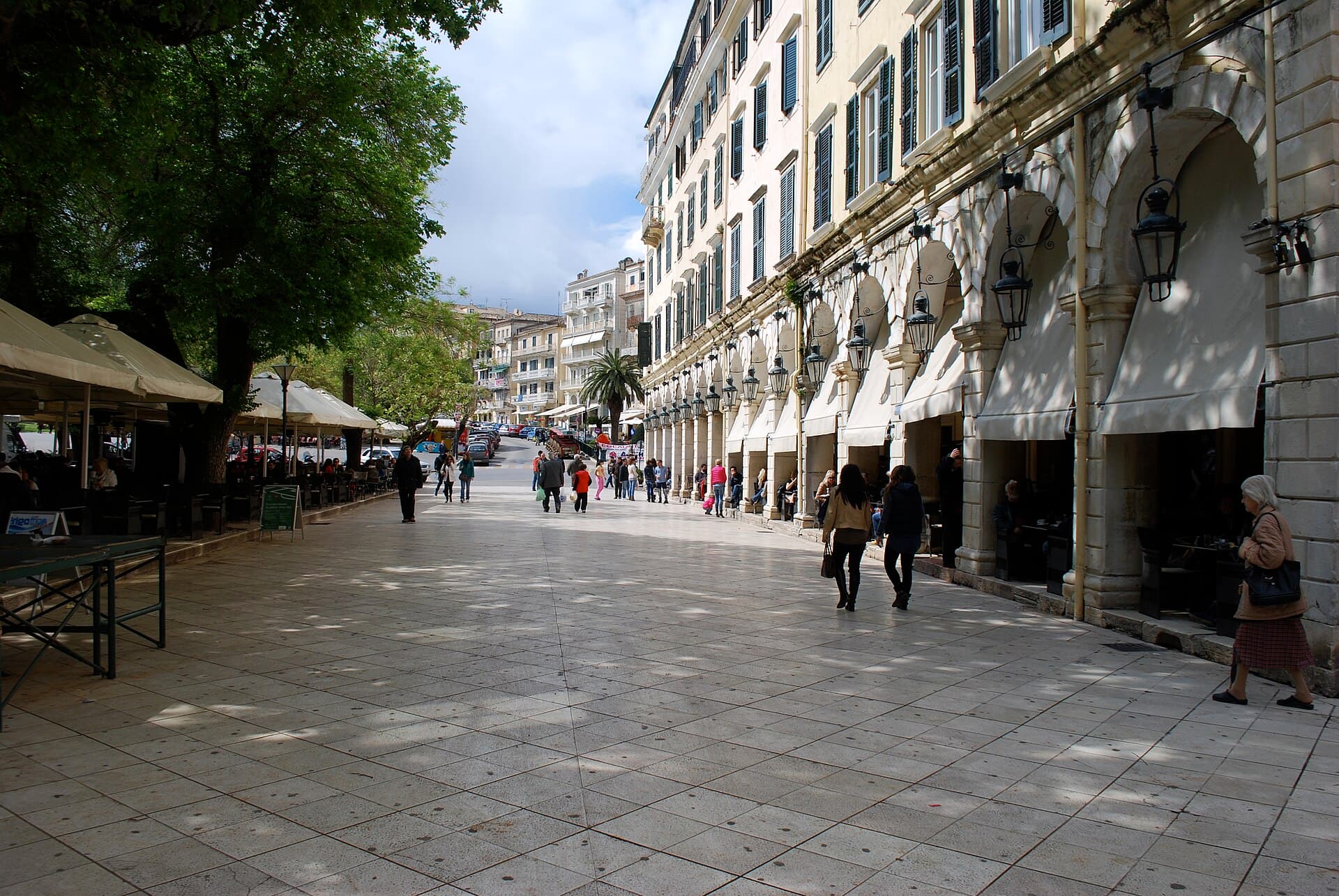 Spianada Square**The largest square in Greece** — and its huge scale is not architectural gener23 minutes walk4.8
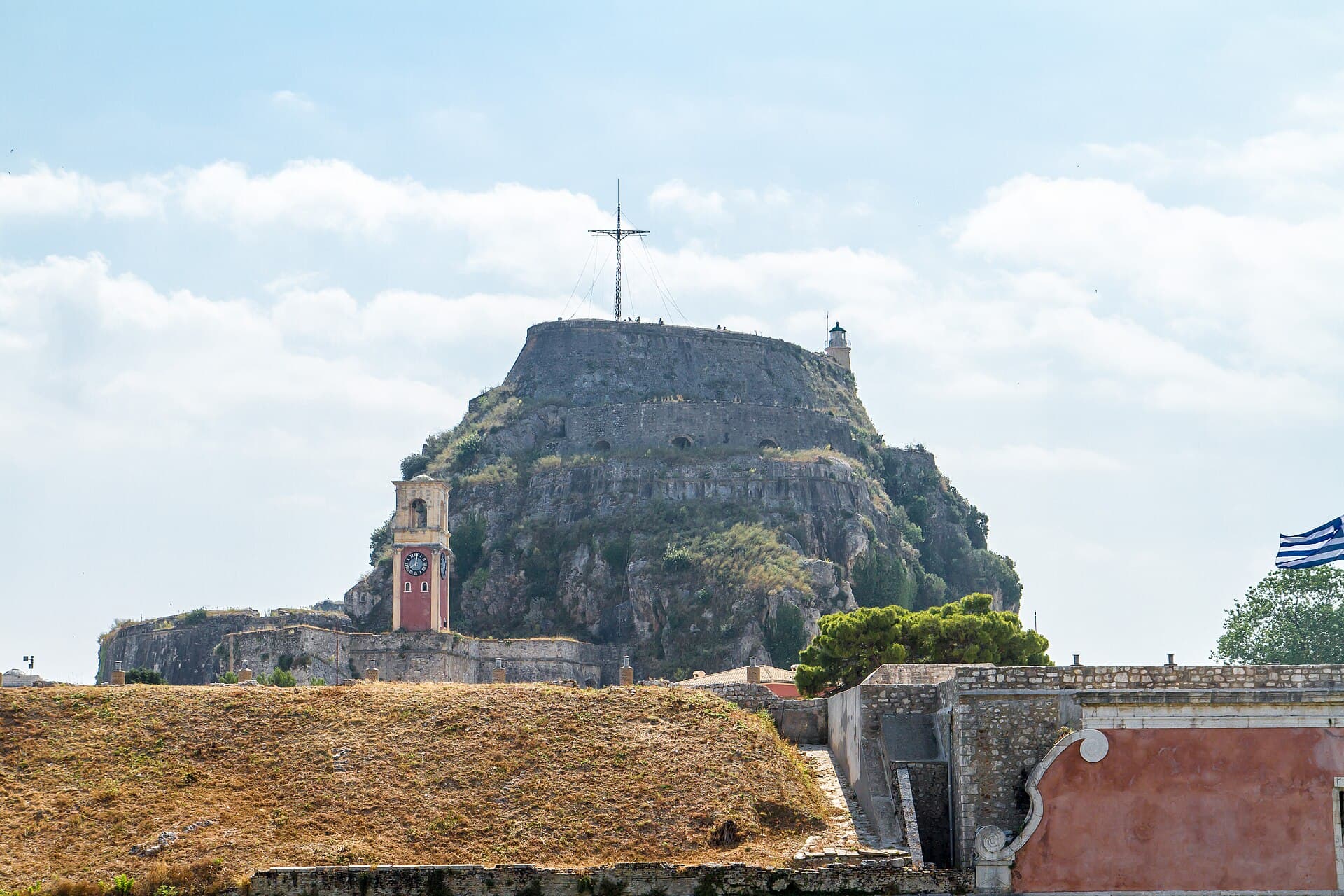 Old Fortress**A fortress on a rocky peninsula with two peaks** — and those two peaks are the24 minutes walk4.7
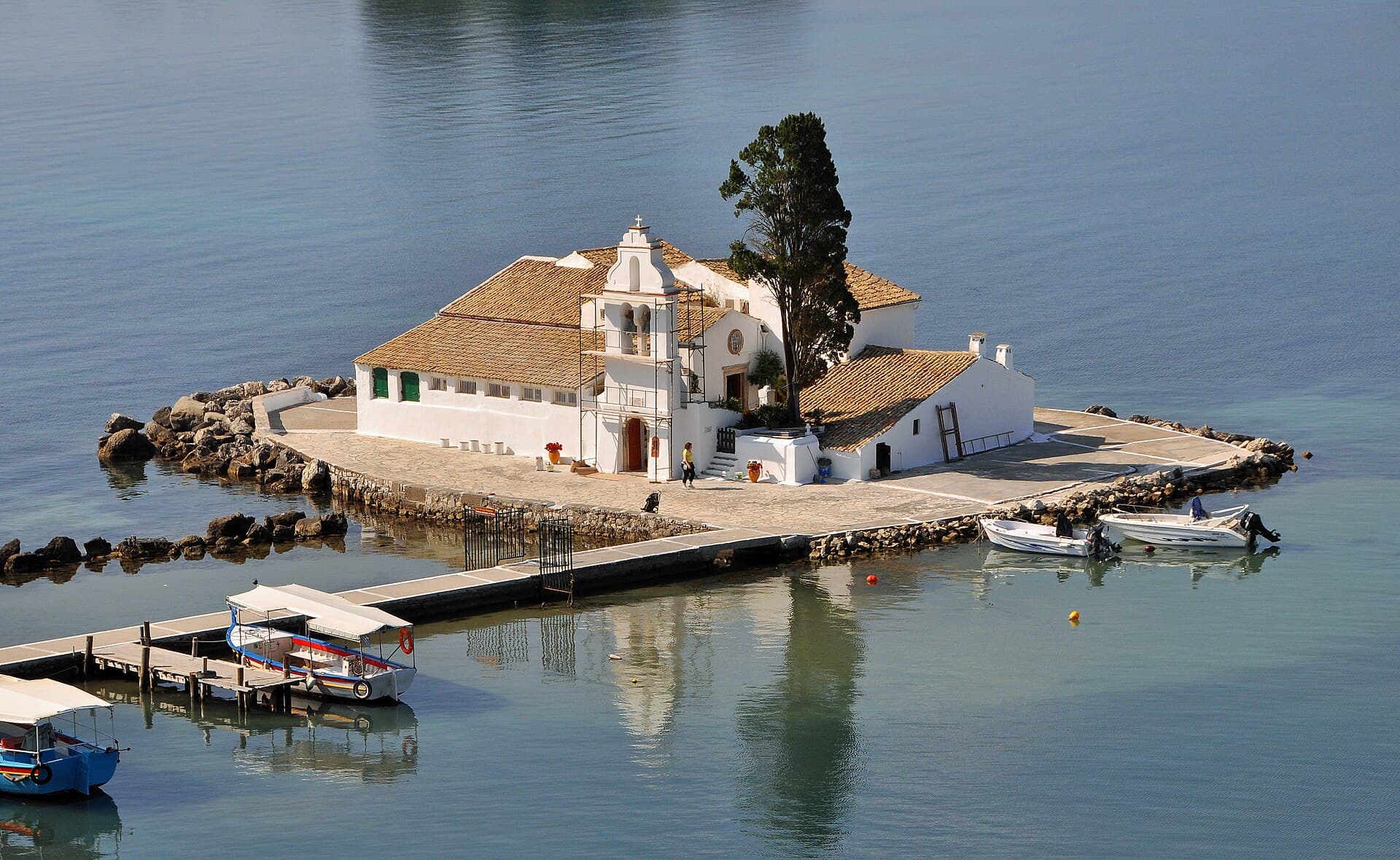 Vlacherna Monastery**A small white monastery on a small island, reached by a narrow concrete causew25 minutes walk4.8
**The park alone is enough for most visitors — the museum is for those specifically interested in archaeology.** ✅ **The park is free and it is the better half**: a genuine forest with shaded paths, the remains of two temples, two swimming coves, complete quiet, and **noticeable coolness** at the height of summer — you can spend two hours there without paying anything. ✅ **The museum** (about €4) is small and well kept, its displays drawn from excavations on the site itself — sculpture, finds and models explaining Palaiopolis. **Worth it if you like archaeology** or want to understand the foundations you see in the grounds, ⚠ **not worth it if you are expecting a furnished palace or Prince Philip's birth room** — the display is archaeological rather than royal, and this is where many people are caught out.
**Because the ancient Greek city really is there — but it lies underground and under the modern town at once.** ✅ **Ancient Corfu (Kerkyra)** was a Corinthian colony founded in the 8th century BC and became a significant naval power — **Thucydides** wrote about it because its quarrel with Corinth was one of the sparks of the **Peloponnesian War**. Its site is the peninsula you stand on at and around Mon Repos. ⚠ **What survives is little and scattered**: the foundations of the **Temple of Artemis** (very important in architectural history, since its sculpture is among the earliest known Greek architectural carving — but the original pieces are in the Archaeological Museum, not on site), the **Kardaki** temple, and foundations dispersed among the trees. ✅ **So the advice**: visit the **Archaeological Museum in town** before or after, and these foundations turn from stones into a city.