
Brought to guard a frontier
The Saxons arrived in the twelfth century with wide privileges.
Cezar Suceveanu — CC BY-SA 3.0 ro · JopkeB — CC BY-SA 4.0 · -wuppertaler — CC BY-SA 4.0 · Leontin l — CC BY-SA 4.0
A statue in Huet Square before the Evangelical Cathedral in Sibiu, to the bishop and historian Georg Daniel Teutsch. Teutsch (1817–1893) was bishop of the Evangelical Lutheran Church in Transylvania and leader of the German Saxons in a critical period of their history. The Saxons were a German community brought into Transylvania in the twelfth century to settle and defend the frontier, and granted wide privileges: land, self-government, their own courts and their own church. They built the towns of Sibiu, Brașov, Sighișoara and Mediaș, and fortified villages around their churches. In the nineteenth century this system began to dissolve with the rise of Hungarian nationalism and centralising policy. Teutsch worked to preserve Saxon identity through education, the church and historical writing — he wrote a history of the Saxons that remains a reference. The community effectively vanished in the twentieth century: most emigrated to Germany after 1945 and especially after 1990, leaving their towns and churches behind. Viewing is free in a public square.
The Saxons arrived in the twelfth century with wide privileges.
They built Sibiu, Brașov, Sighișoara and the fortified church villages.
Most emigrated to Germany after 1945, leaving their towns.
Huet Square, before the Evangelical Cathedral
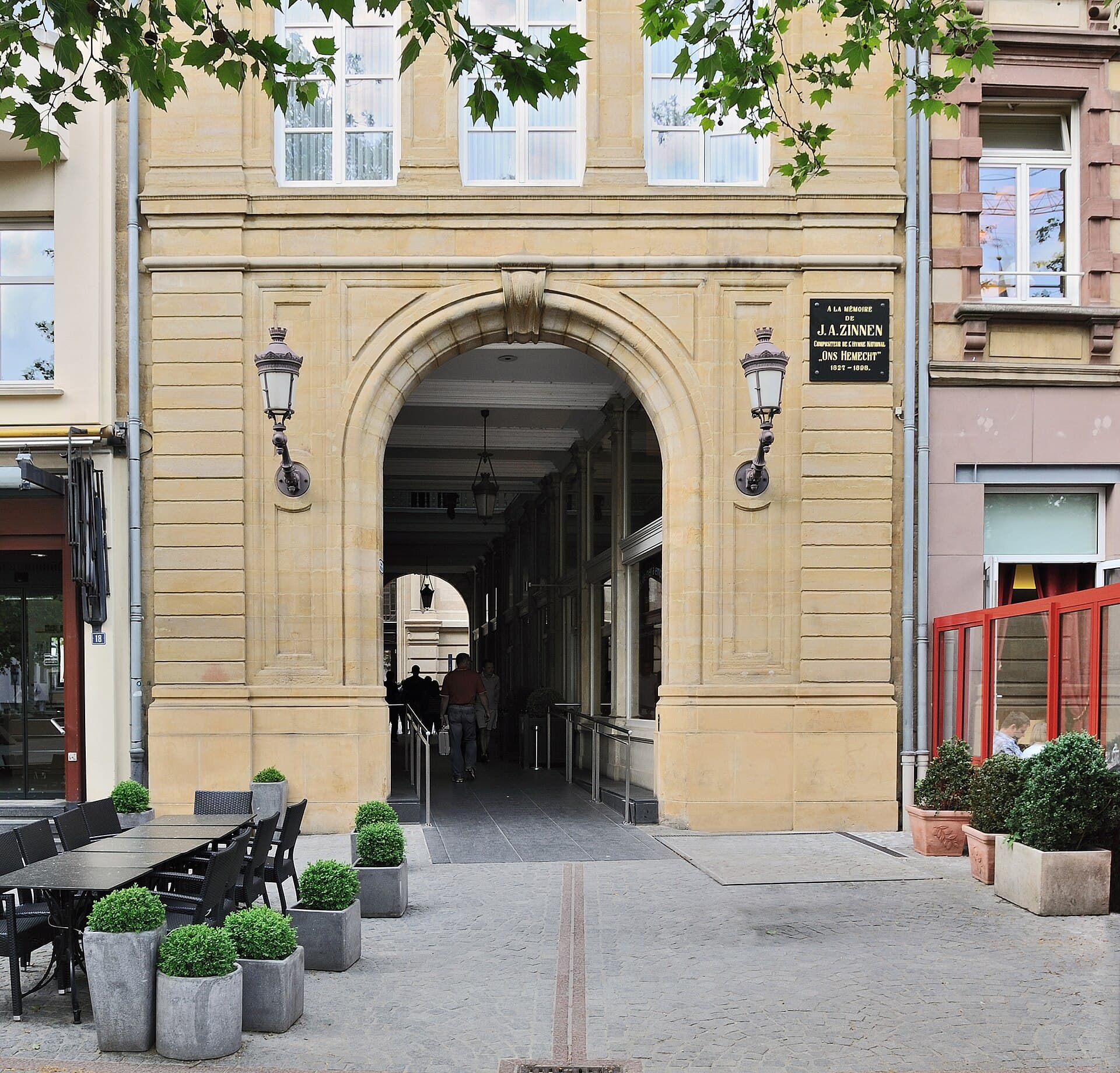 Huet SquareA square in Sibiu's Upper Town surrounding the great Evangelical church, the old1 minute walk4.8
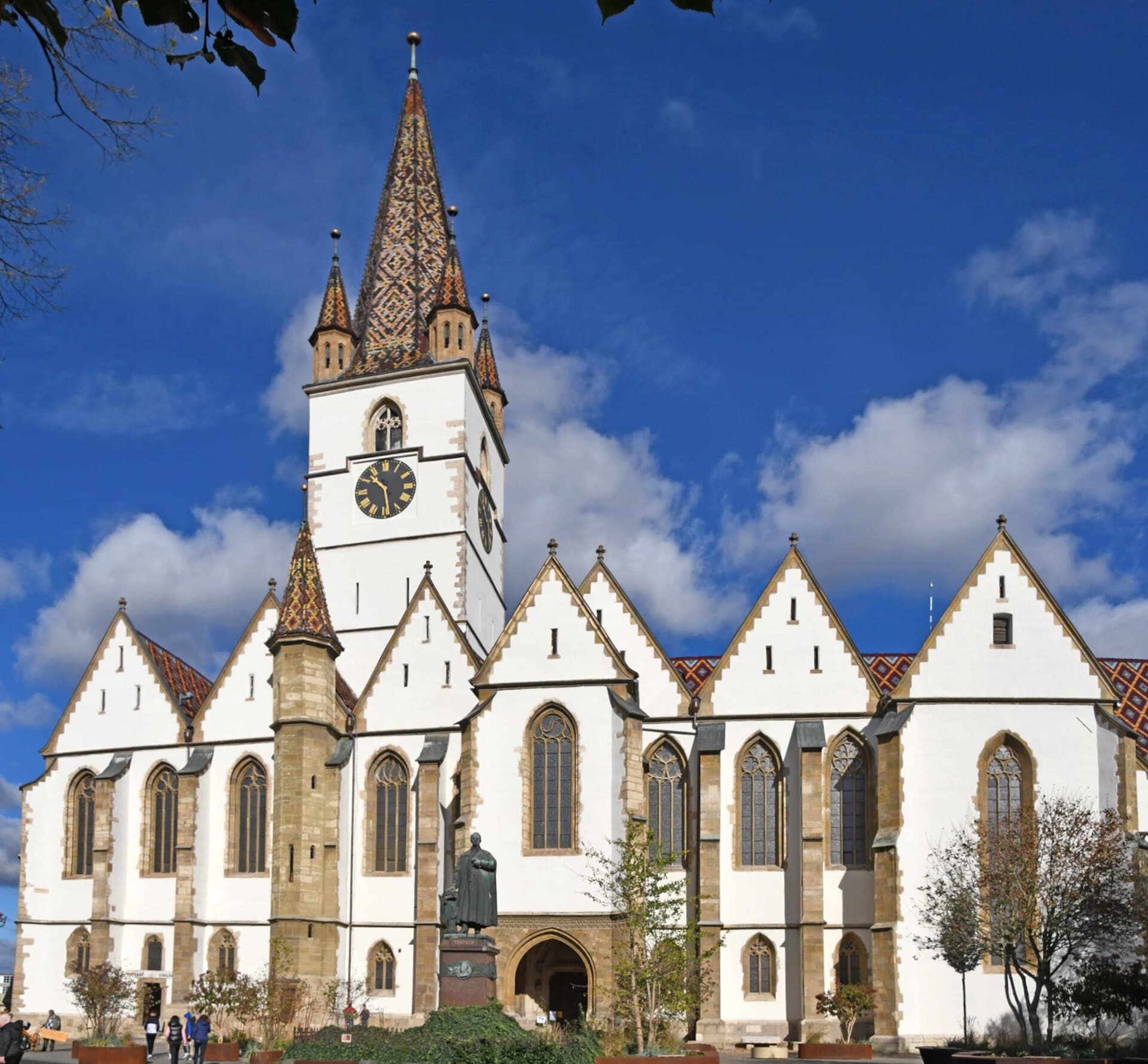 The Evangelical CathedralSibiu's tallest spire: the Gothic Lutheran cathedral (fourteenth century) lifts 1 minute walk4.8
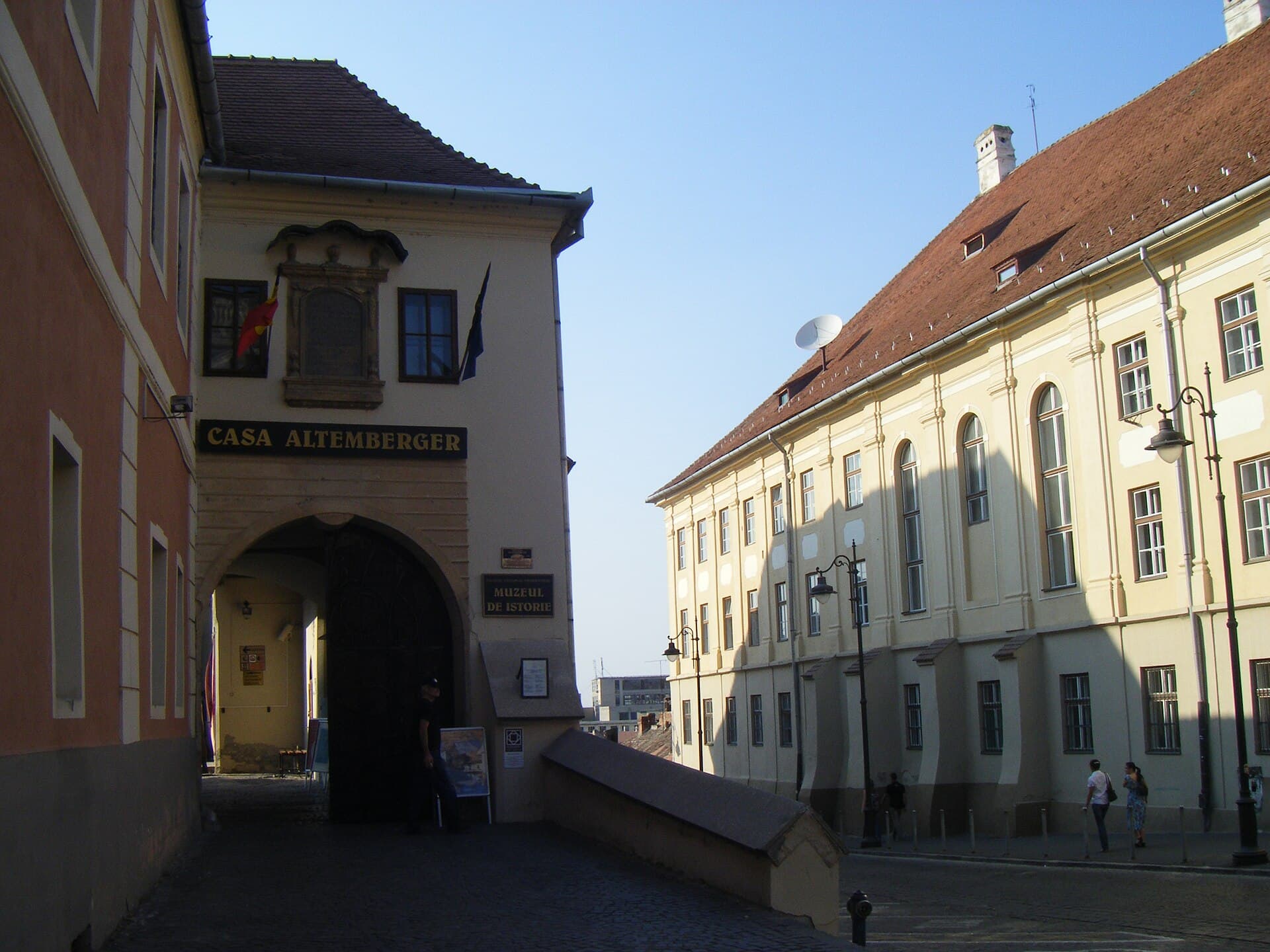 History Museum in Altemberger HouseThe largest Gothic civic complex in Transylvania: Altemberger House, Sibiu's old1 minute walk4.7
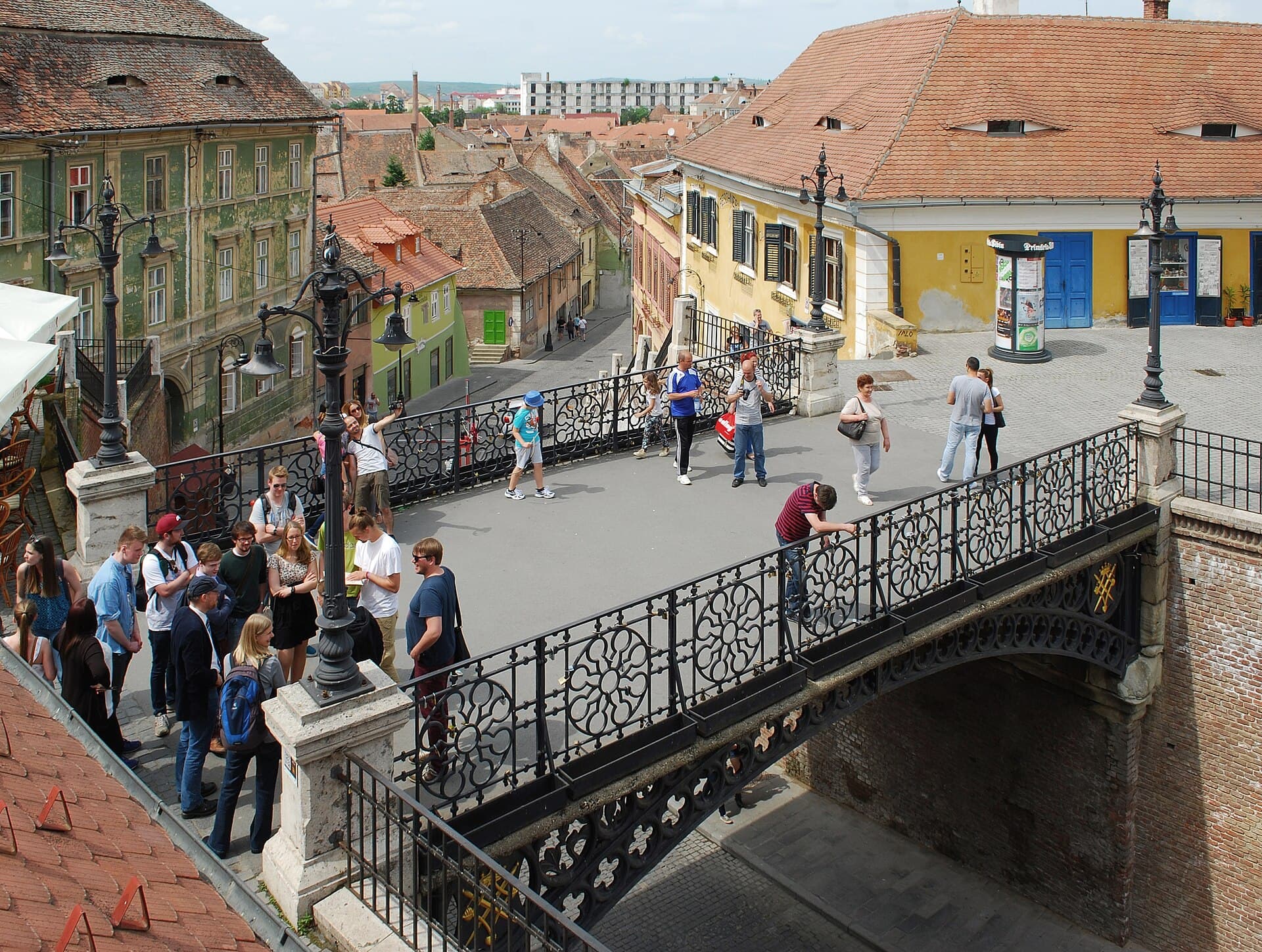 The Bridge of LiesRomania's first cast-iron bridge and its most famous urban legend: built in 18591 minute walk4.6
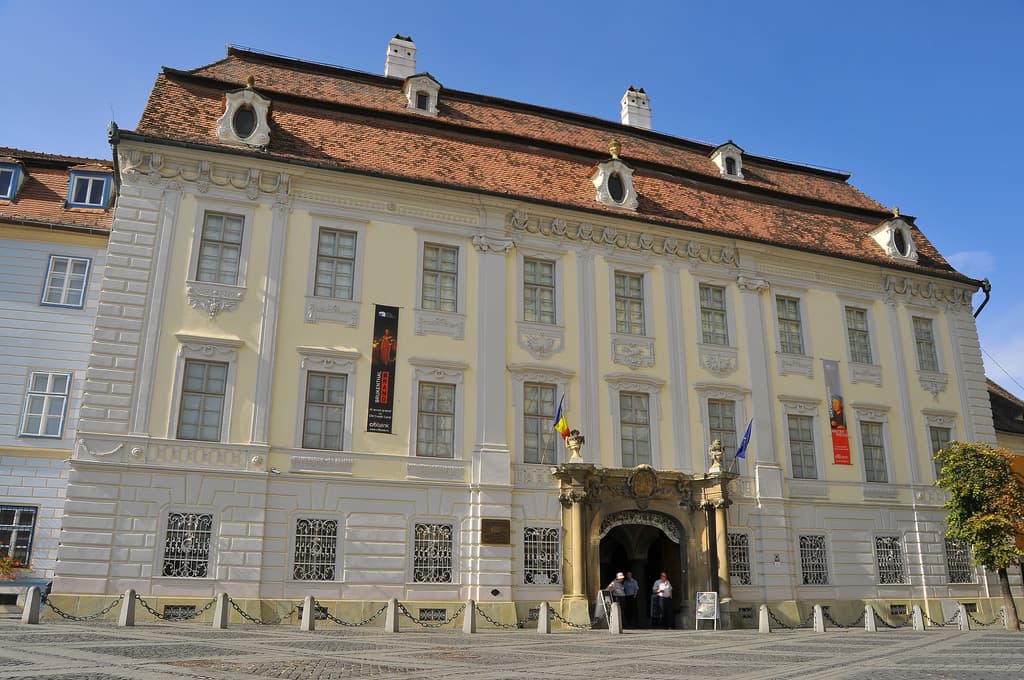 Brukenthal National MuseumRomania's first museum and among Europe's oldest: Baron Samuel von Brukenthal, g2 minutes walk4.5
Churches around which the Saxons built walls, towers and storerooms, so the whole village had a refuge during Ottoman and Tatar raids. Each family kept a small chamber inside the wall storing grain and cured meat, so the village could hold out for weeks under siege. About a hundred and fifty survive in southern Transylvania, seven of them on the World Heritage list — among them Biertan, Viscri and Câlnic.
The causes accumulated. After 1945 tens of thousands were deported to labour camps in the Soviet Union and their property confiscated on the charge of collaboration with Nazi Germany. Then in the 1970s and 1980s the Ceaușescu regime permitted their emigration to West Germany in exchange for sums paid by Bonn for each emigrant. After 1990 almost all the remainder left. From around eight hundred thousand before the war, fewer than twenty thousand remain today.