
The courtyard
A café under the trees.
Niegodzisie — CC BY-SA 4.0 · JoJan — CC BY 3.0 · Bjoertvedt — CC BY-SA 4.0 · Jennifer Boyer from Fredrick, Maryland, USA — CC BY 2.0 · Whitepixels — CC0 · Antidiskriminator — CC0 · Antidiskriminator — CC BY-SA 3.0 · Antidiskriminator — CC0
An Ottoman caravanserai built in 1551 and the only one of Sarajevo's old hans still standing. It belonged to the endowment of Gazi Husrev-beg and stands on Sarači street in the heart of Baščaršija. It could hold about 300 travellers and 70 horses, a caravanserai in the full sense. It burned several times: after a fire in 1697 it was rebuilt in its present form, then a fire in December 1957 destroyed it, and it was rebuilt between 1971 and 1974, with its walls decorated with Persian verses from the quatrains of Omar Khayyam. On 29 July 1878 the people of Sarajevo met in the han and set up a people's council in protest at the Austro-Hungarian occupation of Bosnia. Its present name probably comes from the family of its tenants in the early 19th century, Mustafa-aga Morić and his son Ibrahim-aga. Its cobbled courtyard now holds a restaurant and a café with seats under the trees, plus shops selling carpets, souvenirs and copper lanterns. Entry to the courtyard is free, and it makes a quiet break from walking around Baščaršija.
A café under the trees.
On the walls.
And copper lanterns.
Sarači street, Baščaršija
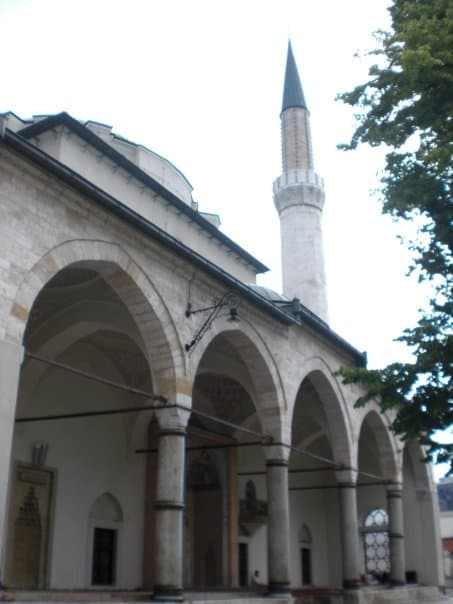 Gazi Husrev-beg MosqueThe largest historic mosque in Bosnia and Herzegovina and one of the finest Otto1 minute walk4.7
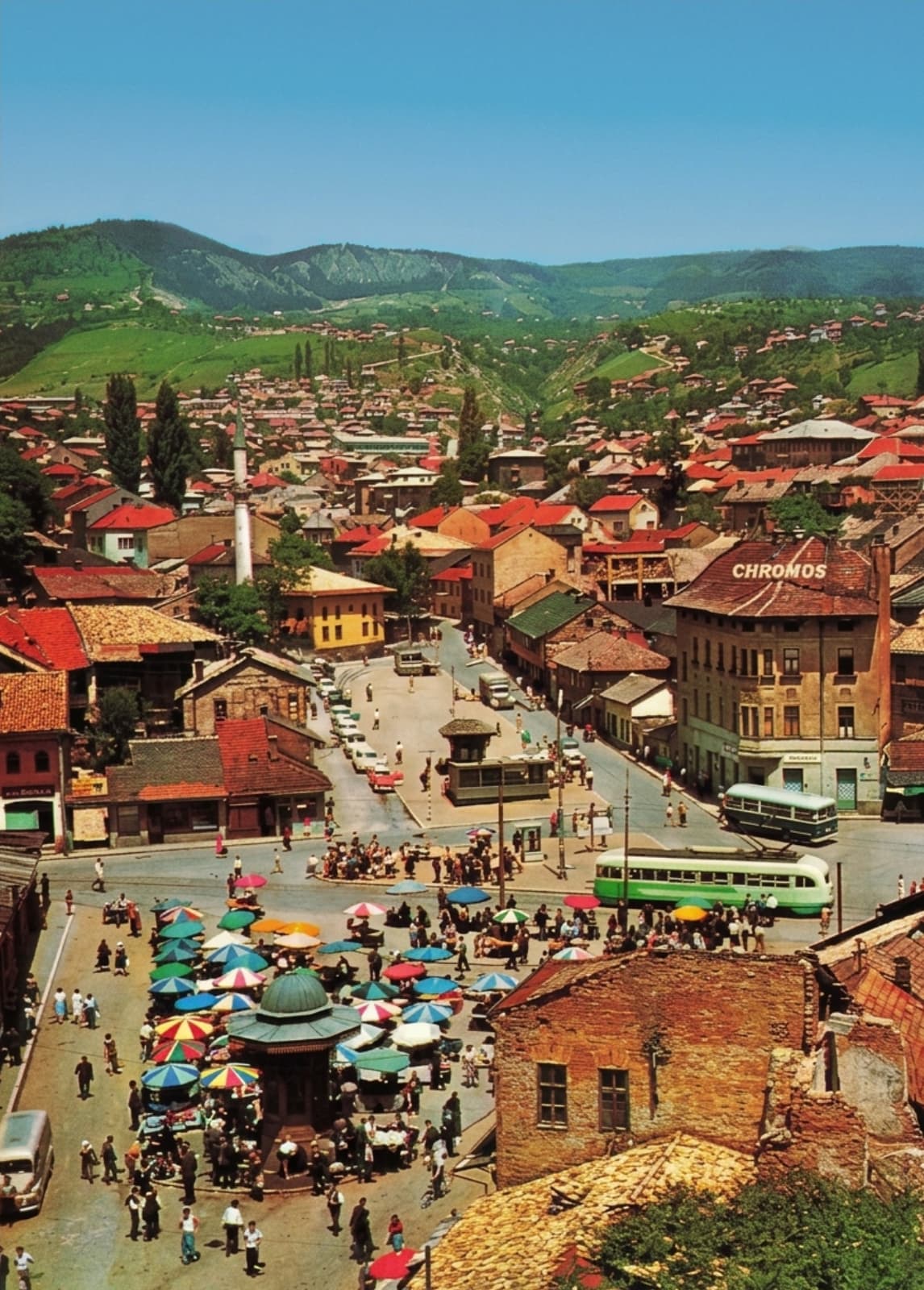 Baščaršija and the SebiljSarajevo's old bazaar and the historic and cultural heart of the city, on the no1 minute walk4.9
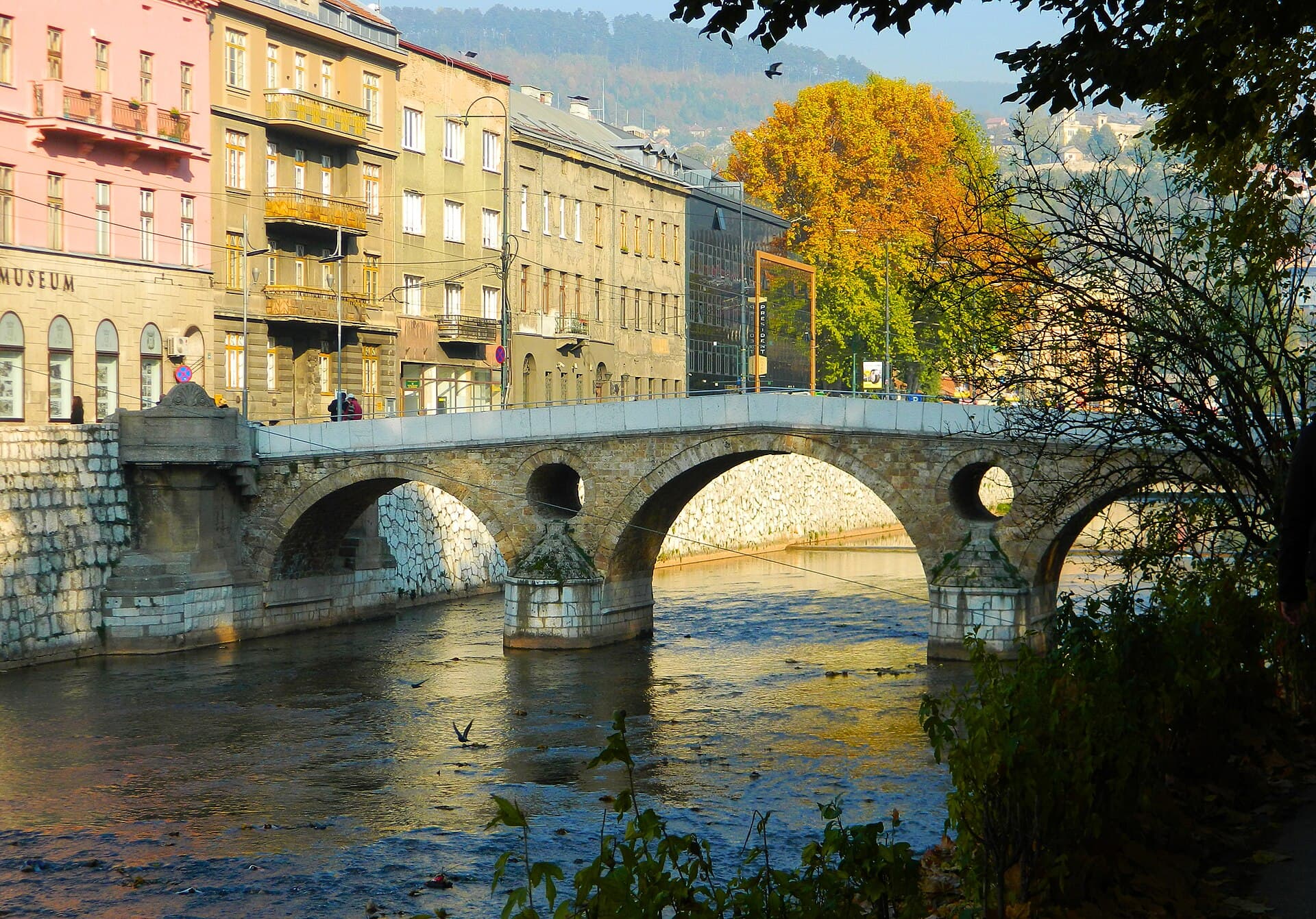 Latin BridgeAn Ottoman stone bridge over the Miljacka river and, judging by its foundations,3 minutes walk4.7
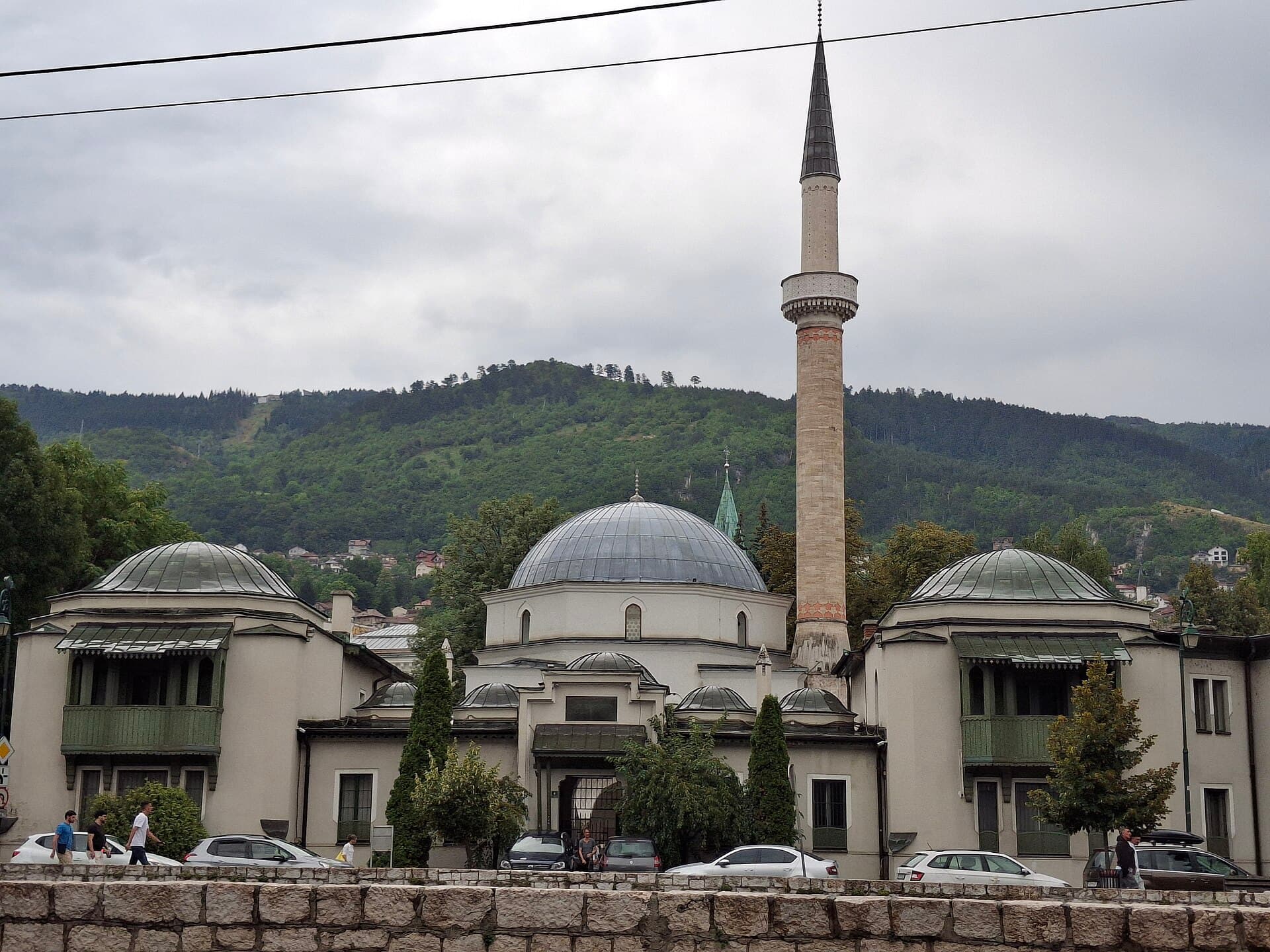 Emperor's Mosque, SarajevoThe first mosque built in Bosnia after the Ottoman conquest, completed in 1457 o3 minutes walk4.8
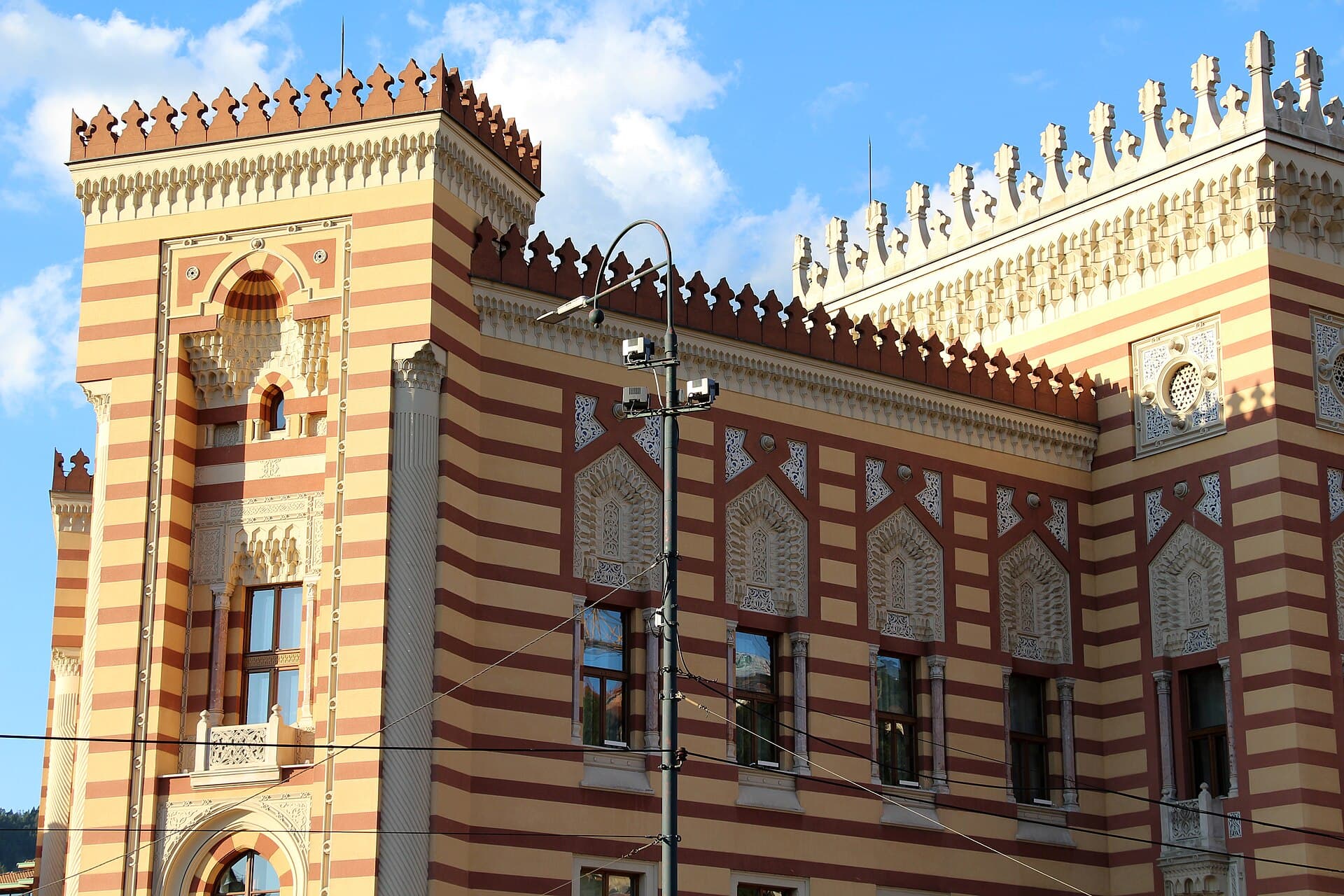 Sarajevo City Hall (Vijećnica)The finest building of the Austro-Hungarian period in Sarajevo and its largest w4 minutes walk4.6
An Ottoman caravanserai built in 1551, the only surviving han in Sarajevo, which once held about 300 travellers and 70 horses. Its courtyard now has a restaurant, a café and shops, and entry is free.